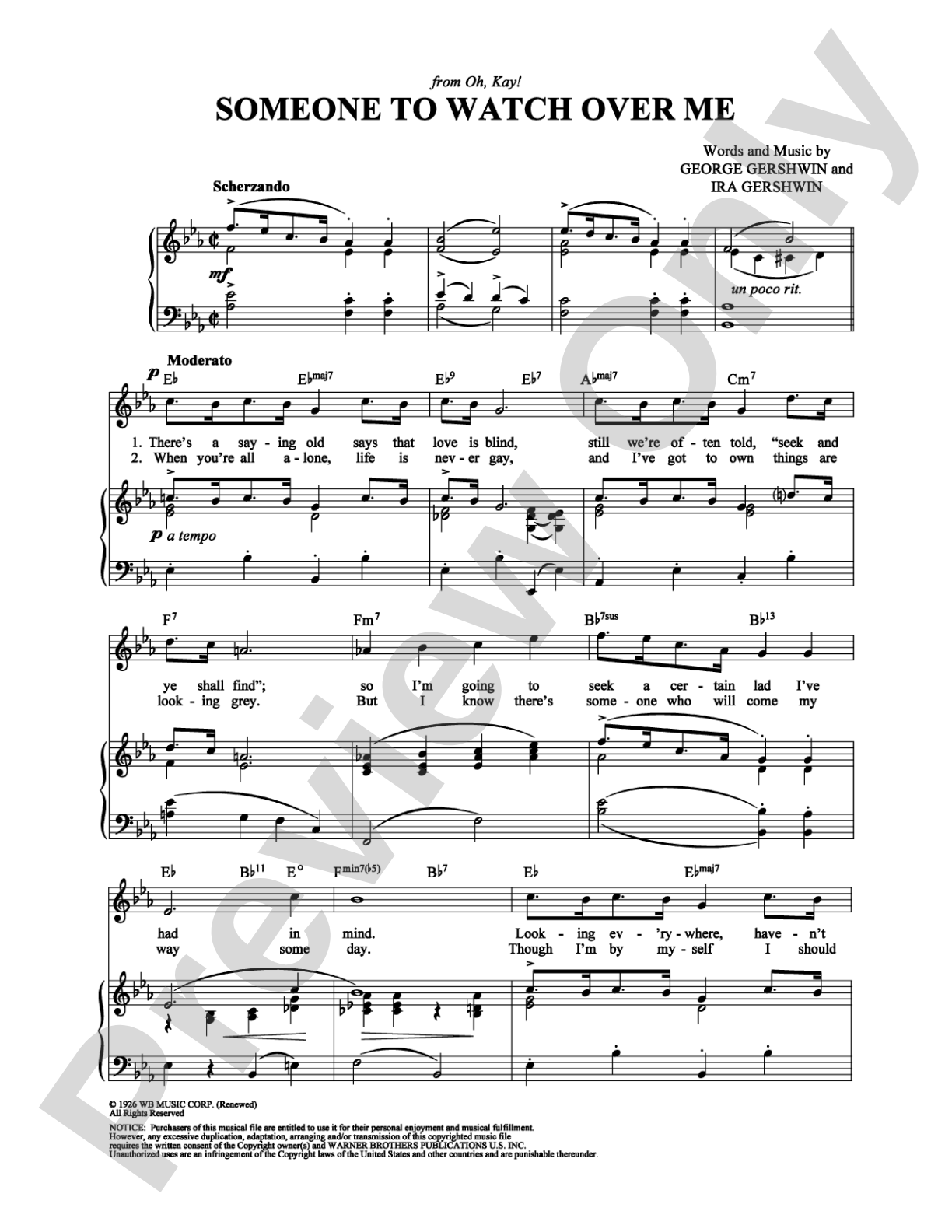
Someone To Watch Over Me: Piano/Vocal/Chords Digital Sheet Music

Someone To Watch Over Me: Piano/Vocal/Chords Digital Sheet Music

George Gershwin, Frank Sinatra

Item: 00-PS-0002202

Digital Download
$3.99
Description

Someone To Watch Over Me: Piano/Vocal/Chords Digital Sheet Music isn't in MakeMusic Cloud just yet...but it could be. Let us know you'd like to see it, and you'll help shape what comes next. In the meantime, start a free trial and dive into thousands of interactive titles your students can play along with today.

Sample Audio
No sample audio found.
Sample Video
Additional Details
SKU: 00-PS-0002202

More about this title

About the Artist: Frank Sinatra

Frank Sinatra (1915-1998) shaped American popular song through a career spanning six decades. His phrasing, breath control, and interpretive depth set the standard for vocal jazz and standards singing, influencing generations of singers across classical, jazz, and popular traditions.

For music educators, Sinatra's recordings and arrangements offer masterclasses in legit voice production, lyrical interpretation, and the marriage of melody to text. His work demonstrates how a singer can own a song through nuance rather than display.

Why we love this

This standard sits at the intersection of accessible melody and real harmonic sophistication, making it ideal for teaching song interpretation without overwhelming beginners. Singers and pianists both find satisfaction in the straightforward vocal line paired with the rich, moveable chord changes that Gershwin wrote, and the sheet music format keeps the focus on the performers rather than on production elements.

What to expect

Warm, intimate, and quietly confident. The melody moves gently through the middle range, supported by chord changes that shift between major and minor tonalities without ever feeling heavy. There is an elegance here that comes not from complexity but from restraint; every note earns its place.

Who it's for

Vocalists preparing recitals or jazz standards repertoire, piano students learning to accompany singers, and anyone building a foundation in American songbook classics. The accessible melody and clear chord structure make it equally valuable for early-intermediate jazz singers and pianists seeking to understand voice-leading in a real song context.

How to get the most out of it

  • Anchor your phrasing to the natural speech rhythms of the lyric; let the words breathe rather than rushing through the melody.
  • Shape the accompaniment to support, not compete. The piano chord voicings work best when you voice them higher or lower depending on where the melody sits in each phrase.
  • Take time with the middle section, where the harmonic movement expands. This is where the song reveals its emotional depth; resist the urge to keep the same tempo and dynamic as the opening.
  • Experiment with rubato in the final phrases. The original recordings show how a small amount of give-and-take in tempo makes the ending feel intimate rather than formulaic.

How to use it

Program this alongside other Gershwin standards to build a coherent set, or pair it with modern interpretations of the same song to demonstrate how different artists inhabit the same material. It works well as a recital closer or opening number where you want to establish intimacy and musicianship before moving into more dramatic fare.

Skills your students will build

  • Legit phrase shaping and breath management across longer melodic lines
  • Reading and voicing jazz chord symbols in a practical context
  • Interpreting rubato and expressive timing without losing rhythmic integrity
  • Understanding the relationship between lyric stress and melodic emphasis
  • Accompanying a vocalist with sensitivity to dynamic balance and textural support

You May Also Like