
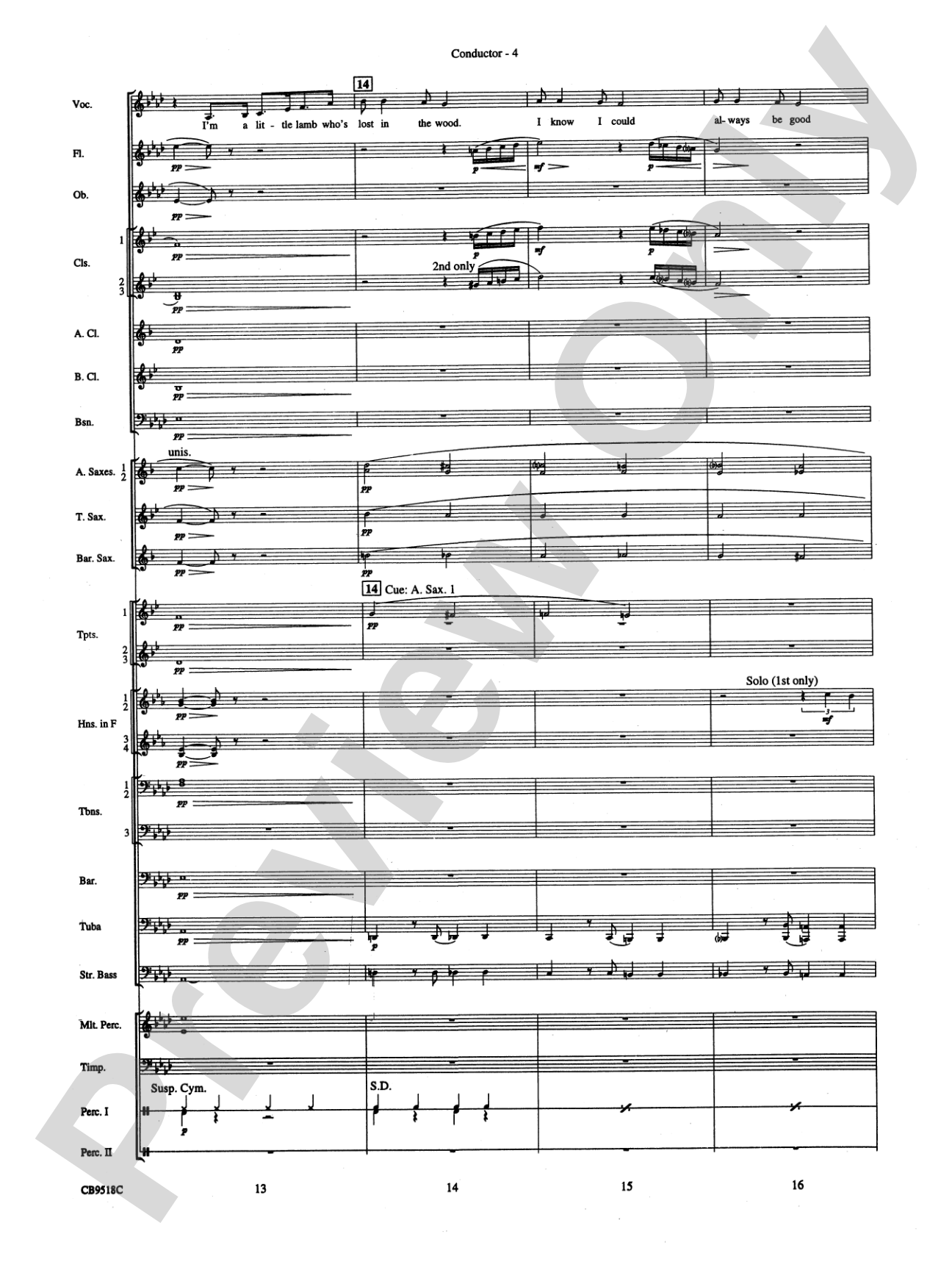
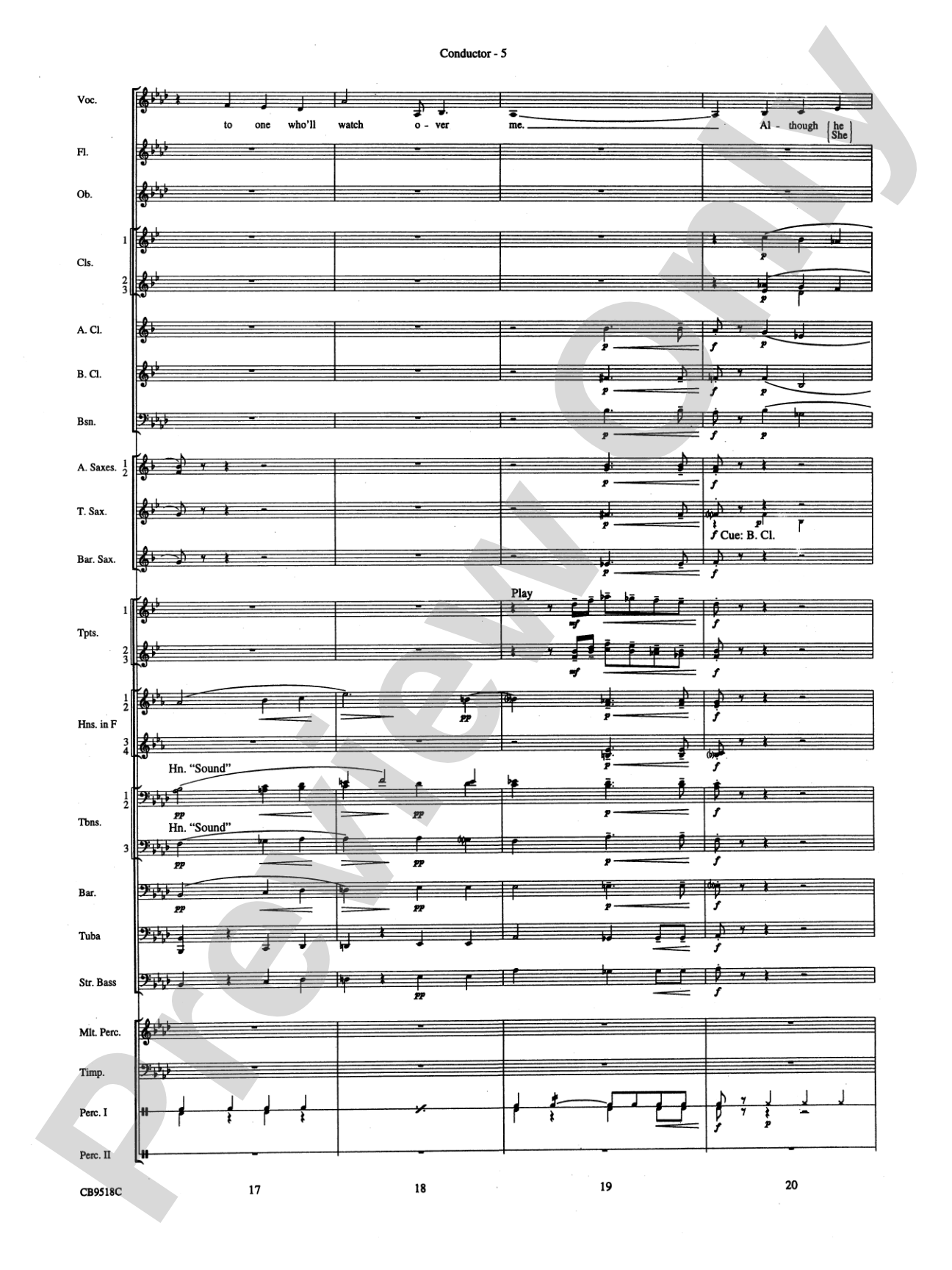
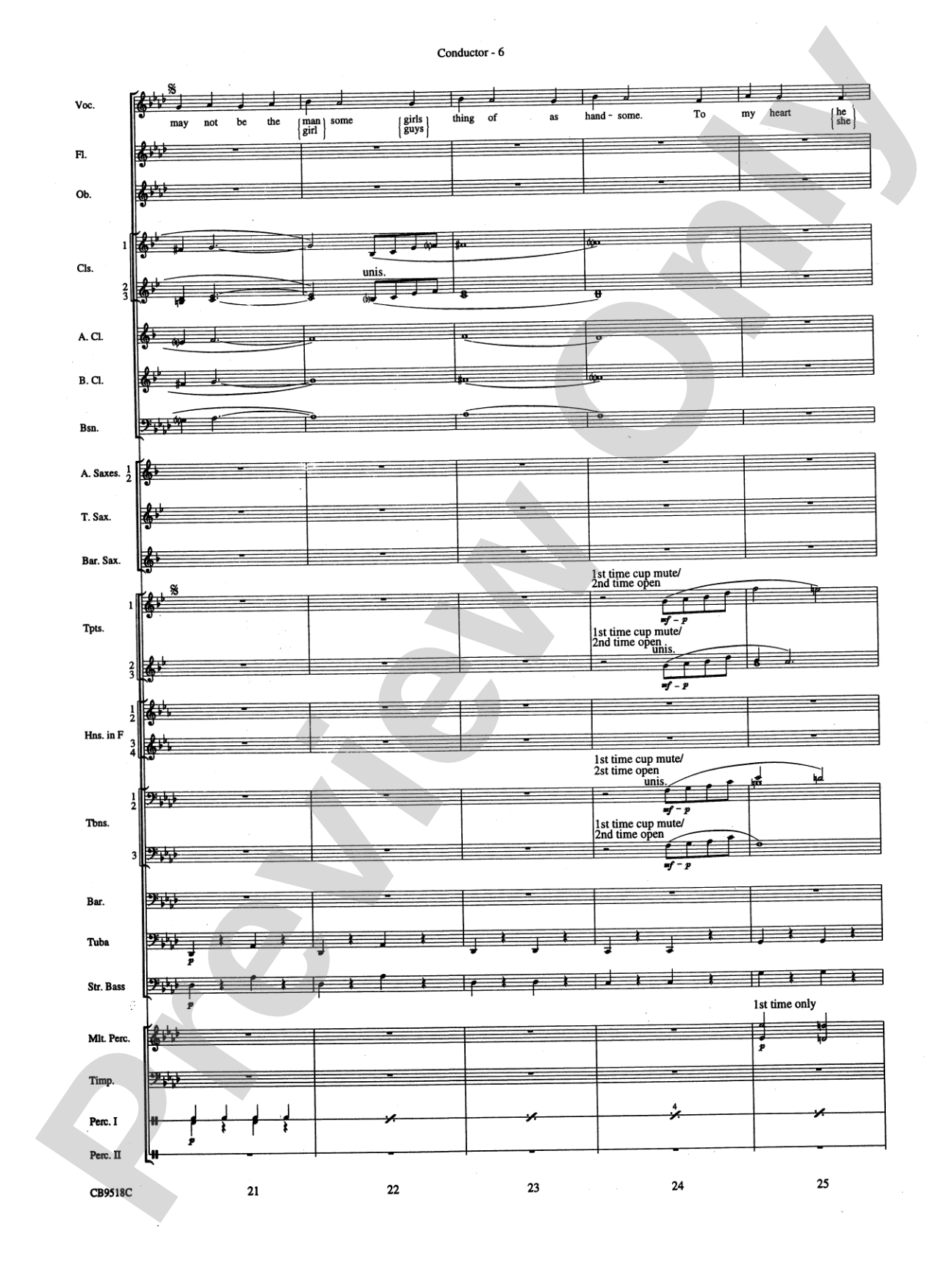
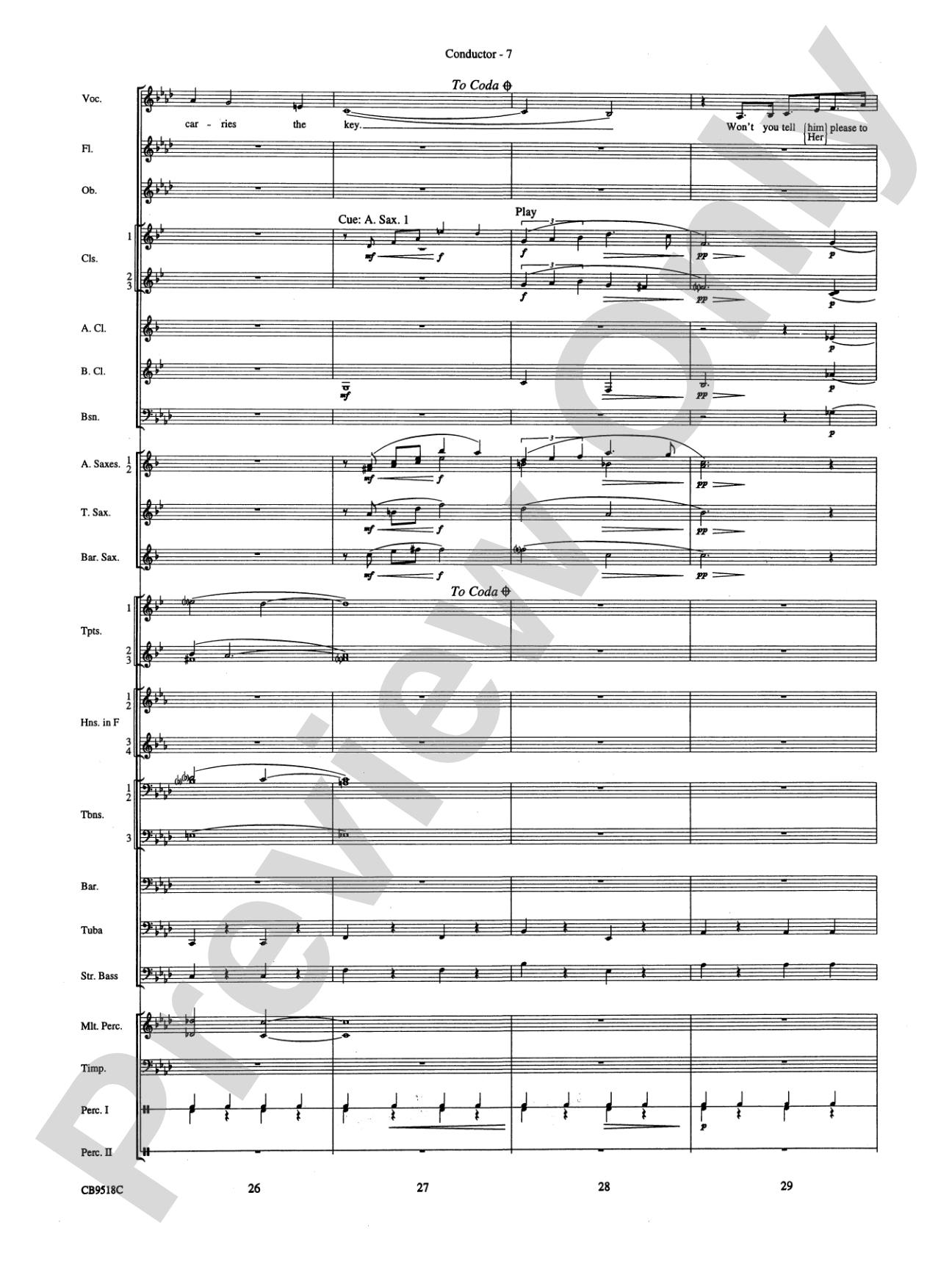
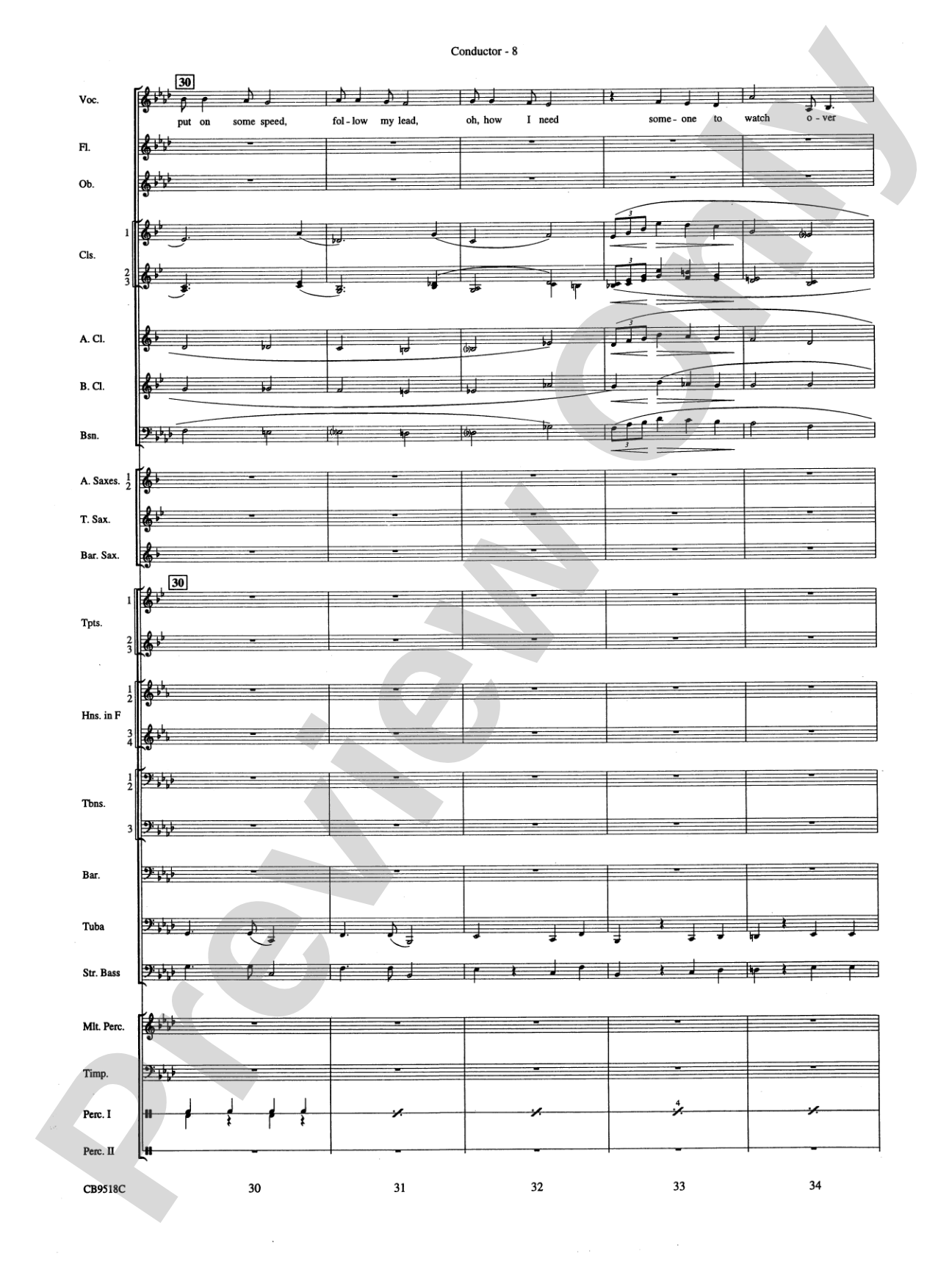
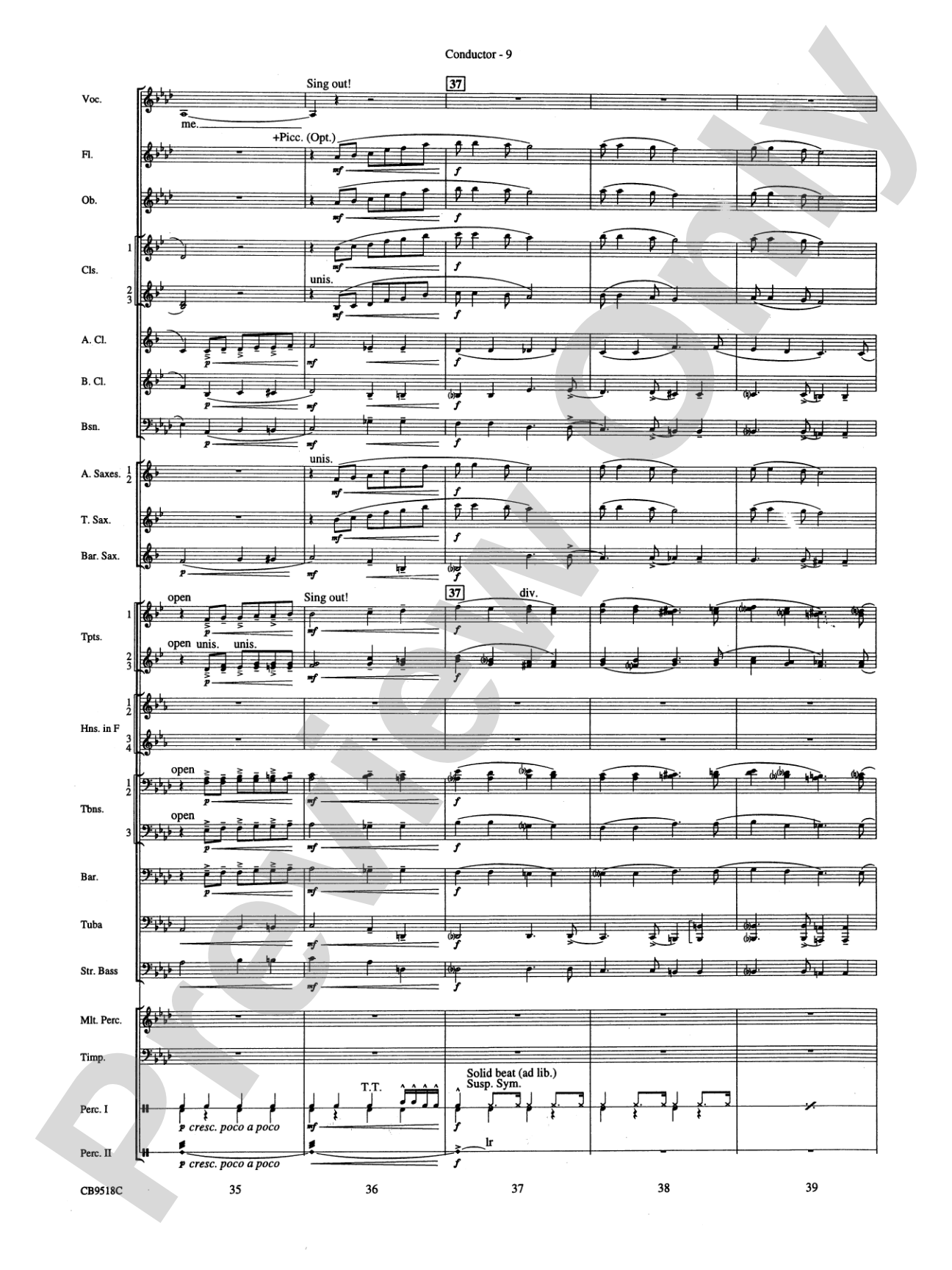
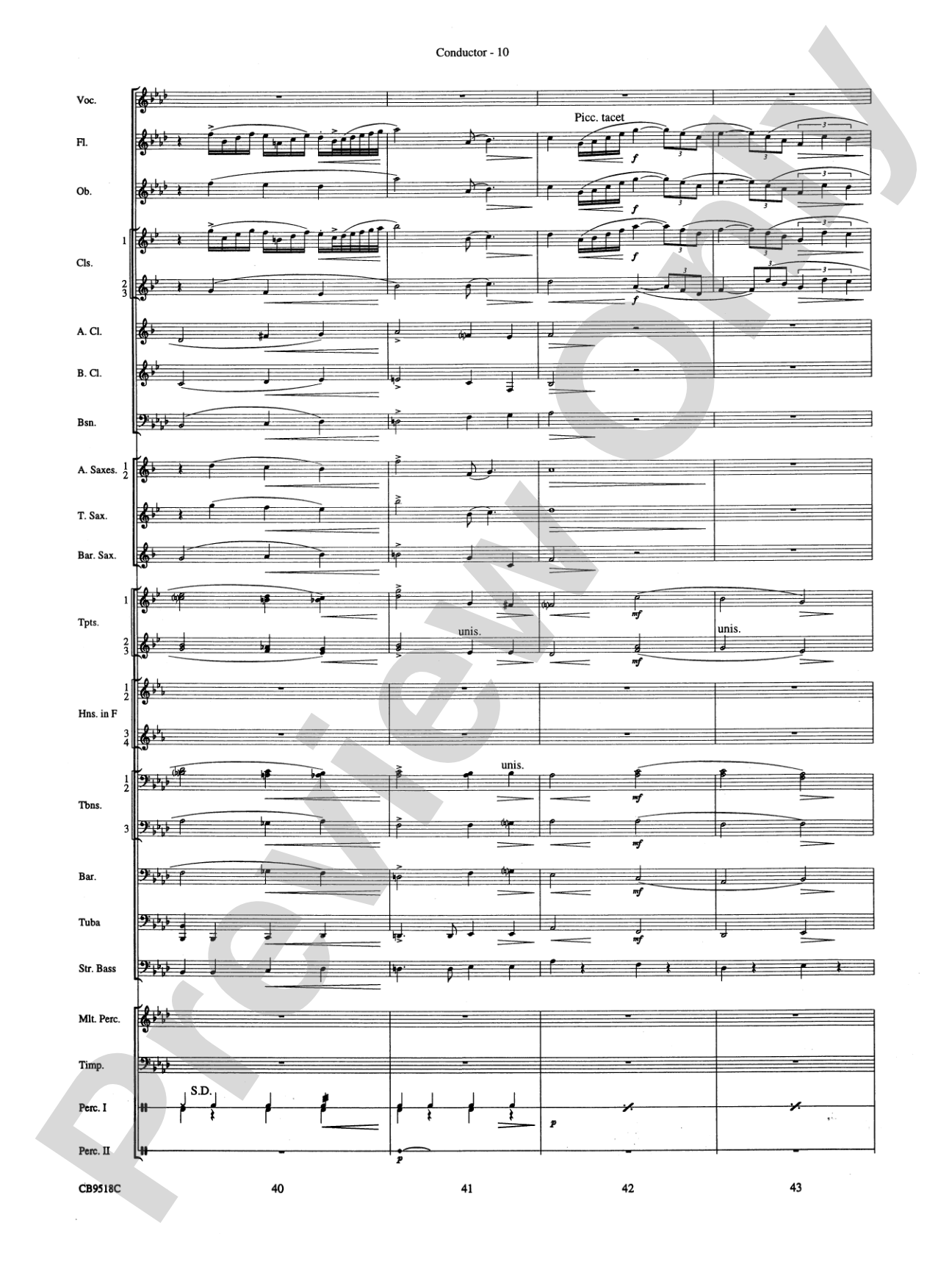
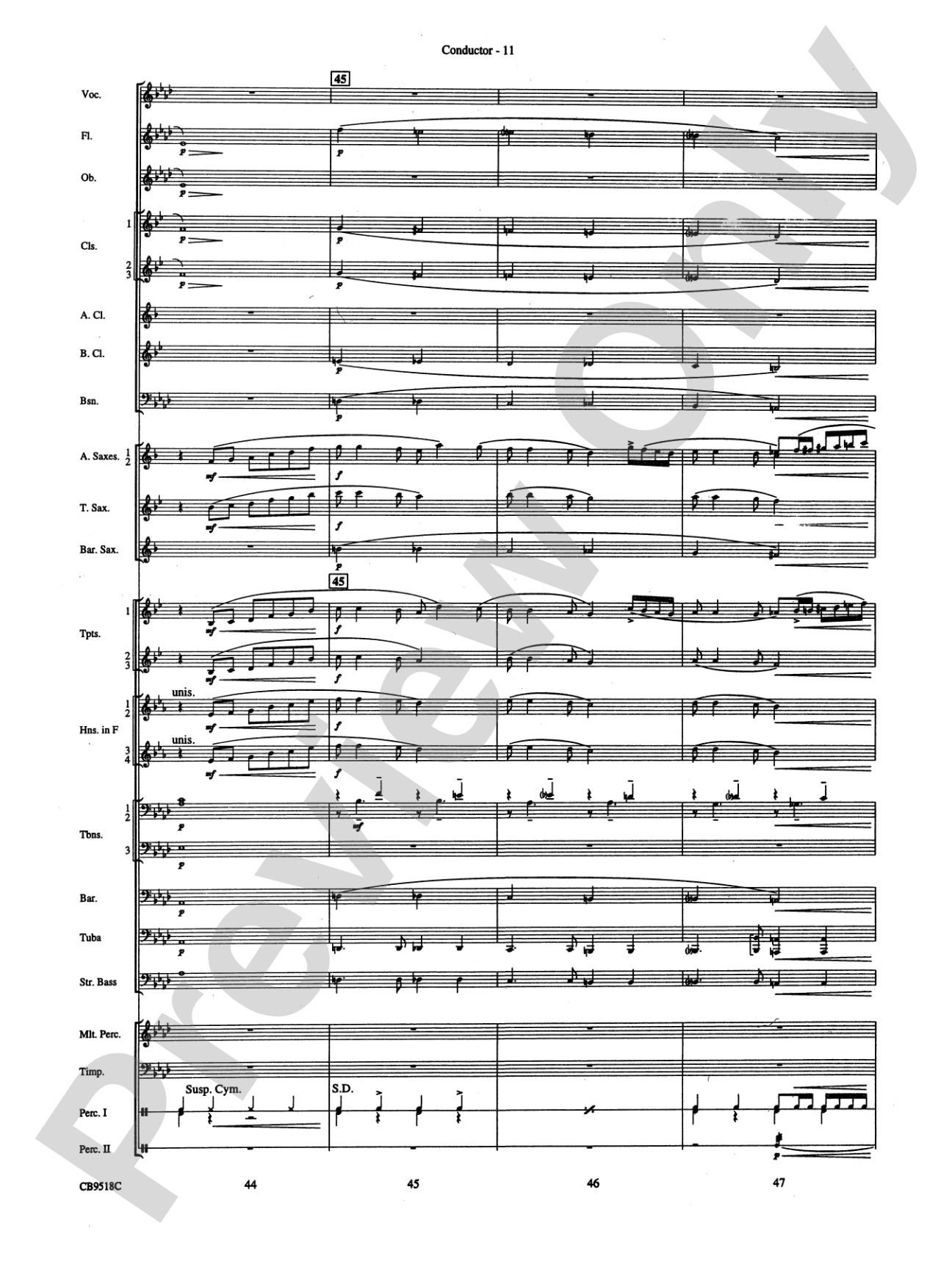
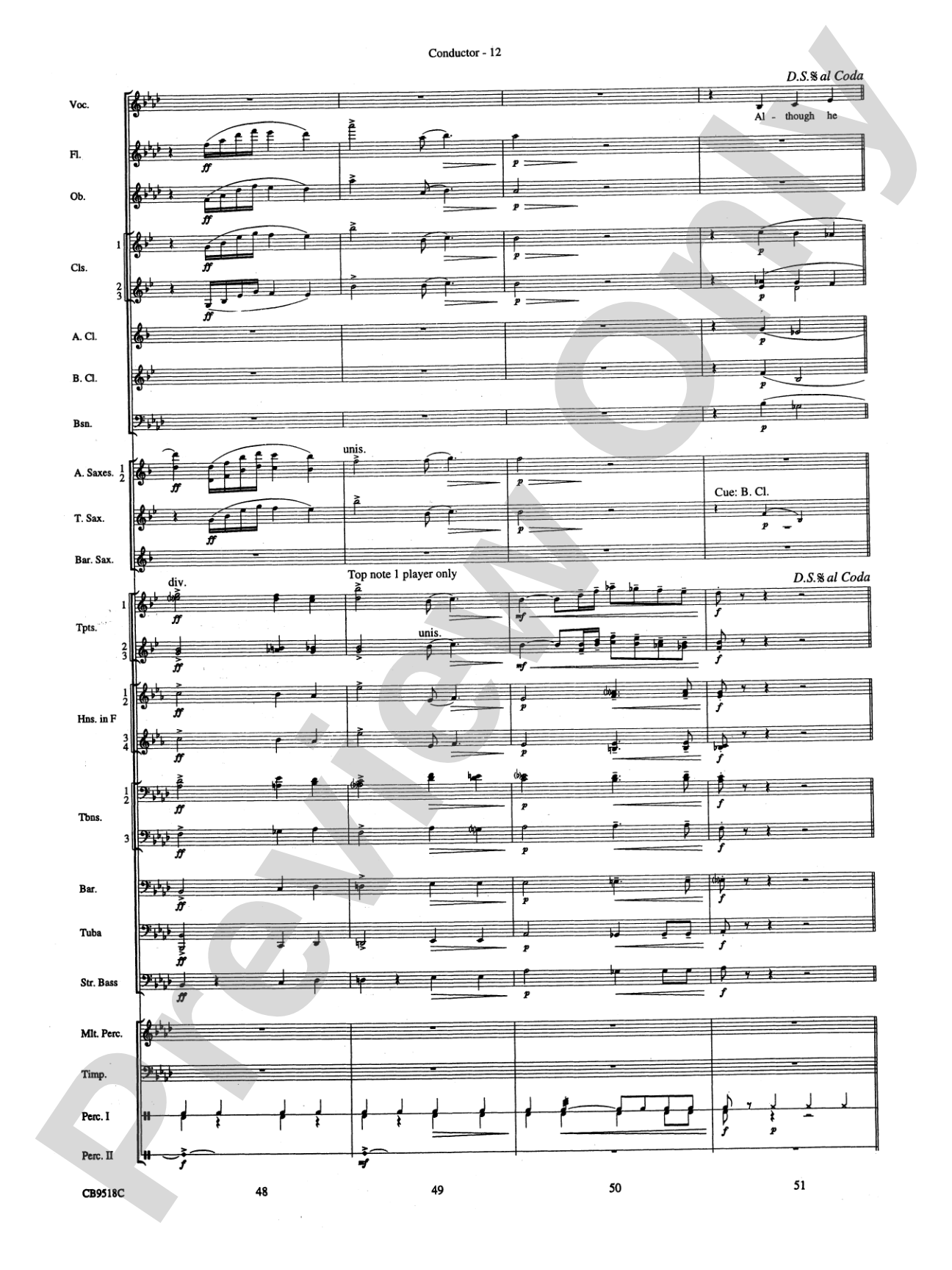
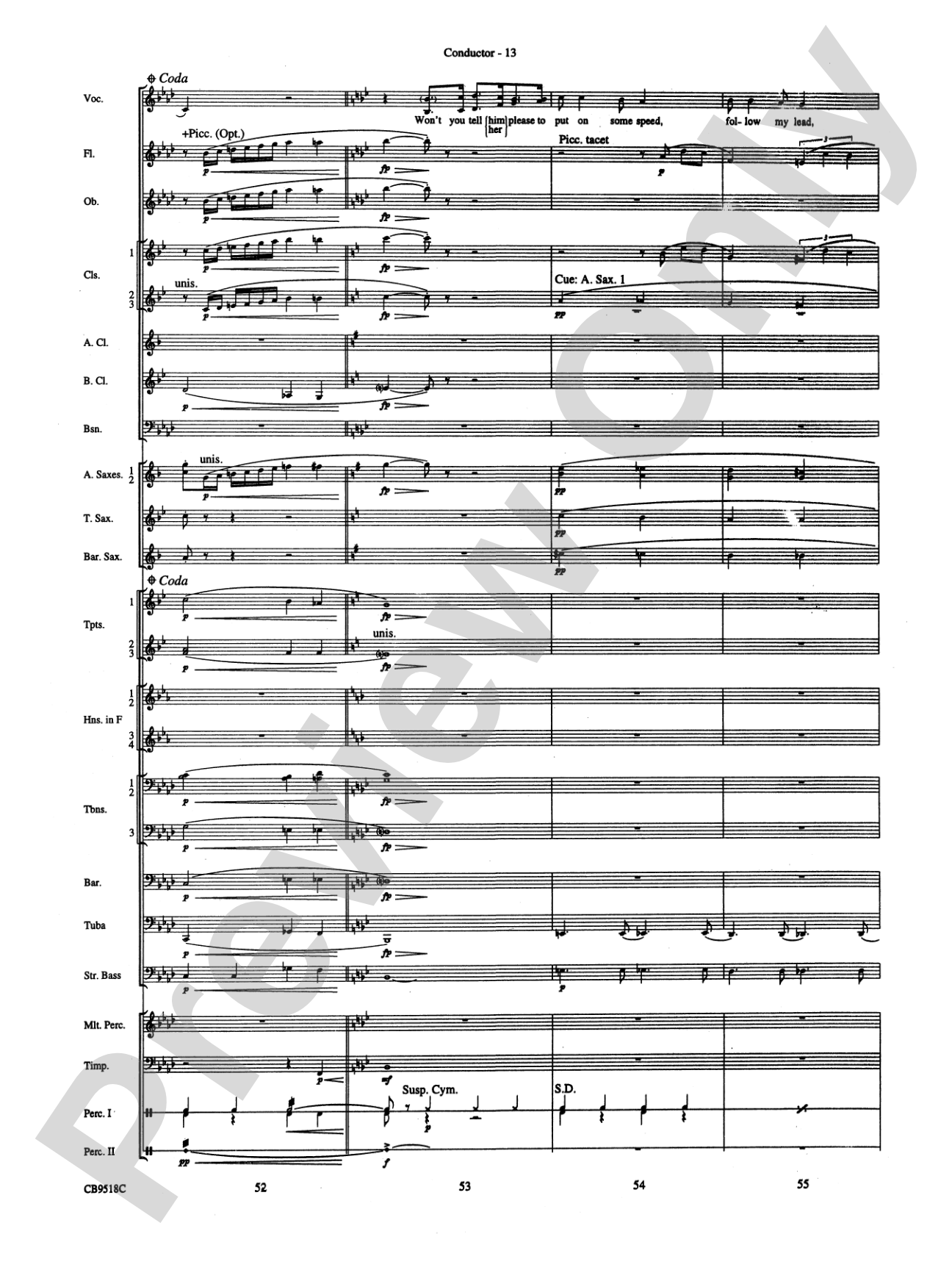
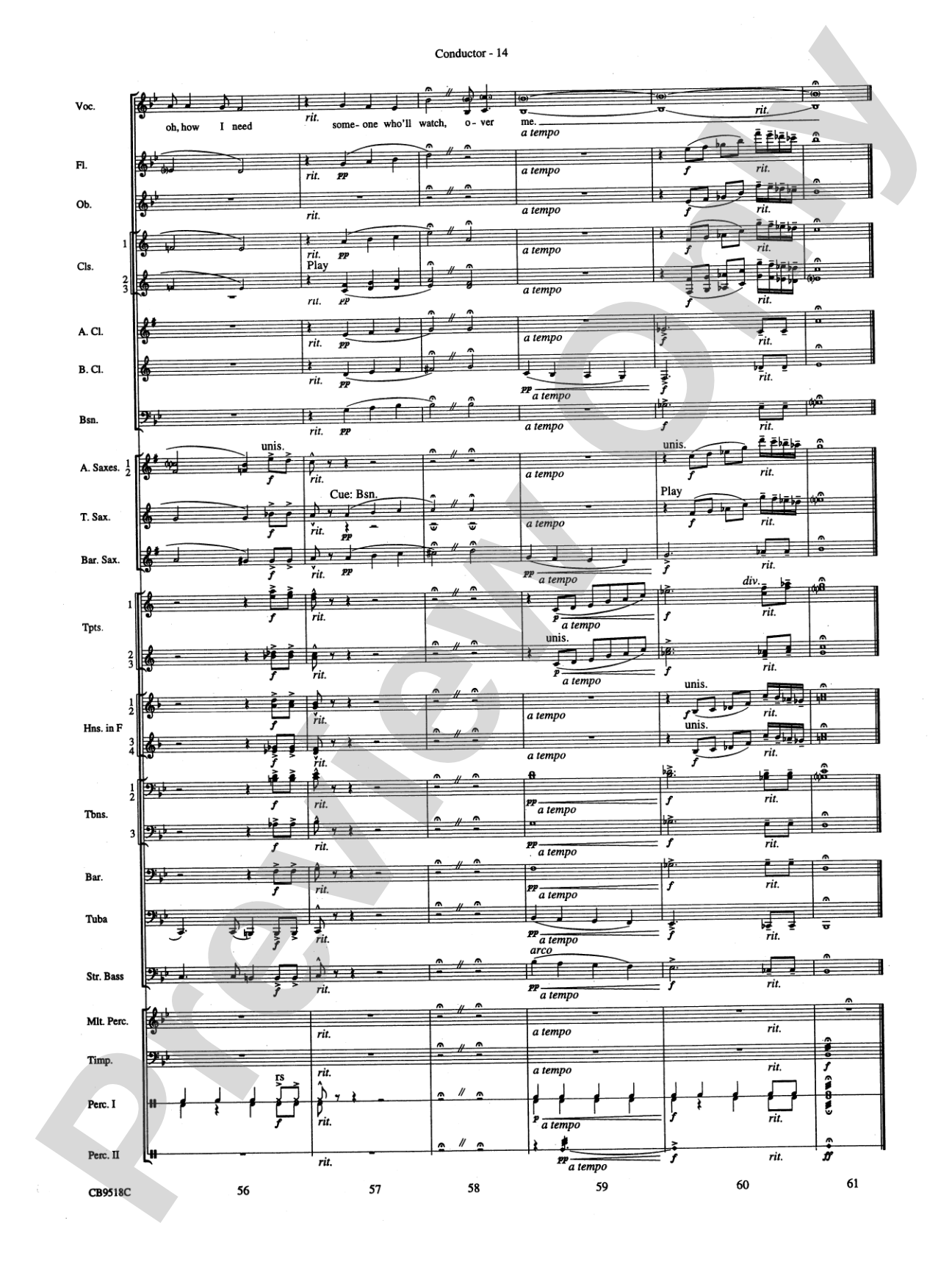


Someone to Watch Over Me: Concert Band Conductor Score & Parts
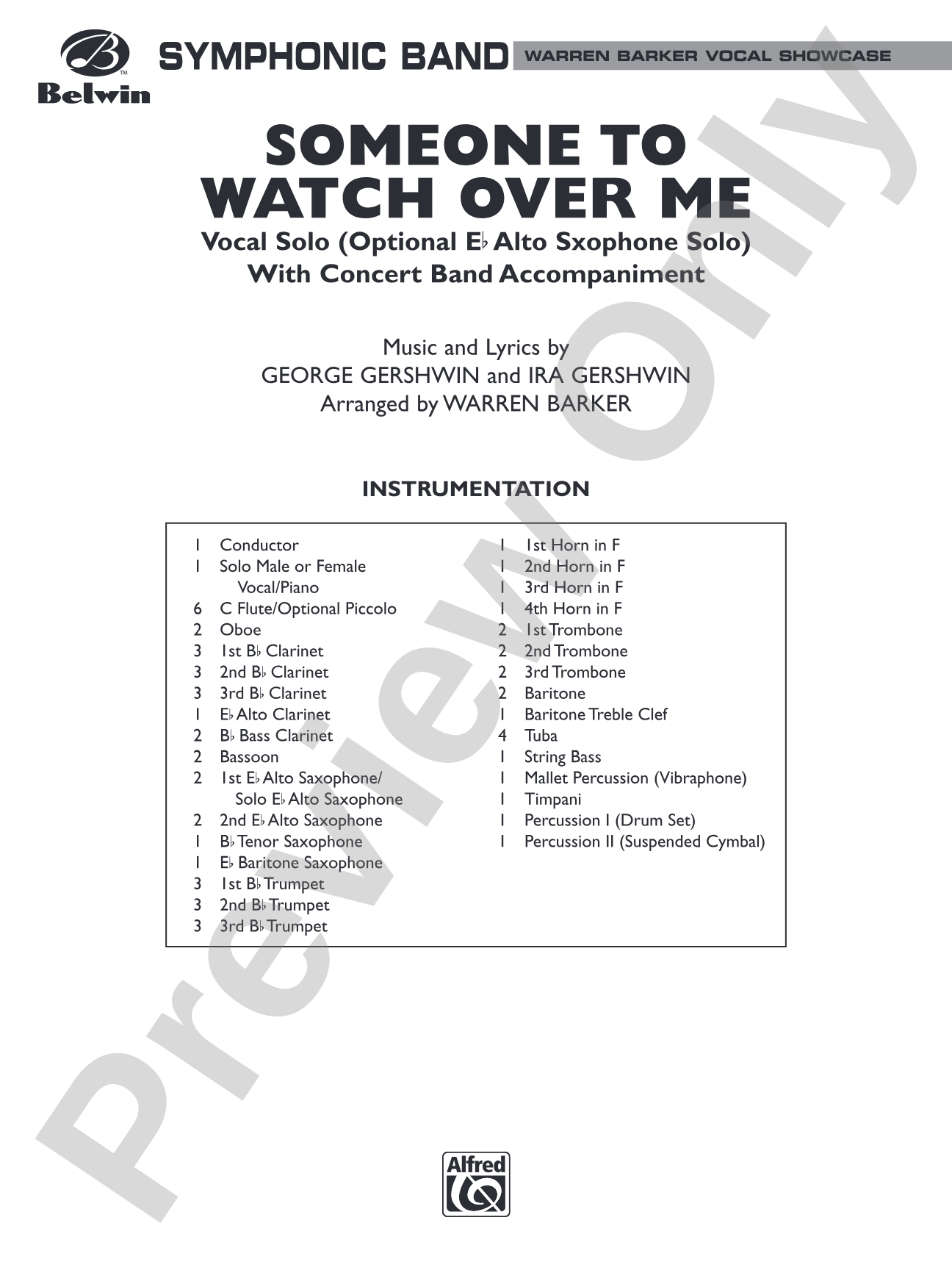
Vocal Solo (Optional E-Flat Alto Saxophone Solo) with Concert Band Acc.
By George Gershwin and Ira Gershwin / arr. Warren Barker
Grade: 4 (Medium (Vocal Range: A-flat up to C))
Item: 00-PK-0002319

$72.00
One moment…
Description
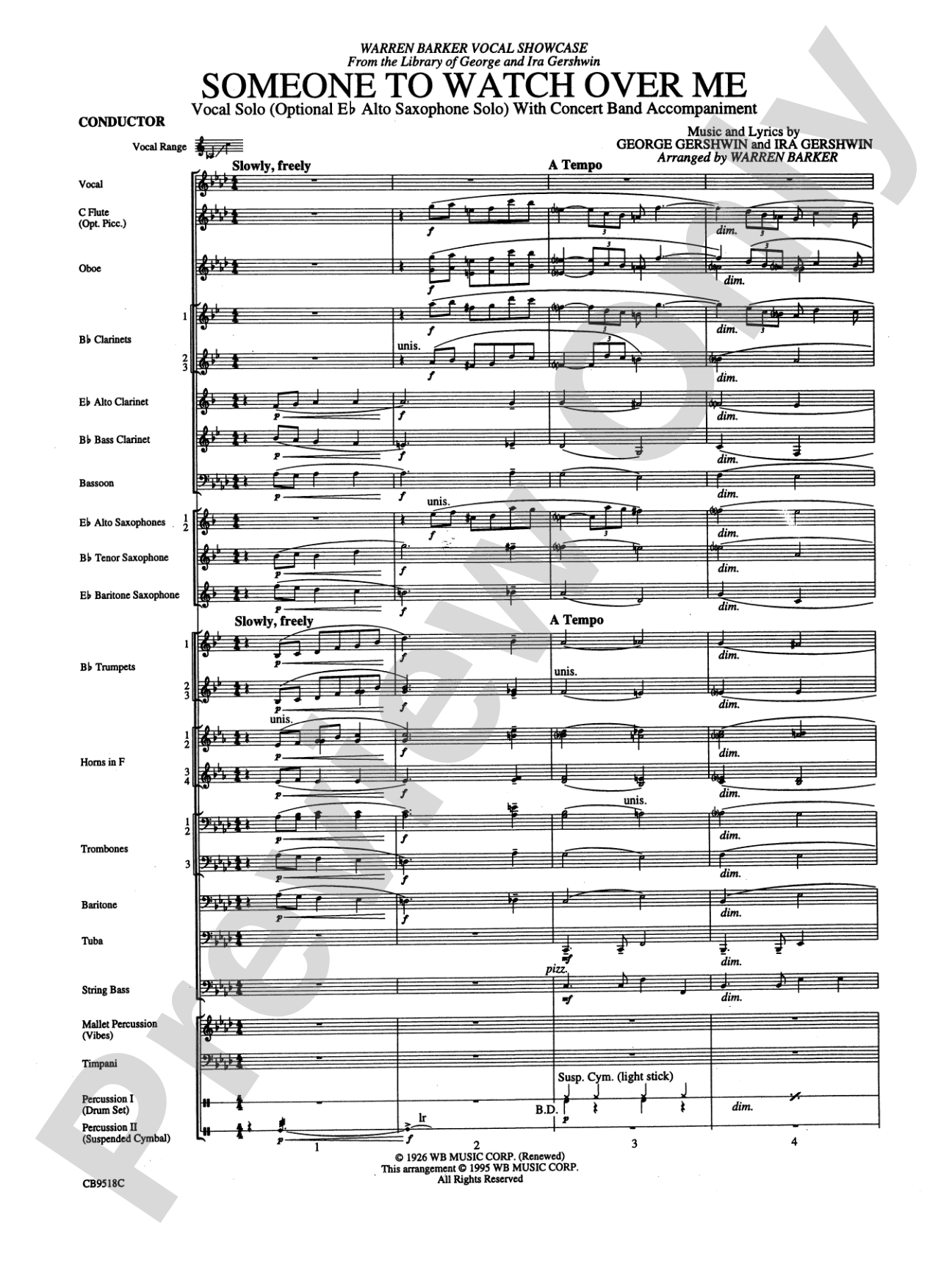
What more could one ask for than the music of George and Ira Gershwin and the arranging talents of Warren Barker and his new Vocal Showcase Series? Here is the answer to the crying need for a top-flight arrangement for vocalist (male or female) with concert band accompaniment. An optional alto saxophone solo is included to give you the flexibility of an instrumental version. This will take the musical world by storm! (3:05)


Don't just read it, hear it, play along with it, and watch your students grow with it. In MakeMusic Cloud, Someone to Watch Over Me: Concert Band Conductor Score & Parts comes alive with professional accompaniment, adjustable tempo, and built-in practice tools that turn solo practice into real progress.
Open in the Player
Jump straight in and assign it today.
Start Your Free Trial
Open this title and explore the full library in minutes.
Sample Audio
No sample audio found.
Sample Video
No sample videos found.
Additional Details
Series:
Pop Symphonic Band
Publisher:
Alfred Music
Page Count:
132
SKU:
00-PK-0002319
Instrumentation:
Optional E-flat Alto Saxophone Solo with Concert Band Acc.
More about this title
About the Composer: George Gershwin
George Gershwin (1898-1937) bridged the worlds of classical concert music and popular song with a compositional voice that felt entirely new. His early training in piano and theory led him to write for Broadway and film, but he never abandoned his ambition to create serious concert works; "Rhapsody in Blue" remains his most celebrated achievement, though his songwriting legacy is equally vital to American music education. Working alongside his lyricist brother Ira, Gershwin created standards that have become essential to the vocal and jazz repertoire, shaping how multiple generations of musicians understand melody, harmony, and the intersection of popular and classical idioms.
Why we love this
Warren Barker's arrangement respects the song's essential character while giving concert band musicians a genuine role in storytelling, not mere accompaniment. The optional alto saxophone solo offers real programming flexibility: you can feature a vocalist with full orchestral color, or lean into an instrumental interpretation that highlights your saxophonists. A Gershwin standard at Grade 4 that plays with sophistication and rewards careful balance work from every section.
What to expect
Warm, lyrical, and inherently nostalgic. The melody carries the kind of elegance that made Gershwin's songs timeless, and Barker's orchestration frames it with sensitivity rather than bombast. There's an intimacy to this arrangement despite the full ensemble sound; listeners hear both the individual voice and the lush harmonic world supporting it.
Who it's for
Band directors seeking a crossover standard that engages your ensemble while providing a genuine showcase for a vocalist. Whether your program includes student soloists or guest singers, this arrangement meets performers at Grade 4 level without compromising the composer's intentions. Ideal for conductors building a concert that blends American songbook classics with concert band repertoire.
How to get the most out of it
- Balance the vocalist against the band texture deliberately, especially in passages where the ensemble fills harmonic space. The vocalist should float above, not compete with, the full sound.
- If using the alto saxophone solo, treat it as a character with its own musical phrasing rather than a substitution for the vocal line. This shifts the emotional weight of the piece.
- Shape the tempo to allow room for vocal breath and rubato without losing the song's fundamental swing. Gershwin's melodies sing best when they breathe.
- Pay close attention to dynamics in the band parts; many directors underblay the accompaniment at softer moments, which weakens the harmonic foundation the vocalist depends on.
How to use it
Open a concert with this piece to set a sophisticated, accessible tone that anchors American art song within your ensemble's capabilities. It pairs beautifully alongside other Great American Songbook standards or as a bridge between classical and contemporary pops programming. The 3-minute duration makes it an ideal feature before or after a larger work, giving your audience a moment of lyrical clarity.
Skills your students will build
- Balancing soloists with ensemble texture
- Playing as accompaniment rather than featured line
- Sustaining harmonic foundation under flexible vocal phrasing
- Differentiating between solo and tutti roles within a single piece
- Responding to rubato and tempo flexibility from a vocalist