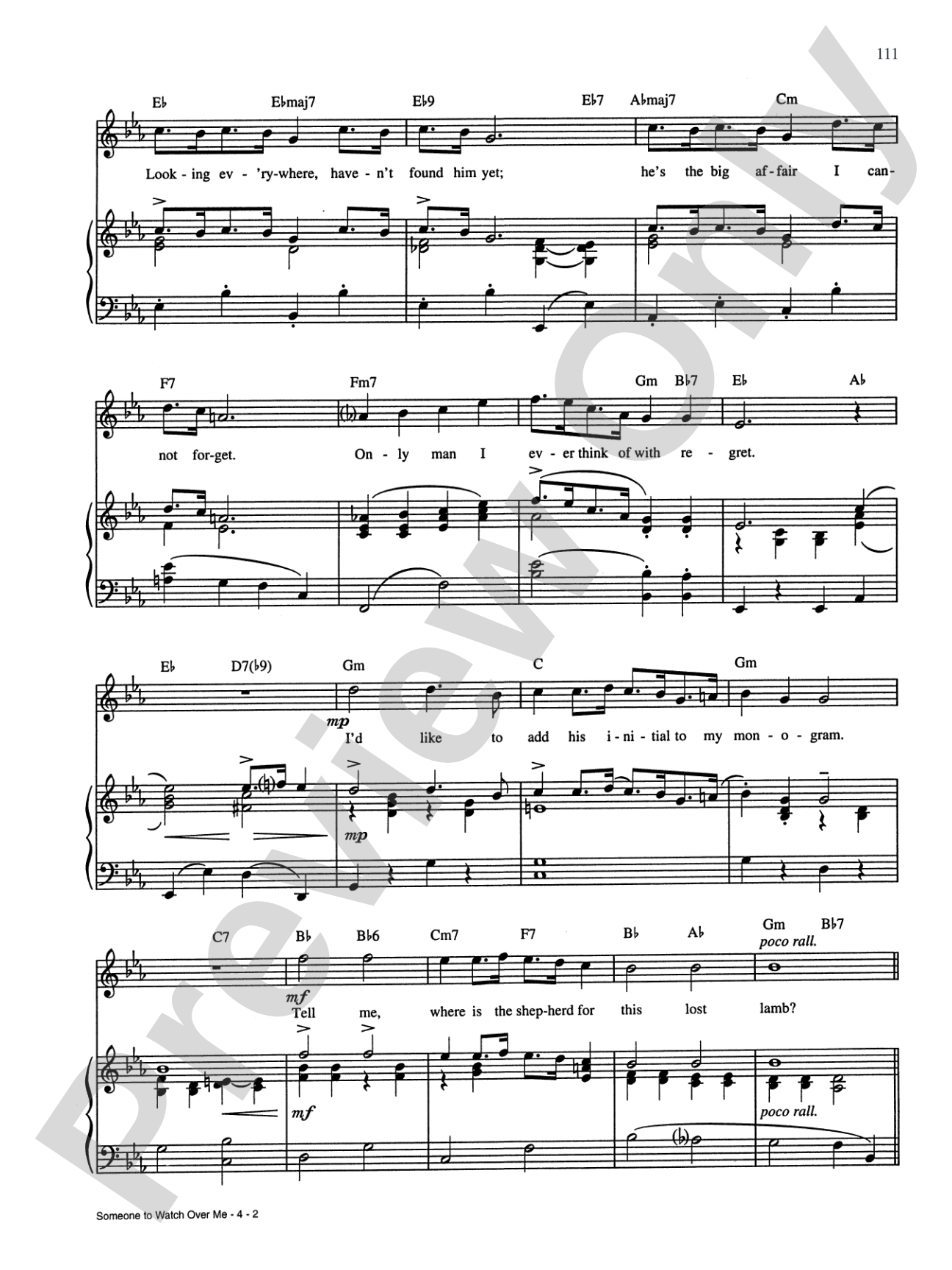
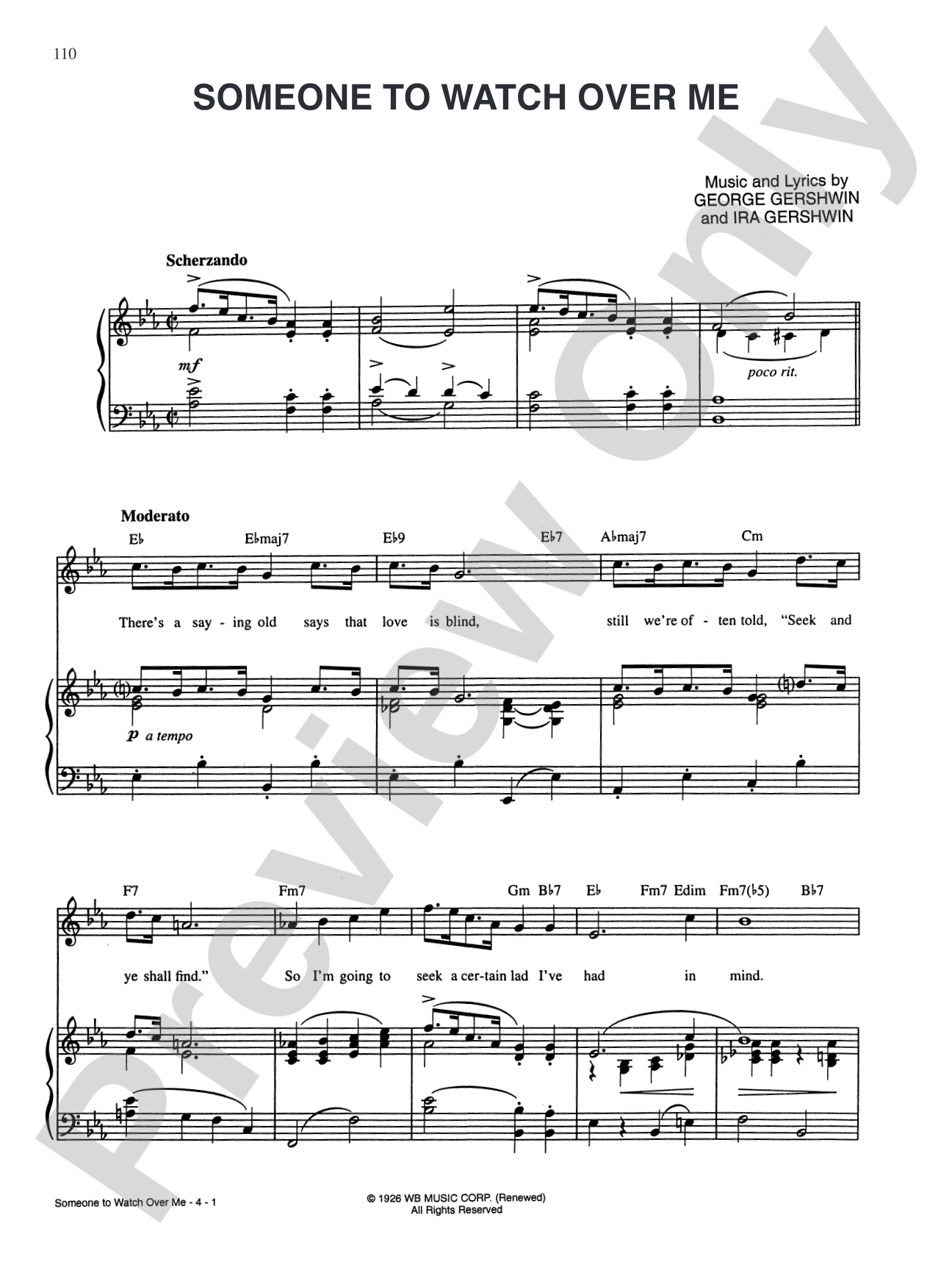
Someone to Watch Over Me Sheet Music Preview

Someone to Watch Over Me: Piano/Vocal/Chords

By George Gershwin and Ira Gershwin

Item: 00-PIP-000128

Digital Download
$3.99

One moment…

Description

Someone to Watch Over Me: Piano/Vocal/Chords isn't in MakeMusic Cloud just yet...but it could be. Let us know you'd like to see it, and you'll help shape what comes next. In the meantime, start a free trial and dive into thousands of interactive titles your students can play along with today.

Sample Audio
No sample audio found.
Sample Video
Additional Details
Publisher: Alfred Music
Page Count: 6
SKU: 00-PIP-000128

More about this title

About the Composer: George Gershwin

George Gershwin (1898-1937) bridged popular song and concert music with a fluency that transformed American composition. His melodies became standards not through formula but through genuine gift: they inhabit the ear and linger there. Gershwin's output across musical theater, film, and concert halls established a model for composers who refused to separate "serious" art from accessibility and joy.

Why we love this

This arrangement distills one of Gershwin's most affecting melodies into an intimate, conversational format. The piano writing supports the voice without crowding it, and the harmonic language remains true to Gershwin's sophisticated jazz-inflected vocabulary while staying within reach of intermediate pianists and singers.

What to expect

Tenderness wrapped in blue-note sophistication. The melody moves with the ease of spoken language, supported by harmonies that suggest both jazz warmth and Broadway elegance. There's no sentimentality here, only genuine vulnerability and the quiet confidence of a song that knows its own worth.

Who it's for

Intermediate pianists and singers who want a standard that sits comfortably in range and technical ability while offering genuine musical substance. This works equally well for studio singers preparing for recital, music theater students building their audition book, or vocalists adding a Gershwin touchstone to their repertoire.

How to get the most out of it

  • Approach the melody with genuine lyrical phrasing rather than rhythmic precision; the song's power comes from its conversational intimacy, not from metronomic steadiness.
  • Let the piano accompaniment breathe. These harmonies deserve space to register; resist the urge to fill every silence.
  • Coordinate dynamics carefully between voice and piano so that the vocal line remains the primary voice throughout, especially in passages where the piano might otherwise dominate.
  • Shape the vocal line through the repeated phrase elements; each return of the main idea can deepen slightly without breaking the song's fundamental gentleness.

How to use it

Pair it with other Great American Songbook standards for a recital focused on twentieth-century popular song, or program it as a bridge between classical song literature and musical theater repertoire. The six-page length makes it ideal for a mixed recital program where you need something substantial yet concise.

Skills your students will build

  • Interpreting Gershwin's jazz-influenced harmonic language and understanding blue notes in context
  • Coordinating vocal line independence with sophisticated piano accompaniment
  • Sustaining lyrical phrasing over longer phrases without relying on rhythmic regularity
  • Reading and performing from a lead sheet style arrangement with chord symbols

You May Also Like