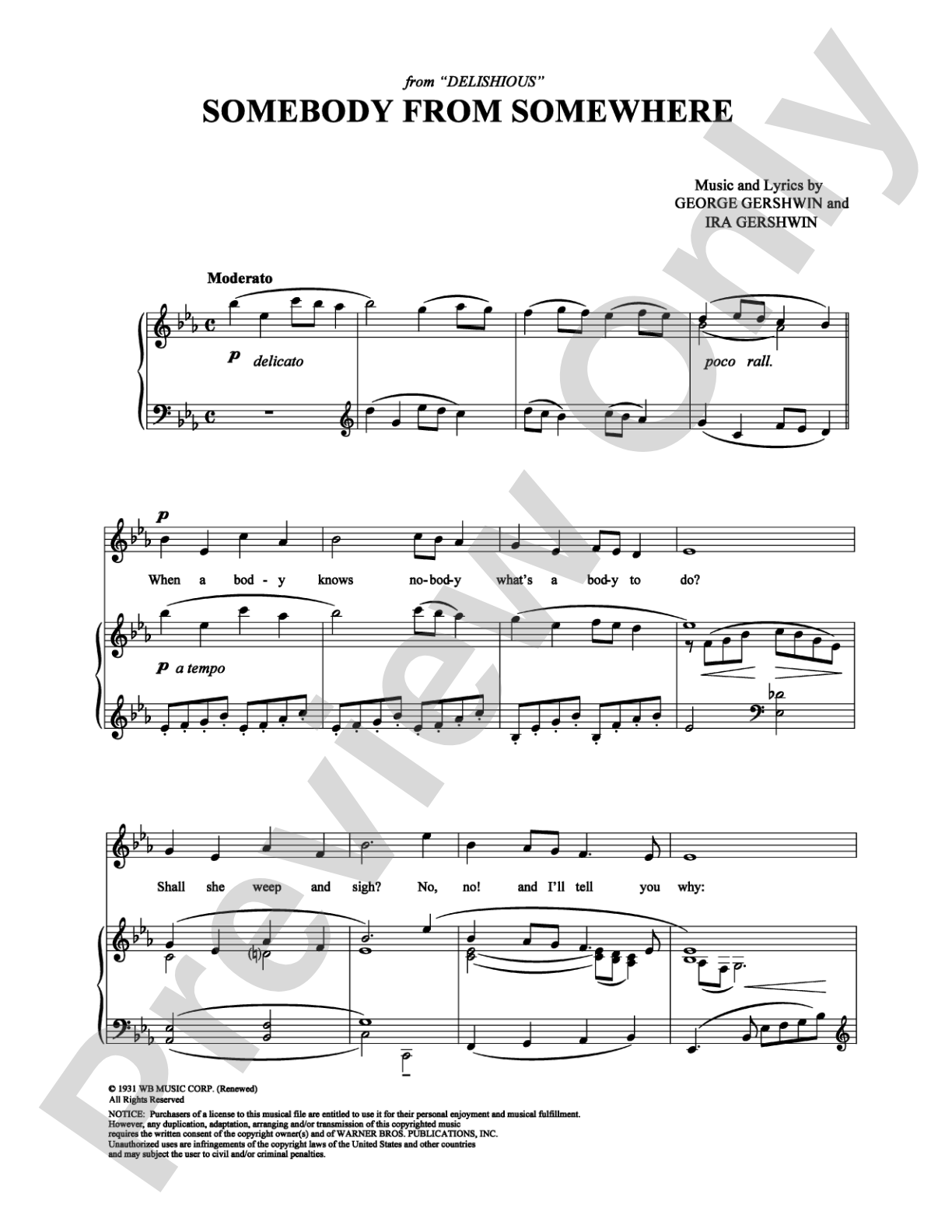
Somebody from Somewhere: Piano/Vocal/Chords Digital Sheet Music

Somebody from Somewhere: Piano/Vocal/Chords Digital Sheet Music

George Gershwin, Ira Gershwin, Janet Gaynor

Item: 00-PS-0008635

Digital Download
$3.99
Description

Somebody from Somewhere: Piano/Vocal/Chords Digital Sheet Music isn't in MakeMusic Cloud just yet...but it could be. Let us know you'd like to see it, and you'll help shape what comes next. In the meantime, start a free trial and dive into thousands of interactive titles your students can play along with today.

Sample Audio
No sample audio found.
Sample Video
Additional Details
SKU: 00-PS-0008635

More about this title

About the Artist: Janet Gaynor

Janet Gaynor (1906–1984) was a pioneering silent film star and one of the first major recipients of the Academy Award for acting. Her career spanned the transition from silent to sound cinema, and she brought a distinctive elegance to both mediums. Beyond her film work, Gaynor's musical interpretations became part of the popular standards repertoire, capturing the sophisticated vocal sensibility of the 1920s and 1930s.

Why we love this

This piece offers pianists and singers a slice of classic American song craft, complete with chord charts that make it accessible for collaborative rehearsal and performance. The piano/vocal/chords format works equally well for solo pianists learning the accompaniment, vocalists seeking period-appropriate standards, or ensembles building a vintage popular music program.

What to expect

A polished, intuitively singable melody paired with straightforward yet elegant harmonic language. The song carries the breezy charm of early popular song, with enough structural clarity that performers and listeners alike can follow the narrative arc without distraction.

Who it's for

Pianists developing a repertoire in American standards and popular song will find this piece both musically rewarding and historically grounded. Vocalists preparing recitals that include classic material from the 1920s–1930s era gain access to authentic accompaniment that respects the song's original character.

How to get the most out of it

  • Pay attention to the chord voicings provided; they reflect the harmonic sophistication of the era and will guide your interpretive phrasing.
  • If performing as a vocalist with pianist, establish clear communication about tempo and dynamics before rehearsing; standards from this period often benefit from flexible rubato.
  • Use the chord symbols to experiment with different accompaniment textures, from stride piano to sparse block chords, depending on your venue and ensemble context.

How to use it

Include this in a recital exploring the Great American Songbook, or program it as a bridge piece between classical and popular traditions in a mixed concert. It works particularly well when paired with other standards from the same era, giving audiences a taste of how popular music was crafted and performed in the early twentieth century.

Skills your students will build

  • Reading and interpreting chord symbols in a melody-focused context
  • Balancing accompaniment texture with vocal line in piano/vocal collaboration
  • Understanding harmonic movement in early popular song idiom

You May Also Like