Some Day My Prince Will Come (arr. Chuck Israels) Sheet Music Preview

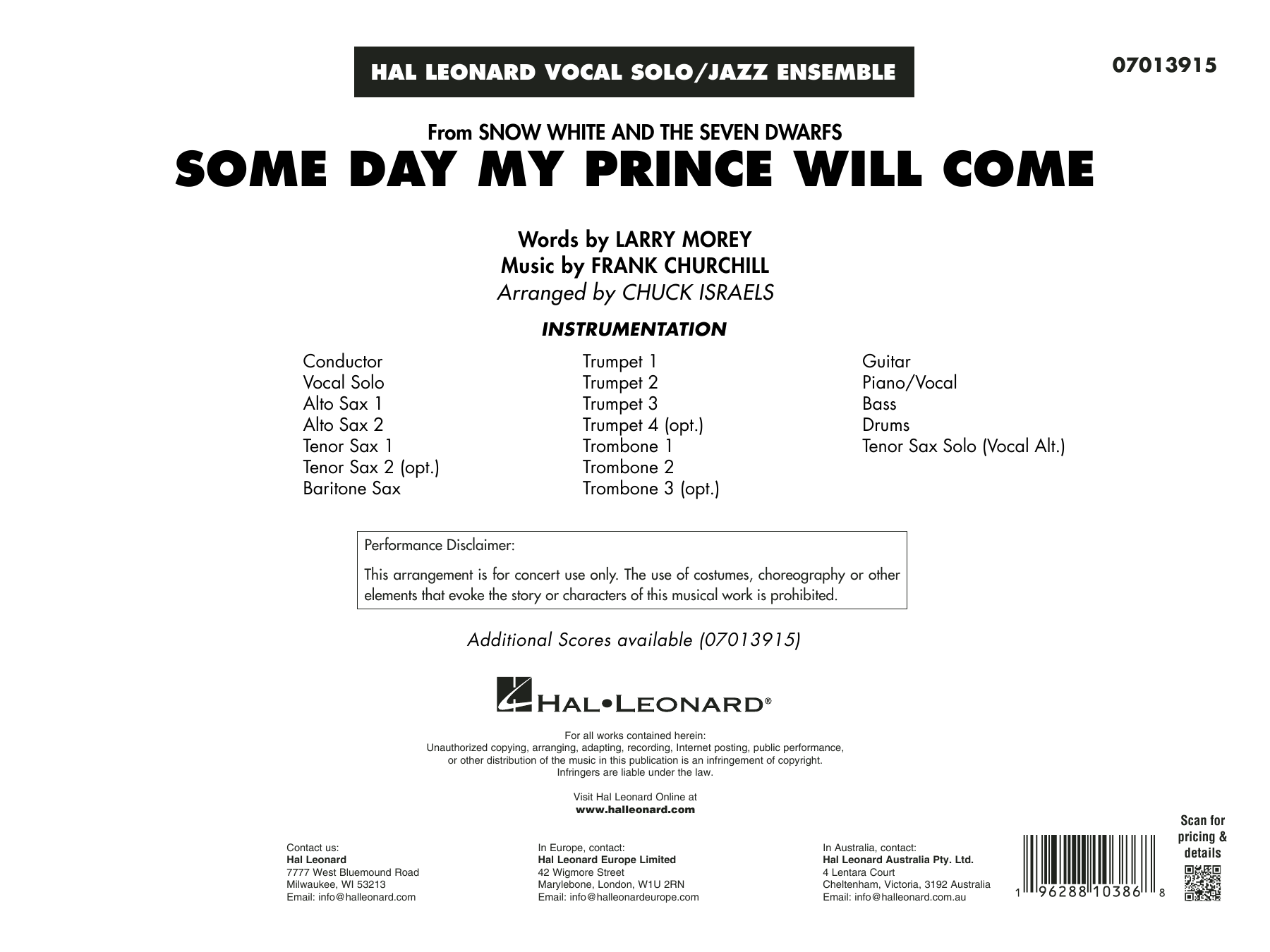
Some Day My Prince Will Come (arr. Chuck Israels): Jazz Ensemble Conductor Score & Parts

Arranged by Chuck Israels

Grade: 3-4

Item: 35-PK01265892

Digital Download
$55.00

One moment…

Description
Best known for his work with the Bill Evans Trio, as well as luminaries such as Billie Holiday, Benny Goodman, and Stan Getz, Chuck Israels is also a masterful composer and arranger. Here is his vocal solo arrangement of this timeless standard, beautifully scored as a jazz waltz with tasteful background figures. Also included are short solos for trumpet and piano.

Some Day My Prince Will Come (arr. Chuck Israels): Jazz Ensemble Conductor Score & Parts isn't in MakeMusic Cloud just yet...but it could be. Let us know you'd like to see it, and you'll help shape what comes next. In the meantime, start a free trial and dive into thousands of interactive titles your students can play along with today.

Sample Audio
No sample audio found.
Sample Video
Additional Details
Publisher: Hal Leonard
SKU: 35-PK01265892

More about this title

About the Arranger: Chuck Israels

Chuck Israels built his reputation as a bassist and composer working alongside some of jazz's most consequential musicians. His three decades with the Bill Evans Trio established him as a thoughtful voice in modern jazz, while his collaborations with Billie Holiday, Benny Goodman, and Stan Getz deepened his understanding of vocal phrasing and ensemble balance.

Israels brings this collaborative sensibility to his arranging work. Rather than overwhelming soloists with dense accompaniment, he creates spacious, supportive backgrounds that let individual voices shine. His academic training in composition complements his deep jazz roots, making him a natural choice for educators seeking arrangements that are both musically sophisticated and accessible to developing ensembles.

Why we love this

Israels transforms this Disney standard into a genuinely swinging waltz that feels fresh without losing the song's inherent charm. The arrangement respects the melody while giving your ensemble real parts to play; the background figures are singable and musical, not busywork. For directors seeking a vocal feature that doesn't require elaborate orchestration, this hits the sweet spot between accessibility and artistry.

What to expect

Intimate and unhurried, like a small group performance rather than a big arrangement. The waltz setting gives the piece a gentle, slightly romantic quality that complements the text beautifully. There's plenty of space for the soloist to breathe and connect with the lyric.

Who it's for

Jazz ensembles at the 3-4 level looking for a vocal feature that teaches ensemble balance and accompaniment craft. Directors who want to program a standards-based arrangement that develops musicianship without demanding virtuosity from soloists. Vocalists ready to interpret a familiar melody in a jazz context.

How to get the most out of it

  • Balance the waltz feel by anchoring the rhythm section's swing; the three-beat pulse should float rather than march, which means the bass player and drummer need to communicate about how much air to leave in the music.
  • Shape the background figures dynamically so they support rather than compete with the soloist. These parts are written to complement a vocal line, so use softer dynamics in passages where the vocalist needs space.
  • Bring out the trumpet solo with enough clarity that listeners can follow the melodic idea, but keep the piano comping underneath from overwhelming the section. This is a conversation, not a showcase.
  • Let the vocalist direct the tempo slightly. Since this is scored as a waltz rather than a straight jazz tune, there's room for interpretive breathing that a traditional rhythm section might initially resist.

How to use it

This works beautifully as a first half program anchor or as part of a set of standards that shows range beyond uptempo swingers. Pair it with instrumental features to build a concert that balances vocals and solos, or use it as a teaching moment about how arrangement choices shape musical character. The modest instrumentation and clear voicings make it useful in mid-year clinics or reading sessions with developing ensembles.

Skills your students will build

  • Accompaniment writing and sensitivity to soloist needs
  • Waltz rhythm and three-beat phrasing in a jazz context
  • Comping and solo construction for piano and trumpet
  • Balancing melodic content with supportive backgrounds
  • Interpreting a vocal standard through jazz language and sensibility

You May Also Like