Solos for Young Cellists Cello Part and Piano Acc., Volume 3 Cover Image

Solos for Young Cellists Cello Part and Piano Acc., Volume 3: Cello Book

$19.99 USD
Sale price  $19.99 USD Regular price 
Skip to product information
Solos for Young Cellists Cello Part and Piano Acc., Volume 3 Cover Image

Solos for Young Cellists Cello Part and Piano Acc., Volume 3: Cello Book

Selections from the Cello Repertoire

Compiled, ed., and arr. Carey Cheney

Item: 00-21030X

$19.99
Shipped

One moment…

Description
Solos for Young Cellists is an eight-volume series of music compilations with companion CDs. The series ranges from elementary to advanced levels and represents a truly exciting variety of musical genres and techniques. This collection of wonderful music offers young cellists the opportunity to work in various positions, techniques, meters, keys and musical styles. Many of the works have long been recognized as stepping stones to the major instrumental repertoire, while others are newly published pieces and original compositions, providing an exciting and diverse choice of study. The collection will become a valuable resource for teachers and students of all ages and levels. The piano track recorded on the second half of each CD gives the cellist the chance to practice performing with accompaniments.
Contents:
Romance-Debussy * Bourree-Squire * Serenade Basque-Adorian * Sicilienne-Faure * Sonata in E Minor, Op. 38, No. 1-Romberg * Sonata in E Minor, Op. 38, No. 1-Romberg/Farrar (quartet arrangement) * Fond Recollections, Op. 64, No. 1-Popper * Harlequinade-Squire * Humoresque-Squire. A Federation Festivals 2020-2024 selection.

Solos for Young Cellists Cello Part and Piano Acc., Volume 3: Cello Book isn't in MakeMusic Cloud just yet...but it could be. Let us know you'd like to see it, and you'll help shape what comes next. In the meantime, start a free trial and dive into thousands of interactive titles your students can play along with today.

Sample Pages

Sample Audio
No sample audio found.
Sample Video
Additional Details
Series: Solos for Young Cellists
Publisher: Alfred Music
Page Count: 108
ISBN10: 1-58951-210-3
ISBN13: 978-1-58951-210-8
UPC: 654979084587
SKU: 00-21030X

More about this title

About the Author: Carey Cheney
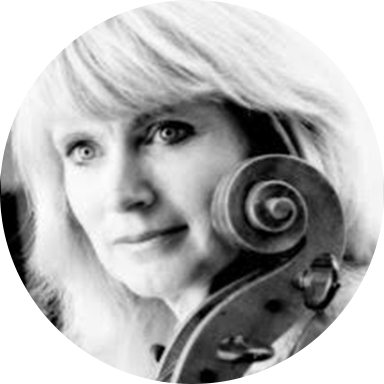
Carey Cheney

Carey Cheney brings three decades of cello performance and teaching to her work as a compiler and pedagogue. She has performed with major orchestras including the Austin Symphony, Utah Symphony, and Knoxville Chamber Orchestra, and spent years playing in university and chamber settings. Her deep involvement with the Suzuki community spans over two decades, during which she has led teacher training and enrichment courses across North America, Europe, Asia, Australia, and Latin America.

Cheney's scholarly focus on cello repertoire and pedagogy has shaped her ability to curate meaningful collections for young players. She has designed specialized courses on the Bach Suites, bowing styles, and supplementary repertoire for cellists, and continues to research both art music and pedagogical literature. The Solos for Young Cellists series represents the culmination of her quarter-century commitment to identifying and organizing music that builds technique while remaining musically engaging.

Why we love this

Cheney's hand-picked collection moves beyond generic "solos for young players" by offering real stepping stones to the standard cello repertoire alongside original works and newly published pieces. Each selection addresses specific technical and musical growth areas without sacrificing artistry, making this volume equally valuable whether students are preparing for festivals, auditions, or simply deepening their musicianship. The range of composers (Debussy, Fauré, Romberg, Popper) signals serious musical content written at a digestible level.

What to expect

This collection spans intimate character pieces, dance-like rhythmic movements, and songlike melodies that reflect a century of European cello writing. You'll move from the impressionistic textures of Debussy's Romance to the playful energy of Squire's pieces, then deepen into the lyric intensity of the Romberg sonata, discovering that technical growth doesn't require sacrificing musical substance.

Who it's for

Young cellists in the intermediate range who have solid facility in first position and are beginning to explore higher positions and varied musical styles. This book works equally well for private students building a performance portfolio and for ensemble players seeking solo repertoire that complements their group work. Teachers will find it essential for students preparing for solo festivals, competitions, or recitals.

How to get the most out of it

  • Prepare the Romberg sonata movement first as the centerpiece of your practice week; it demands the most sustained technical focus and will anchor your confidence for lighter character pieces.
  • Record yourself playing the shorter pieces like the Bourree and Harlequinade to monitor tone consistency across string crossings and position shifts, then move to the full program.
  • Work the Sicilienne and Serenade Basque for cantabile control before addressing the faster technical figures in the Humoresque and Fond Recollections.
  • Sing through the Romance and melodic lines in isolation to internalize phrasing before adding vibrato and dynamic shaping.

How to use it

Feature individual movements or complete shorter works on student recitals, mixing the Fauré and Debussy selections with the folk-inspired character pieces for a program that balances lyricism and personality. The Romberg sonata works as a substantial concert centerpiece for advanced students in the volume, while the lighter works fill chamber concert slots or serve as performance challenges during the school year. The Federation Festivals 2020-2024 selection designation makes these pieces ready-made options for competitive students.

Skills your students will build

  • Shifting between first and higher positions with smooth intonation
  • Vibrato control and expressive tone production in lyric passages
  • Bow distribution across varied musical textures and tempos
  • Reading in multiple keys and meters (3/4, 4/4, and mixed signatures)
  • Musical phrasing in multiple European styles (Romantic, French Impressionism, Spanish character music)
  • Technical figures including arpeggios, double stops, and rapid position changes
  • Ensemble awareness and rhythmic precision for sonata-form movements

You May Also Like