

Solo Xtreme, Book 2: 9 X-traordinary and Challenging Piano Pieces: Piano
9 X-traordinary and Challenging Piano Pieces
By Melody Bober
Level: Elementary / Late Elementary
Item: 00-PB-0000547
$8.99
Pickup currently not available
Related Items
Solo Xtreme, Book 2: Piano Book |
$8.99
|
View |
Description
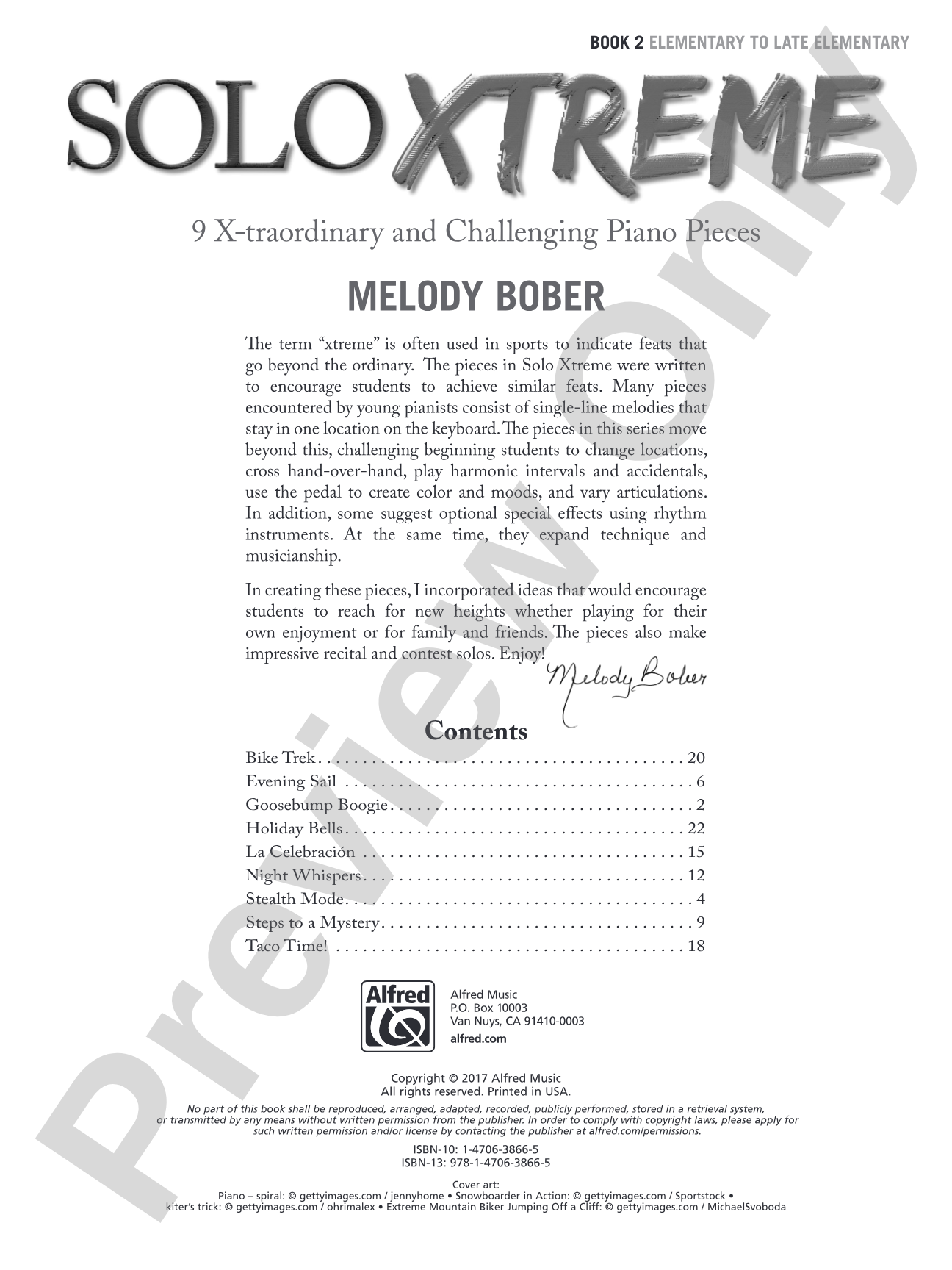
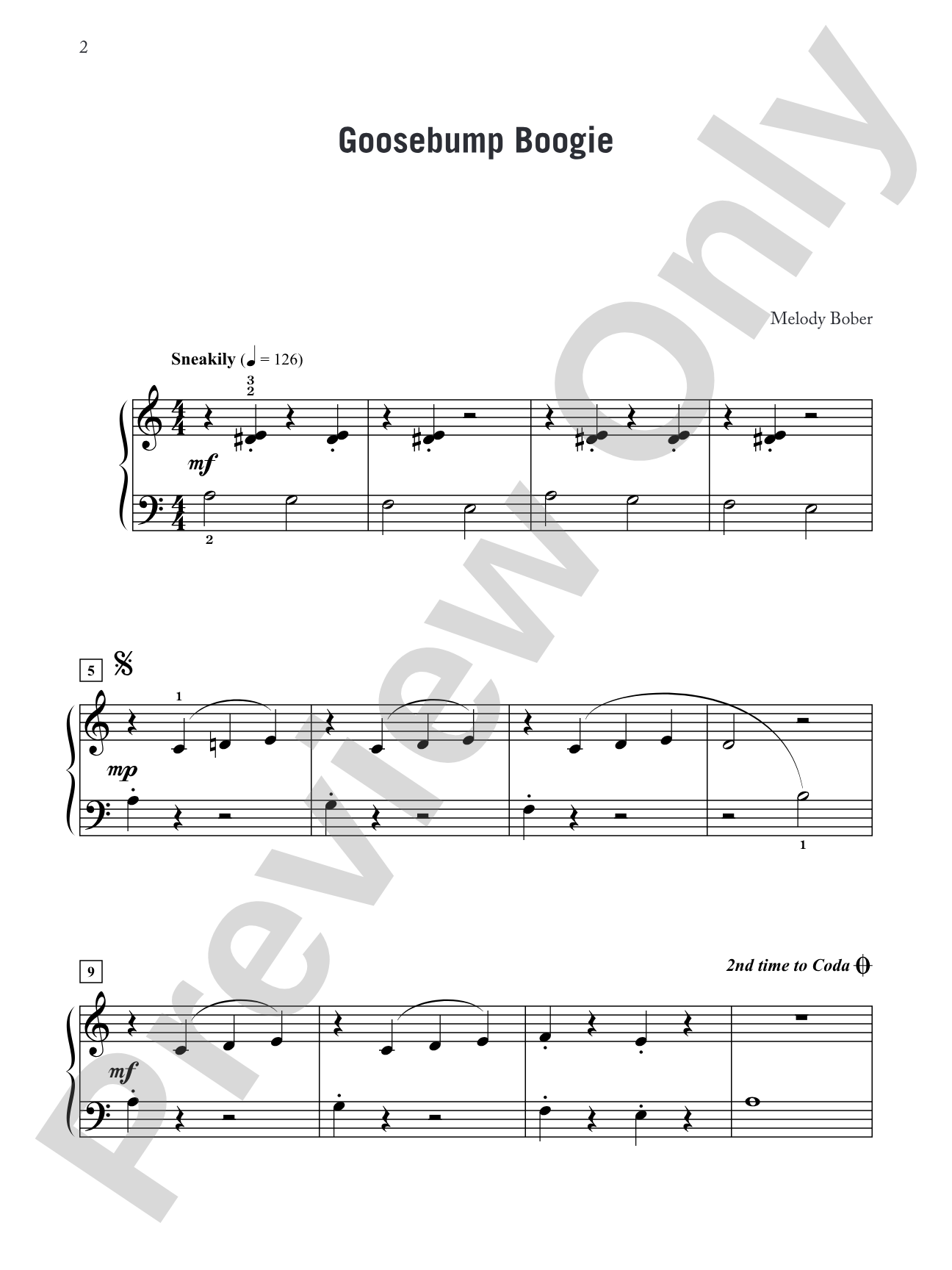
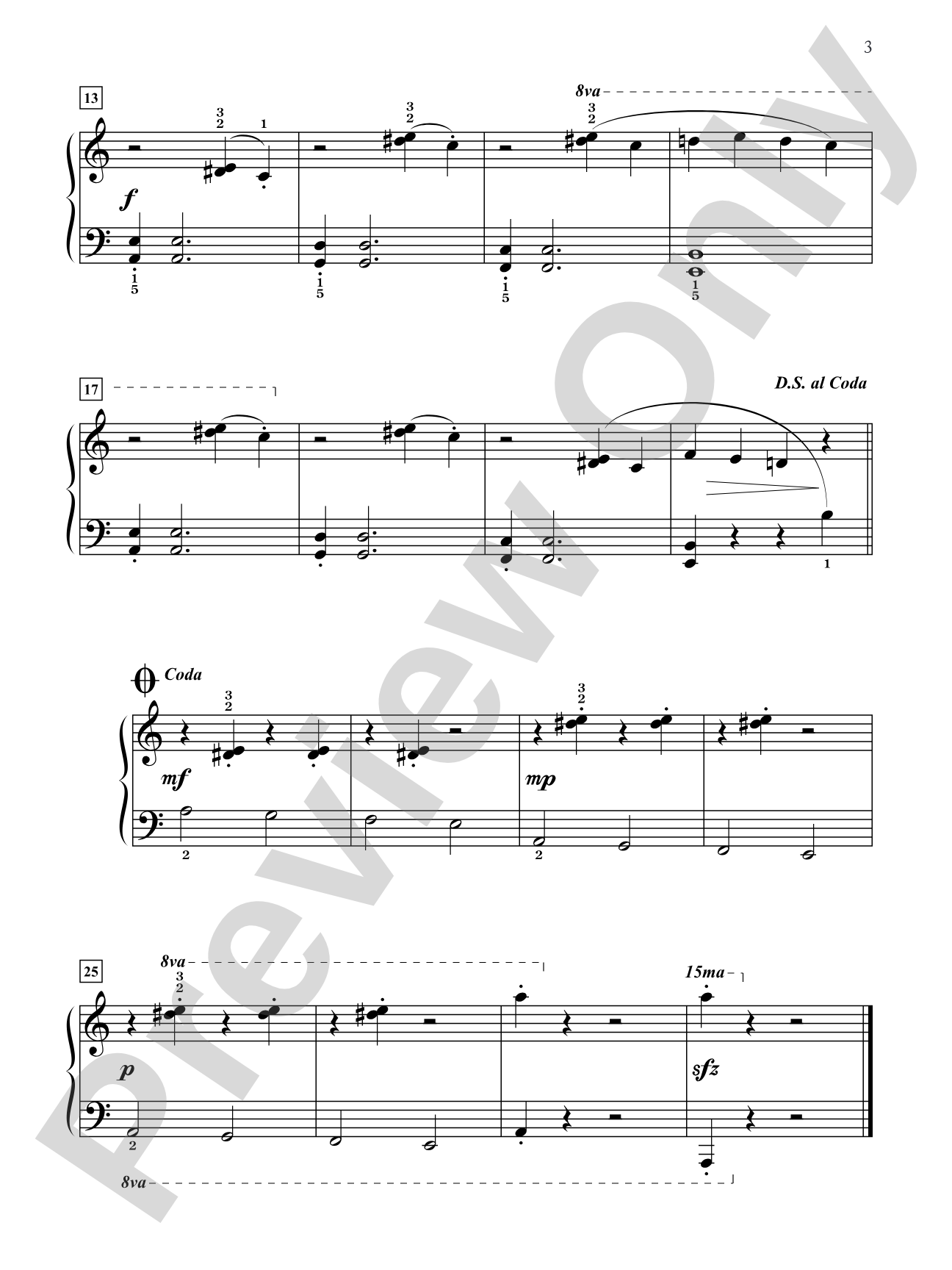
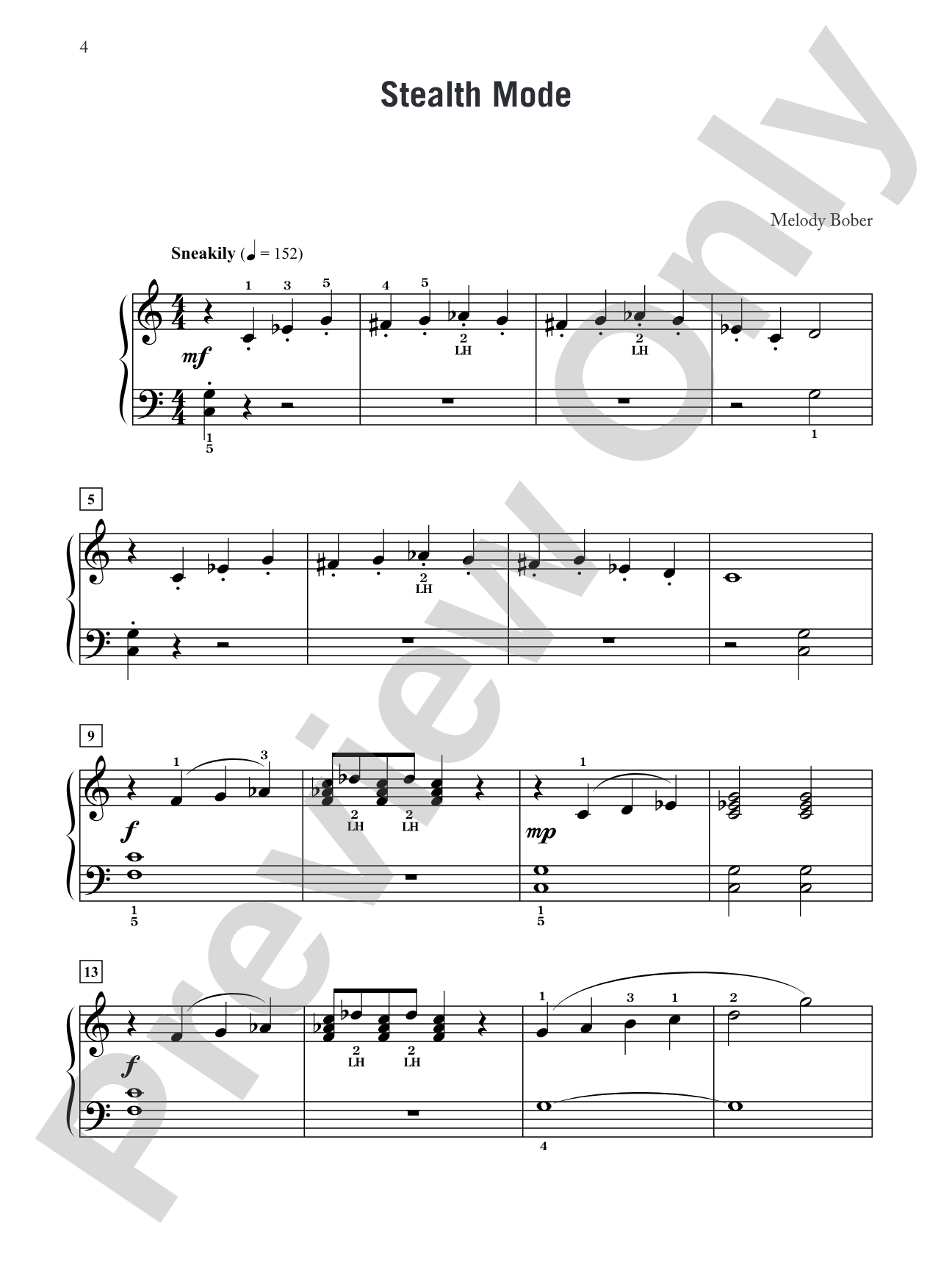
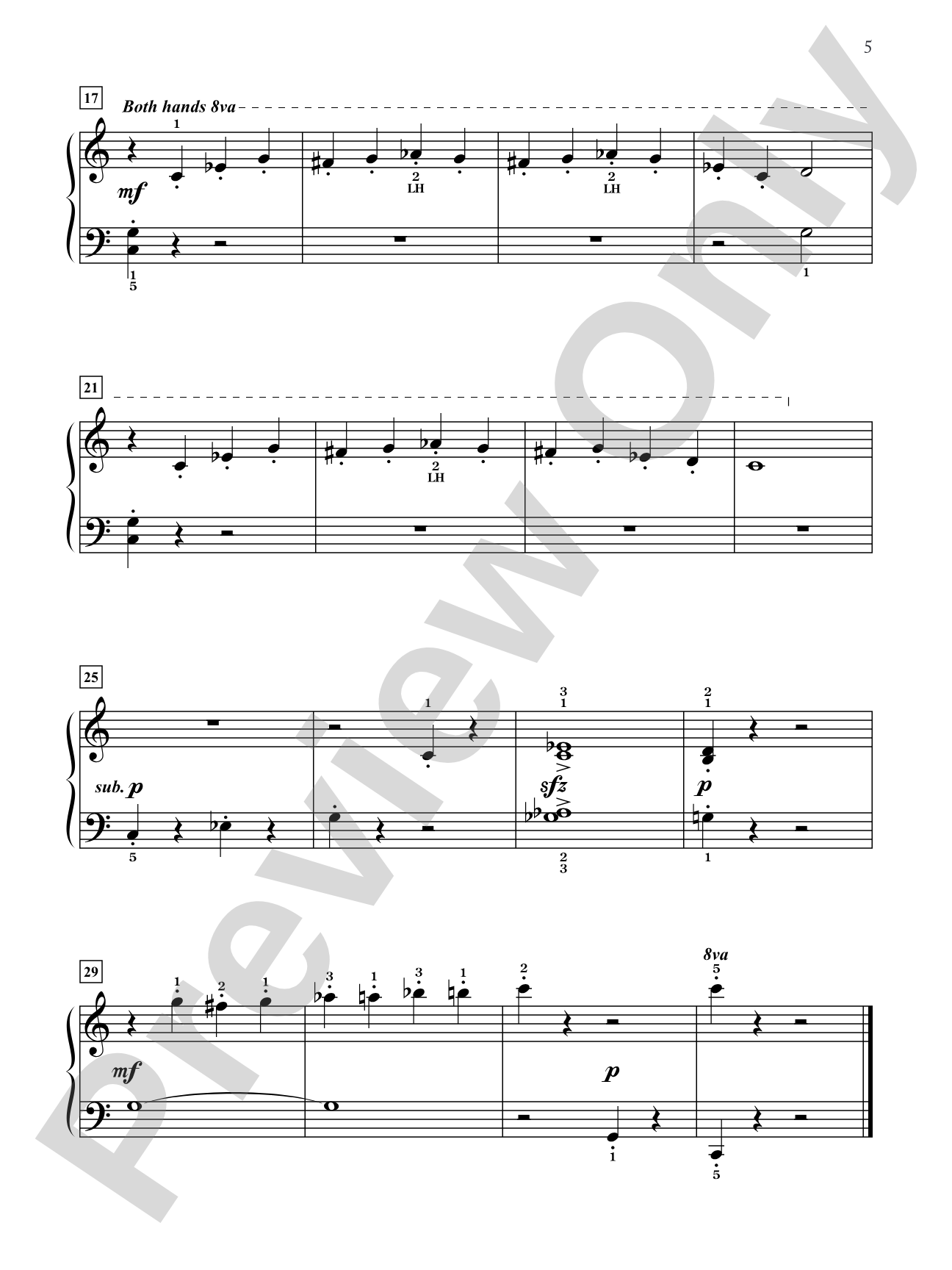
The term "xtreme" is often used in sports to indicate feats that go beyond the ordinary. The pieces in the Solo Xtreme series were written to encourage piano students to achieve similar feats. Pieces in this series move beyond single-line melodies that stay in one location, challenging students instead to move around the keyboard, cross hand-over-hand, use a variety of articulations, play harmonic intervals and accidentals, and use the pedal to create color and moods. At the same time, they expand technique and musicianship. Titles: Bike Trek * Evening Sail * Goosebump Boogie * Holiday Bells * La Celebración * Night Whispers * Stealth Mode * Steps to a Mystery * Taco Time! A Federation Festivals 2020-2024 selection. A Federation Festivals 2024-2028 selection.


Solo Xtreme, Book 2: 9 X-traordinary and Challenging Piano Pieces: Piano isn't in MakeMusic Cloud just yet...but it could be. Let us know you'd like to see it, and you'll help shape what comes next. In the meantime, start a free trial and dive into thousands of interactive titles your students can play along with today.
Request This Title
Tell us you want it.
Start Your Free Trial
Explore everything that's ready to play right now.
Sample Audio
No sample audio found.
Sample Video
No sample videos found.
Additional Details
Series:
Solo Xtreme
Publisher:
Alfred Music
Page Count:
24
SKU:
00-PB-0000547
More about this title
About the Composer: Melody Bober

Melody Bober brings two decades of public school teaching experience into her compositions, understanding precisely what motivates young pianists to practice and perform. She earned her bachelor's degree in music education from the University of Illinois at Champaign-Urbana and completed a master's degree in piano performance at Minnesota State University, Moorhead, studying under influential mentors including Joel Shapiro and Andrew Froelich.
Beyond her private studio in Minnesota, Bober serves as an active church musician and maintains a reputation as a sought-after clinician at conventions and workshops throughout North America. Her teaching perspective spans public schools, university-level instruction, and church music direction, all of which inform her gift for writing pieces that challenge students while remaining genuinely enjoyable to learn and perform.
Why we love this
Bober refuses to let late elementary pianists coast into recitals with predictable single-line pieces. These nine works demand real musical problem-solving: hand-over-hand crossings that build confidence on a full keyboard, harmonic thinking beyond block chords, and pedal work that transforms the sound rather than just dampening it. The themed titles and accessible musicianship make these pieces ones students actually want to master.
What to expect
These pieces sparkle with personality. Titles like Goosebump Boogie and Taco Time signal music that entertains and engages rather than intimidates. The writing moves fluidly across the keyboard with unexpected harmonic colors and satisfying rhythmic textures that reward careful listening.
Who it's for
Late elementary pianists who have outgrown static pieces but need writing that respects their current technical limits. Teachers preparing recital programs that showcase genuine growth in keyboard navigation, pedal technique, and musical interpretation.
How to get the most out of it
- Map out hand position shifts before learning the notes. Many of these pieces require crossing the hands, so marking where each hand 'lives' on the staff prevents hesitation during performance.
- Experiment with the pedal during early rehearsals rather than adding it as an afterthought. The color and mood Bober creates with the sustain pedal are central to the piece, not optional embellishment.
- Slow the tempo enough to nail articulation changes cleanly. The variety of attack and release across these pieces becomes a liability if players rush through the technical shifts.
- Record yourself playing through the entire collection. Hearing the breadth of musical characters in sequence builds a stronger sense of what you've learned across the book.
How to use it
Build a recital around this collection as a complete arc, pairing the more energetic pieces (Bike Trek, Taco Time) with introspective ones (Night Whispers, Steps to a Mystery) to create programming variety. Solo Xtreme Book 2 is Federation Festivals approved for both 2020-2024 and 2024-2028 selections, making it ideal for students preparing for competitive festival performance.
Skills your students will build
- Hand-over-hand crossing and keyboard navigation across the full staff
- Pedal control for color and mood creation rather than noise reduction
- Harmonic interval recognition and playing (moving beyond single-line melodies)
- Articulation variety and rapid changes in attack and release
- Reading and executing accidentals and altered harmony
- Dynamic shaping and phrasing over longer musical phrases