

Solo Xtreme, Book 1: 9 X-traordinary and Challenging Piano Pieces: Piano
9 X-traordinary and Challenging Piano Pieces
By Melody Bober
Level: Early Elementary / Elementary
Item: 00-PB-0000546
$8.99
Pickup currently not available
Related Items
Solo Xtreme, Book 1: Piano Book |
$8.99
|
View |
Description
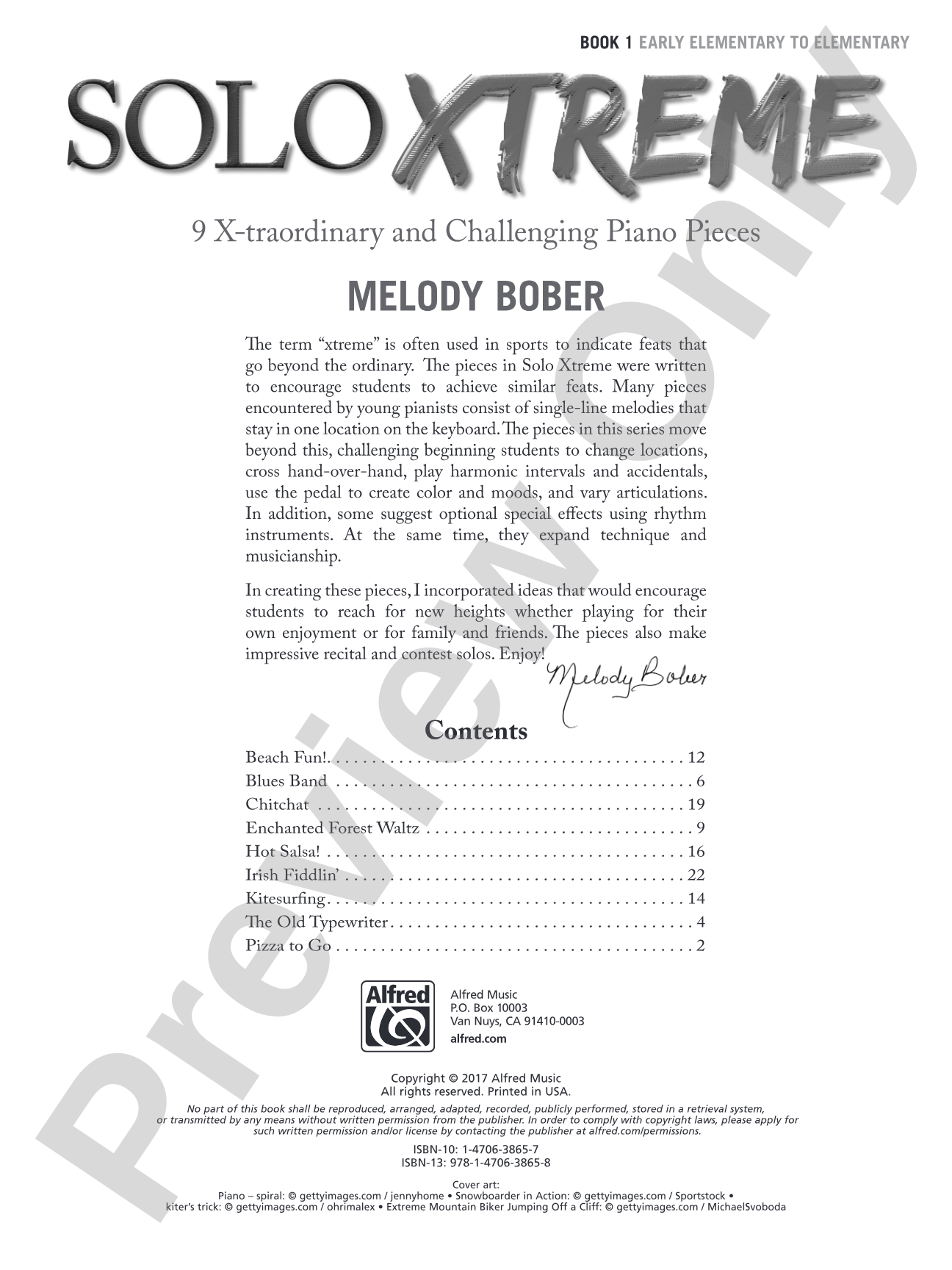
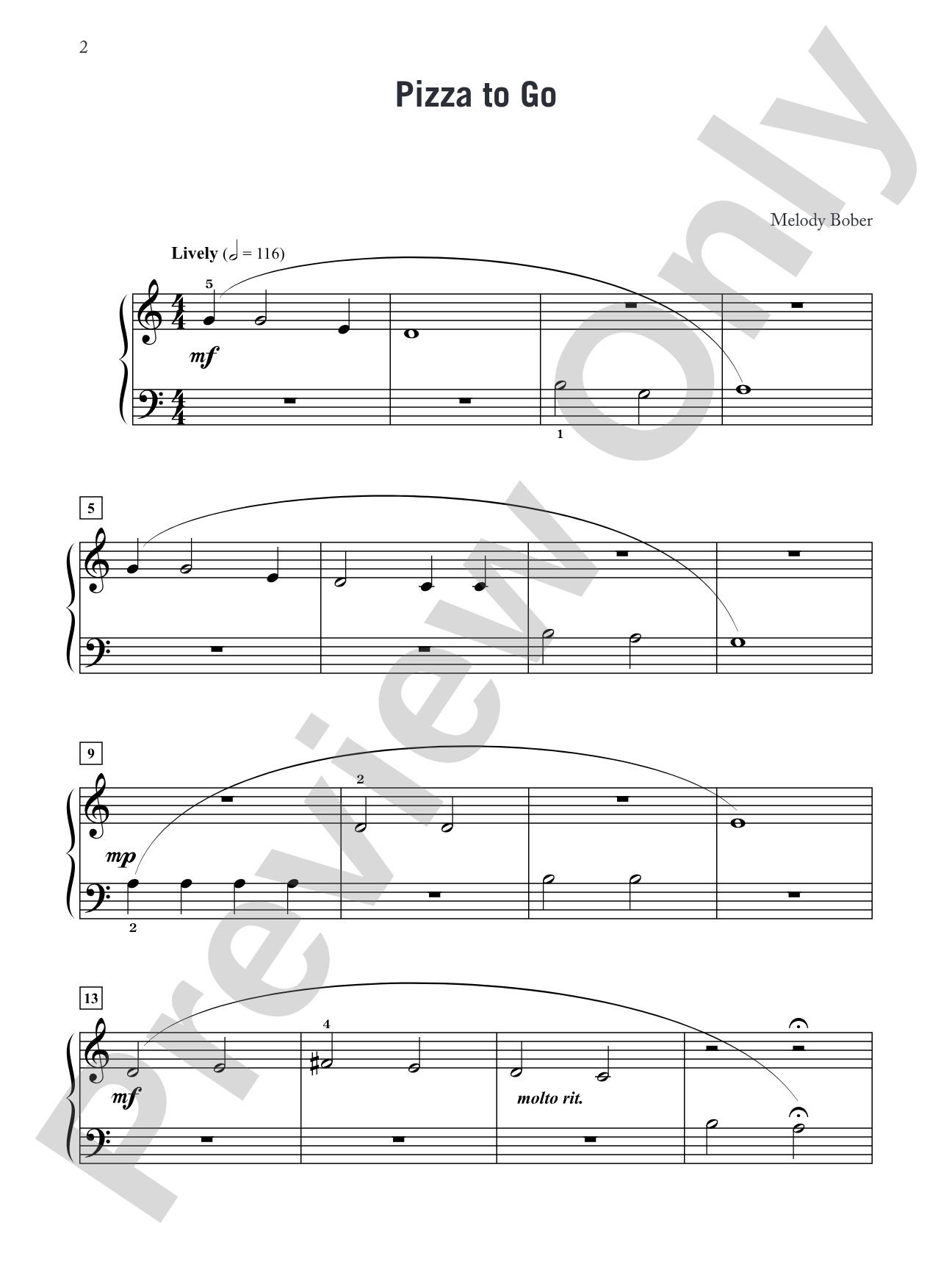
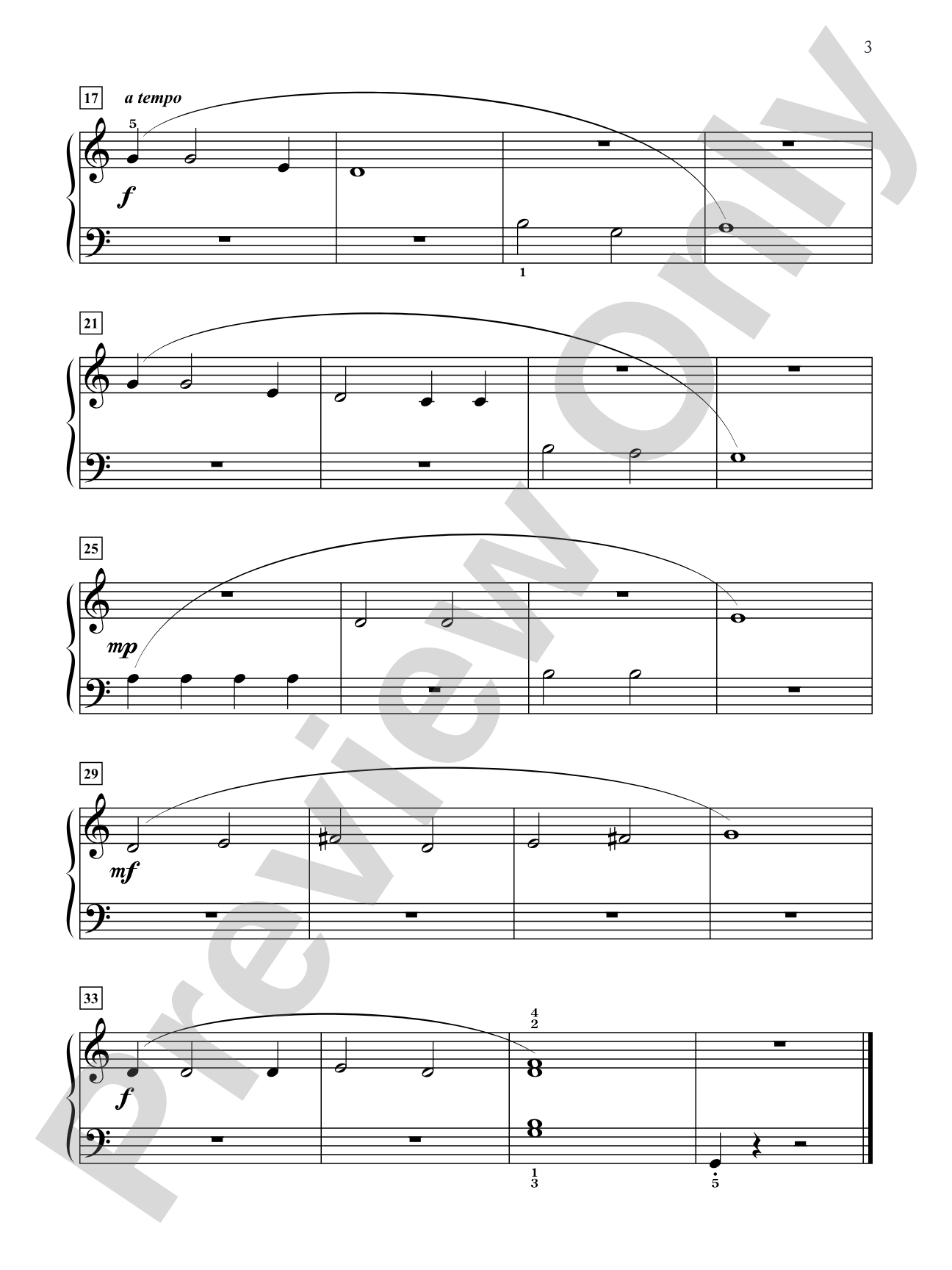
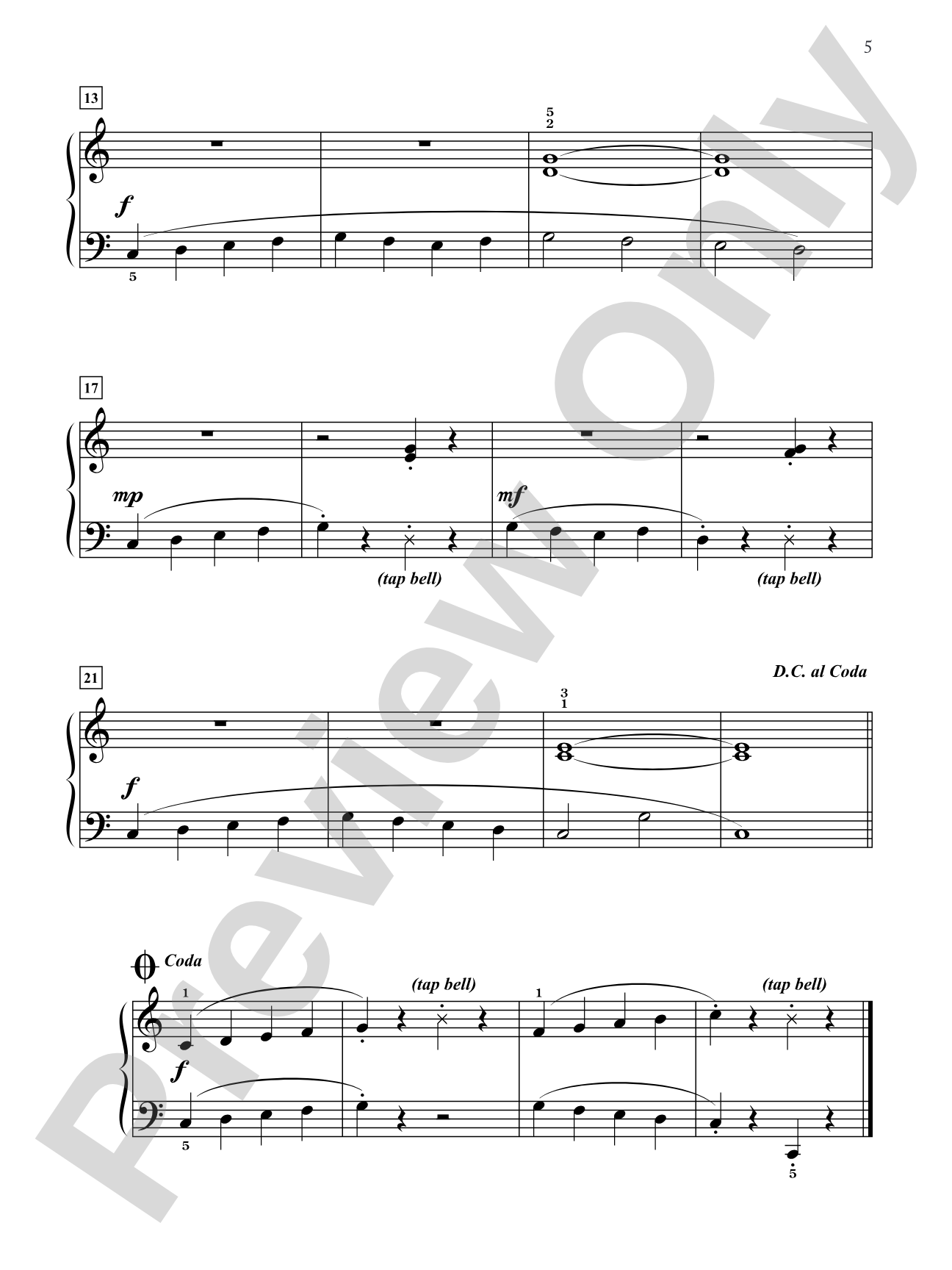
The term "xtreme" is often used in sports to indicate feats that go beyond the ordinary. The pieces in the Solo Xtreme series were written to encourage piano students to achieve similar feats. Pieces in this series move beyond single-line melodies that stay in one location, challenging students instead to move around the keyboard, cross hand-over-hand, use a variety of articulations, play harmonic intervals and accidentals, and use the pedal to create color and moods. At the same time, they expand technique and musicianship. Titles: Beach Fun! * Blues Band * Chitchat * Enchanted Forest Waltz * Hot Salsa! * Irish Fiddlin' * Kitesurfing * The Old Typewriter * Pizza to Go. A Federation Festivals 2020-2024 selection. A Federation Festivals 2024-2028 selection.


Solo Xtreme, Book 1: 9 X-traordinary and Challenging Piano Pieces: Piano isn't in MakeMusic Cloud just yet...but it could be. Let us know you'd like to see it, and you'll help shape what comes next. In the meantime, start a free trial and dive into thousands of interactive titles your students can play along with today.
Request This Title
Tell us you want it.
Start Your Free Trial
Explore everything that's ready to play right now.
Sample Audio
No sample audio found.
Sample Video
No sample videos found.
Additional Details
Series:
Solo Xtreme
Publisher:
Alfred Music
Page Count:
24
SKU:
00-PB-0000546
More about this title
About the Composer: Melody Bober

Melody Bober holds degrees in music education from the University of Illinois at Champaign-Urbana and piano performance from Minnesota State University, Moorhead. Her teaching spans two decades in public schools, university instruction, and a thriving private studio, complemented by active work as a church pianist and music director. She studied with renowned pedagogues including Joel Shapiro and Andrew Froelich on piano, Mary Hoffman in music education, and Tony Caramia in jazz.
Bober's reputation as both a clinician and composer has made her a sought-after presenter at piano teacher conventions and workshops throughout North America. Her pieces consistently appear on festival selection lists because they balance technical challenge with genuine musicality, reflecting her deep understanding of what motivates student musicians to grow.
Why we love this
Bober resists the urge to dress up elementary technique in simple arrangements of familiar tunes. Instead, these nine pieces give students real musical situations to navigate: hand crossings, pedal work that shapes atmosphere, harmonic texture, and the freedom to move across the full keyboard. You get early-level students who feel accomplished because they're solving actual musical problems.
What to expect
These pieces sparkle with personality. From the beach energy of opening tracks to the contemplative shimmer of 'Enchanted Forest Waltz,' each one creates a complete musical world despite its modest scope. You hear colorful harmonics, rhythmic vitality, and genuine care for how young hands discover the keyboard.
Who it's for
Early elementary pianists ready to move beyond one-hand-at-a-time pieces and confined positions. Students need basic rhythmic fluency and reading skills but benefit from pieces that push spatial awareness and textural thinking rather than speed or large leaps.
How to get the most out of it
- Map out hand crossings in advance. Mark them in the score so crossover moments become deliberate musical events, not fumbles.
- Explore the pedal gradually. Start by understanding which sonorities Bober wants to blur, then work backward to find the precise moment of engagement and release.
- Let articulation variety breathe. The mix of legato, staccato, and accented notes defines each piece's character; practice them as intentional choices rather than technical decorations.
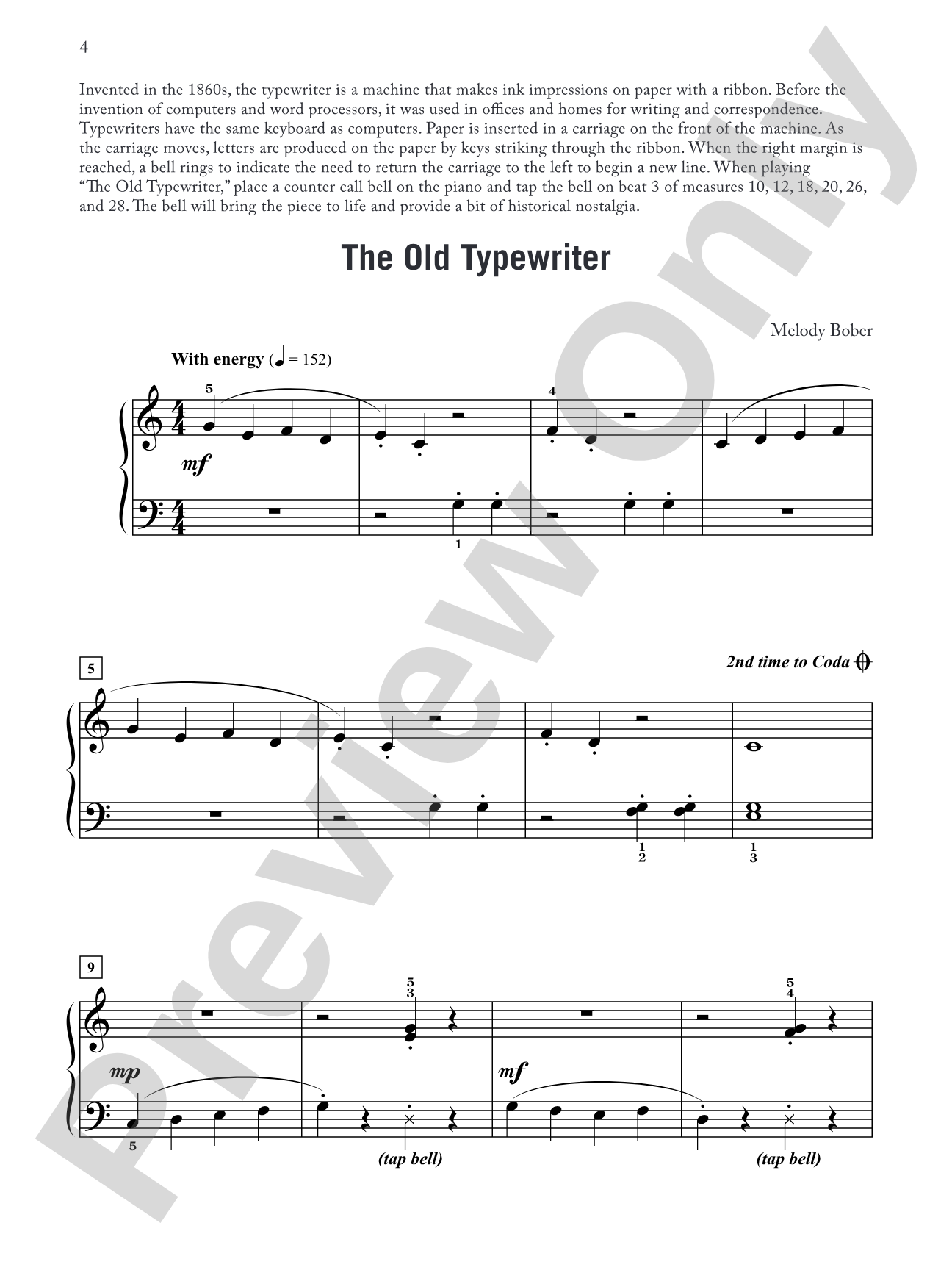
- Listen to how title concepts shape the musical gestures. 'The Old Typewriter' needs rhythmic precision; 'Enchanted Forest Waltz' needs rubato and space.
How to use it
Build a recital around three or four of these pieces to showcase range without fatigue. They work equally well as standalone festival entries (both NFMC selections listed) or as contrasting items that demonstrate a student's versatility and musicality. Early in the year, use them to diagnose who's ready for hand independence; later, select them as confidence-builders before more demanding repertoire.
Skills your students will build
- Hand-over-hand crossing and coordination
- Pedal technique and tone color differentiation
- Reading and executing articulation variety (legato, staccato, accent)
- Playing harmonic intervals and recognizing chromatic inflection
- Spatial navigation across the keyboard beyond single-position playing
- Interpreting character and mood through musical gestures