Solo Flight (for Time to Begin, Part 1) Cover Image

Solo Flight (for Time to Begin, Part 1): Piano Book

$5.99 USD
Sale price  $5.99 USD Regular price 
Skip to product information
Solo Flight (for Time to Begin, Part 1) Cover Image

Solo Flight (for Time to Begin, Part 1): Piano Book

16 Solos for the Beginning Pianist

By Elvina Pearce

Item: 00-1018X

$5.99
Shipped

One moment…

Description
Very first solos for the beginner, many written as rote pieces on a "ghosted" staff. Rich, appealing music that uses the entire keyboard, wide dynamic range and pedal. Satisfying to play, yet easy to learn. The first pieces can be used as supplementary material for Time to Begin, Part 1.

Solo Flight (for Time to Begin, Part 1): Piano Book isn't in MakeMusic Cloud just yet...but it could be. Let us know you'd like to see it, and you'll help shape what comes next. In the meantime, start a free trial and dive into thousands of interactive titles your students can play along with today.

Sample Pages

Sample Audio
No sample audio found.
Sample Video
Additional Details
Publisher: Alfred Music
Page Count: 16
ISBN10: 0-913277-18-5
ISBN13: 978-0-913277-18-8
UPC: 029156659955
SKU: 00-1018X

More about this title

About the Composer: Elvina Pearce
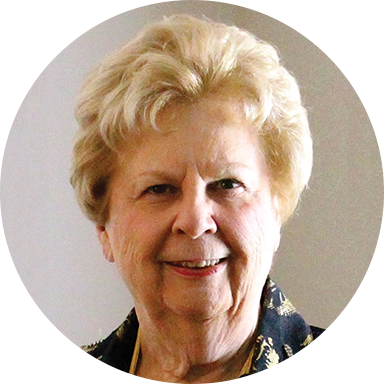
Elvina Pearce

Elvina Pearce trained under Isabelle Vengerova in New York, studying alongside future luminaries like Samuel Barber and Leonard Bernstein. She also apprenticed with Frances Clark in pedagogy, later co-founding the New School for Music Study and the Frances Center for Keyboard Pedagogy in Princeton. For fourteen years she taught piano and pedagogy at Northwestern University, and served as Editor-in-Chief of Keyboard Companion Magazine from 2000 to 2006.

Her performance résumé includes the Liszt Concerto in E-flat with the Chicago Symphony, plus solo recitals at Carnegie Recital Hall and the National Gallery of Art. She has presented workshops across more than 40 states and internationally in Canada, Taiwan, and Australia. As a composer, Pearce has published over 25 collections of piano music and authored the influential teaching text "The Success Factor in Piano Teaching: Making Practice Perfect." In 2011, she received the Lifetime Achievement Award from the National Conference on Keyboard Pedagogy for her fifty-plus years of service to music education.

Why we love this

These pieces marry genuine musicality with appropriate technical demands for students making their first steps at the keyboard. The use of ghosted staves removes the cognitive load of note reading while allowing early learners to focus entirely on touch, phrasing, and the physical experience of music-making. Pearce's command of dynamic range and pedal work means even the easiest pieces sound and feel professional when performed.

What to expect

Accessible and satisfying. The music breathes with genuine character, wide dynamics and full keyboard usage create a sense of discovery and breadth that keeps early learners engaged. Despite their simplicity, these pieces never sound thin or patronizing.

Who it's for

Teachers introducing young students to solo piano literature alongside or just after Time to Begin, Part 1. These pieces work for students who have basic keyboard orientation but are not yet confident with traditional staff notation.

How to get the most out of it

  • Map out the hand positions before introducing the rote learning element; even ghosted staves benefit from understanding where the body sits at the instrument.
  • Encourage students to listen to how the pedal sustains and blends tones, experimenting with half-pedal and full pedal changes to hear the difference.
  • Shape phrases with the dynamic markings as written; resist the urge to play everything evenly just because the piece is beginner-level.

How to use it

Assign these as supplementary solos within the Time to Begin curriculum, or feature individual pieces on recitals where young students deserve performance vehicles that sound polished without requiring years of technique. They also work well as rewards when students complete a particular unit of study.

Skills your students will build

  • Rote learning from ghosted staves (reading without staff notation)
  • Dynamic shaping across a wide range (pp to ff)
  • Basic pedal technique and listening for sustain
  • Hand position and keyboard geography across the full range
  • Phrasing and musical line in short-form compositions

You May Also Like