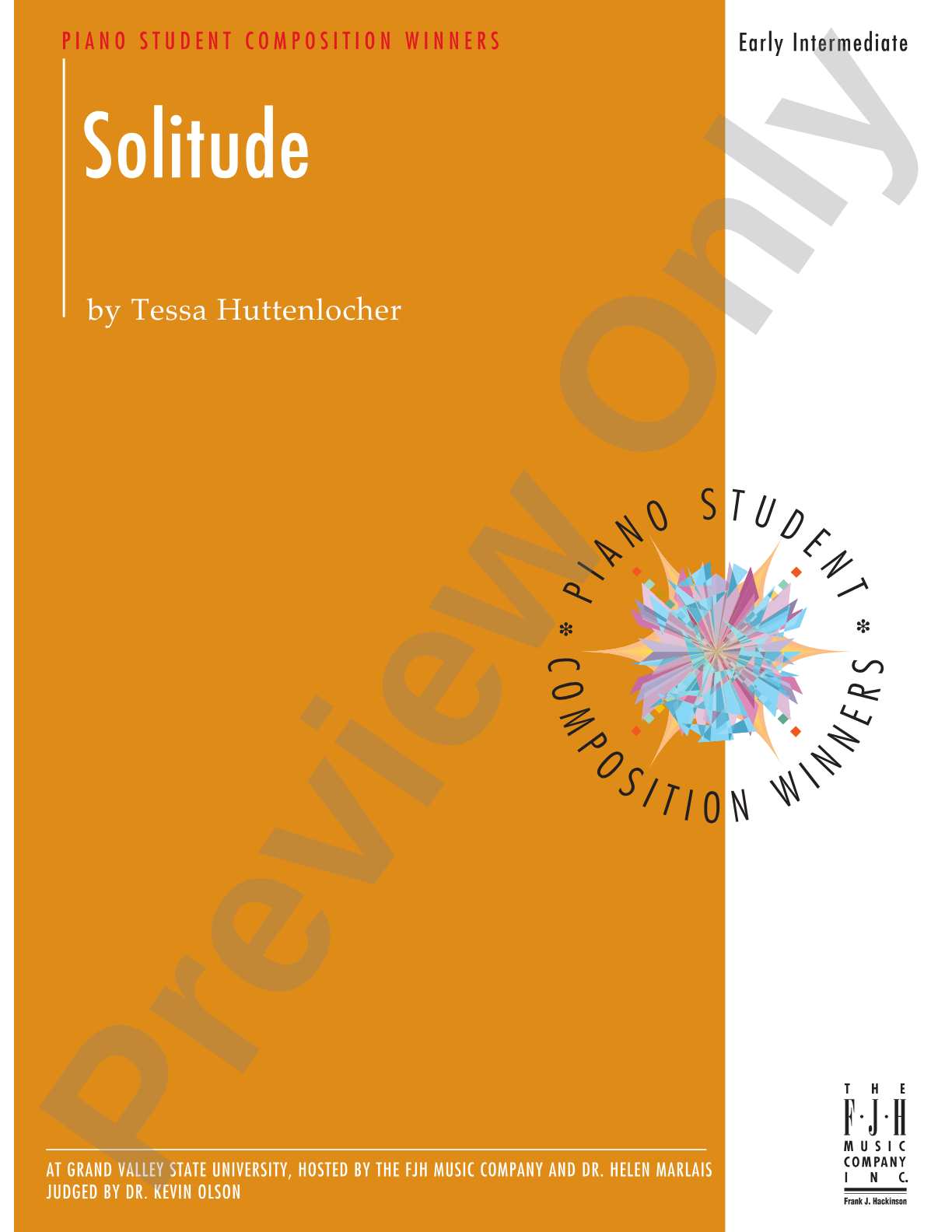
This reflective piece captures Solitude simply and eloquently. The four-measure melodic theme travels lightly and somberly in A minor. The L.H. lends support with arpeggiated, chordal 10ths. Plenty of room for the student to explore melodic expression through articulation and dynamics.
Discover MakeMusic Cloud: thousands of interactive titles your students can play along with today.
Huttenlocher understands how to write for developing pianists without resorting to empty gestures. The A minor tonality feels genuine, not imposed, and the four-measure phrase gives students something substantial to shape without overwhelming them. This is the kind of piece that teaches restraint and intention.
What to expect
A quiet moment of reflection captured in sound. The melody floats with a slight heaviness, neither cheerful nor despairing, while the left hand's steady arpeggios provide a gentle foundation. There's intimacy here, the kind that asks listeners to sit still and listen closely.
Who it's for
Intermediate and early intermediate pianists ready to move beyond technical exercises into genuine musical expression. This piece works well for students who respond to introspection and benefit from exploring how small choices in phrasing and touch reshape meaning.
How to get the most out of it
Shape the melodic line with subtle dynamic swells that follow the contour of each phrase; avoid sudden changes that interrupt the piece's contemplative mood.
Let the left-hand arpeggiated tenths breathe. They're not accompaniment window dressing; they anchor the emotional weight of the piece.
Experiment with how articulation (legato, gentle staccato, portato) changes the character of the main theme across repetitions.
Find a tempo that allows the melody to unfold naturally without rushing; solitude requires space to exist.
How to use it
This fits naturally into a recital program as a palate-cleansing solo between larger or more extroverted pieces. It also serves as a thoughtful addition to a student showcase or competition where you want to demonstrate emotional maturity alongside technical skill. Consider pairing it with contrasting works to highlight its understated character.
Skills your students will build
Sustaining phrases across register changes while maintaining harmonic support
Dynamic shaping of a simple melodic idea across multiple iterations
Left-hand independence in broken-chord textures
Expressive articulation choices as a tool for reinterpreting a theme
You May Also Like
Scan to Complete Your Purchase
Use your phone's camera to scan the code below
You'll log in on your phone and the order will be added to your account