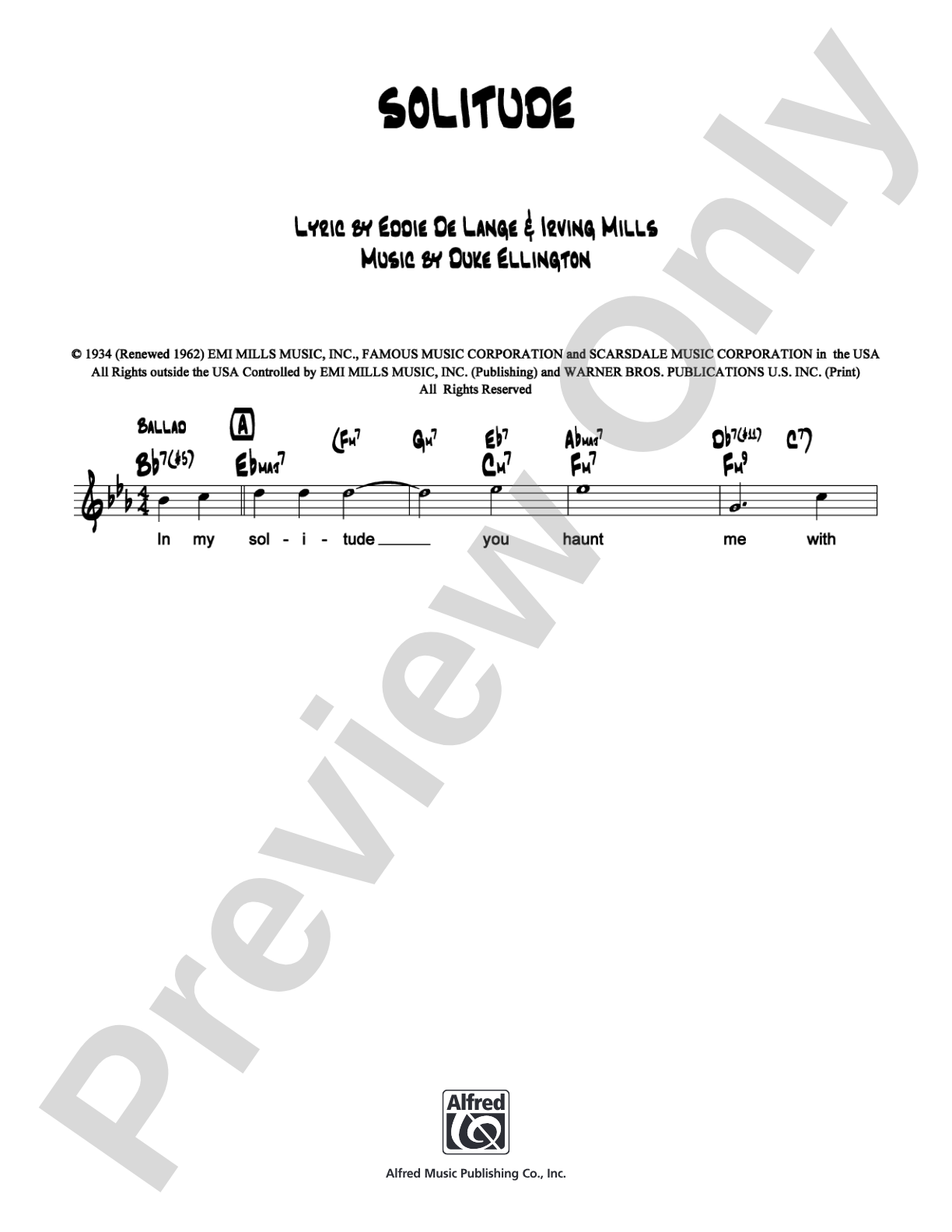
Solitude: Lead Sheet Digital Sheet Music

Solitude: Lead Sheet Digital Sheet Music

Duke Ellington, Ella Fitzgerald

Item: 00-PS-0007625

Digital Download
$1.99
Description

Solitude: Lead Sheet Digital Sheet Music isn't in MakeMusic Cloud just yet...but it could be. Let us know you'd like to see it, and you'll help shape what comes next. In the meantime, start a free trial and dive into thousands of interactive titles your students can play along with today.

Sample Audio
No sample audio found.
Sample Video
Additional Details
SKU: 00-PS-0007625

More about this title

About the Artist: Ella Fitzgerald

Ella Fitzgerald (1917–1996) was a jazz vocalist whose technical command and interpretive depth set the standard for American popular song. Her voice spanned nearly three octaves, and her ability to swing a phrase while maintaining pristine intonation made her an essential interpreter of the Great American Songbook.

Fitzgerald's decades-long partnership with Duke Ellington produced some of jazz's most enduring recordings. Her work on standards like "Solitude" demonstrates why she remains a foundational figure in jazz education—her phrasing choices, harmonic awareness, and emotional restraint offer clear lessons in how to inhabit a song with authenticity.

Why we love this

This lead sheet captures one of the most beautifully restrained jazz vocals in the repertoire. Fitzgerald's approach to "Solitude" emphasizes space and restraint rather than display, making it an ideal study in melodic economy and harmonic sensitivity for singers working to move beyond showiness into genuine interpretation.

What to expect

A quiet conversation rather than a performance. The melody floats over warm, contemplative harmony, creating space for the accompanist to listen and respond rather than simply fill every beat. The overall effect is one of vulnerability and clear-eyed acceptance.

Who it's for

Jazz singers developing interpretive skills through the standard repertoire will find this lead sheet essential. Pianists and guitarists accompanying singers benefit equally, as understanding Fitzgerald's melodic choices illuminates how to voice the changes and support the lyrical line.

How to get the most out of it

  • Study how Fitzgerald allows silence to speak. The melody lies relatively low in her range on this standard; resist the urge to transpose or reach for higher notes when the original placement carries more emotional weight.
  • Listen closely to her rhythm section choices on original recordings. The comping patterns and bass movement will reveal how much harmonic flexibility exists within the changes; use that knowledge to inform your own accompaniment.
  • Shape the bridge with a slight dynamic lift without losing the overall introspective quality. The harmonic movement deserves attention, but the mood remains intimate throughout.

How to use it

Feature this in a jazz vocal recital or standards showcase where you're exploring how different artists interpret the same tune. Pairing it alongside interpretations by other singers reveals how deeply understanding a song's architecture allows for personal expression within tradition.

Skills your students will build

  • Interpreting silence and space as compositional elements
  • Reading and navigating jazz chord changes
  • Balancing lyrical phrasing with harmonic awareness
  • Understanding how less can be more emotionally

You May Also Like