
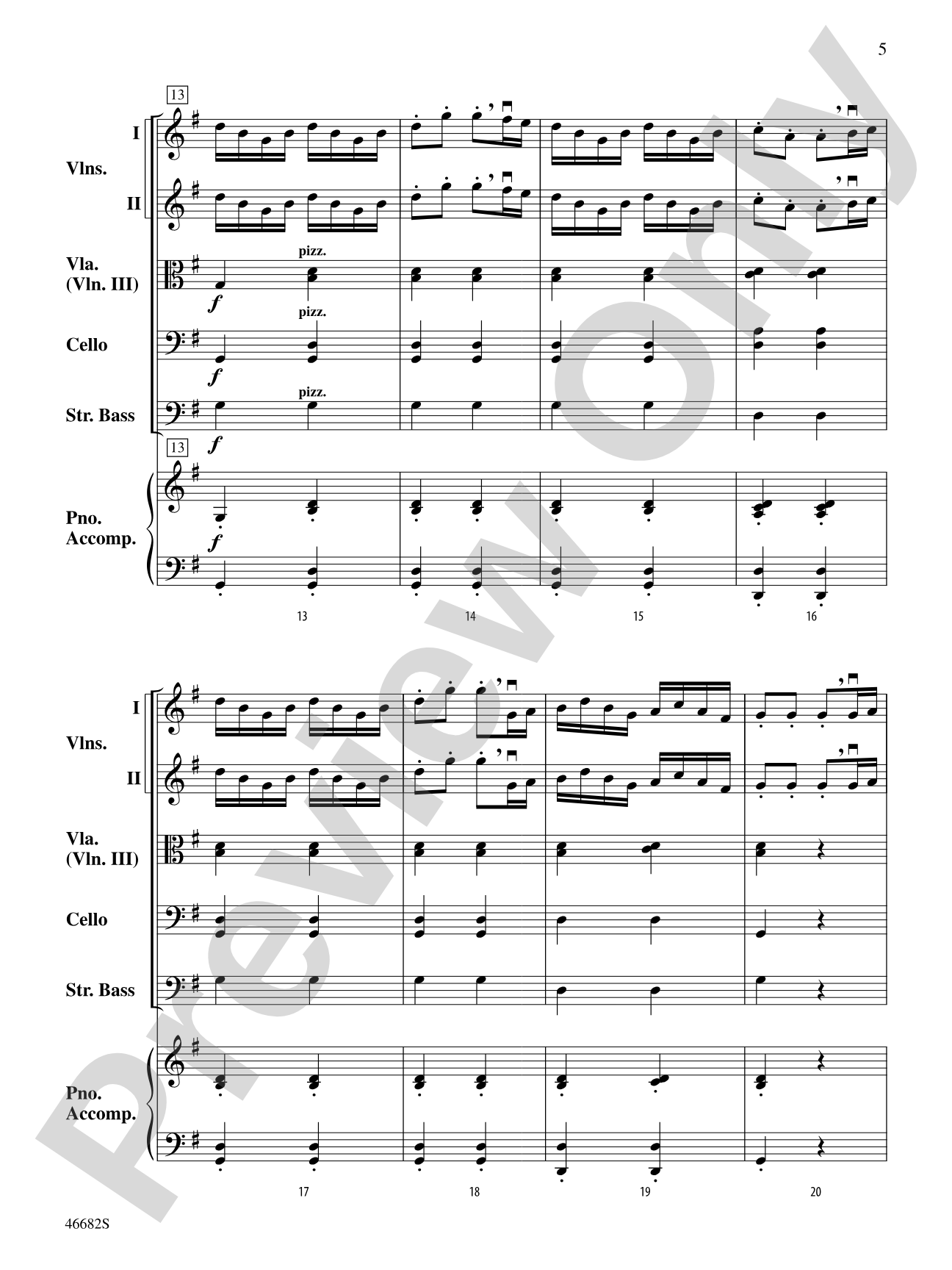
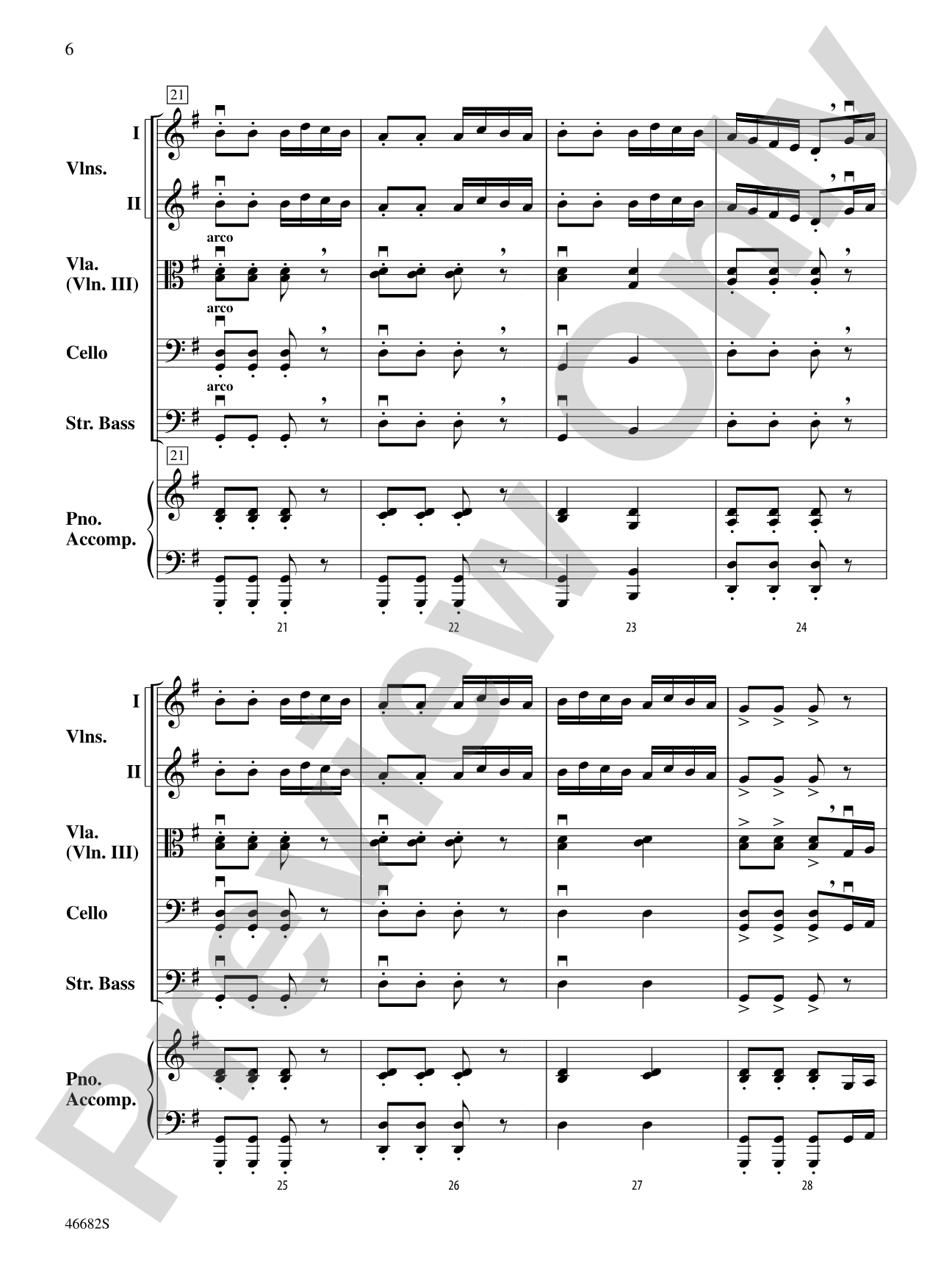
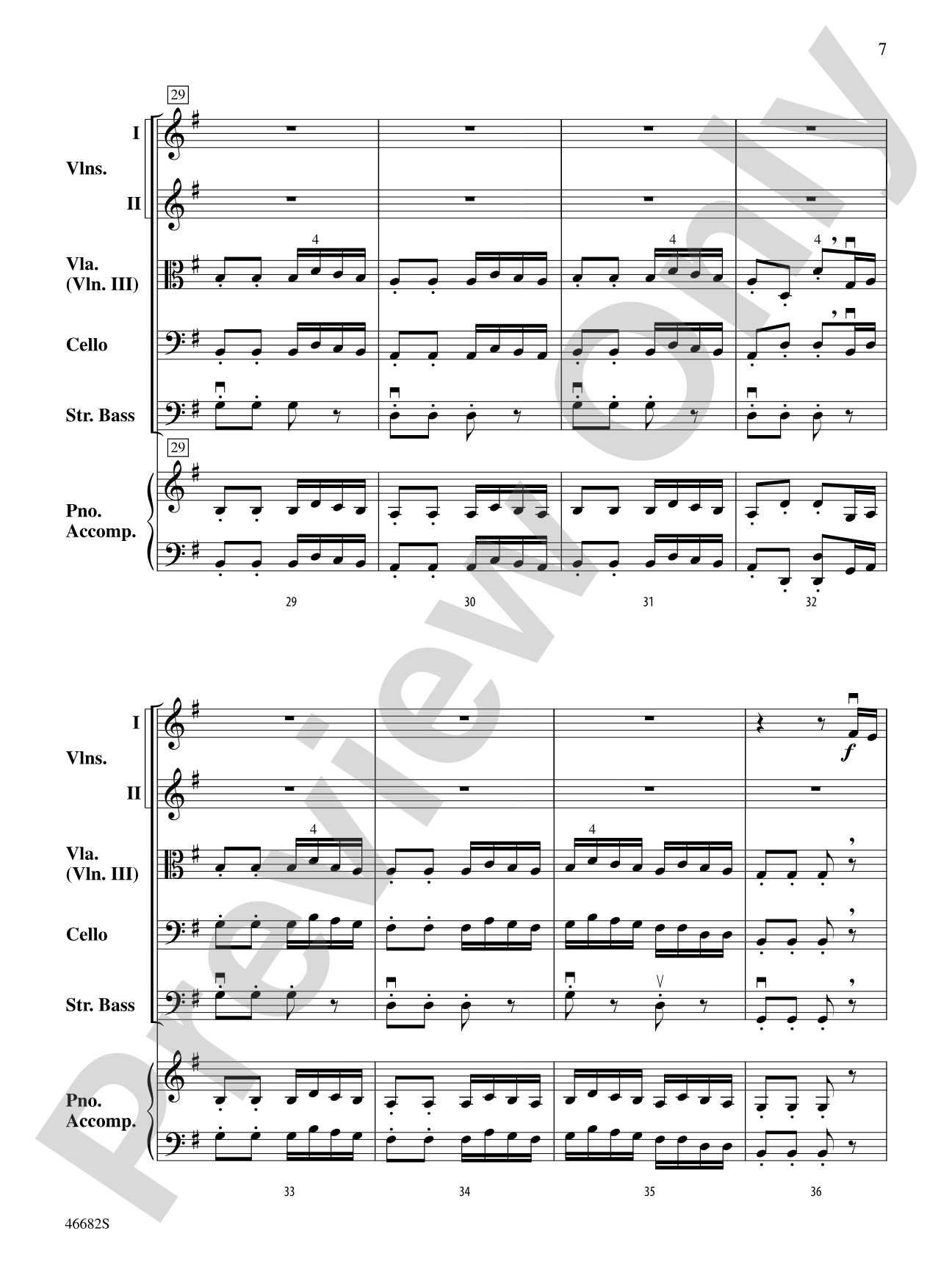
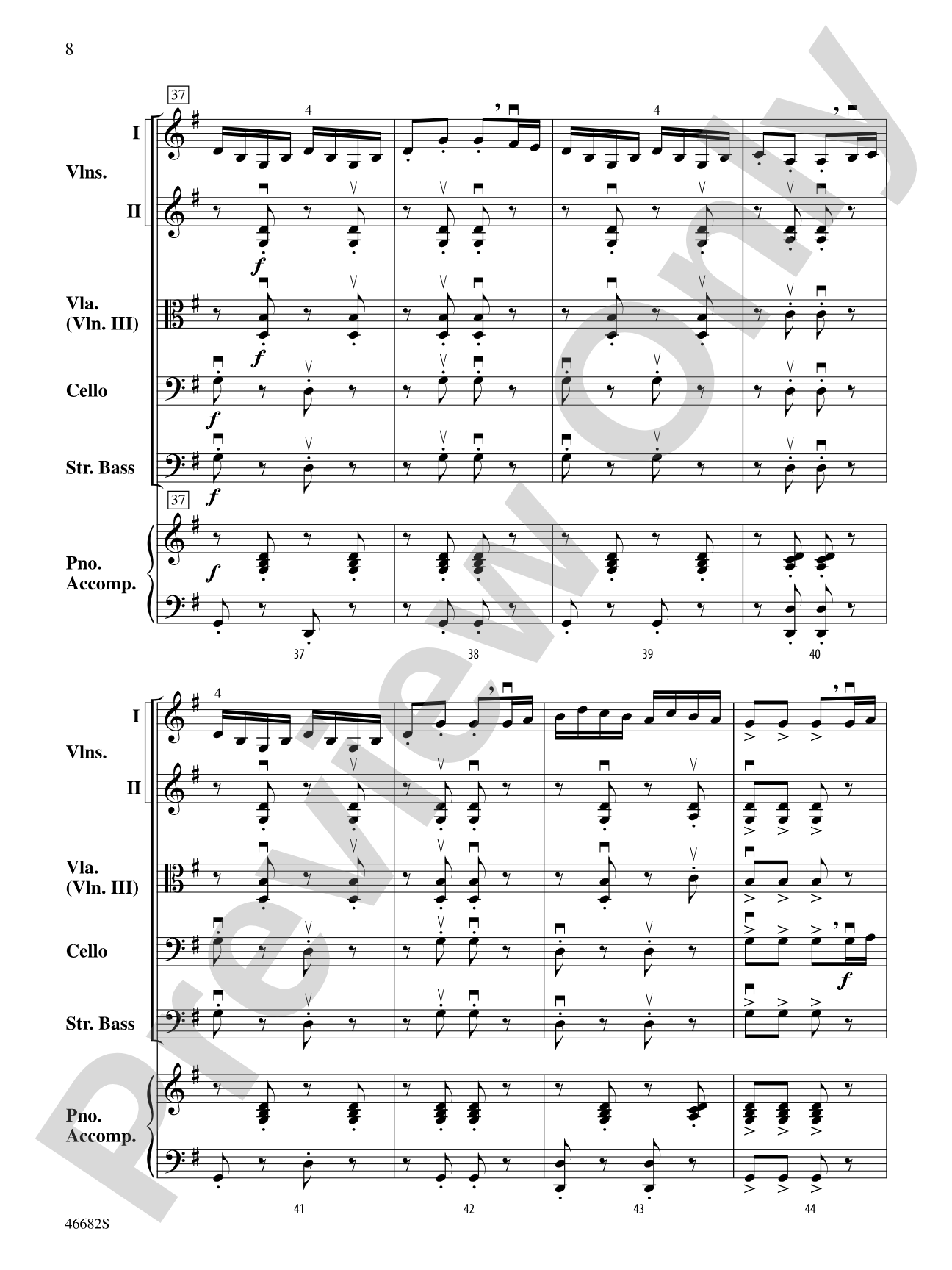
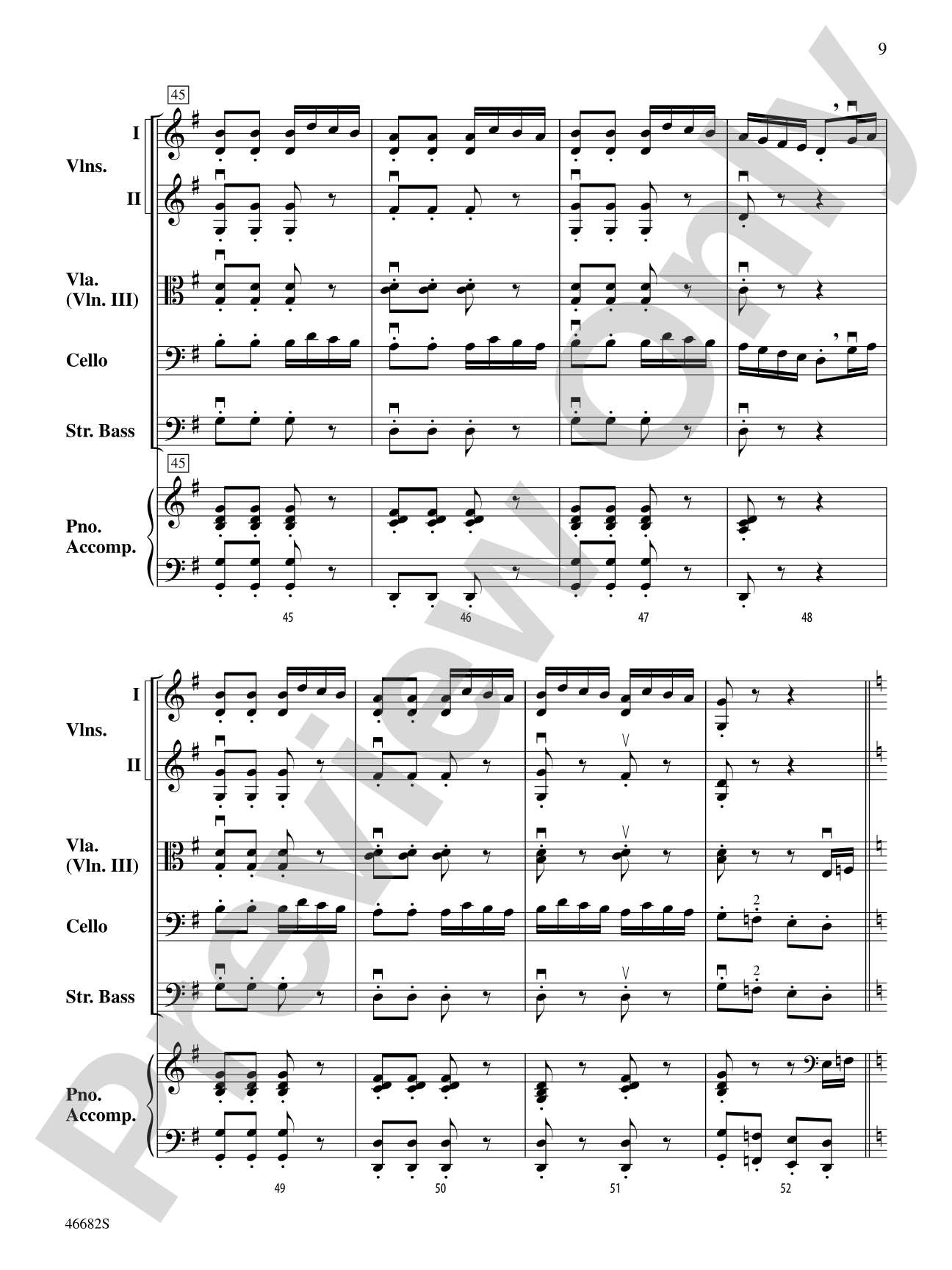
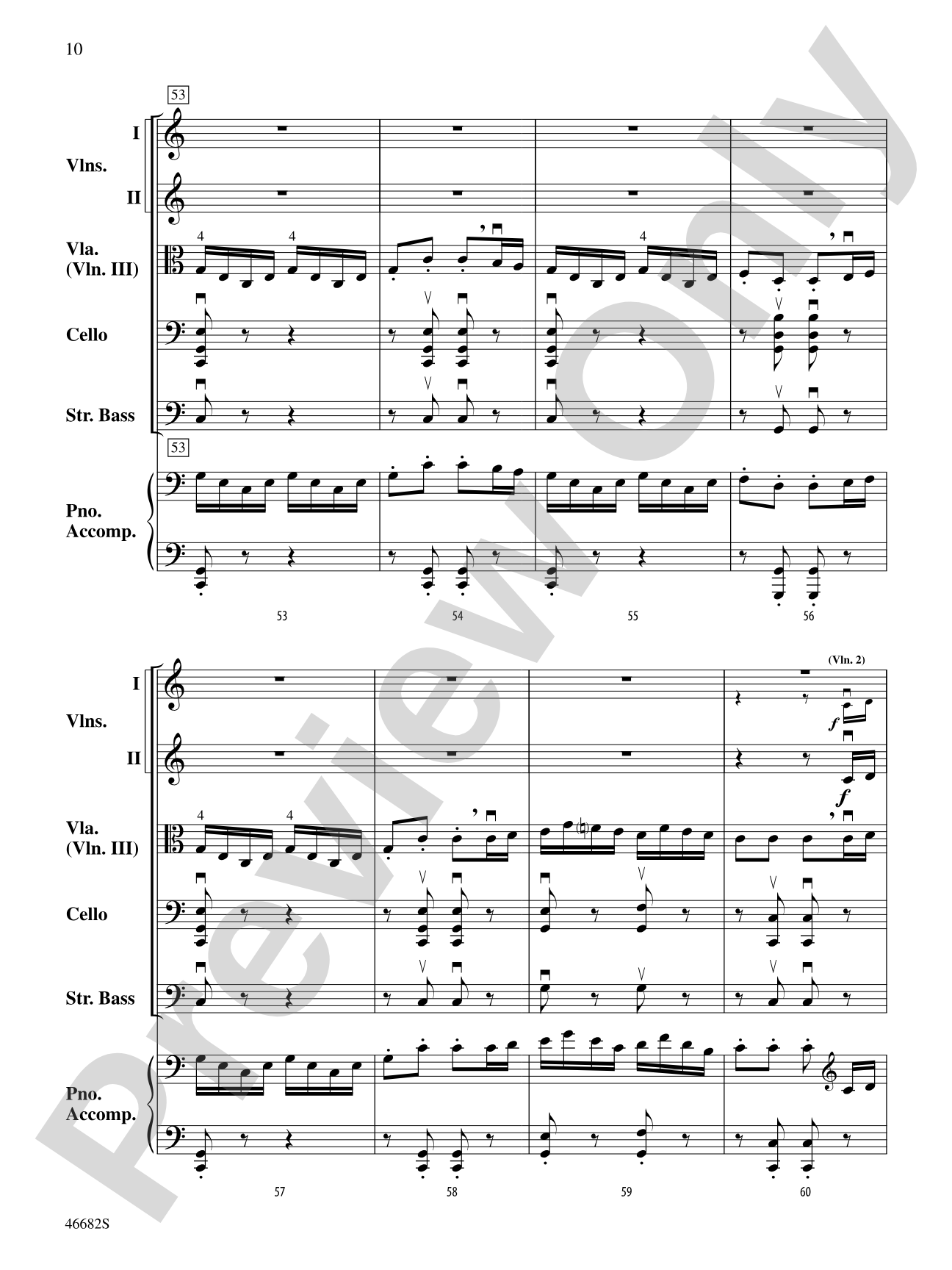
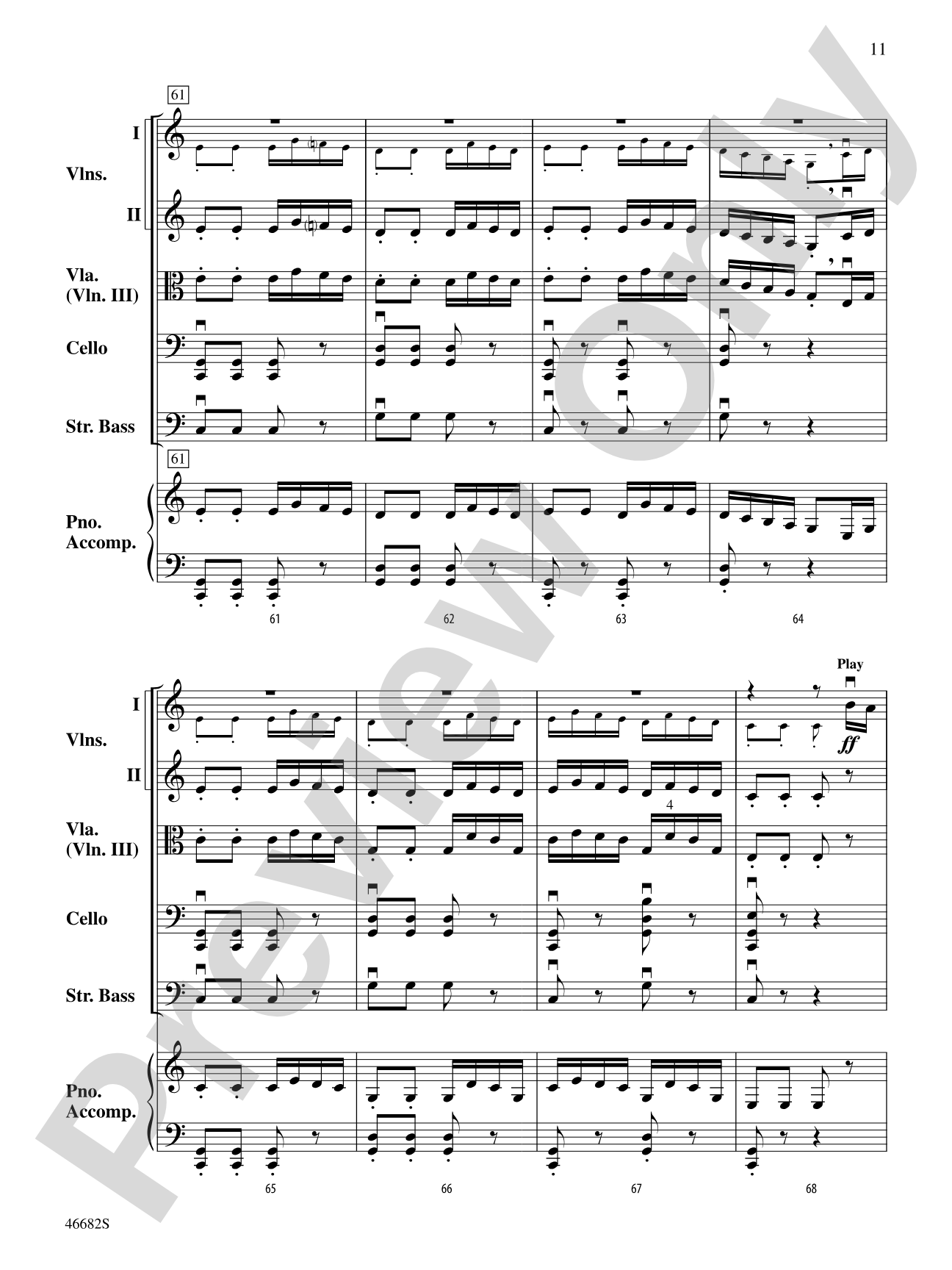
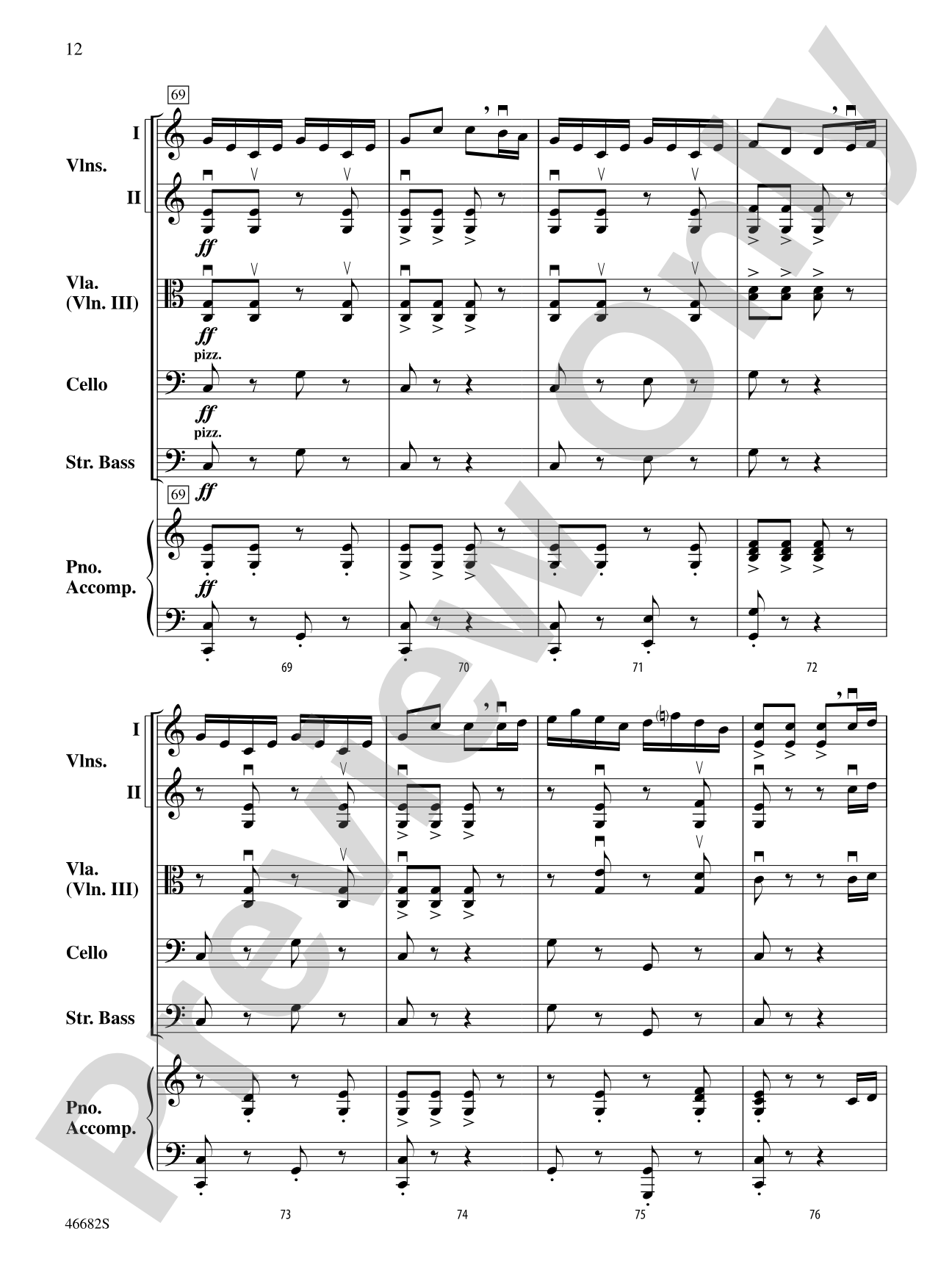
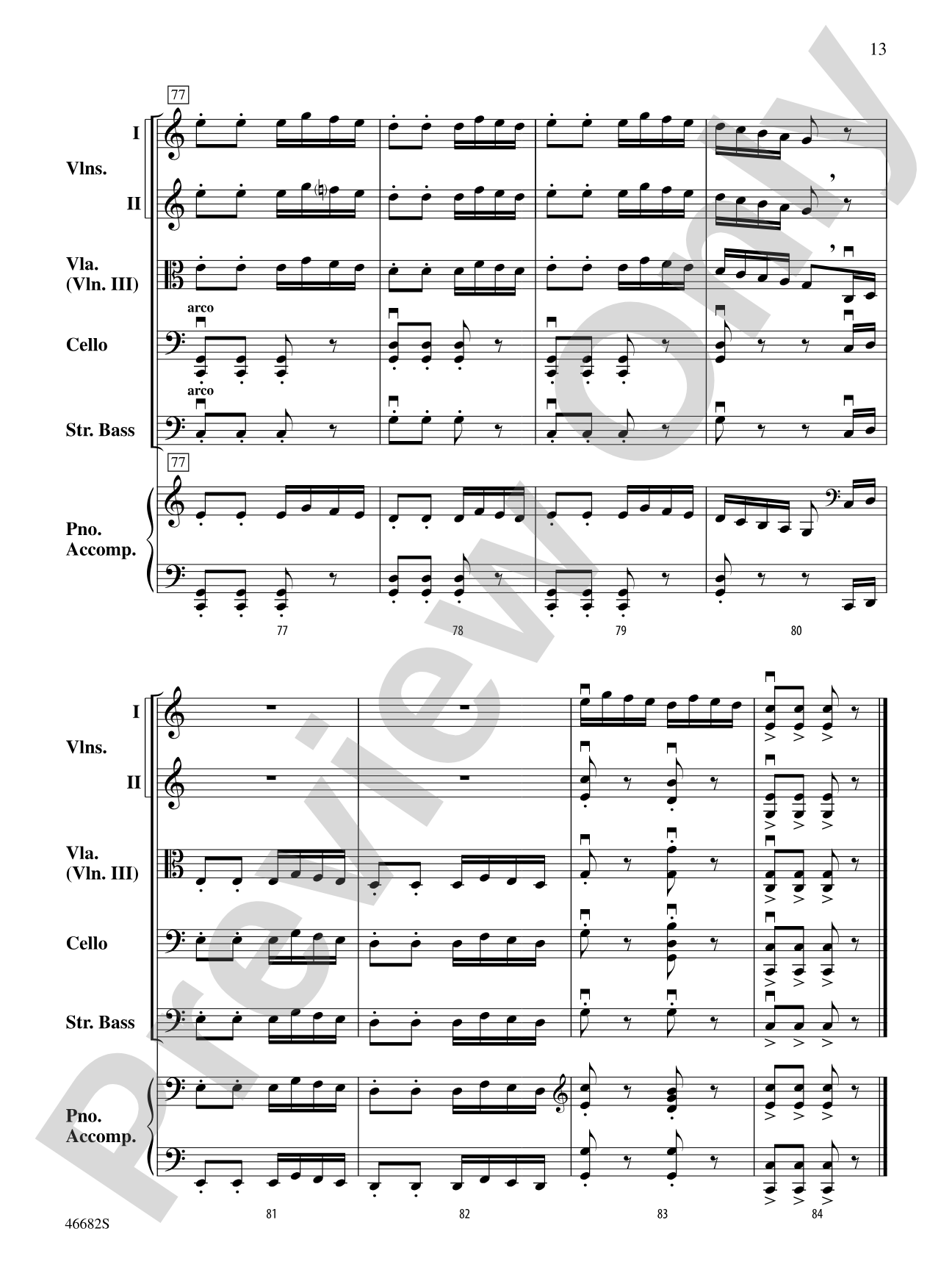

Soldier's Joy: Score
Scottish/Irish/American Fiddle Tune / arr. Sandra Dackow
Grade: 2
Item: 00-PR-0006029
$8.00
Pickup currently not available
Description
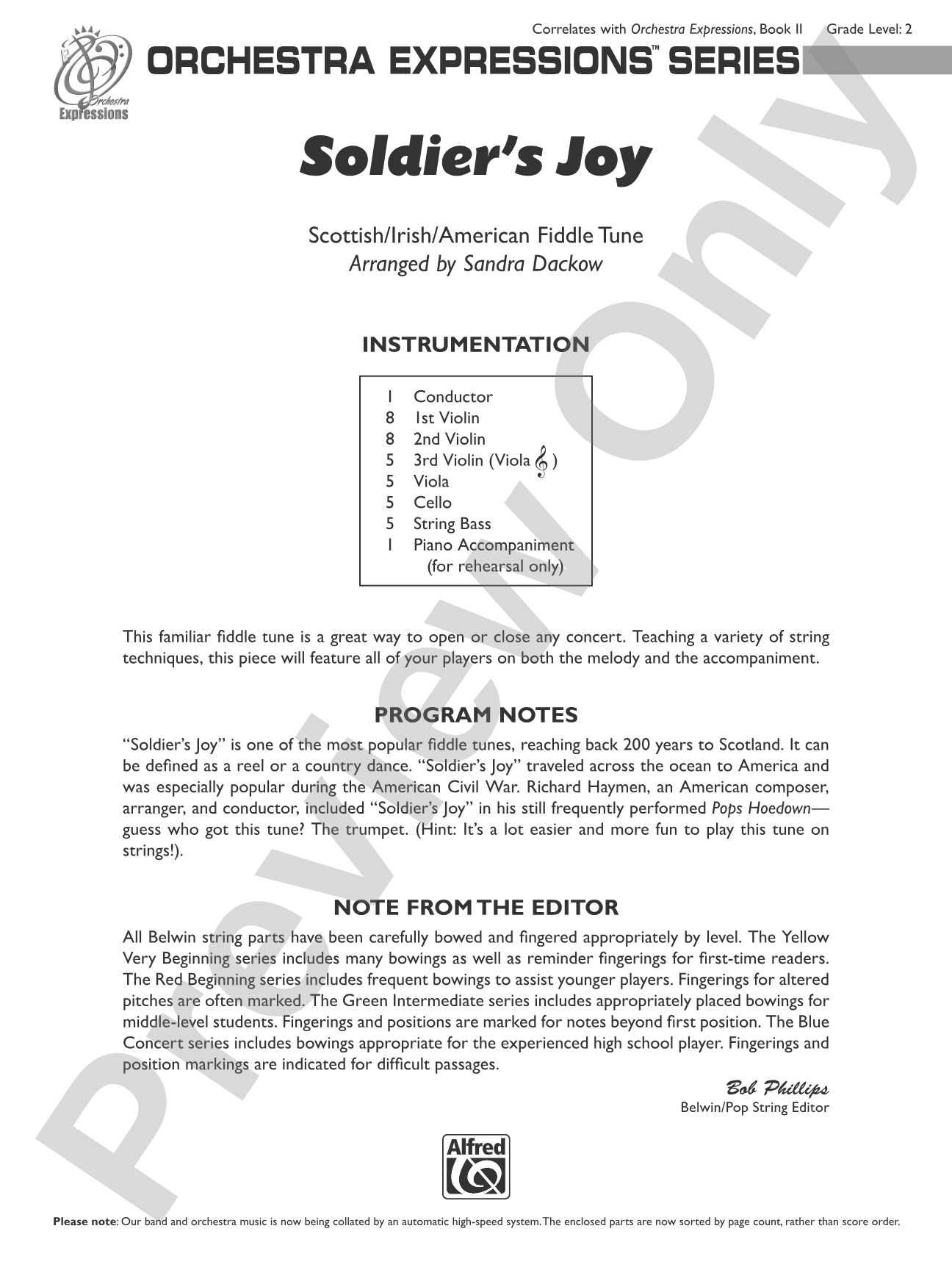
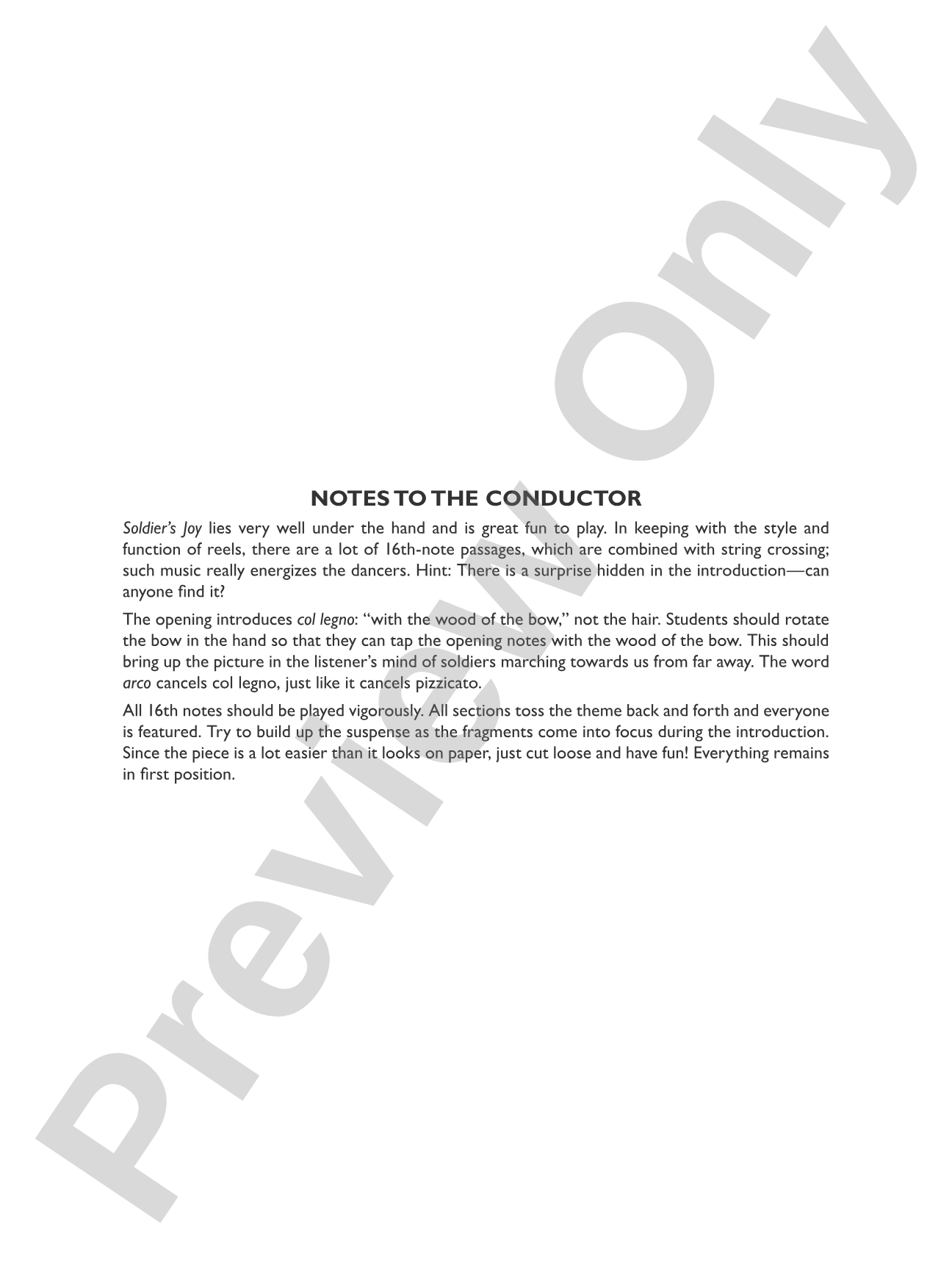
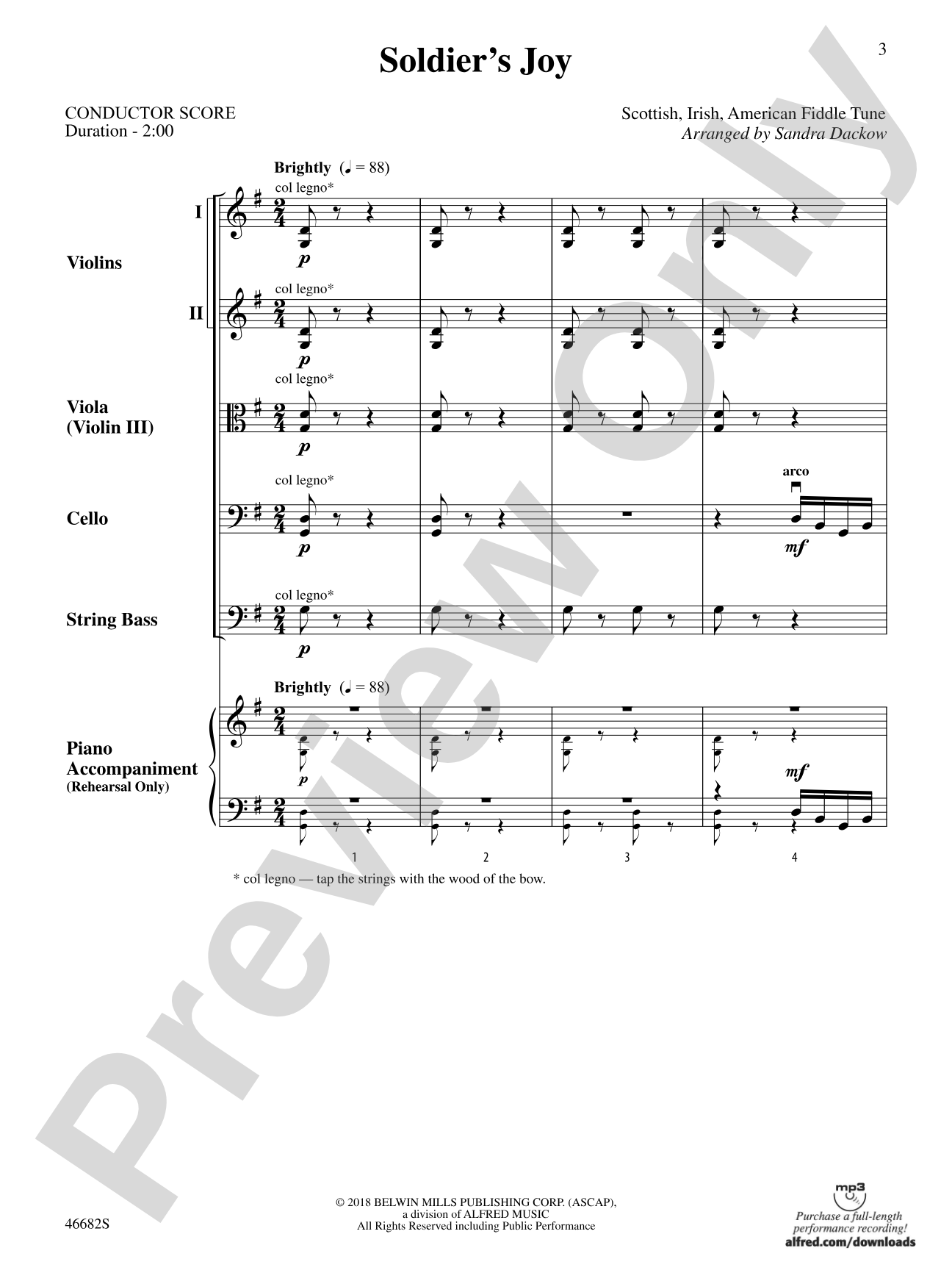
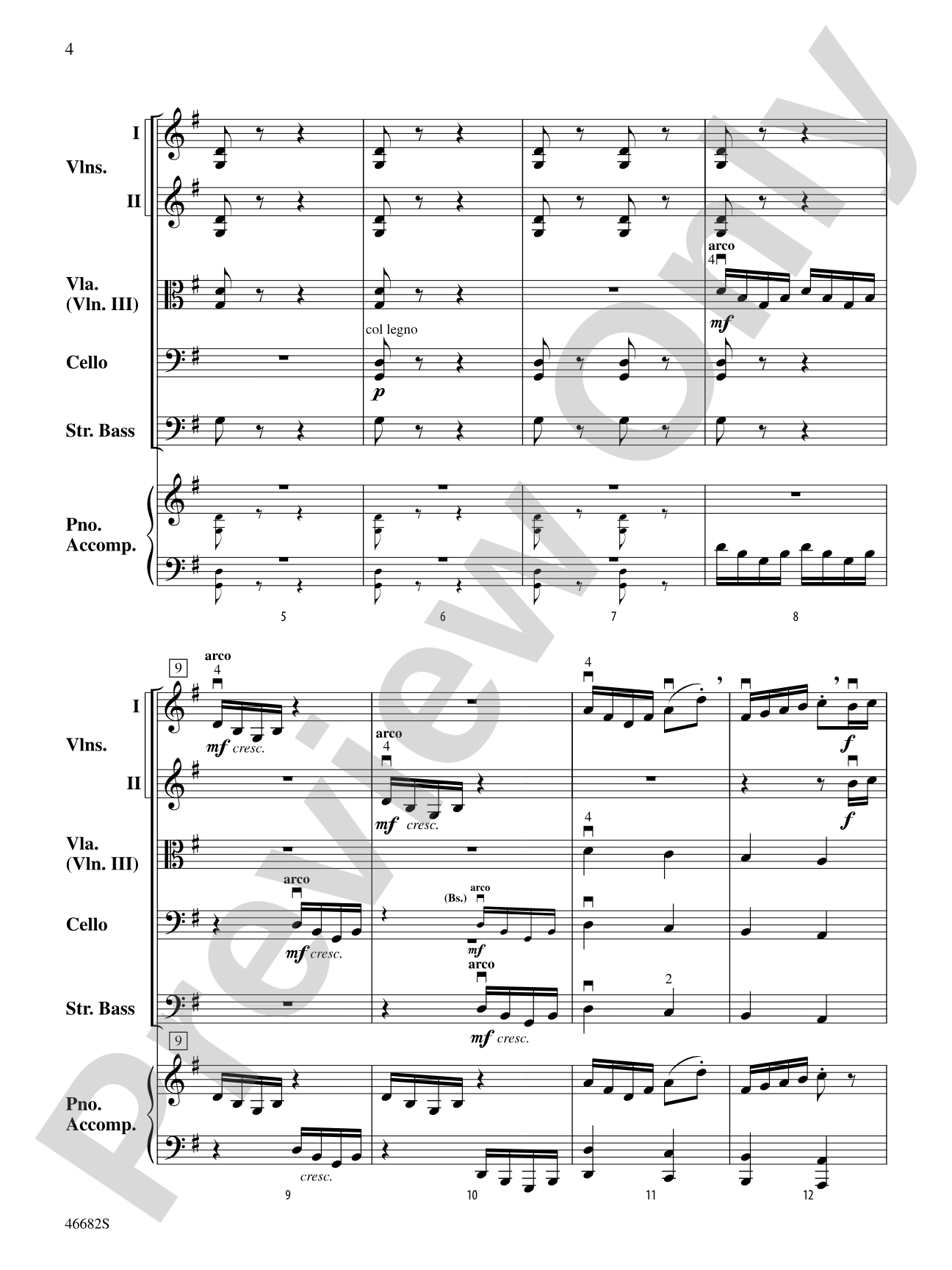
"Soldier's Joy" arranged by Sandra Dackow is a familiar fiddle tune that will be a great way to open or close any concert. Teaching a variety of string techniques, this piece will feature all of your players on both the melody and the accompaniment. Correlated with Orchestra Expressions, Book 2, this arrangement will inspire your students to increase their tempo to create an exciting performance!


Don't just read it, hear it, play along with it, and watch your students grow with it. In MakeMusic Cloud, Soldier's Joy: Score comes alive with professional accompaniment, adjustable tempo, and built-in practice tools that turn solo practice into real progress.
Open in the Player
Jump straight in and assign it today.
Start Your Free Trial
Open this title and explore the full library in minutes.
Sample Audio
1
Audio File
--:--
0:00
0:00
Sample Video
Additional Details
Series:
Orchestra Expressions
Publisher:
Alfred Music
Page Count:
148
SKU:
00-PR-0006029
More about this title
About the Arranger: Sandra Dackow
Sandra Dackow has spent decades arranging folk and traditional music for young string orchestras, earning recognition for her ability to preserve the character of source material while creating playable, engaging parts for developing musicians. Her work with Orchestra Expressions and similar educational series demonstrates her deep understanding of what students need to build technique, confidence, and musicality at the same time.
Why we love this
Dackow's arrangement gives every section something to do, rotating melodic and accompaniment roles so your players stay engaged and invested in the overall sound. The built-in tempo challenge at the end creates a natural performance goal that motivates students to refine their execution, and the familiar tune means your rehearsal time goes into musicianship, not decoding unfamiliar material.
What to expect
Energetic and purposeful, this fiddle tune carries the joy of a traditional dance while remaining grounded in careful string pedagogy. The arrangement invites players to taste the satisfaction of ensemble sound, where their individual part work adds texture and motion to something larger than themselves.
Who it's for
String orchestra directors teaching Grades 2-3 students who need manageable literature with built-in learning moments. This arrangement works equally well for ensembles working through Orchestra Expressions, Book 2 and for programs looking for a concert opener that builds student ownership and pride through a recognizable folk melody.
How to get the most out of it
- Establish clarity in the rhythmic foundation before pushing tempo; lock the lower strings' accompaniment patterns so the melody can breathe on top.
- Work through the transitions between sections slowly, making sure players understand when they shift from melody to harmony roles and vice versa.
- Record a practice tempo and gradually increase it over several rehearsals, giving students time to adjust fingerings and bow changes without sacrificing accuracy.
- Shape the melody with dynamic contrast; even at faster tempos, the tune will sing if the lead voices lift through phrase peaks rather than play mechanically.
How to use it
Open your concert with this piece to set an upbeat, accessible tone that draws the audience in immediately. Its flexibility also makes it an excellent closing number when you want to end on energy and leave the audience smiling rather than contemplative.
Skills your students will build
- Rotating between melodic and accompanying roles within the same piece
- Tempo control and rhythmic accuracy at increasing speeds
- Sustained bow control through repeated rhythmic figures
- Dynamic shaping within folk-style phrasing
- Ensemble balance when melody passes between sections