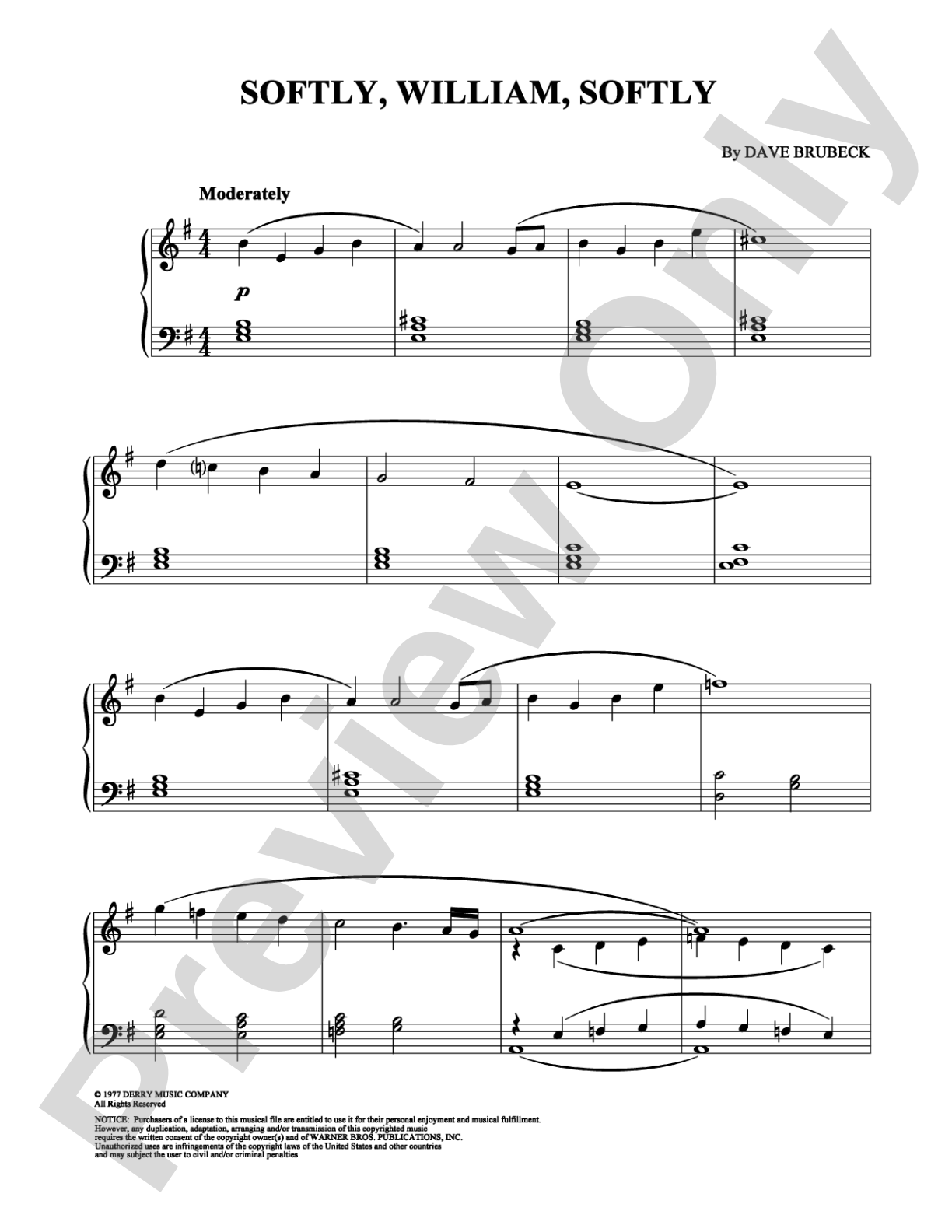
Softly, William, Softly: Piano Digital Sheet Music

Softly, William, Softly: Piano Digital Sheet Music

Dave Brubeck

Item: 00-PS-0000960

Digital Download
$3.99
Description

Softly, William, Softly: Piano Digital Sheet Music isn't in MakeMusic Cloud just yet...but it could be. Let us know you'd like to see it, and you'll help shape what comes next. In the meantime, start a free trial and dive into thousands of interactive titles your students can play along with today.

Sample Audio
No sample audio found.
Sample Video
Additional Details
SKU: 00-PS-0000960

More about this title

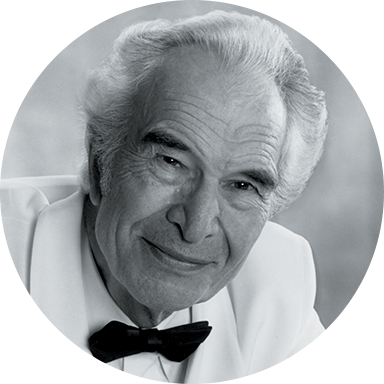
About the Artist: Dave Brubeck

Dave Brubeck

Dave Brubeck was a pianist and composer who bridged jazz and classical music throughout a career spanning seven decades. His improvisational mastery informed his approach to fully notated composition across genres: choral works, orchestral pieces, chamber music, and solo repertoire. Brubeck studied with Darius Milhaud after World War II, and Milhaud's encouragement to synthesize jazz language with classical forms shaped his artistic identity.

Beyond his landmark recordings, including the groundbreaking album "Time Out" and its hit "Take Five," Brubeck used his prominence to advance racial integration in mid-twentieth-century America. His sacred works, including the mass "To Hope!" and oratorios like "The Voice of the Holy Spirit," have been performed and recorded internationally by major ensembles. He received the Presidential Medal of the Arts, a Grammy Lifetime Achievement Award, and election to the American Classical Music Hall of Fame in 2003.

Why we love this

This is authentic Brubeck, not a transcription of a recorded improvisation. A fully notated piano solo gives you the structure and harmonic sophistication you expect from a composer who worked with Darius Milhaud while preserving the melodic language that made Brubeck instantly recognizable. Pianists will find a piece that respects their technique while demanding interpretive maturity in how they voice the jazz harmonies and pace the rubato.

What to expect

Intimate and reflective, with the kind of gentle swing that feels personal rather than virtuosic. Brubeck's piano voice here is conversational, drawing you into the harmonic movement through a melody that unfolds naturally across sophisticated chord changes. It carries the emotional weight of a late-night session where mastery serves the music rather than the musician.

Who it's for

Intermediate to advanced pianists who read jazz notation fluently and want to explore Brubeck's compositional voice beyond his most famous recordings. Teachers looking for a substantial solo that demonstrates how jazz vocabulary can serve serious musical expression will find this rewarding to assign.

How to get the most out of it

  • Treat the harmonic language as classical even though the idiom is jazz. Voice the chords with care; this isn't stride piano, and clarity matters more than percussive attack.
  • Honor the notated rhythms and phrase markings without oversoloing. Brubeck's compositions are meant to be played, not springboards for improvisation.
  • Use the rubato inherent in the melody, but keep the harmonic support steady underneath. The piece breathes through the top line, not through rhythmic looseness in both hands.

How to use it

Pair this with other twentieth-century jazz compositions or with contemporary classical piano works to show how boundary-crossing was central to serious composers of Brubeck's generation. It works well as a closing piece for a recital focused on American composers, or as a moment of lyrical reflection in a program emphasizing jazz standards and original compositions.

Skills your students will build

  • Voice leading through jazz harmonic progressions
  • Rubato and phrasing in a notated jazz context
  • Reading and interpreting jazz chord symbols and notation
  • Balancing independence between melodic and harmonic material on piano
  • Interpreting classical articulation and expression marks within a jazz idiom

You May Also Like