
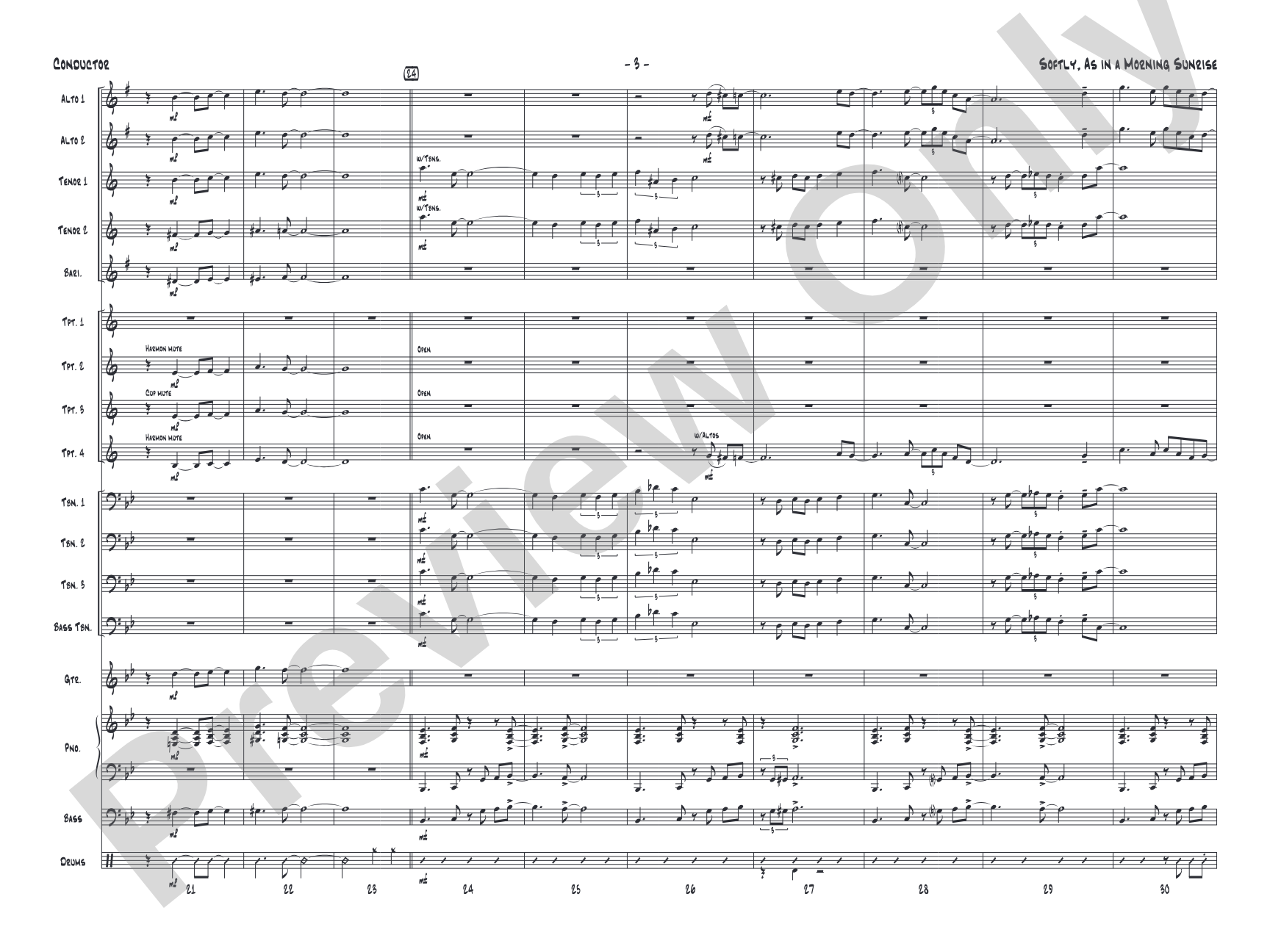
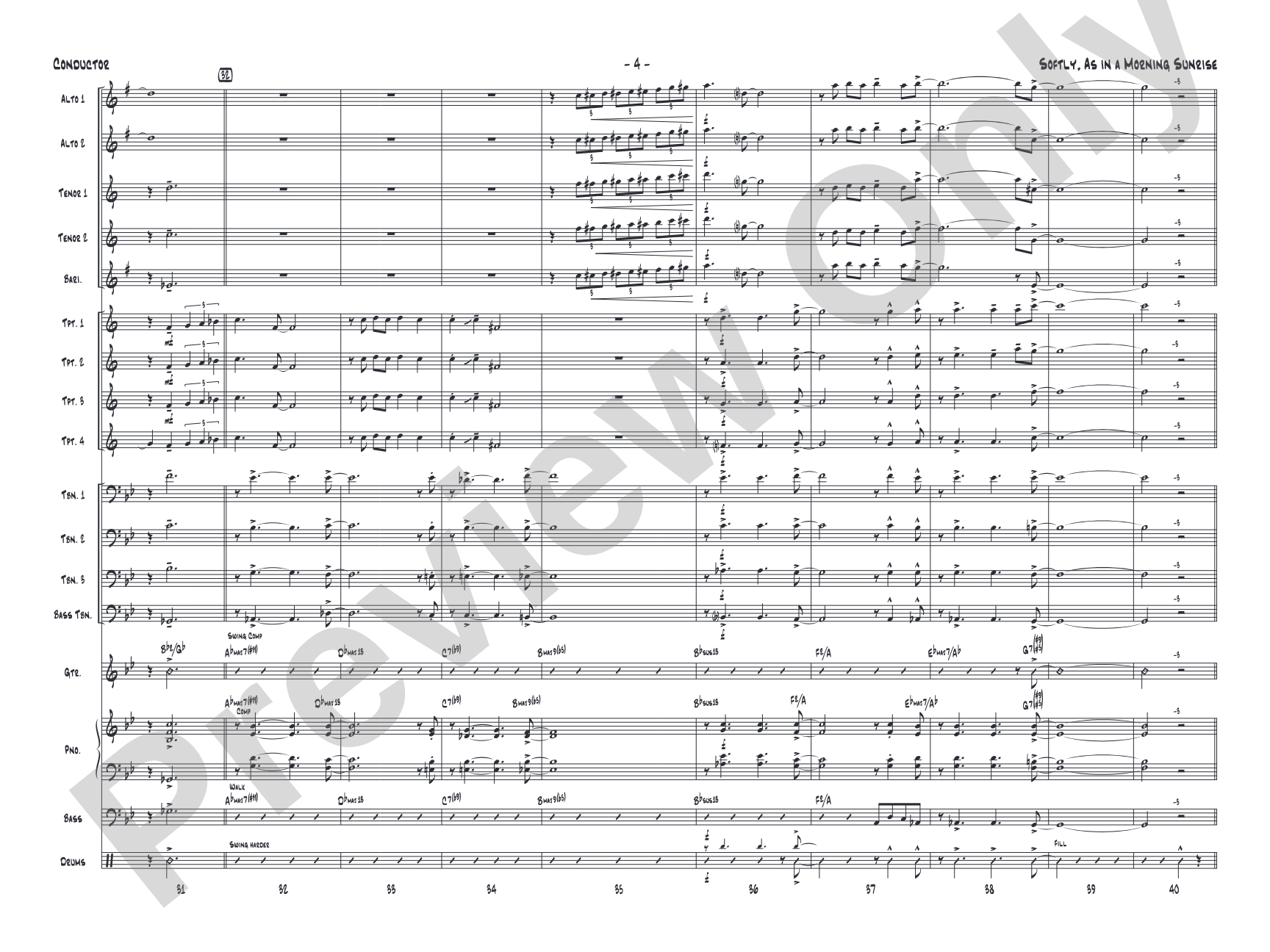
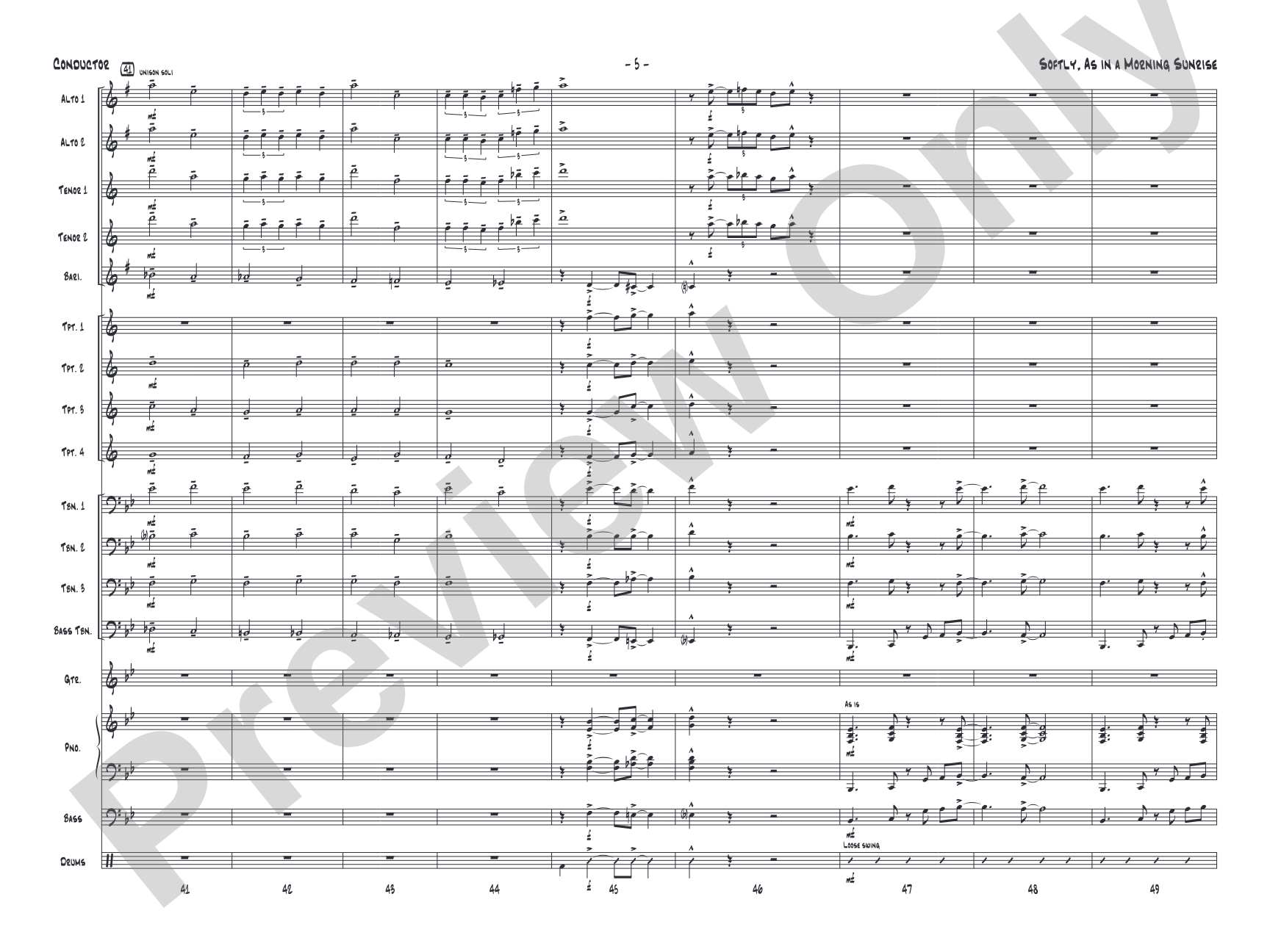
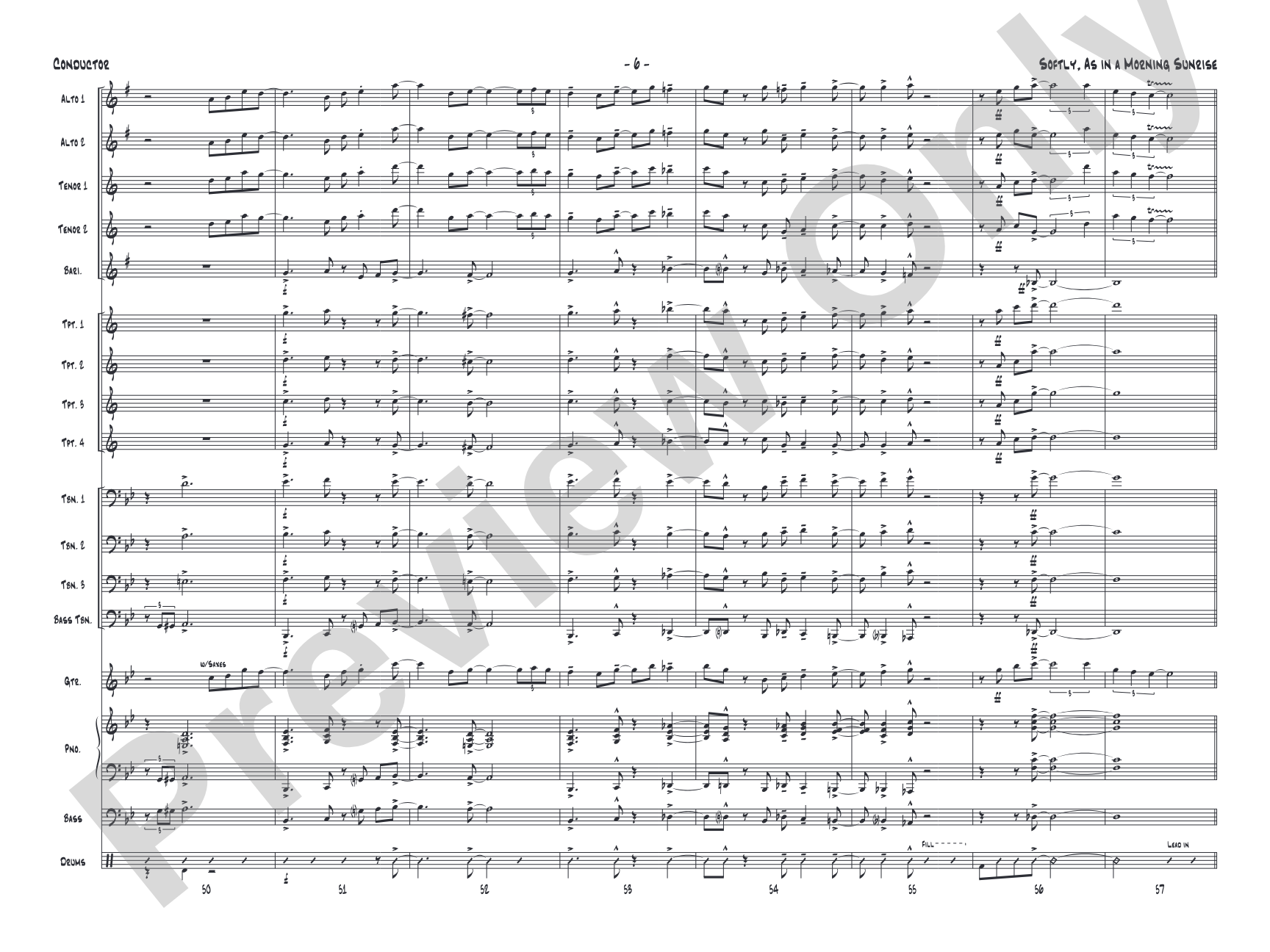
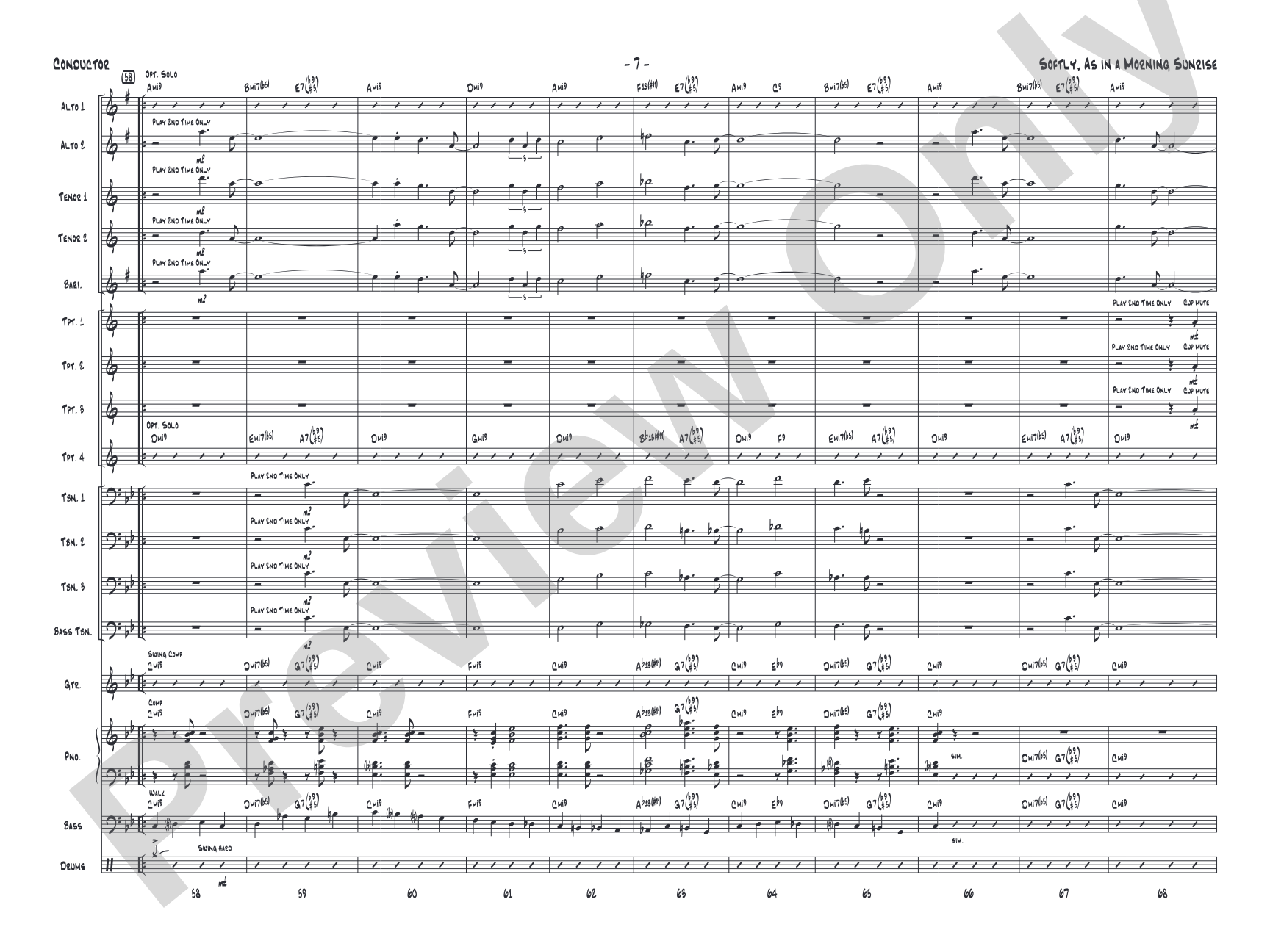
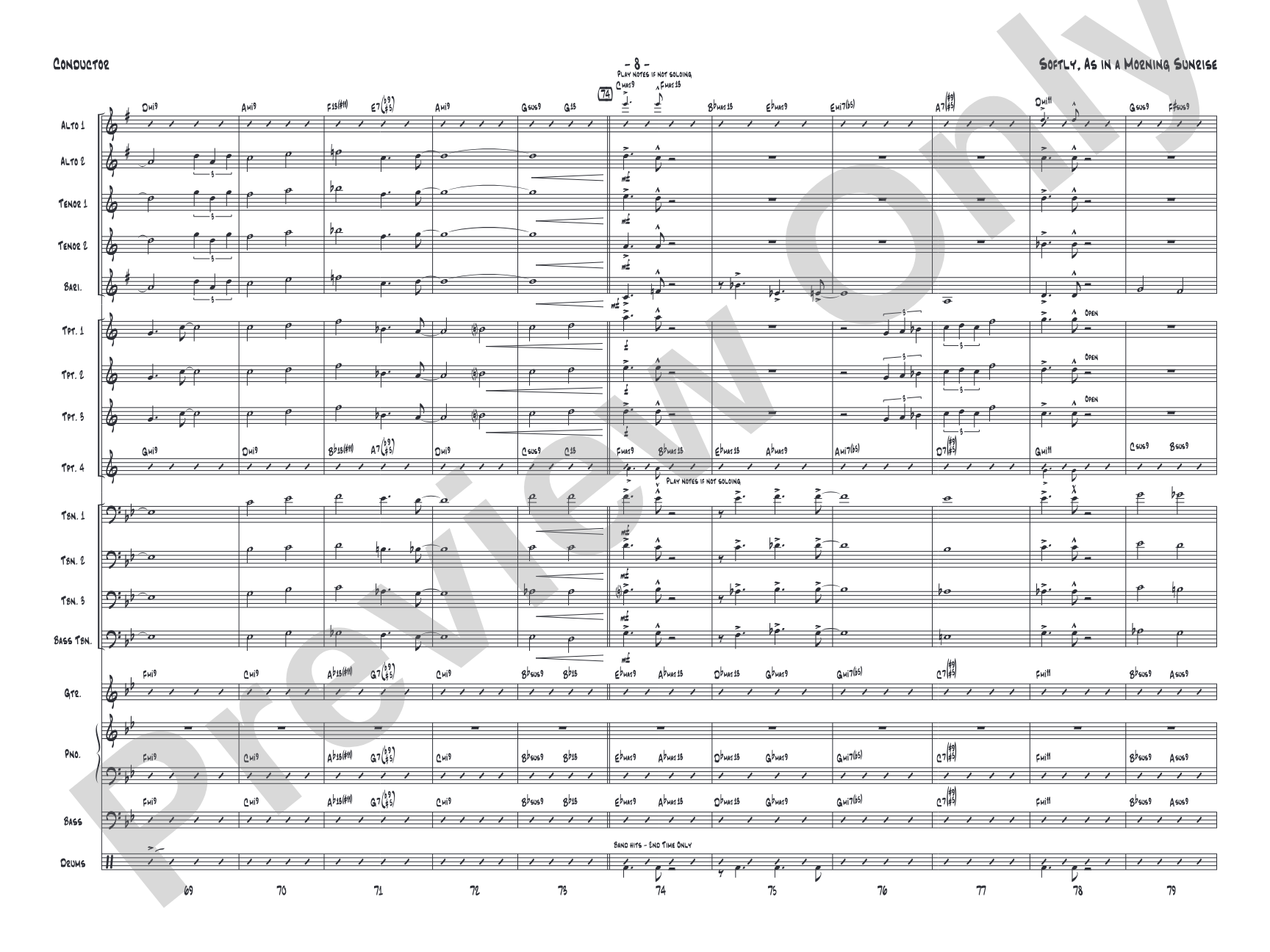
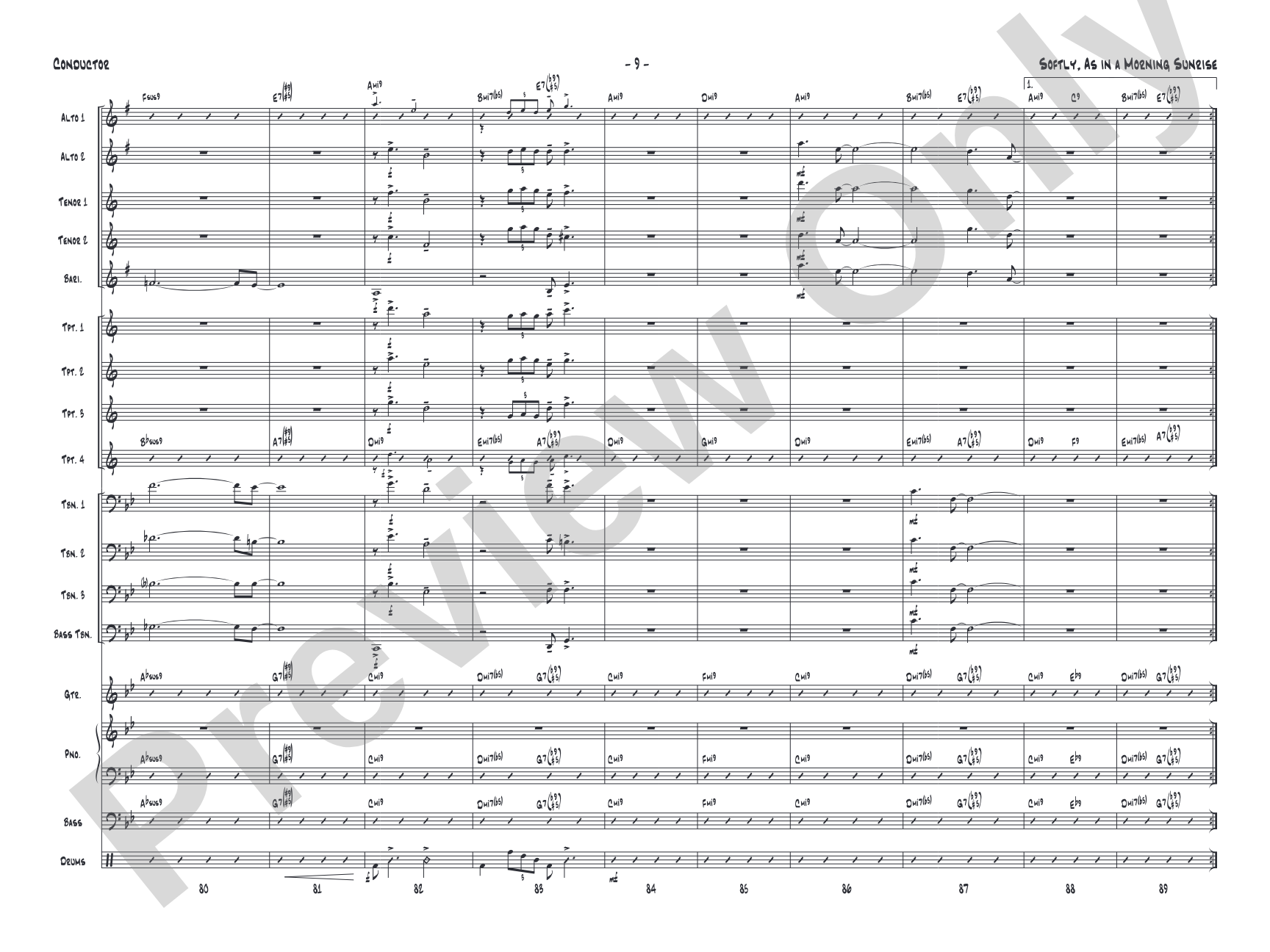
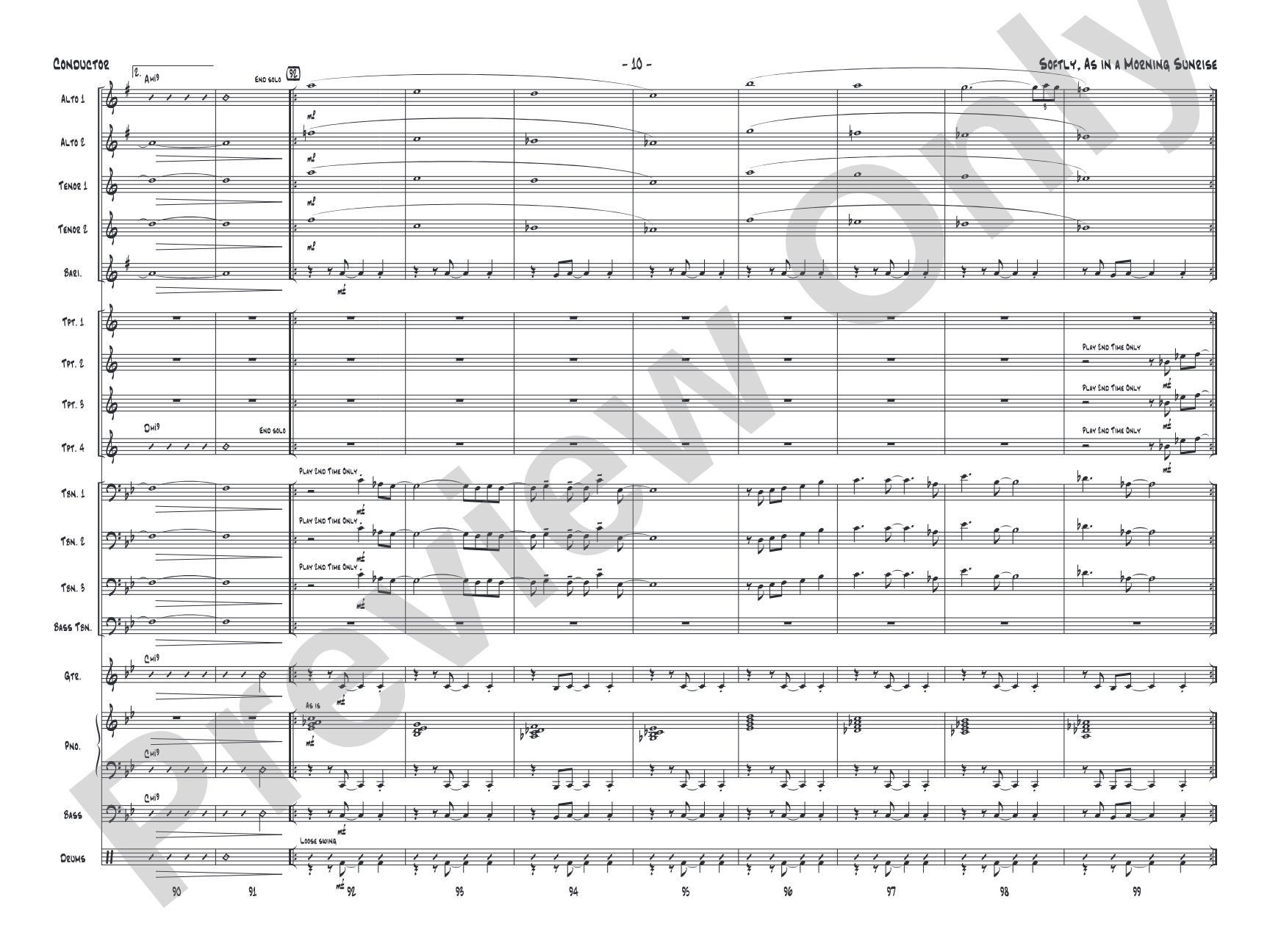
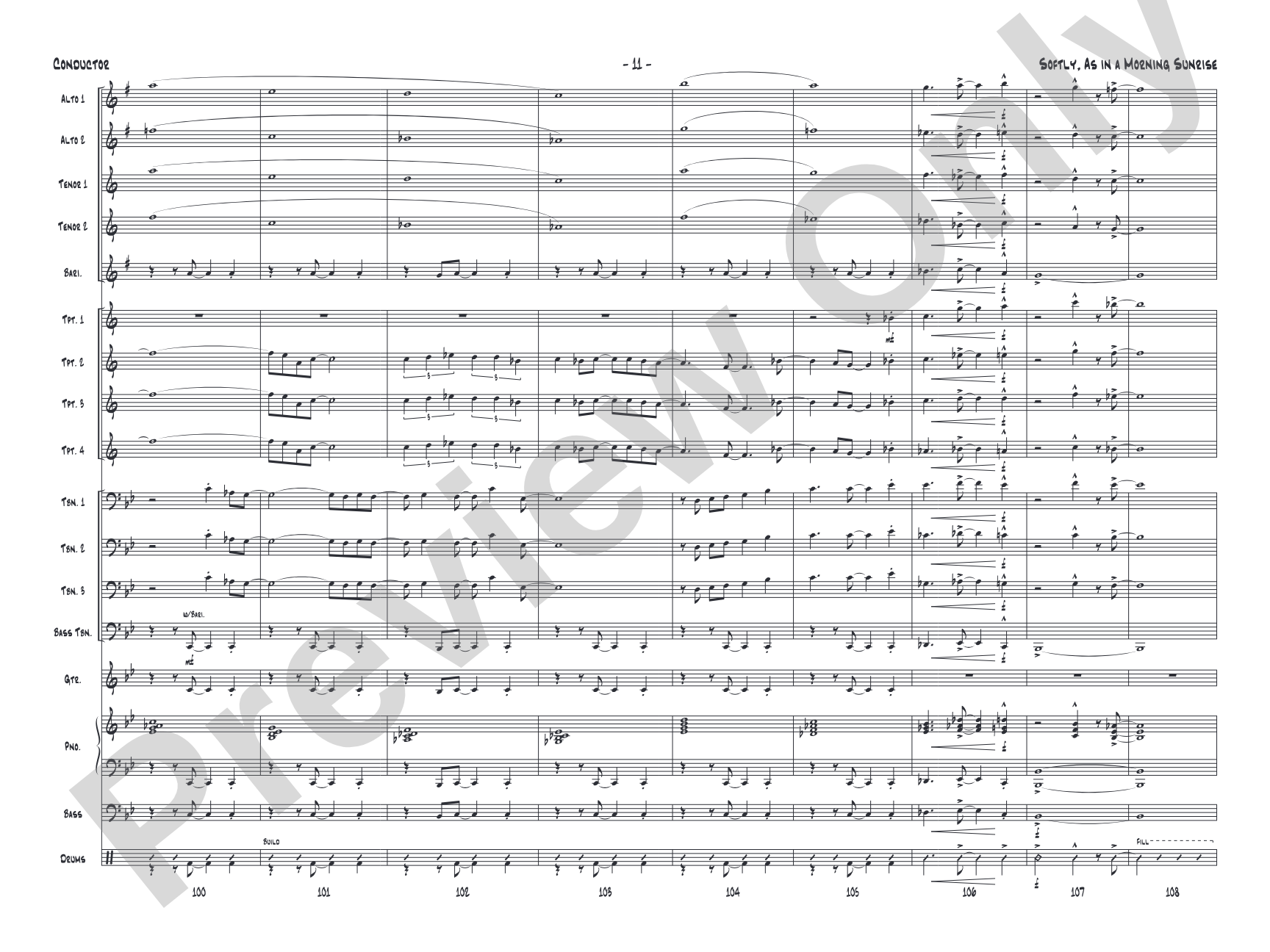
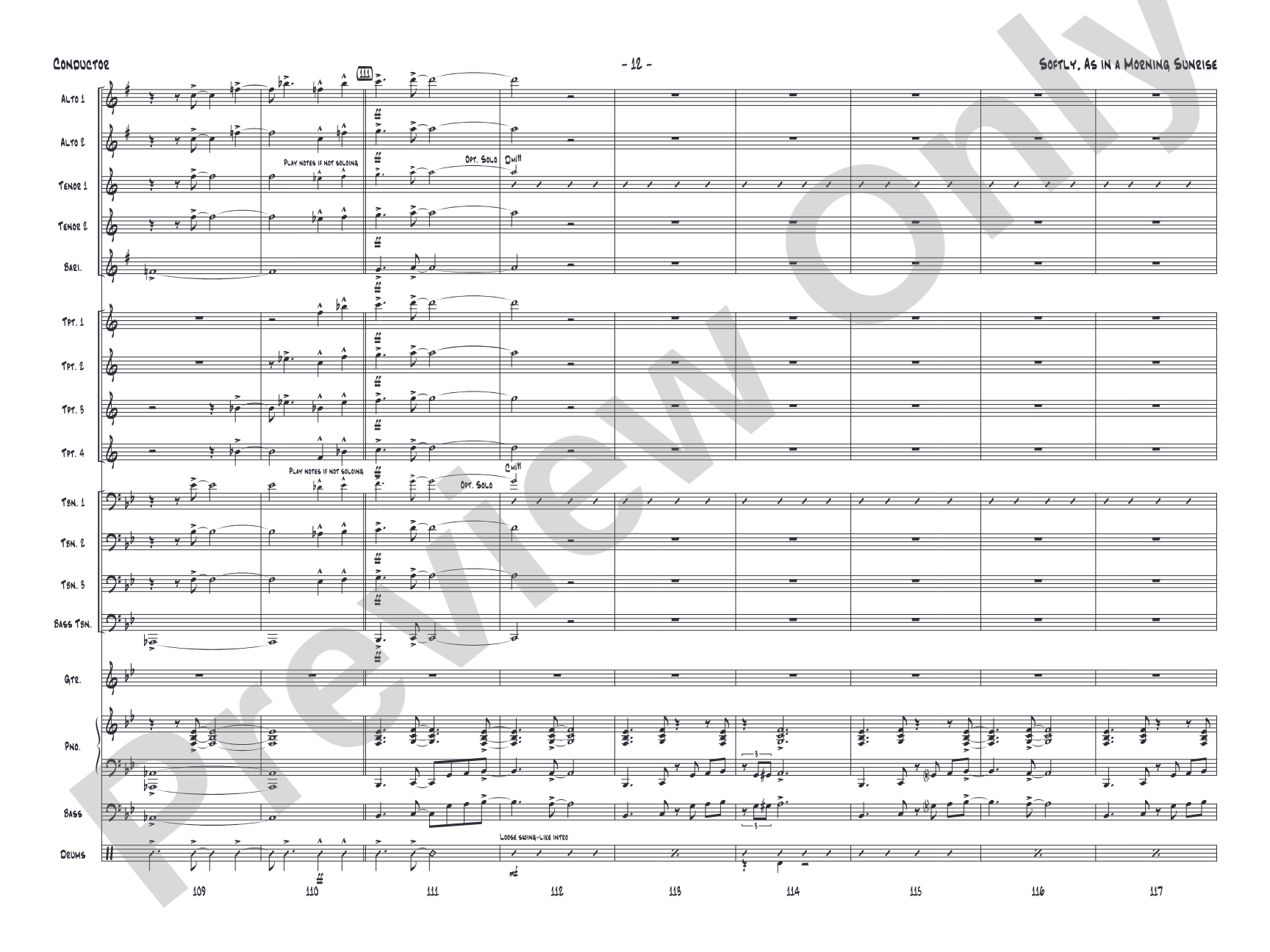
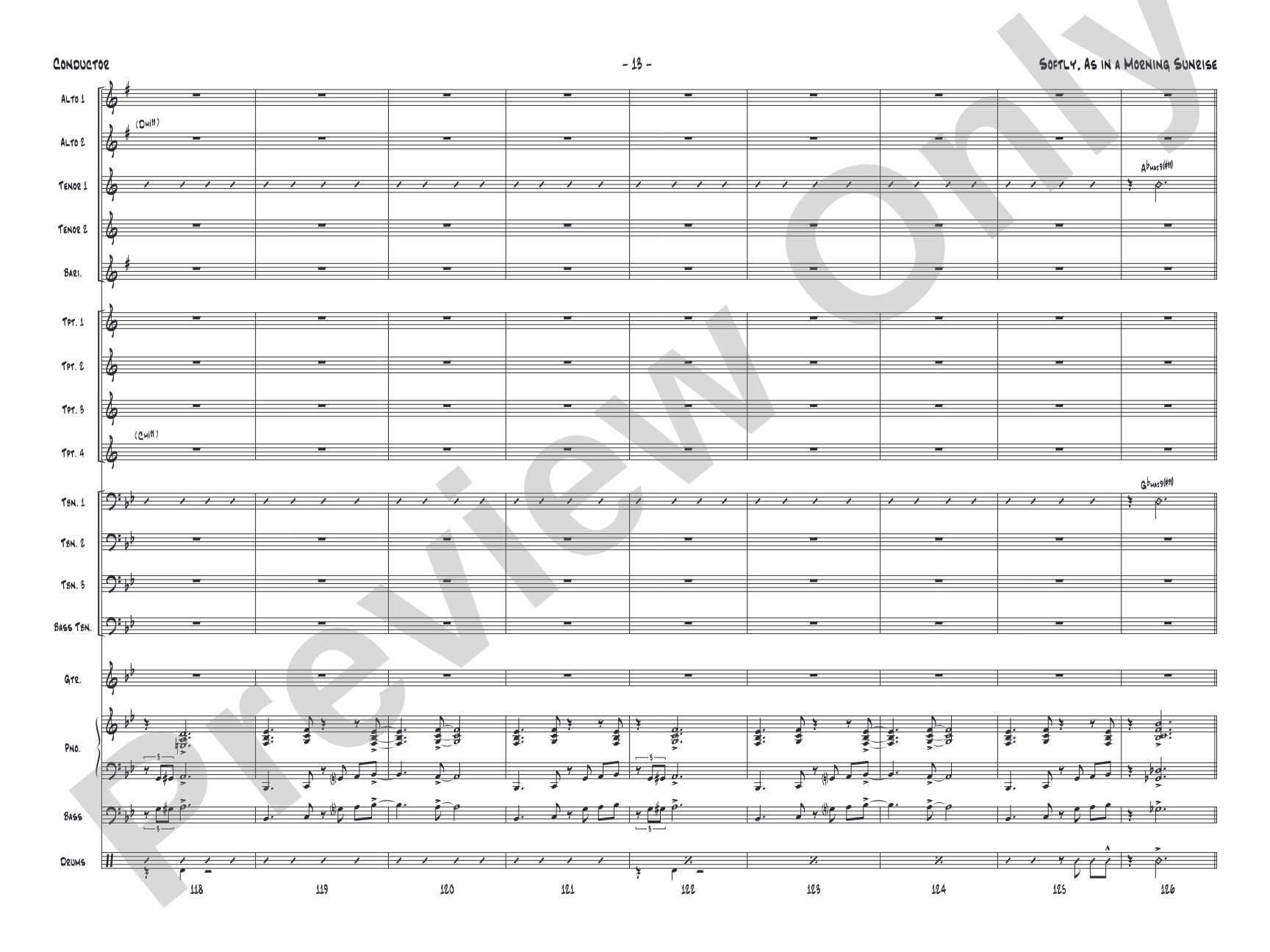
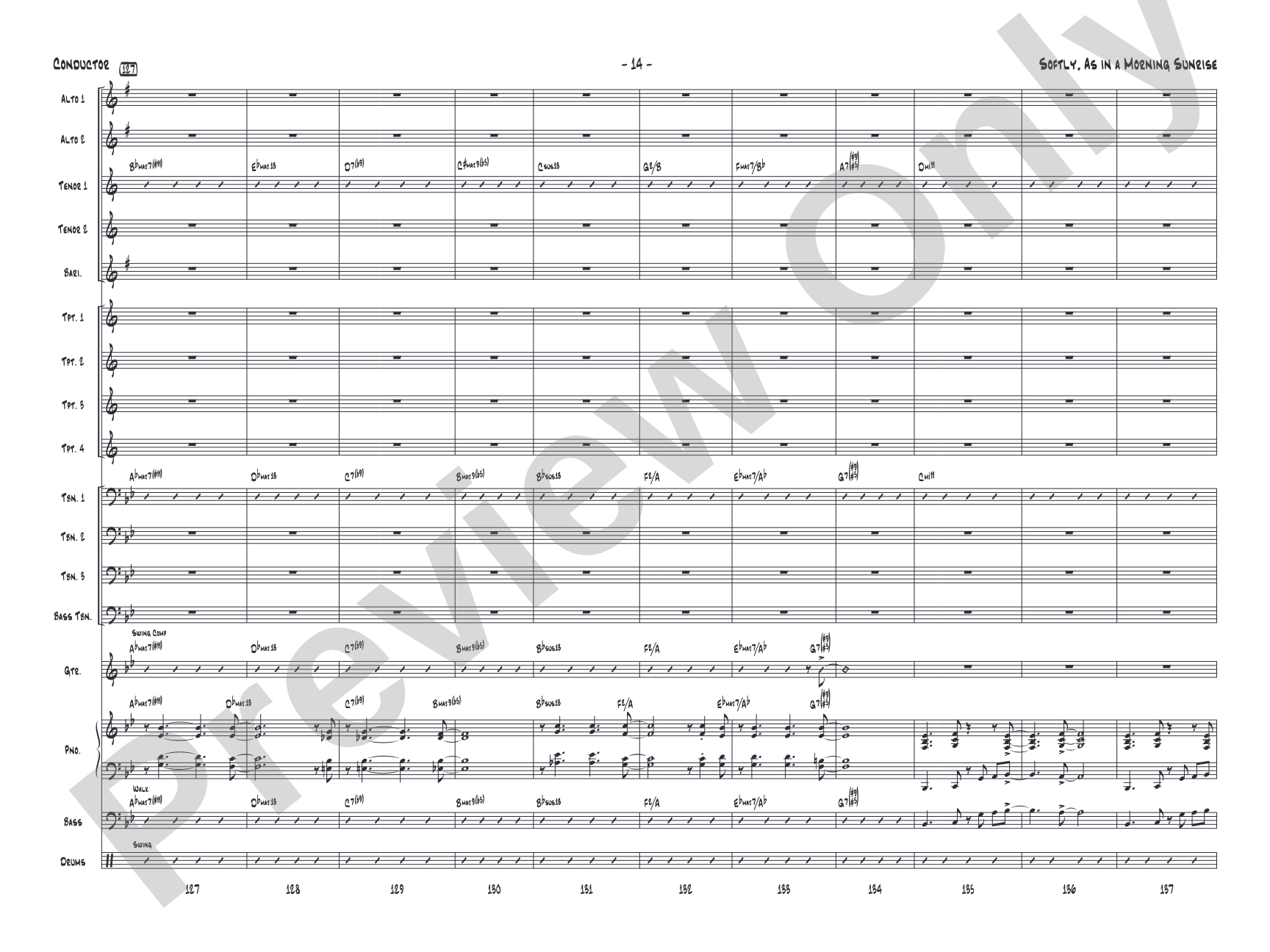
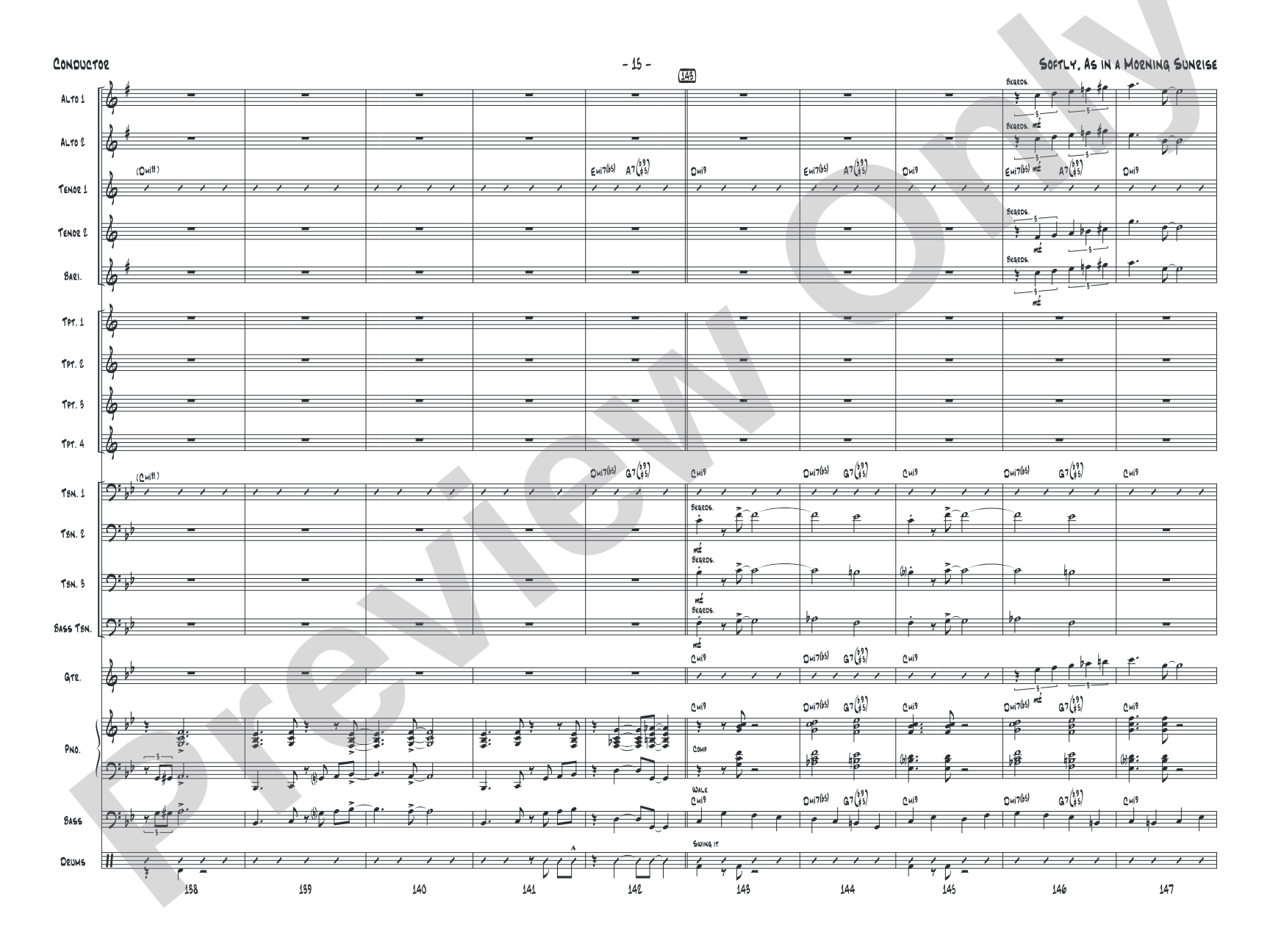
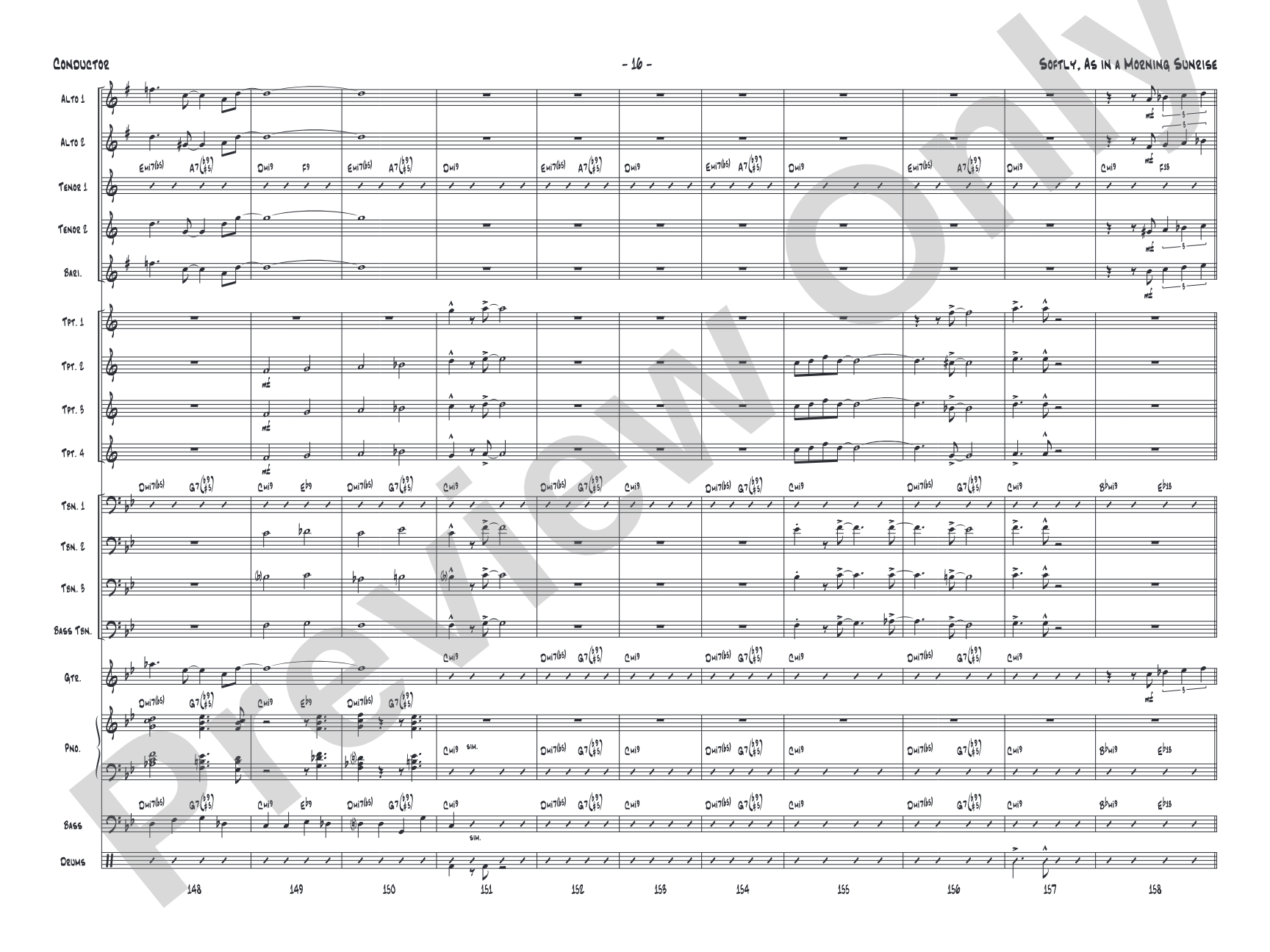
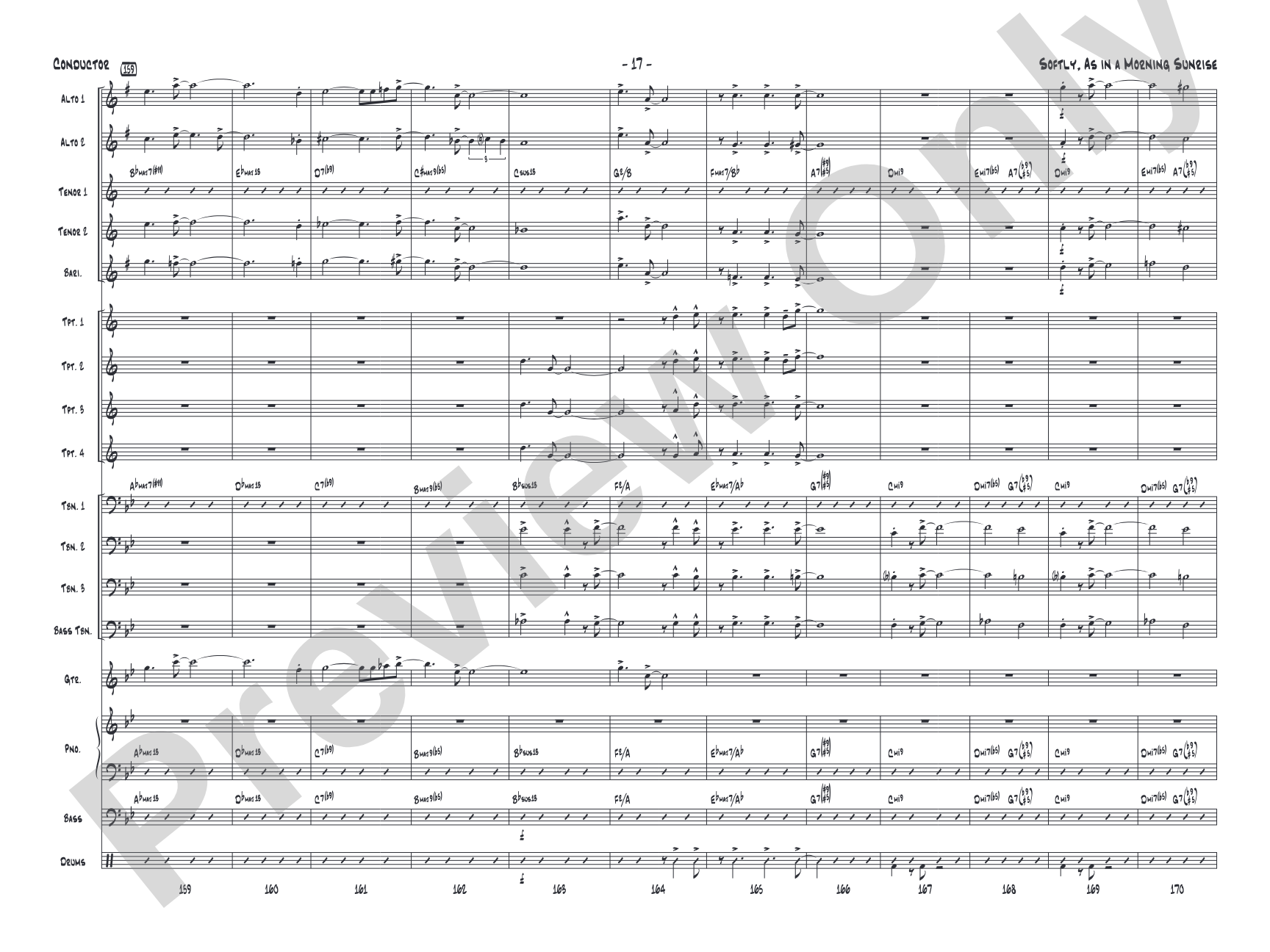
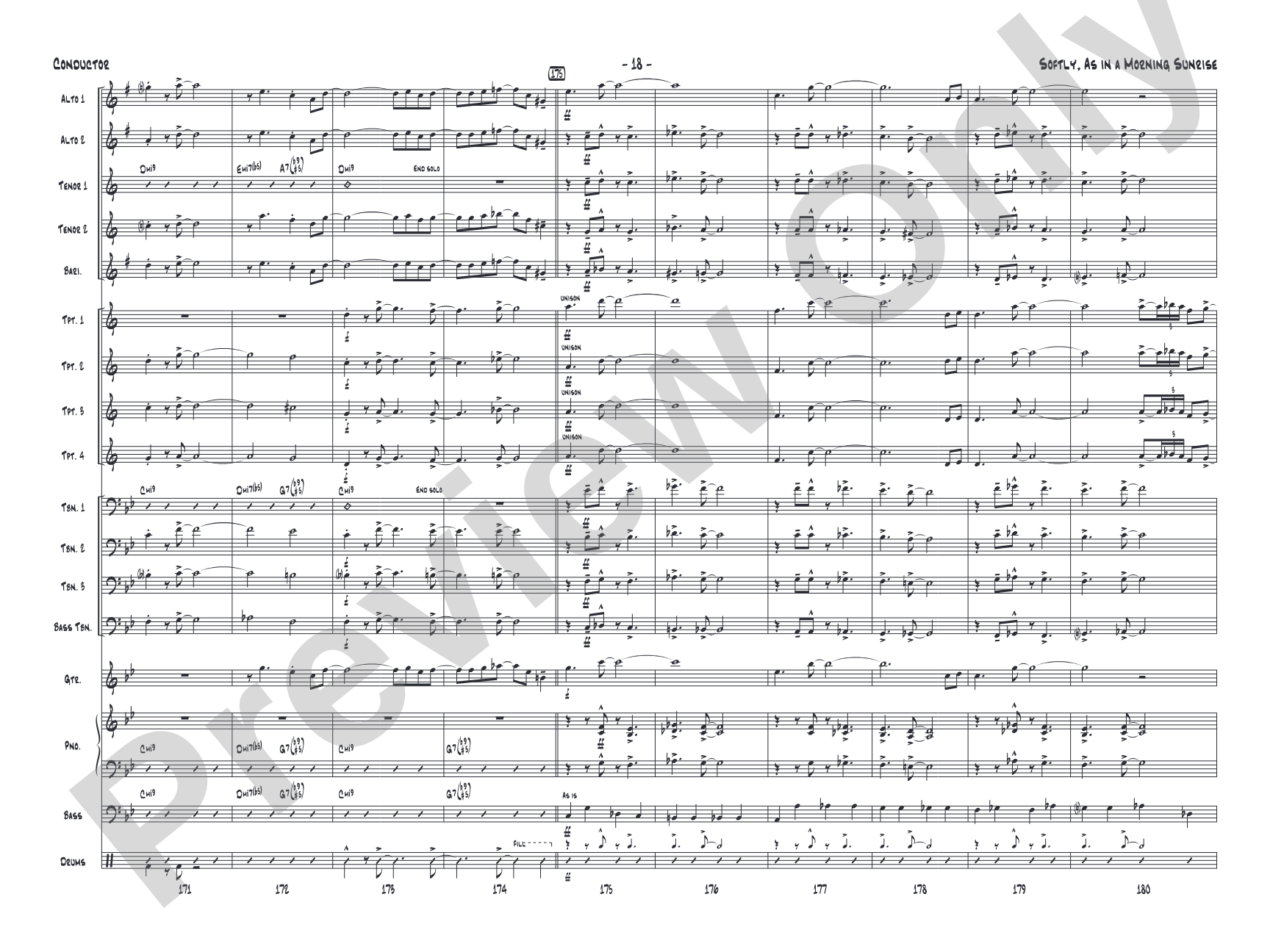
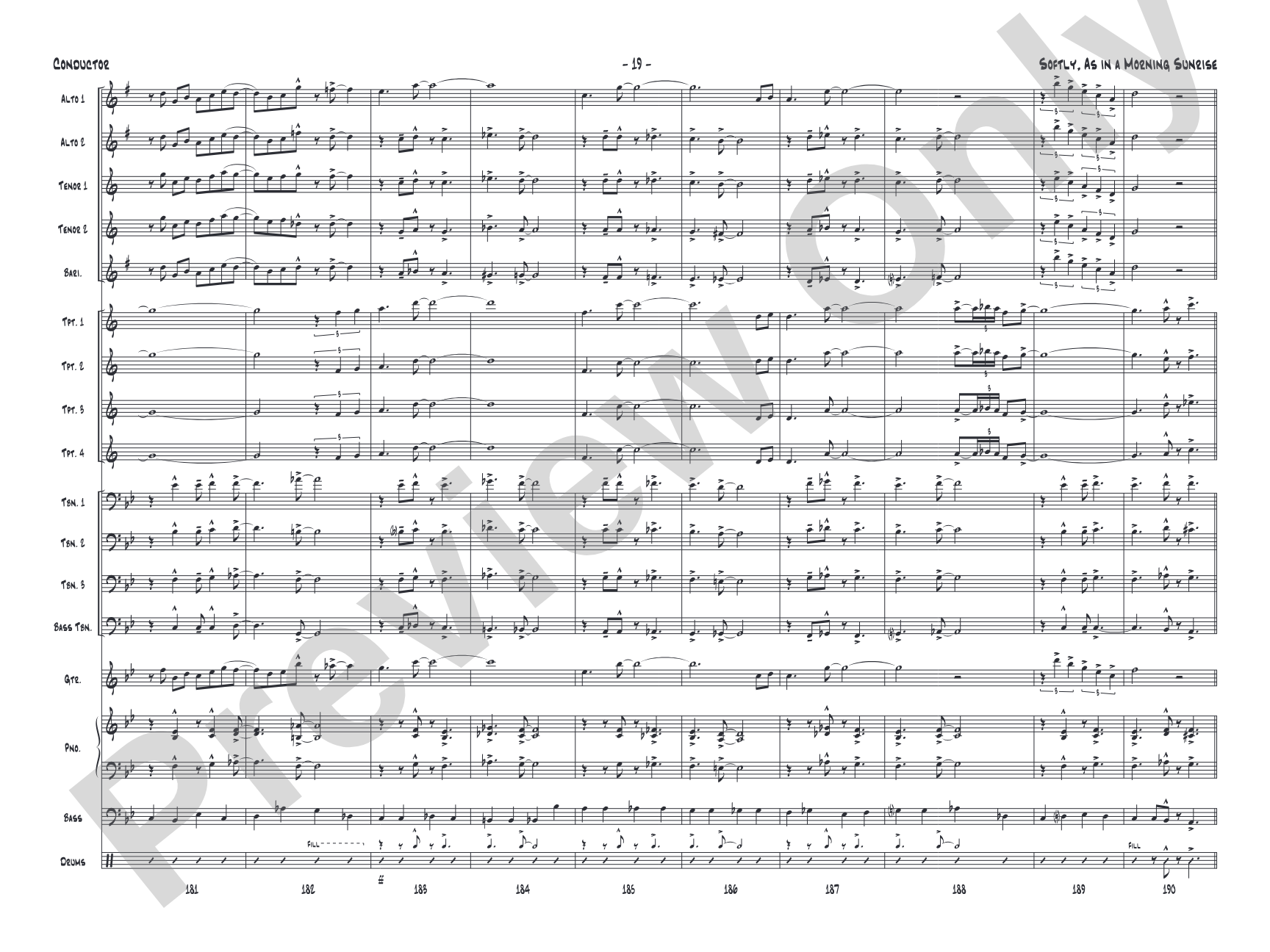
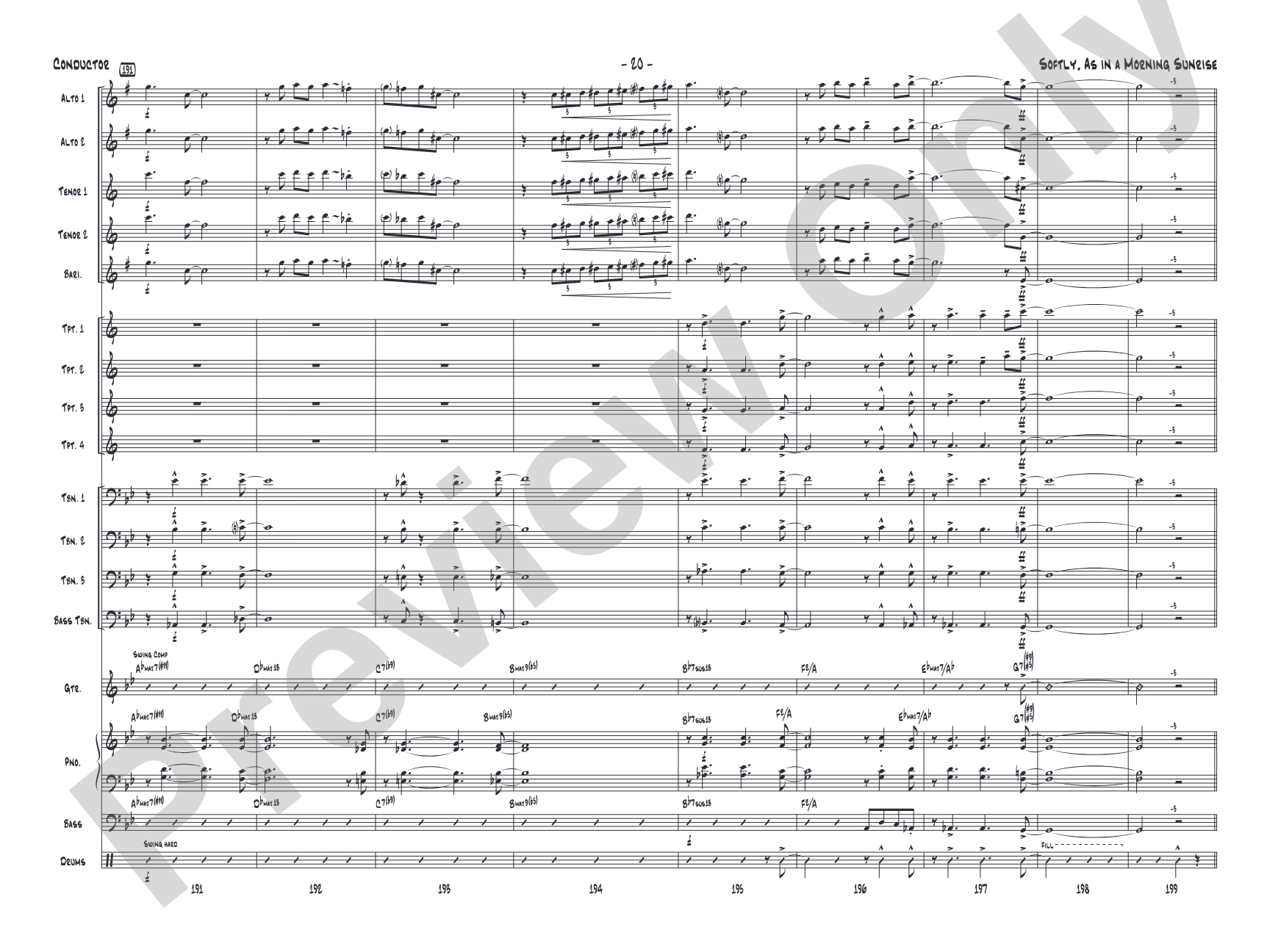
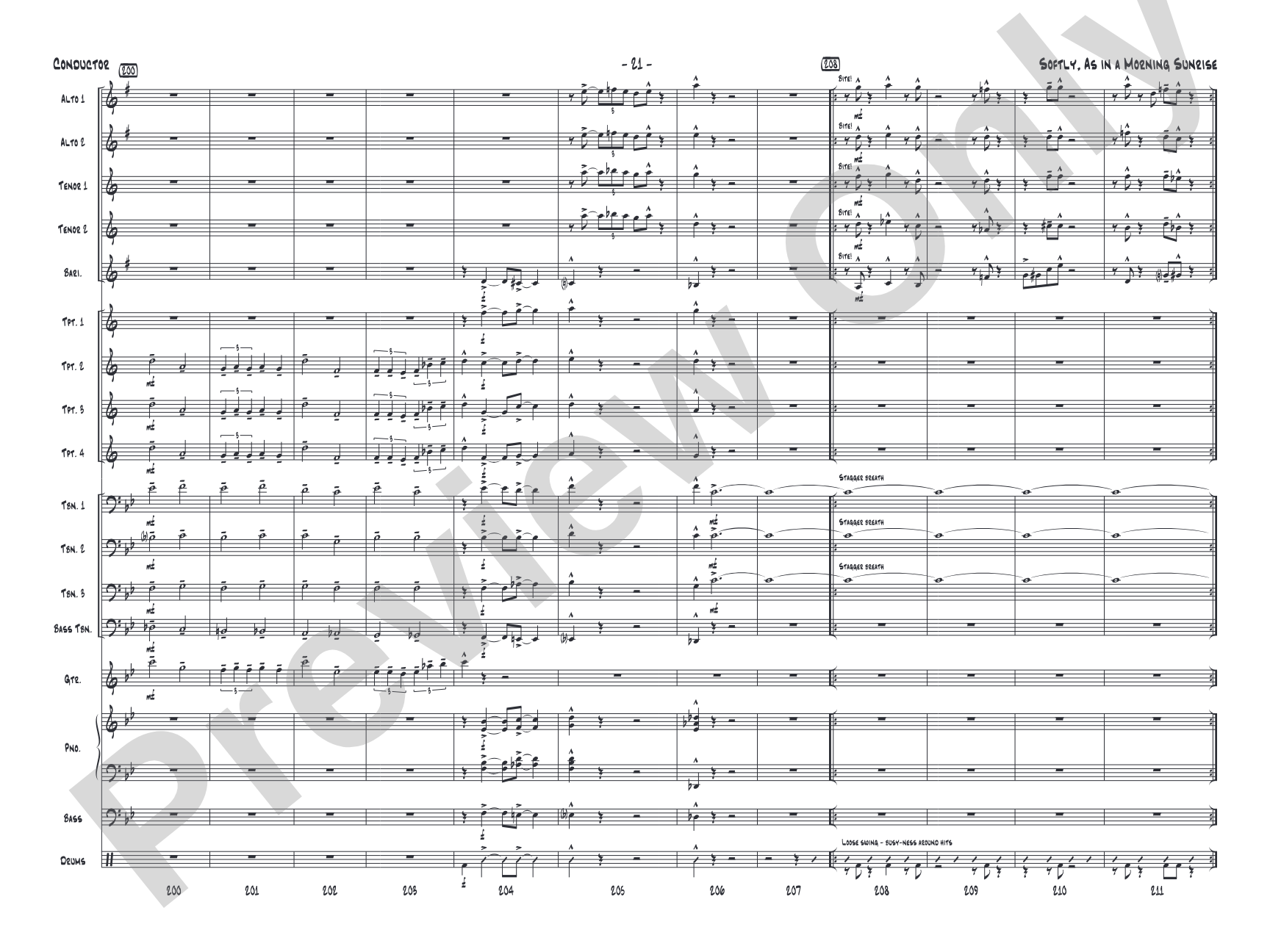
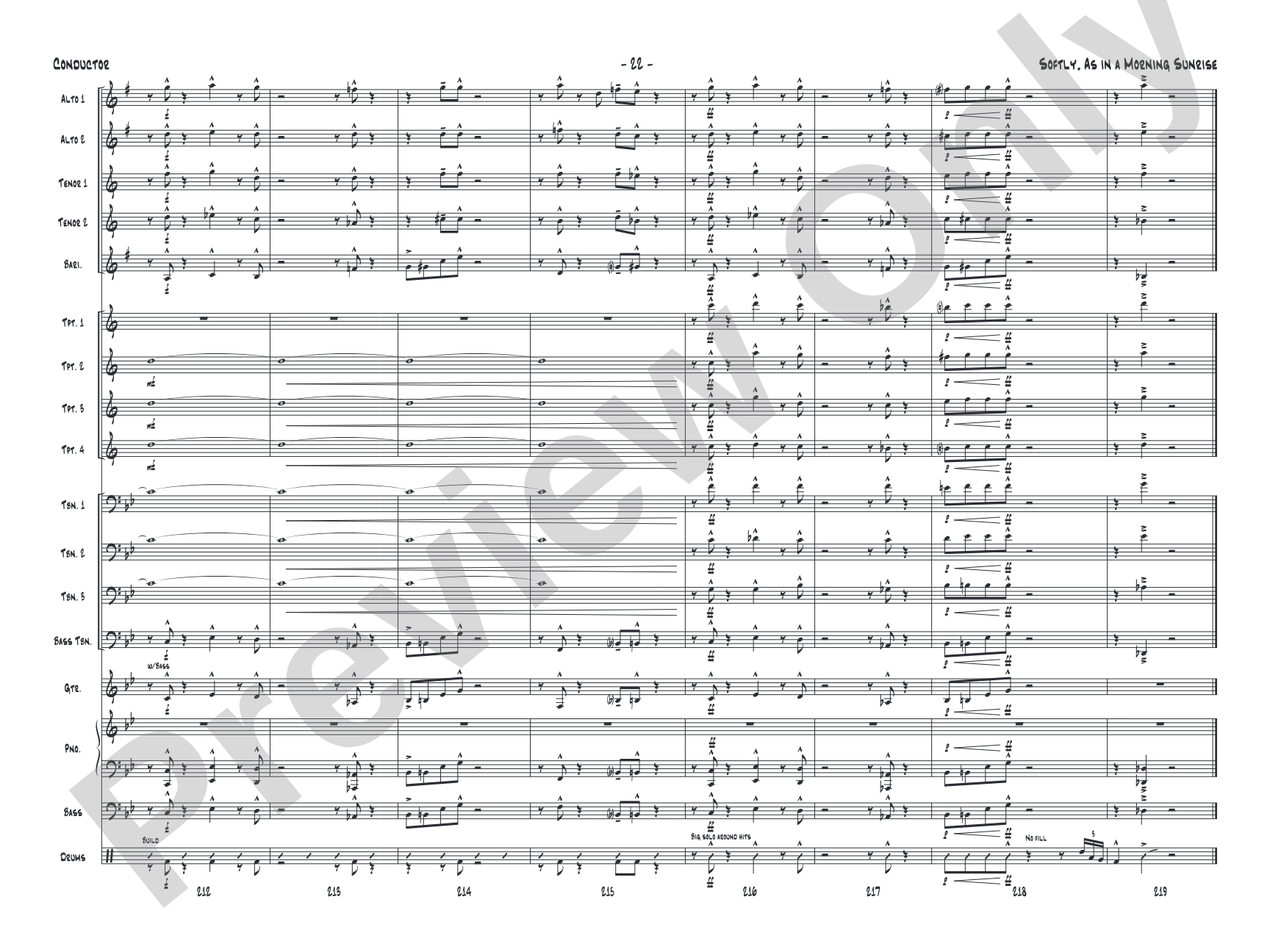

Softly, as in a Morning Sunrise: Jazz Ensemble Conductor Score & Parts
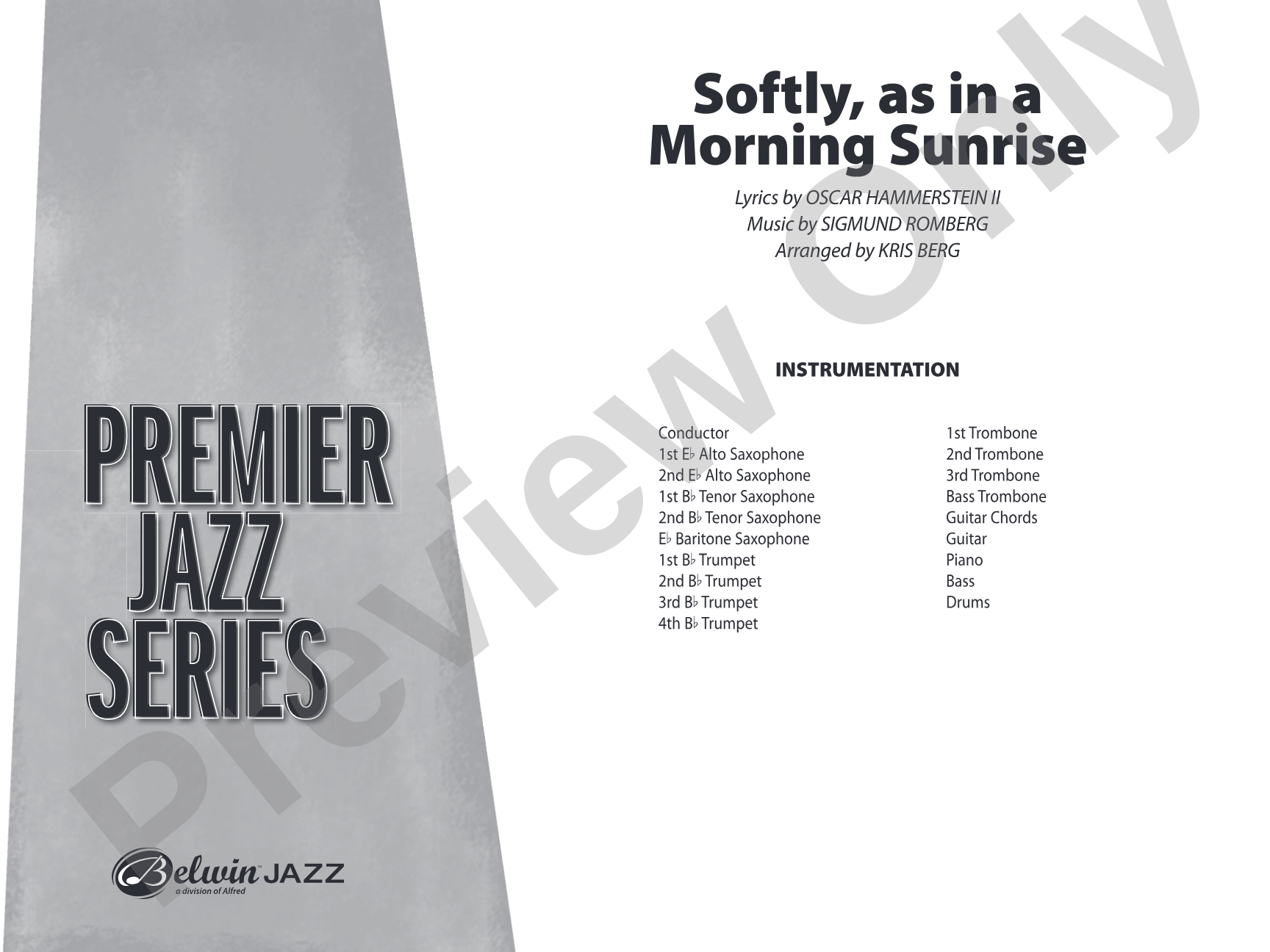
Lyrics by Oscar Hammerstein II, music by Sigmund Romberg / arr. Kris Berg
Grade: 4 (Medium Advanced / Difficult)
Item: 00-PK-0006953

$55.00
Pickup currently not available
Buy Extra Parts (Digital PDF Download)
Parts Added to Cart!
Related Items
Softly, As in a Morning Sunrise: Jazz Ensemble Conductor Score |
$10.00
|
View |
Description
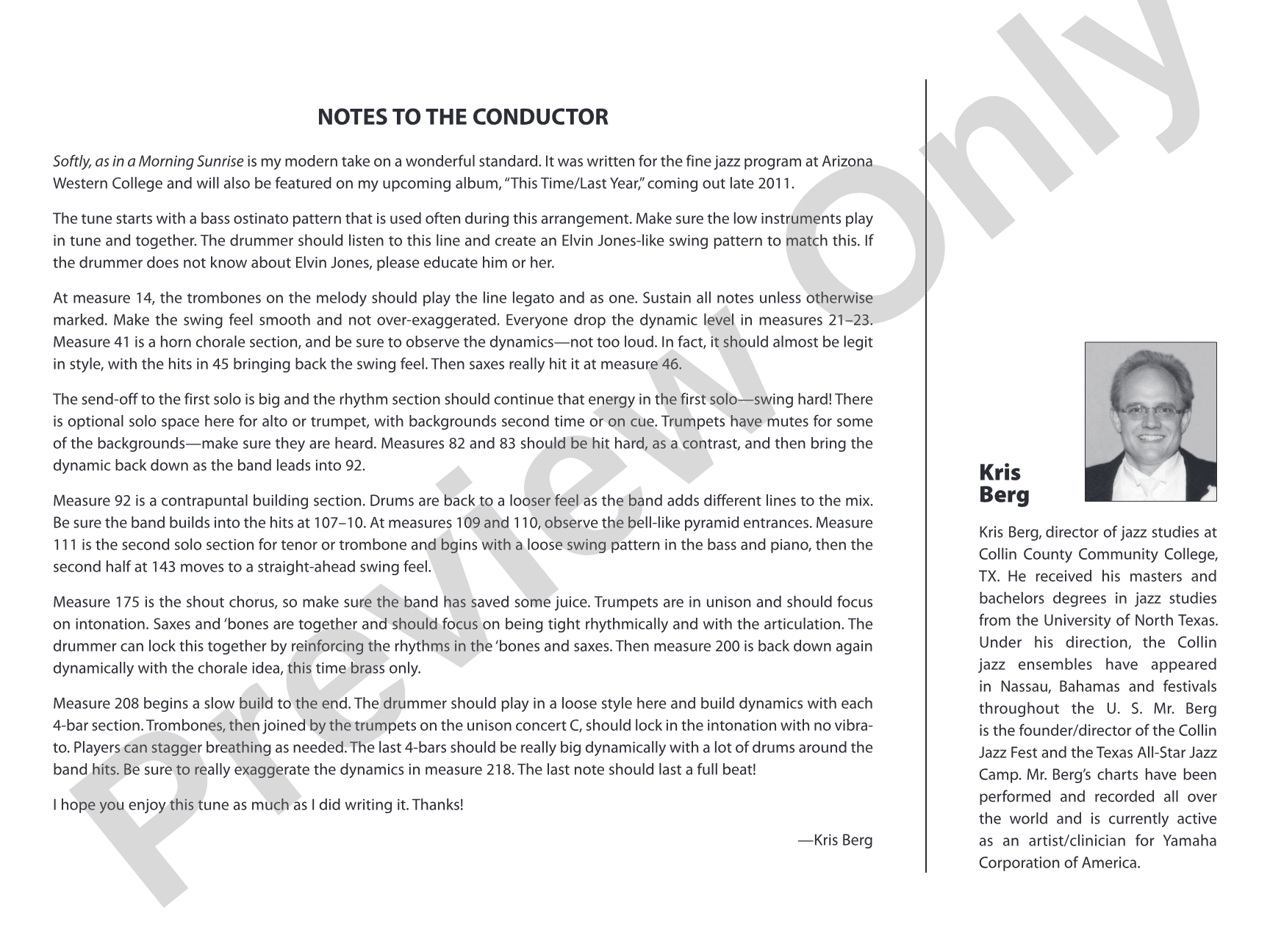
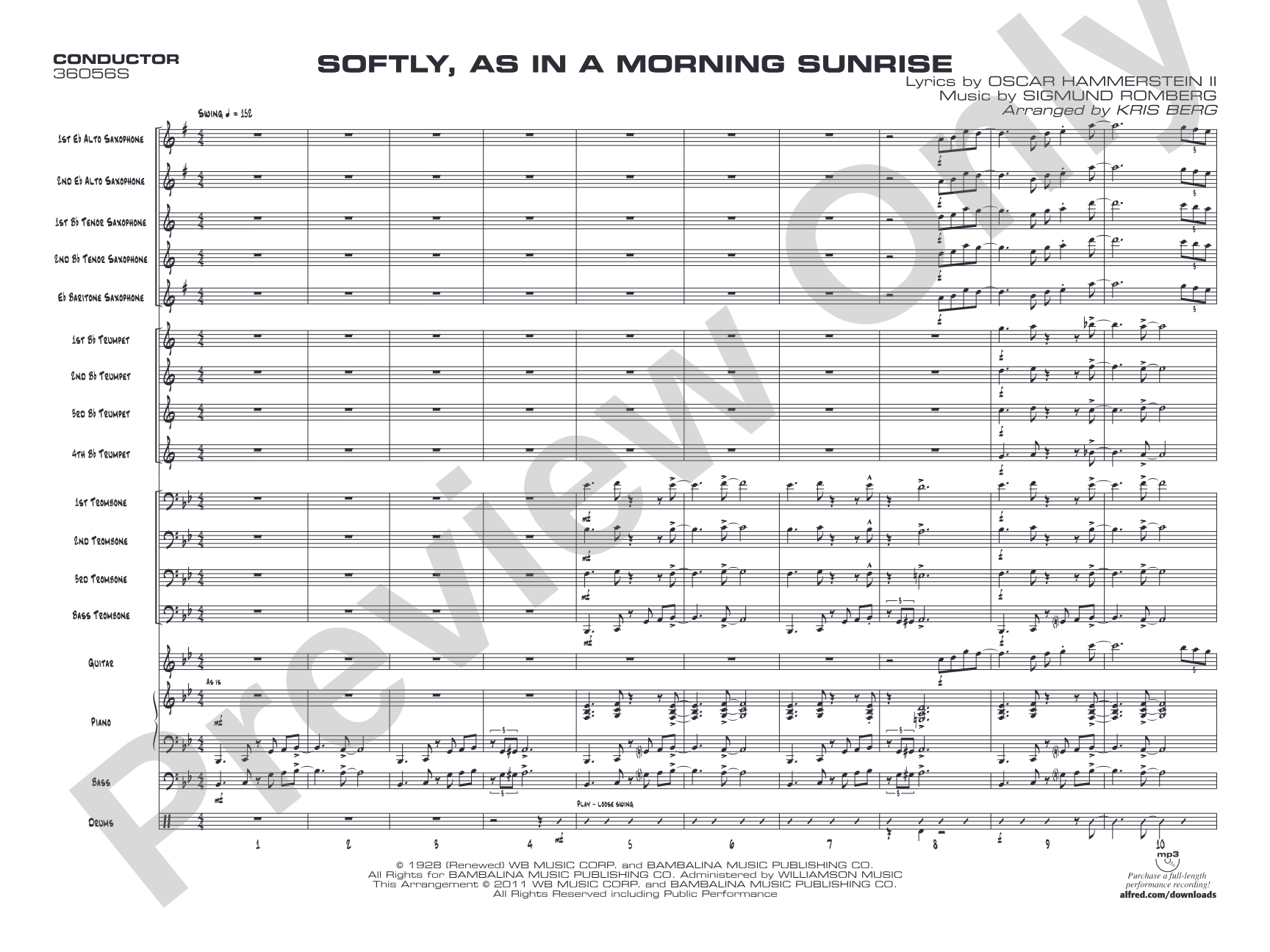
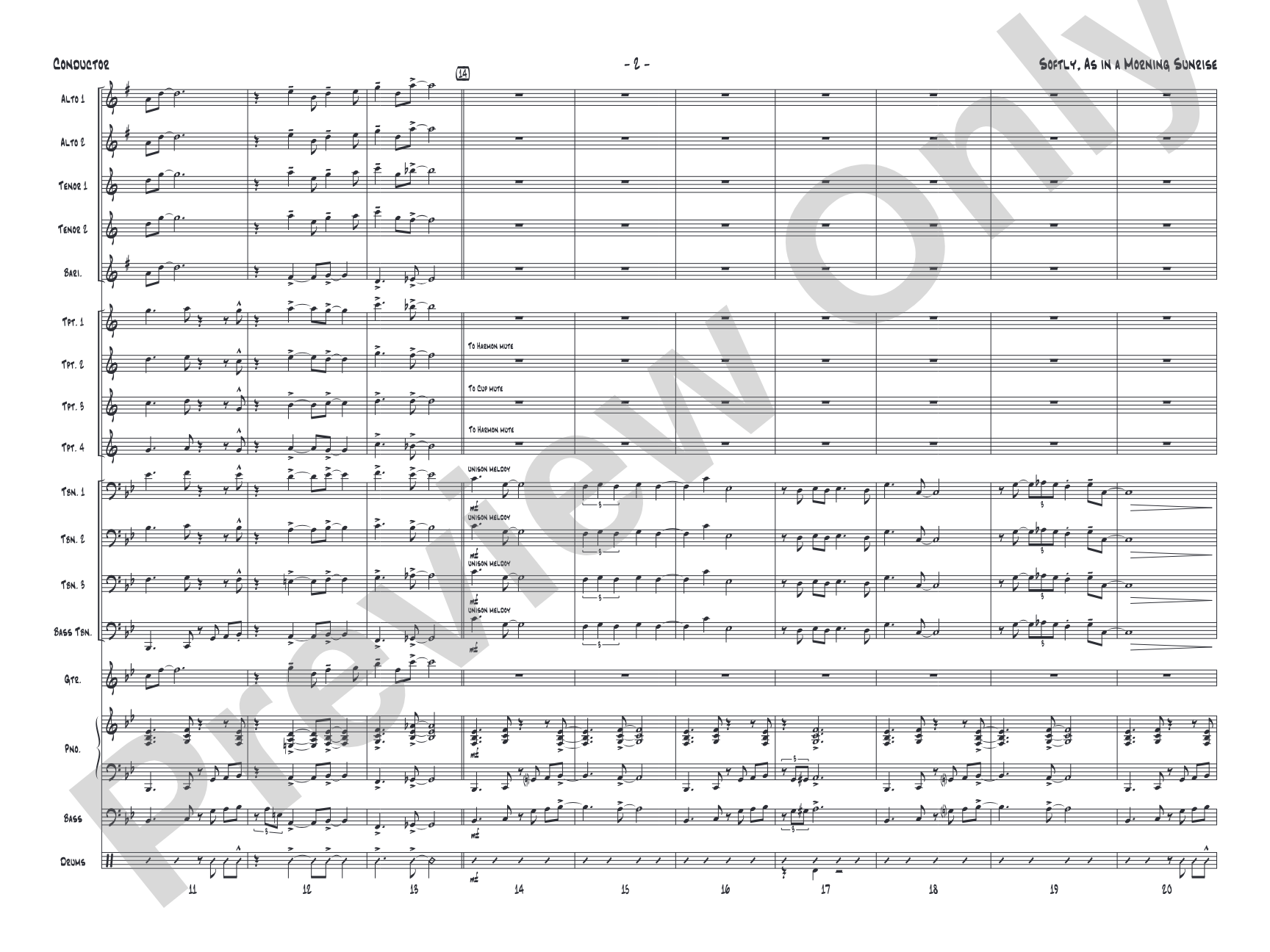
A very hip and contemporary chart arranged and recorded by Kris Berg for his big band in the Dallas area. A mysterioso-sounding intro blossoms into this powerful chart. Solo space for alto, trumpet, tenor, and trombone, and lots of ensemble action for the whole group. Lead trumpet range is to written D above the staff.


Don't just read it, hear it, play along with it, and watch your students grow with it. In MakeMusic Cloud, Softly, as in a Morning Sunrise: Jazz Ensemble Conductor Score & Parts comes alive with professional accompaniment, adjustable tempo, and built-in practice tools that turn solo practice into real progress.
Open in the Player
Jump straight in and assign it today.
Start Your Free Trial
Open this title and explore the full library in minutes.
Sample Audio
1
Audio File
--:--
0:00
0:00
Sample Video
No sample videos found.
Additional Details
Series:
Premier Jazz Series
Publisher:
Alfred Music
Page Count:
96
SKU:
00-PK-0006953
More about this title
About the Composer: Sigmund Romberg
Sigmund Romberg (1887-1951) was a Hungarian-American composer who became one of the most prolific creators of operetta and musical theater in the early 20th century. His works, including The Student Prince and The Desert Song, established him as a master of melody and theatrical orchestration, with a gift for writing songs that balance sophistication with accessibility.
Romberg's compositional legacy extends well beyond his time, as his melodies continue to appear in jazz arrangements, film scores, and educational settings. His harmonic language and gift for memorable themes make his music ideal for reharmonization and reinterpretation by contemporary arrangers seeking material that combines elegance with jazz potential.
Why we love this
Kris Berg's arrangement takes this classic melody and transforms it into a vehicle for ensemble energy and solo storytelling. The mysterioso opening creates immediate intrigue, then the chart opens up to showcase individual voices while maintaining sophisticated ensemble writing throughout. It's the kind of vehicle that keeps a jazz program engaged because everyone on stage has something rewarding to play.
What to expect
The piece opens with an atmospheric, noir-tinged quality that draws listeners in immediately. Once the ensemble enters, it transforms into something swinging and propulsive, combining elegance with infectious groove. The solos feel like natural extensions of the arrangement rather than interruptions, and the overall effect is sophisticated without being precious.
Who it's for
Jazz ensembles at the advanced high school or college level looking for a contemporary arrangement of familiar material. This chart works for groups with solid section chops and at least one strong solo voice in each section. Conductors programming a concert that balances classic melodies with modern jazz energy will find this piece fills that niche effectively.
How to get the most out of it
- Shape the intro with restraint and space. Let the mysterioso quality breathe before the ensemble blossoms; rushing will undercut the arrangement's dramatic arc.
- Balance solo space with ensemble support. Each soloist (alto, trumpet, tenor, trombone) needs the section behind them to be present but not overwhelming.
- Monitor the lead trumpet's top register carefully during sectional rehearsals. The written D above the staff demands solid fundamentals from your lead player, and the rest of the section needs to lock around that sound.
- Lock the rhythm section early. The chart's power comes from ensemble cohesion, which starts with rock-solid time and harmonic clarity from piano, bass, and drums.
How to use it
Program this early enough in the set to establish your ensemble's musicality and sophistication. The blend of accessibility (a well-known melody) and contemporary jazz arranging makes it an excellent bridge between classic standards and original compositions. It also works well as a showcase for section strength before or after a more demanding original.
Skills your students will build
- Balance between solo transparency and ensemble support in jazz voicings
- Navigating extended brass range (lead trumpet to D above staff) with control and endurance
- Sustaining groove during solo sections while maintaining rhythmic precision
- Reading and interpreting contemporary jazz arranging conventions (voicings, articulation, comping)
- Ensemble listening and response as soloists trade material over consistent section sound