Soaring Meadows: Viola Sheet Music Preview

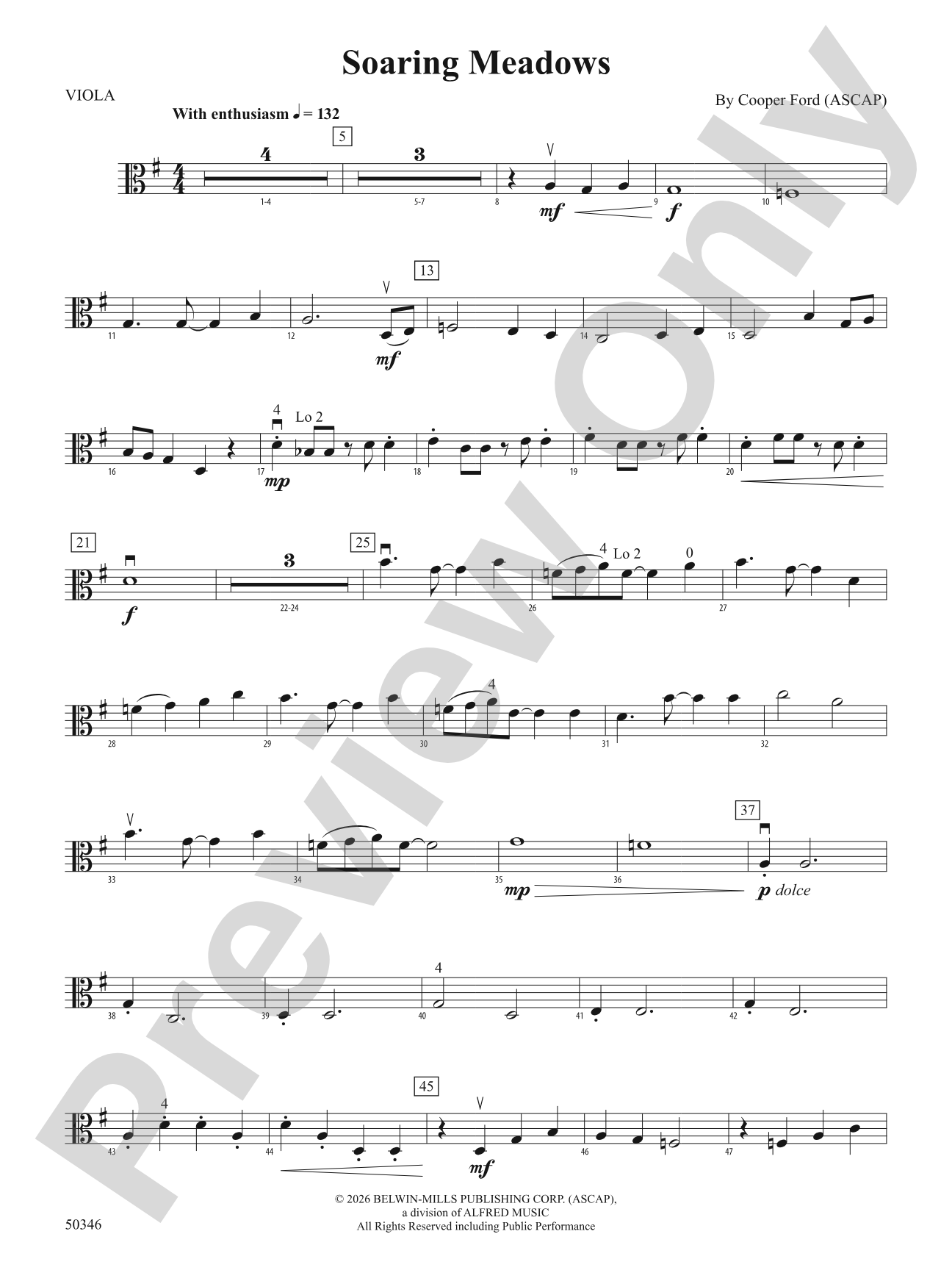
Soaring Meadows: Viola

By Cooper Ford

Grade: 2

Item: 00-PC-0019704_VA1

Digital Download
$3.00
Description
Imagine flying over fields of vibrant colors and sunshine. Centered in G, Cooper Ford's Soaring Meadows is a lighthearted piece for intermediate string orchestra that features an introduction to accidentals, basic syncopation, and hooked bowings. Melodies are also passed around, giving each section a chance to shine. This musical bird's-eye view of nature's beauty will be a delight for all!

Soaring Meadows: Viola isn't in MakeMusic Cloud just yet...but it could be. Let us know you'd like to see it, and you'll help shape what comes next. In the meantime, start a free trial and dive into thousands of interactive titles your students can play along with today.

Sample Audio
0:00
0:00
Sample Video
Additional Details
Series: Belwin Intermediate String Orchestra
Publisher: Alfred Music
SKU: 00-PC-0019704_VA1

More about this title

About the Composer: Cooper Ford

Cooper Ford

Cooper Ford grew up in Chatham, New Jersey, where early instruction in violin and trumpet sparked his interest in composition through encouragement from his school music teachers. He earned his Bachelor of Music in Music Education from The College of New Jersey and his Master of Music in Music Education from the University of Florida.

Ford has taught orchestra at North Brunswick Township High School in New Jersey and previously served on the conducting staff of the New Jersey Youth Symphony, working with students in grades 5-7. He remains active as a guest conductor and clinician, and holds membership in both the American String Teachers Association (ASTA) and the National Association for Music Education (NAfME).

Why we love this

Ford writes with a natural understanding of what intermediate orchestras need: accessible melodies that rotate through sections so every player gets a moment in the spotlight, technical challenges that teach without overwhelming, and a genuinely engaging musical concept that keeps rehearsals from feeling like drills. The lighthearted character and imagery make this one that students actually remember playing.

What to expect

Bright and soaring, with a sense of movement and discovery. The melody floats above the landscape like a bird taking in vistas of color and open space, never heavy or earthbound, always curious about what comes next.

Who it's for

Intermediate string orchestras seeking concert or festival repertoire that teaches solid fundamentals without sacrificing musical interest. Directors looking for a piece where every section has meaningful solo material will find this especially rewarding to program.

How to get the most out of it

  • Establish the hooked bowings cleanly in sectionals before full rehearsal. Have each section demonstrate the articulation pattern independently so the technique feels natural rather than rushed.
  • Balance the passing melodies by rehearsing them as a choir would: the section carrying the melody plays at a comfortable volume while other sections support underneath, then swap roles so everyone experiences both the leading and accompanying role.
  • Address accidentals by measure number early in preparation. Mark them in pencil if students are still adjusting to reading them, then gradually phase out the marks as confidence grows.
  • Shape the introduction deliberately to set the "flying over" imagery. Keep it lighter and more spacious than you might initially instinct, letting the melody breathe before the fuller textures arrive.

How to use it

This works beautifully as a concert opener that sets an upbeat, optimistic tone for the program. It also fits naturally into a nature-themed concert or alongside other pieces that celebrate the outdoors, and its festival-appropriate length and difficulty make it a strong choice for spring competitions.

Skills your students will build

  • Reading and intonating accidentals in G major context
  • Executing hooked bowings with clear articulation
  • Playing syncopated rhythmic figures with precision
  • Balancing melody and accompaniment when parts rotate between sections
  • Responding to linear shape and phrasing across an entire piece

You May Also Like