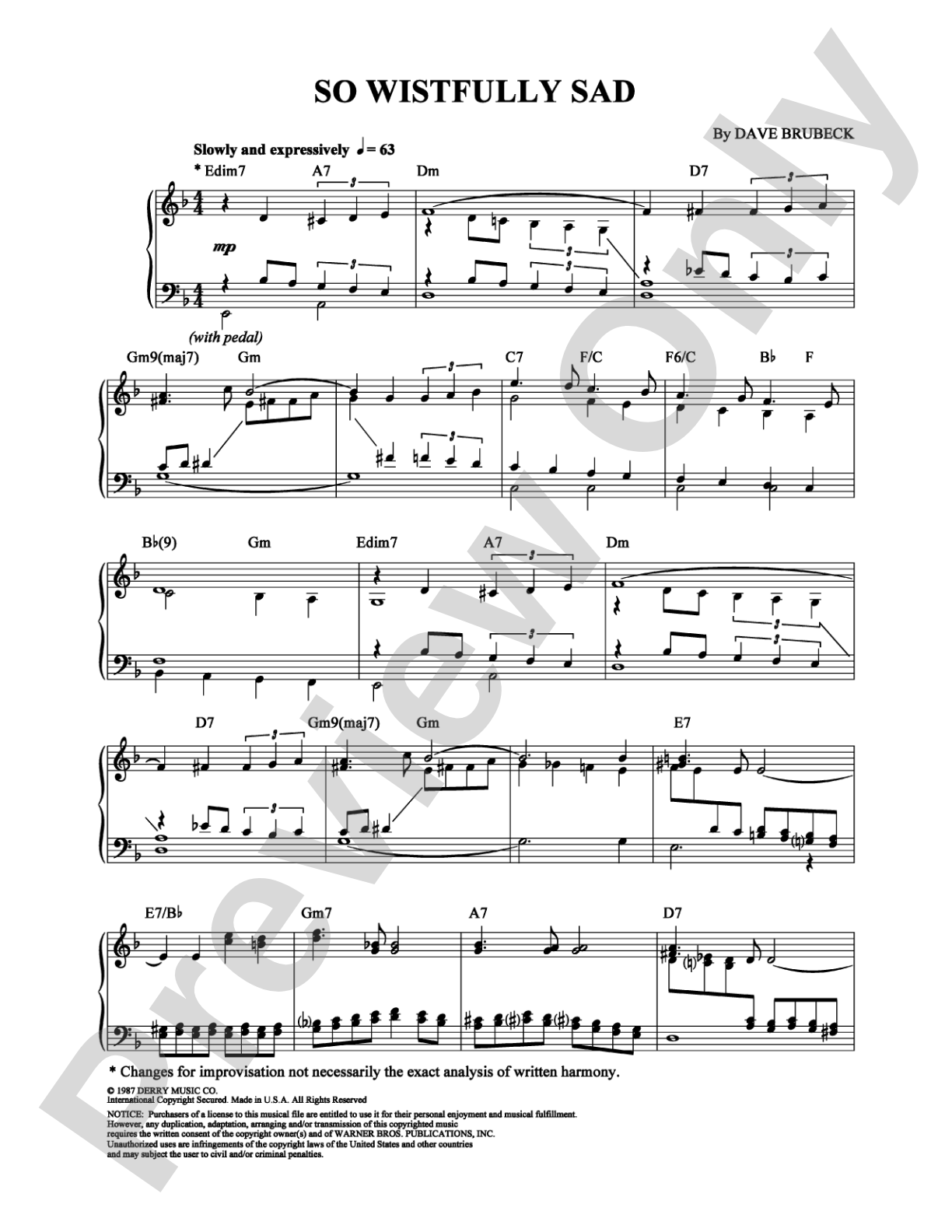
So Wistfully Sad: Piano Digital Sheet Music

So Wistfully Sad: Piano Digital Sheet Music

Dave Brubeck

Item: 00-PS-0000961

Digital Download
$3.99
Description

So Wistfully Sad: Piano Digital Sheet Music isn't in MakeMusic Cloud just yet...but it could be. Let us know you'd like to see it, and you'll help shape what comes next. In the meantime, start a free trial and dive into thousands of interactive titles your students can play along with today.

Sample Audio
No sample audio found.
Sample Video
Additional Details
SKU: 00-PS-0000961

More about this title

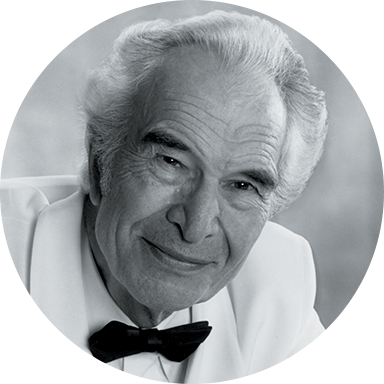
About the Artist: Dave Brubeck

Dave Brubeck

Dave Brubeck built his reputation as a pianist and composer who refused to separate jazz from classical thinking. His studies with Darius Milhaud at Mills College shaped a compositional voice that drew equally from improvisation and rigorous structure, resulting in works spanning choral pieces, orchestral compositions, ballets, and chamber music alongside his celebrated jazz recordings. His landmark album Time Out became the first jazz LP to sell over a million copies, introducing complex meters and sophisticated harmonies to mainstream audiences.

Beyond his musical innovations, Brubeck was a civil rights pioneer who integrated his touring ensembles in the 1950s when such decisions carried real personal cost. His sacred works including To Hope! and the oratorios The Voice of the Holy Spirit and Beloved Son have been recorded by major orchestras and choral ensembles worldwide. He received the Presidential Medal of the Arts from President Clinton, a Grammy Lifetime Achievement Award, and was honored by the London Symphony Orchestra and the American Classical Music Hall of Fame.

Why we love this

Brubeck's piano writing balances jazz idiom with compositional craft, creating pieces that sound spontaneous while demanding real pianistic maturity. A composition like this reveals why he bridged the jazz and classical worlds so successfully: the notated score captures the essence of his improvisational voice without requiring the performer to be an experienced jazz improviser.

What to expect

The piece unfolds with introspective melancholy, its title suggesting emotional depth rendered through Brubeck's characteristic harmonic language. Jazz inflections appear not as surface decoration but as integral to the emotional expression, creating a texture that feels both intimate and sophisticated.

Who it's for

Pianists comfortable with jazz vocabulary and harmonic sophistication who want to explore Brubeck's compositional voice through his notated works. This suits advanced students and professionals seeking repertoire that bridges classical and jazz aesthetics without requiring expert-level jazz improvisation.

How to get the most out of it

  • Honor the rhythmic flexibility implied by the jazz idiom. The notated melody should breathe naturally rather than feel metronomically locked, especially during transitions between sections.
  • Pay attention to dynamics and articulation markings as compositional statements, not mere suggestions. Brubeck's fully notated works rely on these details to convey the emotional arc.
  • Explore the harmonic colors by listening to how each chord sits in the register you're playing. Brubeck's classical training shaped his voice leading; let the harmony guide your touch and voicing choices.
  • Consider the piece's relationship to his recorded work. Knowing how Brubeck himself approached similar material can inform your interpretive choices without requiring you to imitate his improvisation.

How to use it

This solo work fits naturally into recitals exploring twentieth-century American composers or programming that showcases the convergence of jazz and classical traditions. It also serves as an introduction to Brubeck's compositional catalog for students who know him primarily as a jazz recording artist.

Skills your students will build

  • Interpreting jazz harmony and voice leading in a notated score
  • Balancing rubato and rhythmic flexibility within a classical compositional framework
  • Understanding Brubeck's approach to bridging jazz and concert music traditions
  • Developing sensitivity to articulation and dynamic subtlety in emotionally introspective material

You May Also Like