So Rare: Lead Sheet Digital Sheet Music

So Rare: Lead Sheet Digital Sheet Music

Jimmy Dorsey, Jerry Herst

Item: 00-PS-0007298

Digital Download
$1.99
Description

So Rare: Lead Sheet Digital Sheet Music isn't in MakeMusic Cloud just yet...but it could be. Let us know you'd like to see it, and you'll help shape what comes next. In the meantime, start a free trial and dive into thousands of interactive titles your students can play along with today.

Sample Audio
No sample audio found.
Sample Video
Additional Details
SKU: 00-PS-0007298

More about this title

About the Artist: Jimmy Dorsey

Jimmy Dorsey (1904–1957) was a clarinet and alto saxophone virtuoso who shaped the sound of the big band era. Leading one of the most commercially successful orchestras of the 1930s and 1940s, Dorsey became known for his silky tone and sophisticated arrangements that balanced ensemble precision with space for improvisation. His band recorded dozens of hits and served as a training ground for musicians who went on to define American jazz.

Why we love this

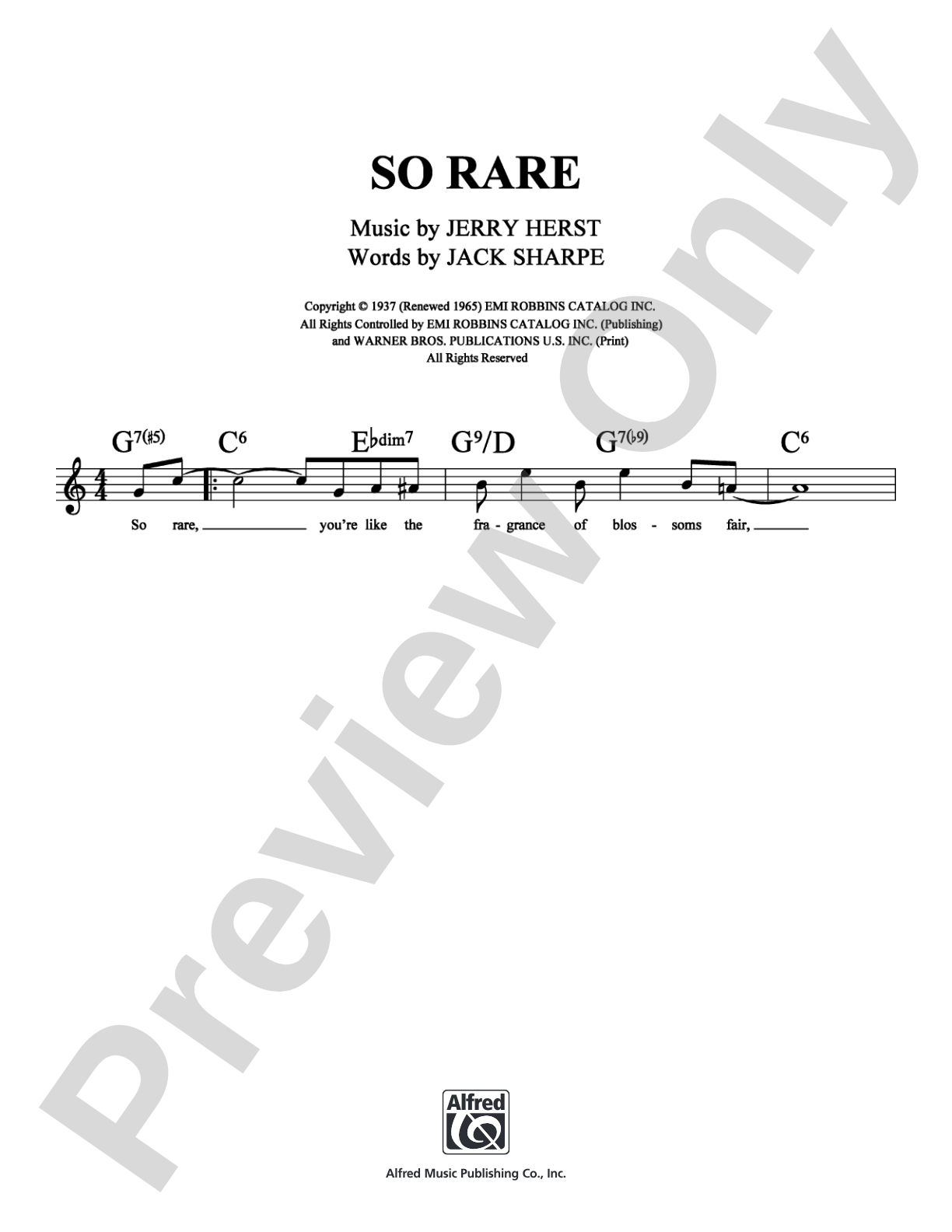
So Rare remains one of the most recorded standards in jazz, and having it as a lead sheet gives you direct access to the melody and chord changes that have sustained generations of musicians. The song's lyrical quality and straightforward harmonic structure make it ideal for teaching jazz soloing without overwhelming harmonic complexity, while its nostalgic charm adds elegance to any jazz or standard repertoire program.

What to expect

Warm and nostalgic, with a melody that unfolds like a gentle reminiscence. The tune's unhurried pace and warm harmonic colors evoke the intimate quality of a late-night ballroom, inviting performers to find their own voice within its familiar contours.

Who it's for

Jazz musicians developing their soloing vocabulary, arrangers building charts for small groups or big bands, and educators seeking accessible standards for teaching jazz language and phrasing. This lead sheet works equally well for horn players, pianists, and singers working in jazz or traditional pop settings.

How to get the most out of it

  • Study the original Dorsey recording to internalize the phrasing and rubato that defines the tune's character; the melody's simplicity rewards subtle interpretive choices.
  • Treat the chord progression as a dialogue between stated changes and logical extensions; the lead sheet provides the foundation, but jazz interpretation means knowing when to imply alterations.
  • Balance melody and comping by listening closely to the harmonic rhythm; this tune breathes best when accompanists support rather than fill every available space.

How to use it

Program this alongside other Dorsey-era standards in a jazz or American songbook concert to provide historical context and showcase how accessible, enduring melodies remain vehicles for artistic expression. It pairs naturally with other romantic standards and works well as a feature for a soloist or small combo within a larger ensemble concert.

Skills your students will build

  • Reading lead sheet notation and interpreting chord symbols
  • Phrasing legato melody lines with jazz articulation
  • Improvising over a simple, functional harmonic progression
  • Understanding song form and navigating repeated sections in performance

You May Also Like