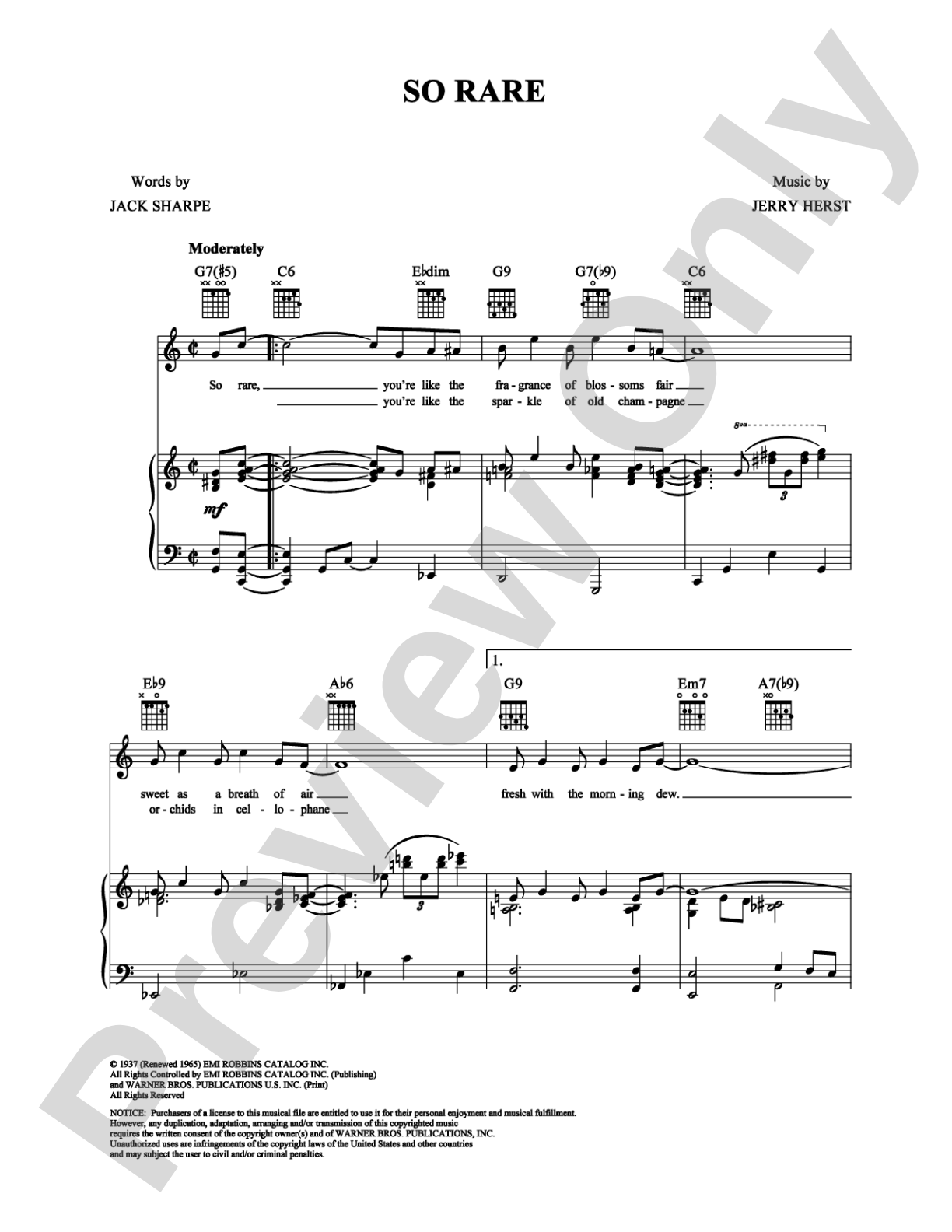
So Rare: Piano/Vocal/Chords Digital Sheet Music

So Rare: Piano/Vocal/Chords Digital Sheet Music

Jimmy Dorsey, Jerry Herst

Item: 00-PS-0007297

Digital Download
$3.99
Description

So Rare: Piano/Vocal/Chords Digital Sheet Music isn't in MakeMusic Cloud just yet...but it could be. Let us know you'd like to see it, and you'll help shape what comes next. In the meantime, start a free trial and dive into thousands of interactive titles your students can play along with today.

Sample Audio
No sample audio found.
Sample Video
Additional Details
SKU: 00-PS-0007297

More about this title

About the Artist: Jimmy Dorsey

Jimmy Dorsey (1904-1957) was a pioneering alto saxophonist and bandleader who helped define the swing era. His orchestra became one of the most commercially successful ensembles of the 1930s and 1940s, known for polished arrangements and crossover appeal that brought jazz phrasing to popular song standards.

Why we love this

This lead sheet captures a timeless ballad from the swing repertoire that works equally well as a solo piano piece or a jazz vocal vehicle. The straightforward chord progression and lyrical melody make it accessible for students building jazz interpretation skills while retaining enough harmonic interest to reward thoughtful accompaniment.

What to expect

The tune carries a gentle, nostalgic quality characteristic of 1940s ballads, with a melody that sits comfortably in the voice and invites lyrical singing. The harmonic language is warm and consonant, allowing singers and pianists to focus on phrasing and interpretation rather than navigating dense chromaticism.

Who it's for

Pianists and vocalists exploring jazz standards and swing-era repertoire benefit from this straightforward lead sheet arrangement. It works well for students developing sight-reading fluency in jazz notation and for performers preparing material for recitals or jazz ensemble performances.

How to get the most out of it

  • Shape the melody with subtle rubato through the verse, letting the harmonic rhythm breathe rather than adhering strictly to the beat.
  • Voice the piano chords across the full keyboard range instead of clustering them in one register, which opens up space for the vocal line to sit prominently.
  • Balance the tension between the written chords and jazz comping possibilities by establishing a clear harmonic foundation before adding seventh extensions or alterations.
  • Support the vocalist's phrasing by listening to their breath and lyrical intention rather than treating the accompaniment as a rigid metric grid.

How to use it

Include this standard in a jazz recital or standard-focused concert where it can sit alongside other swing-era vocals or instrumental pieces. It also works as a teaching model when introducing students to lead sheet reading and the relationship between melody, chords, and comping choices.

Skills your students will build

  • Reading and interpreting jazz chord symbols and lead sheet notation
  • Balancing melodic and harmonic elements in piano-vocal collaboration
  • Applying rubato and phrasing interpretation to swing-era material
  • Comping and voicing choices that support a vocalist's line

You May Also Like