
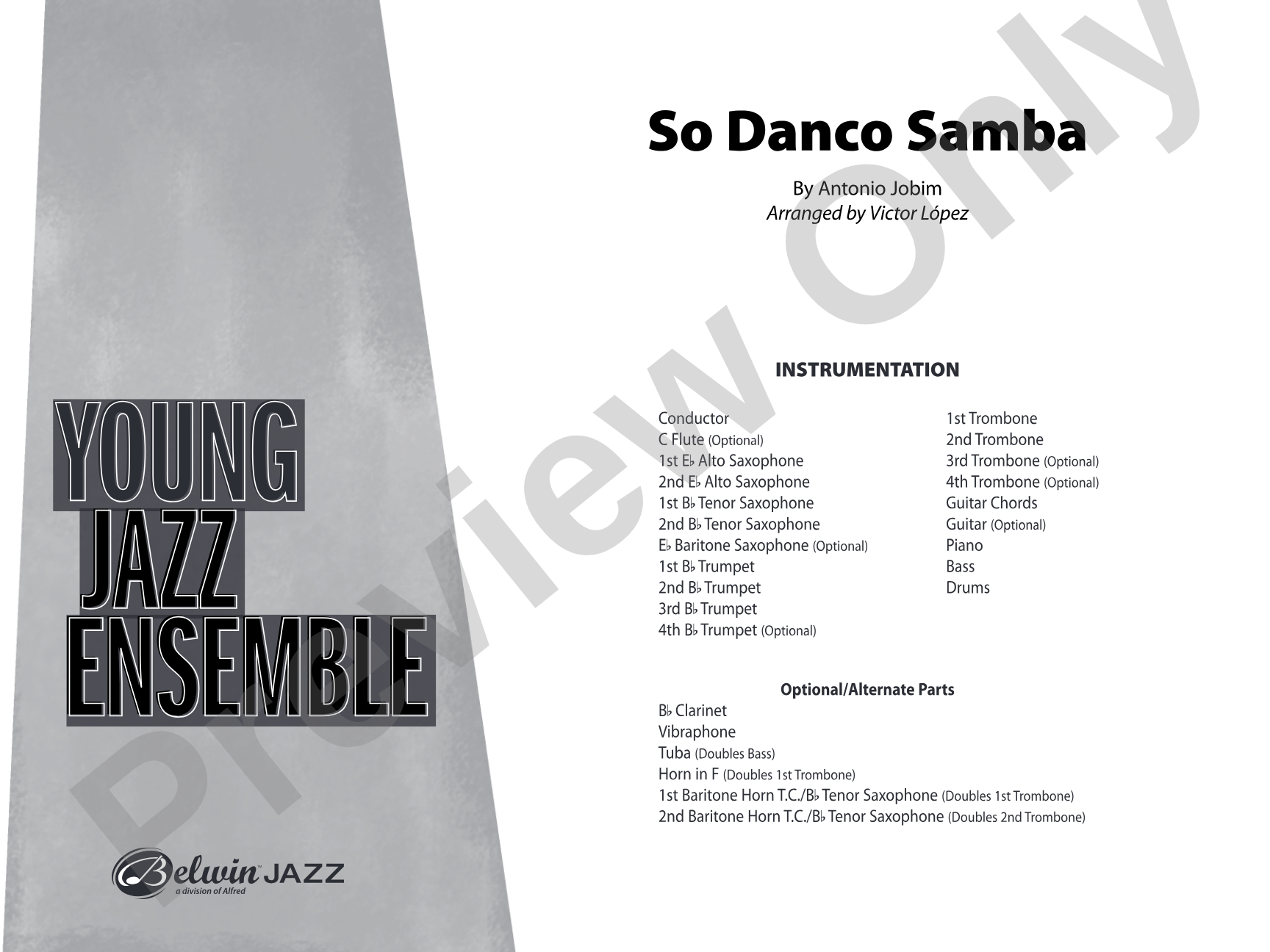
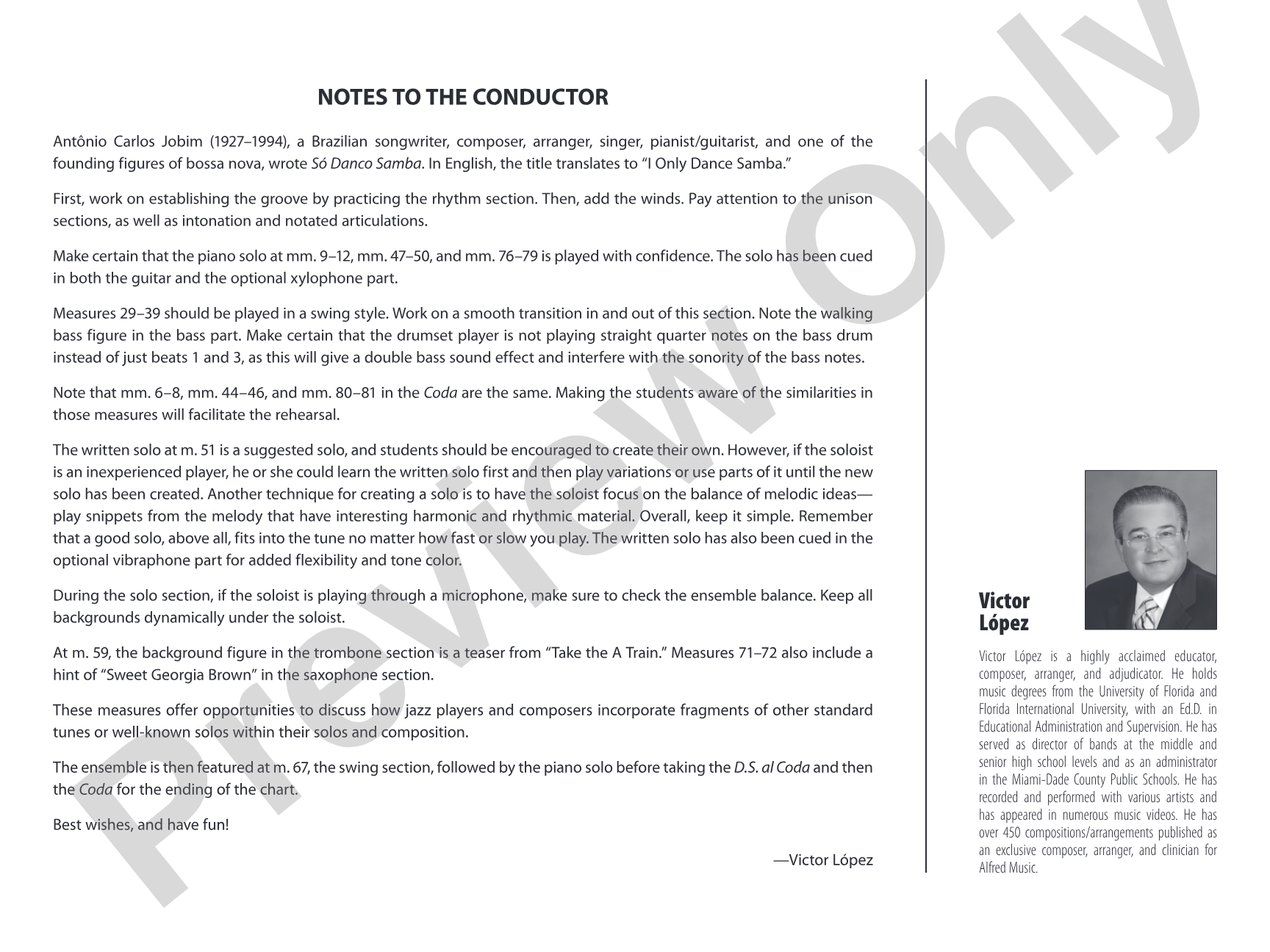
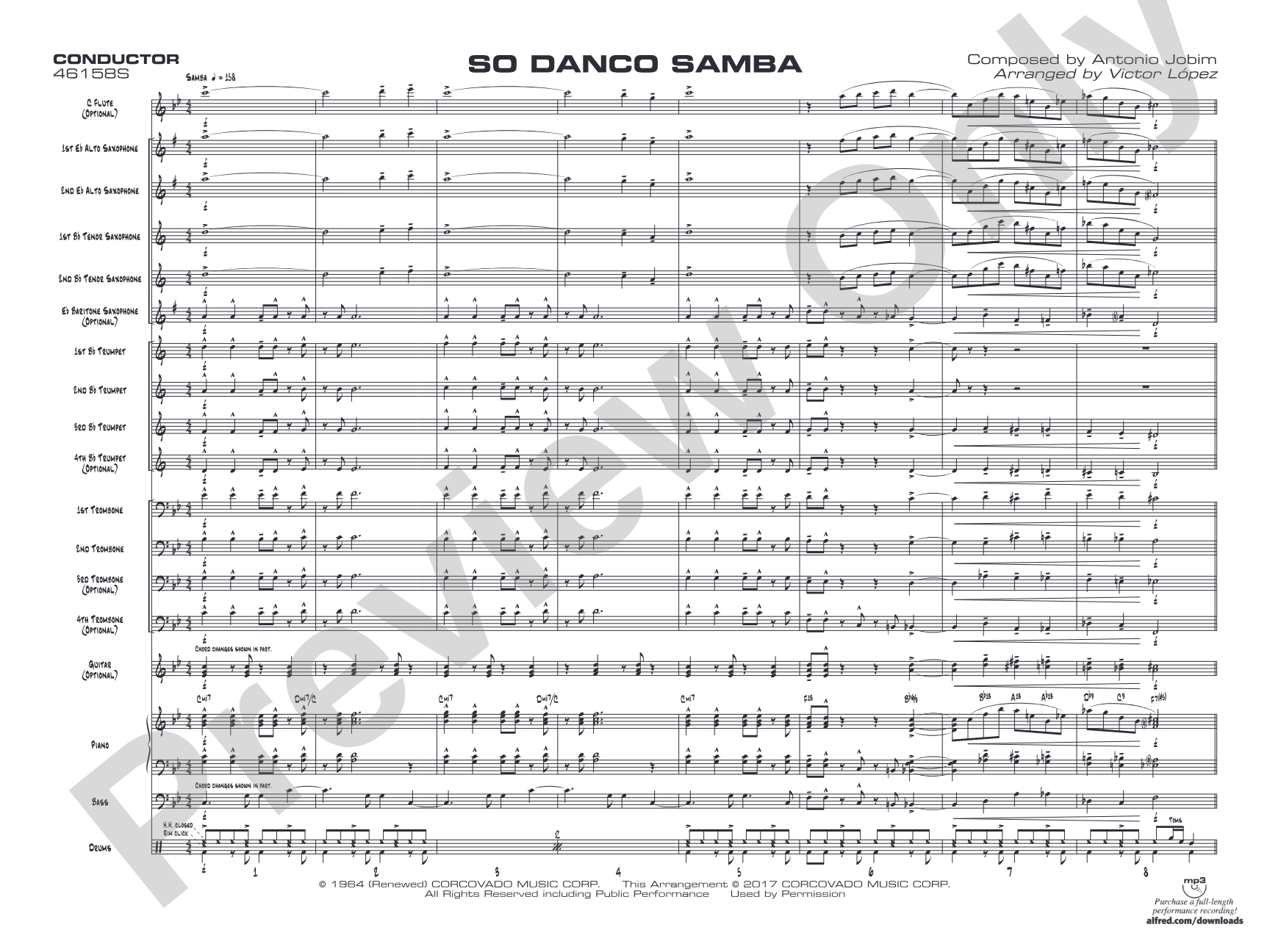
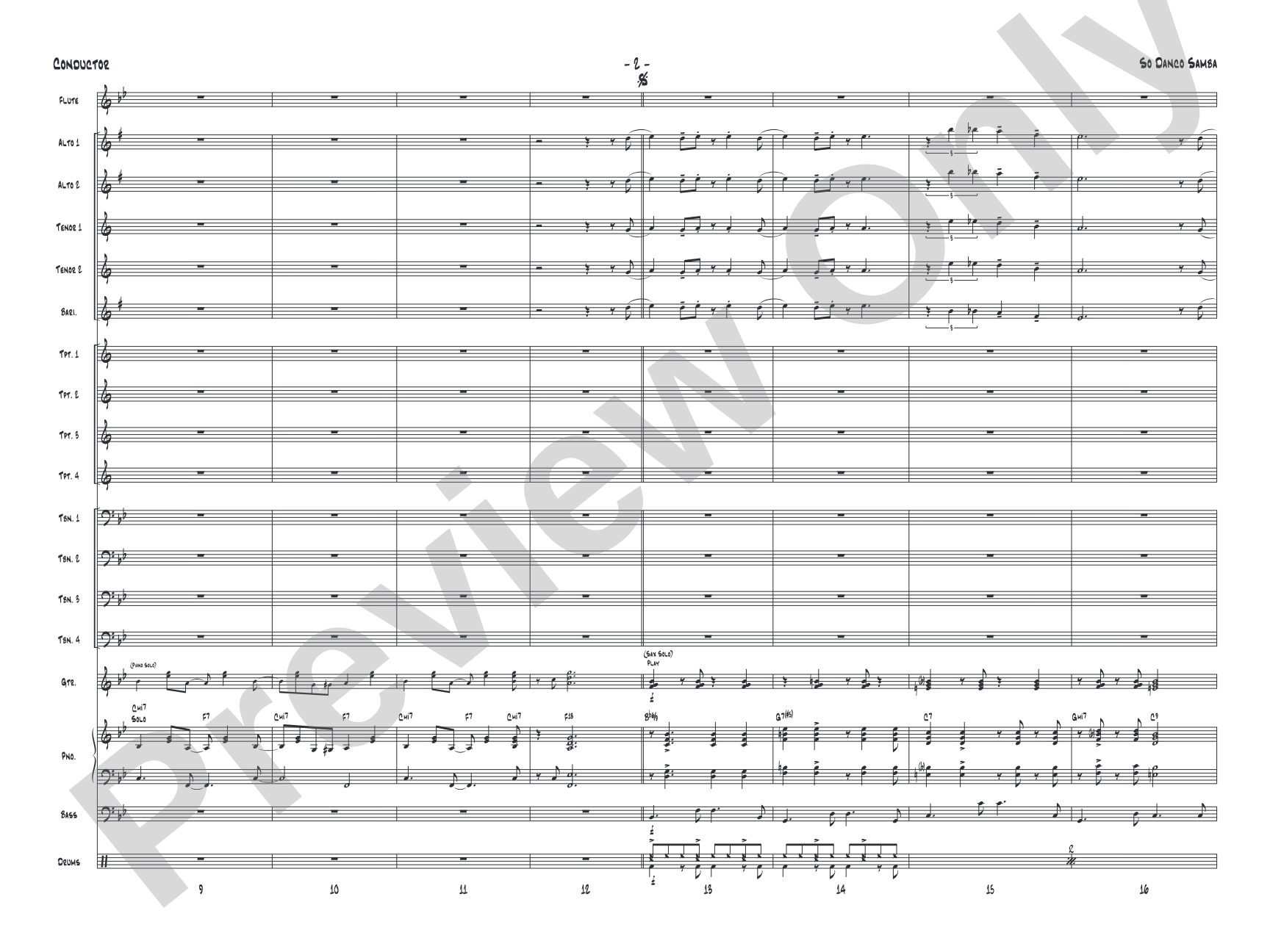
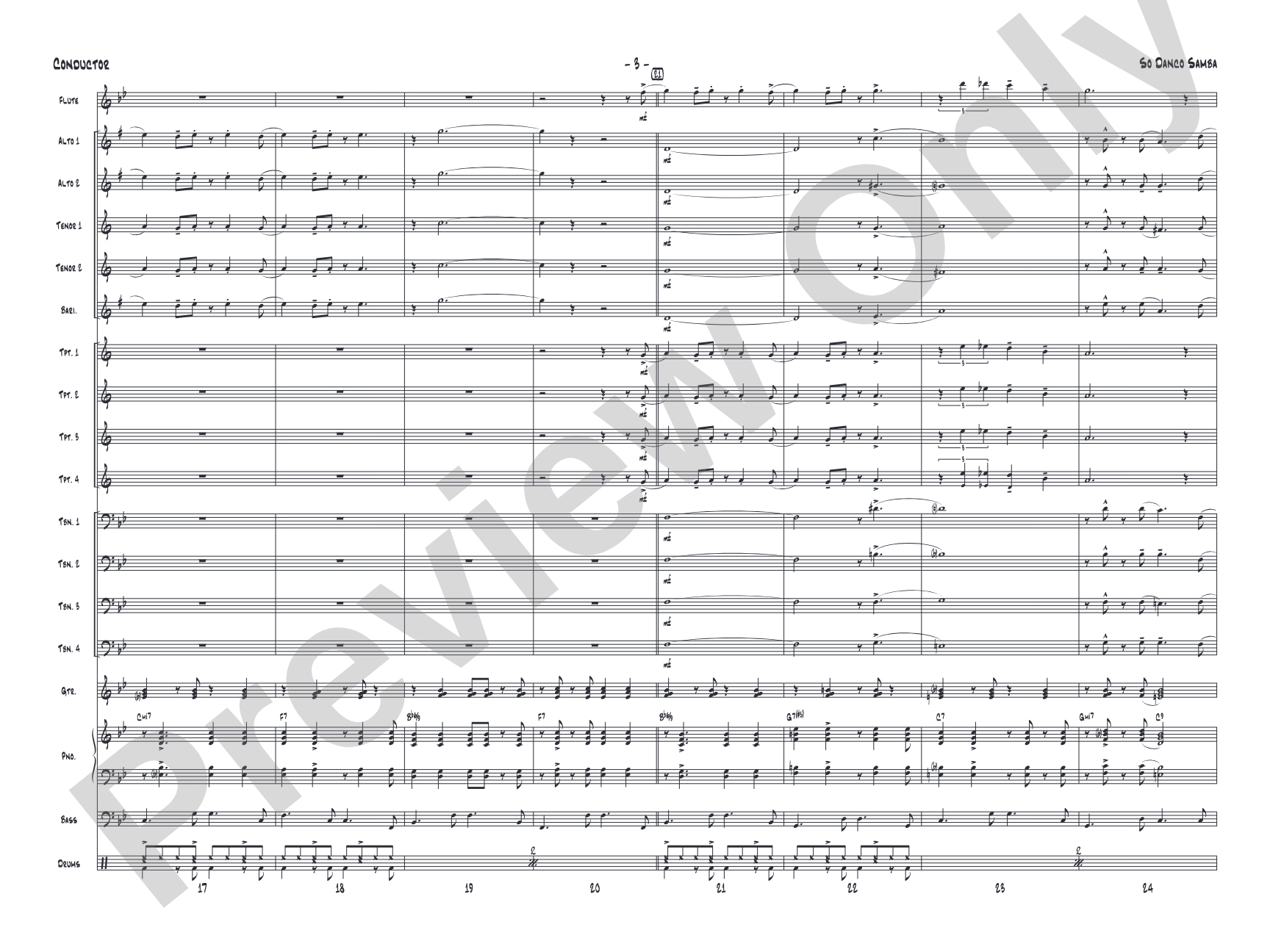
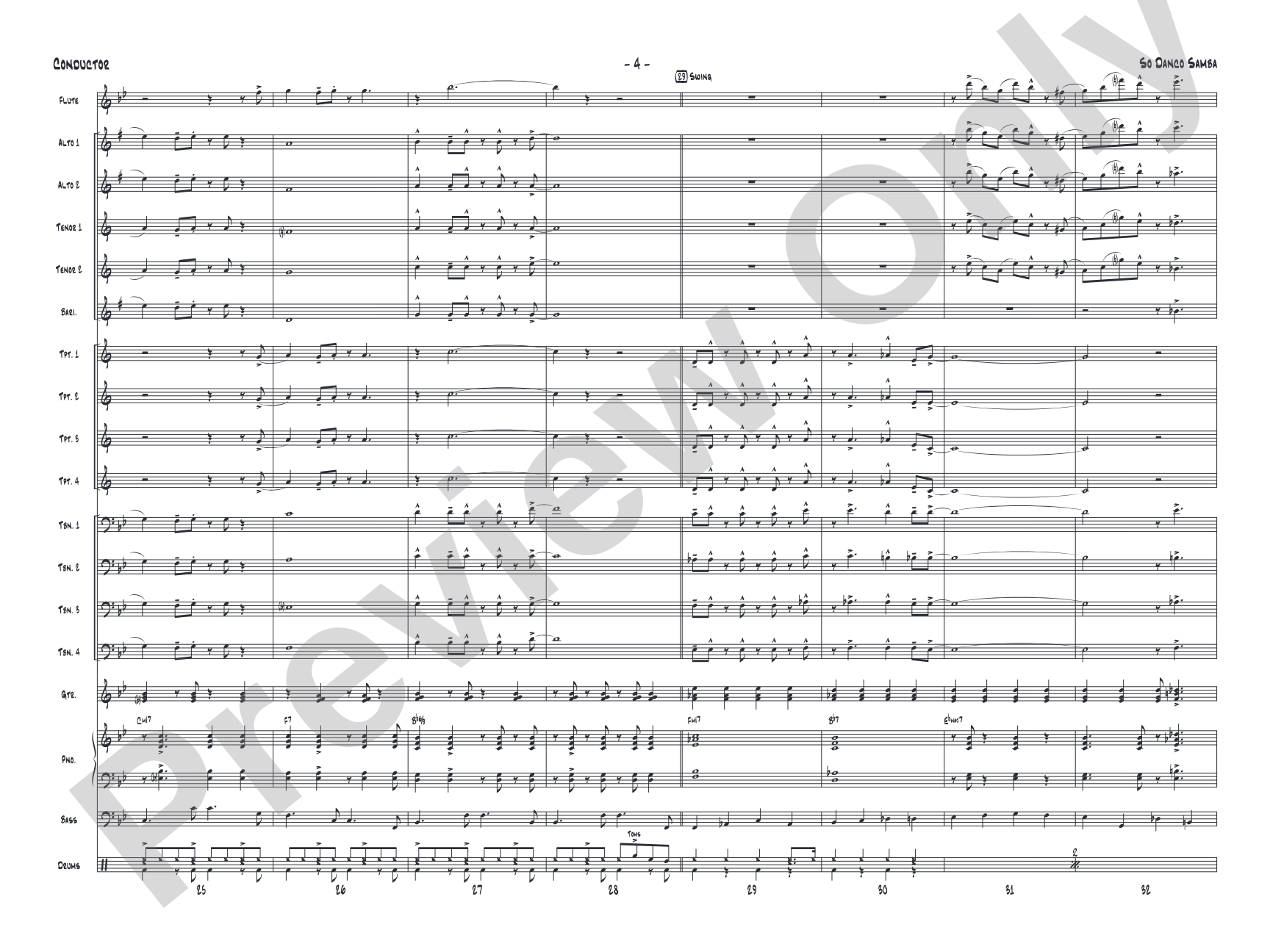
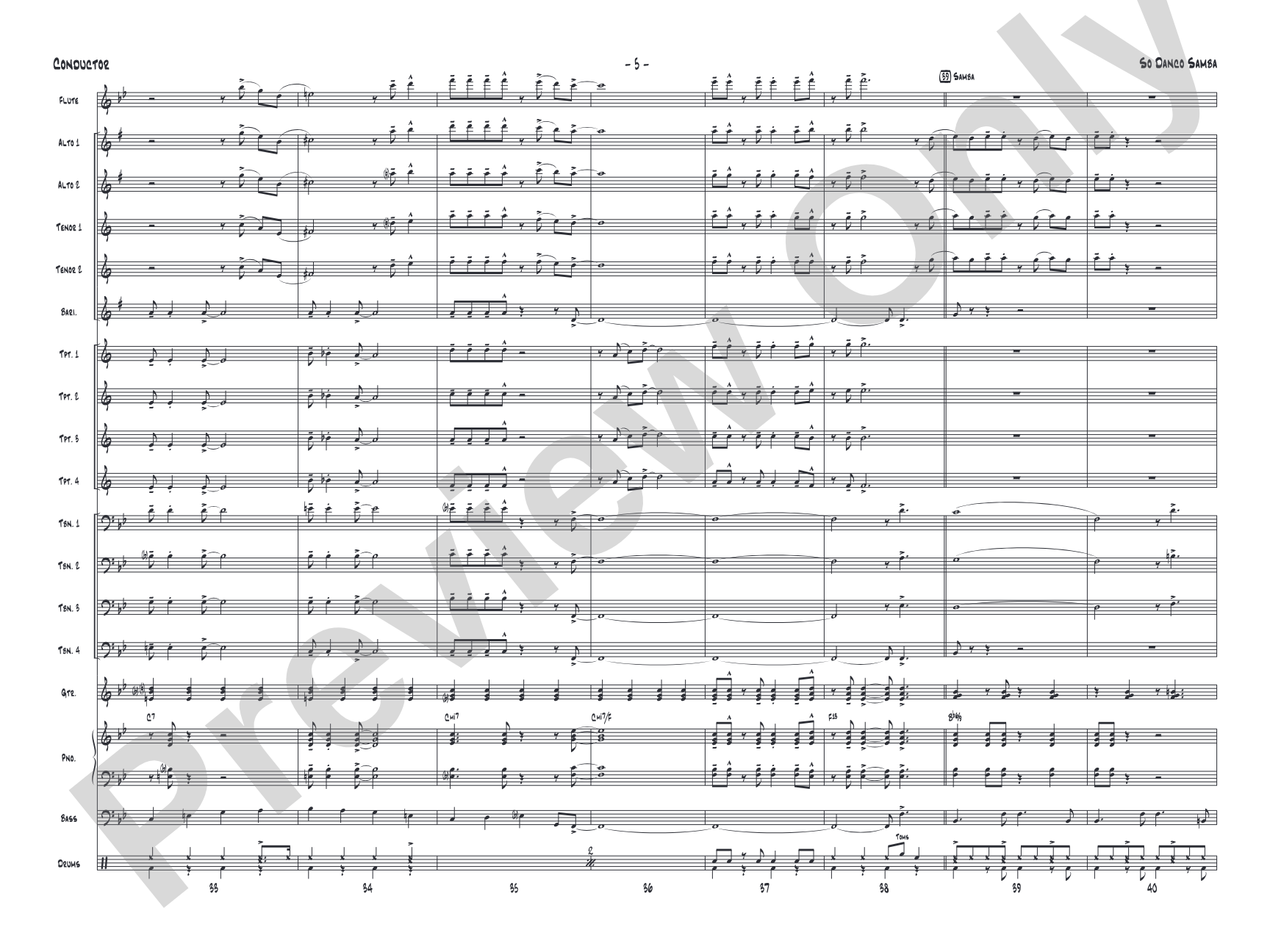
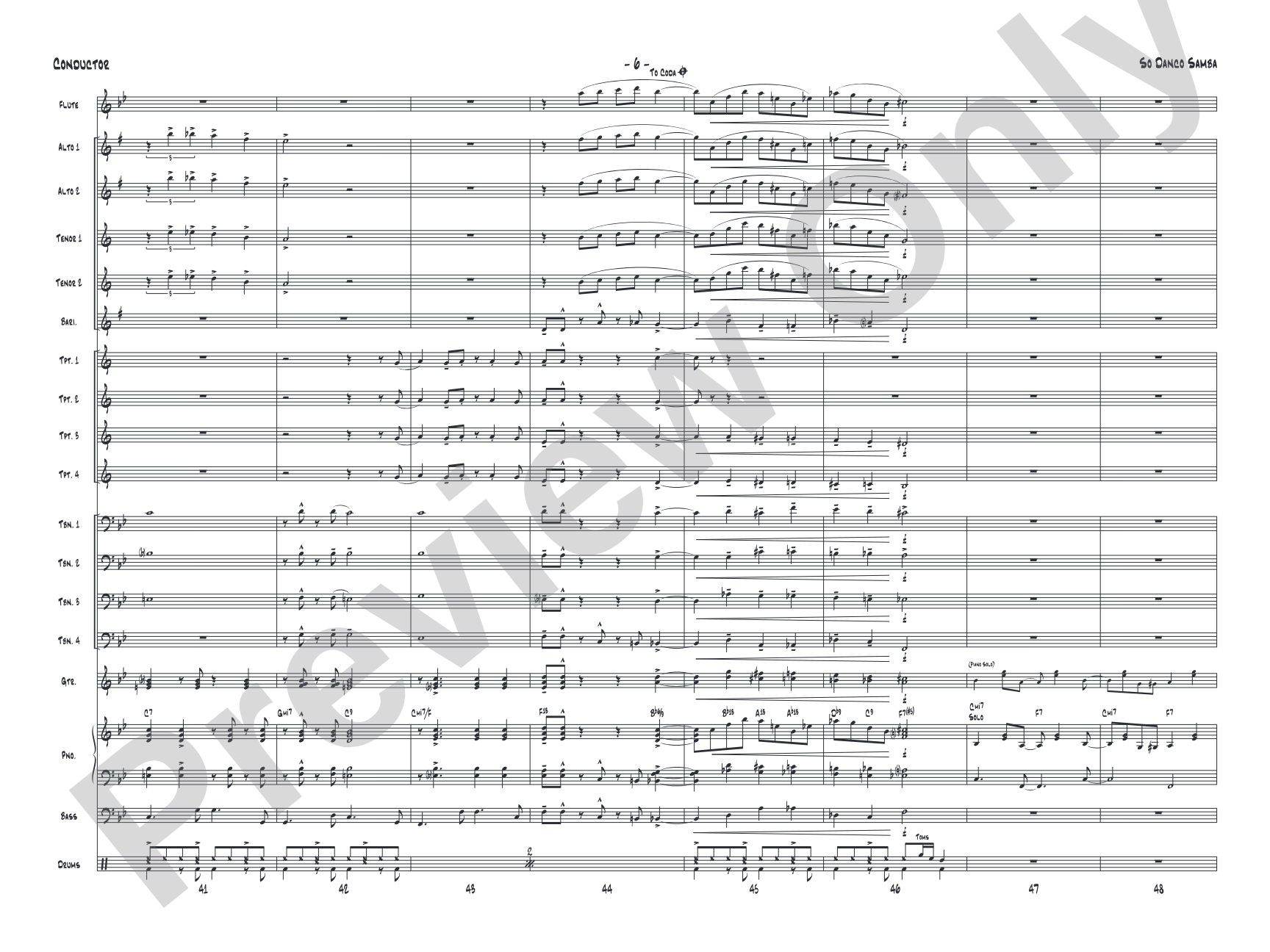
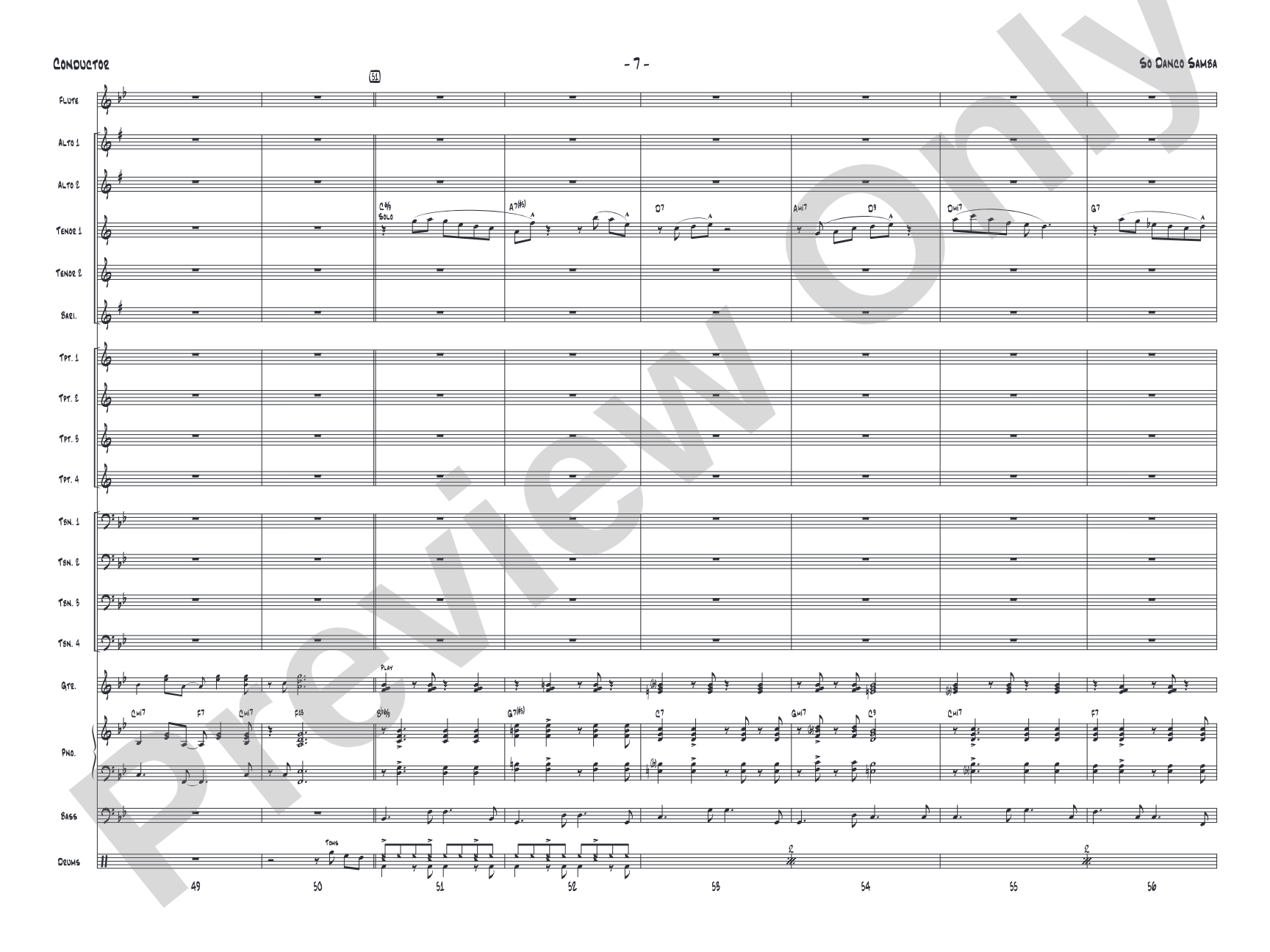
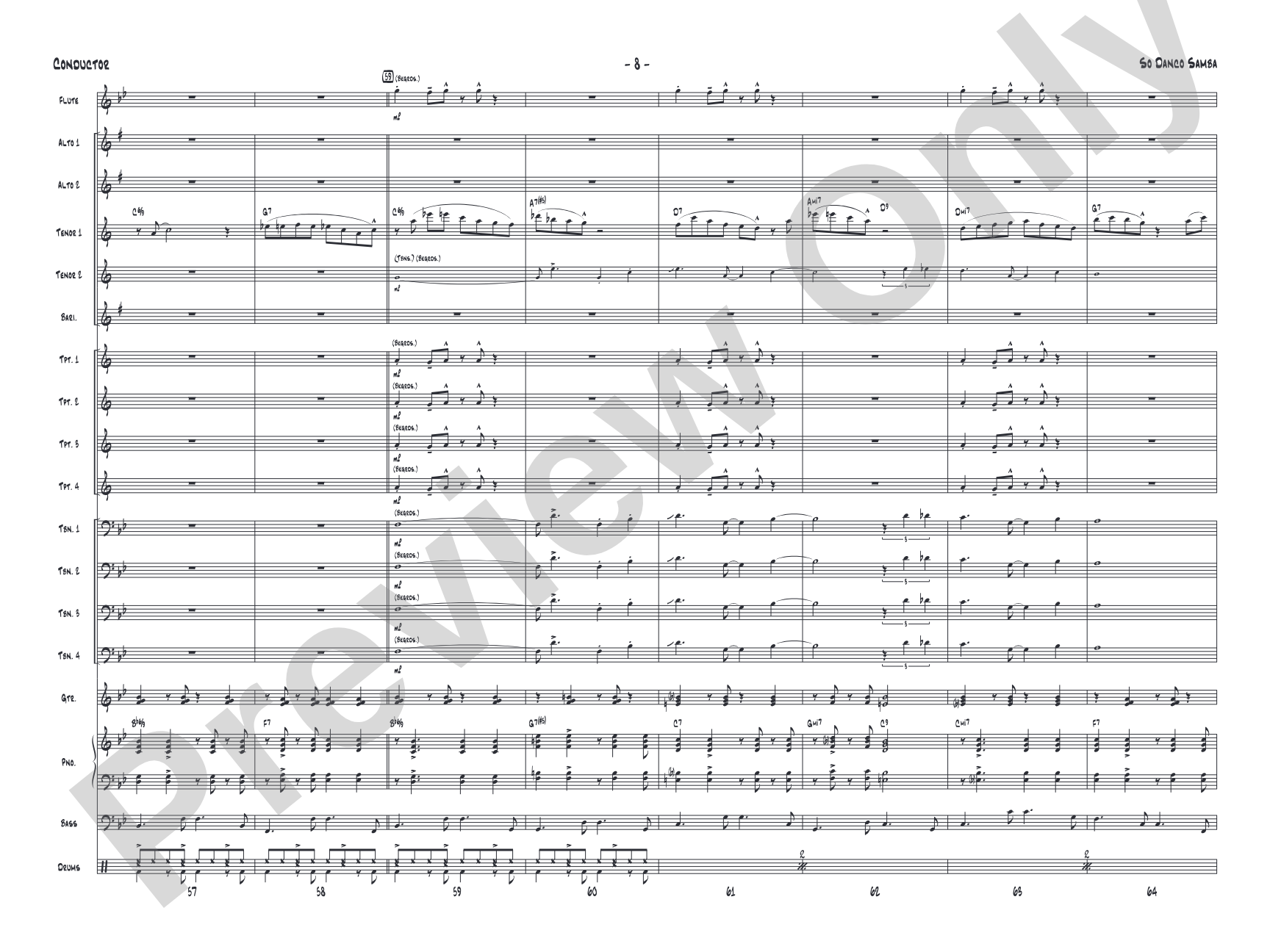
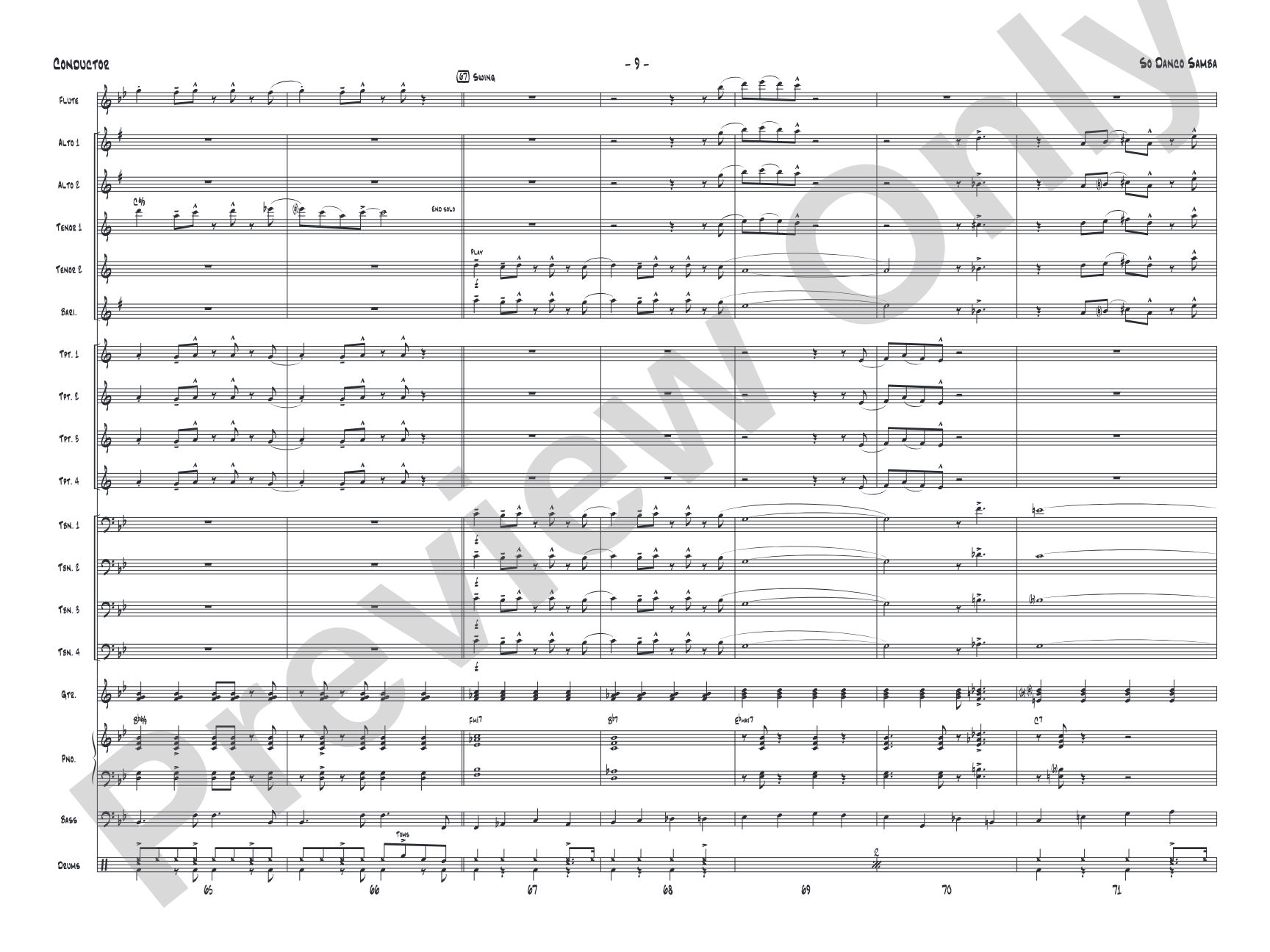
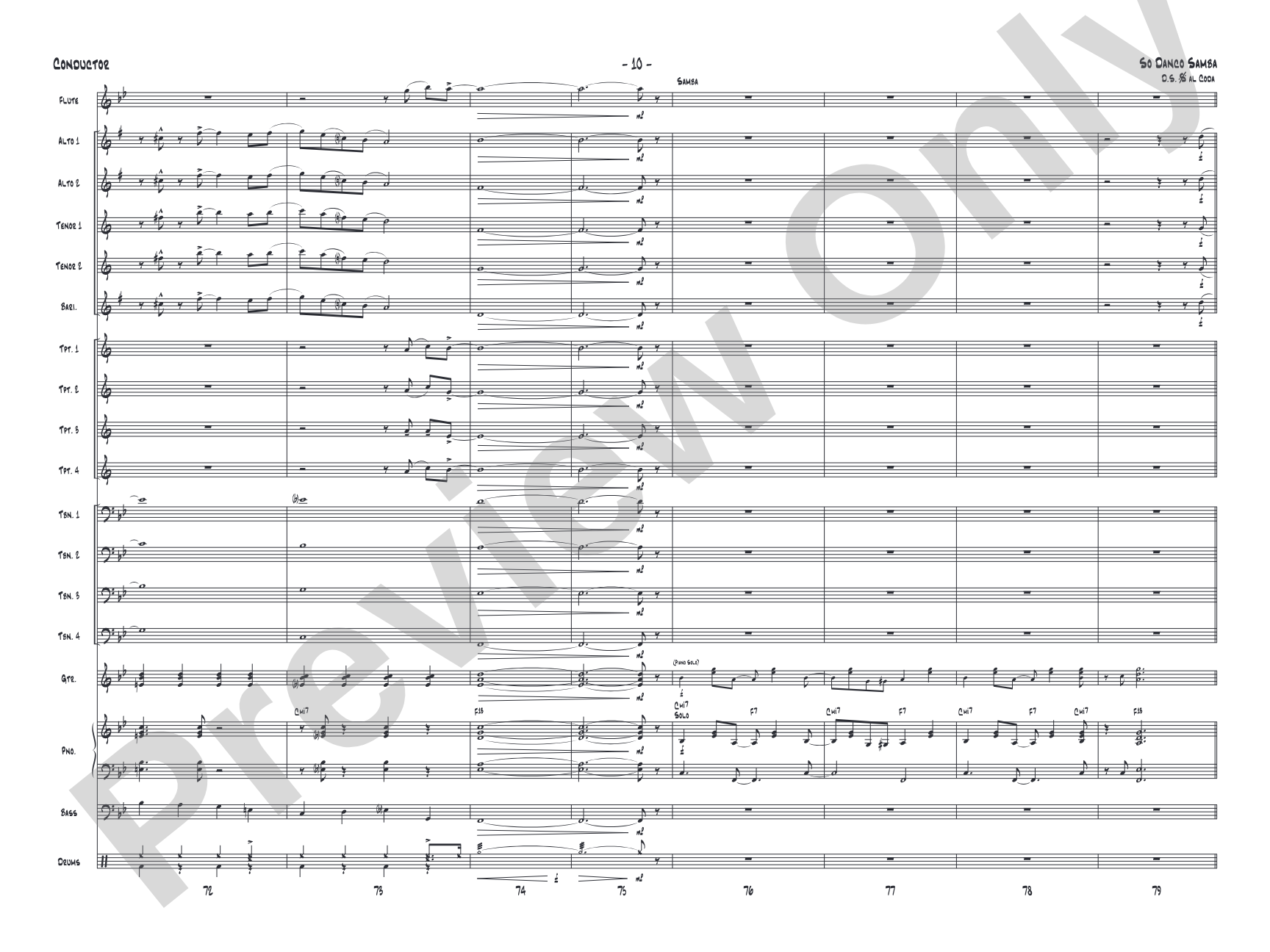
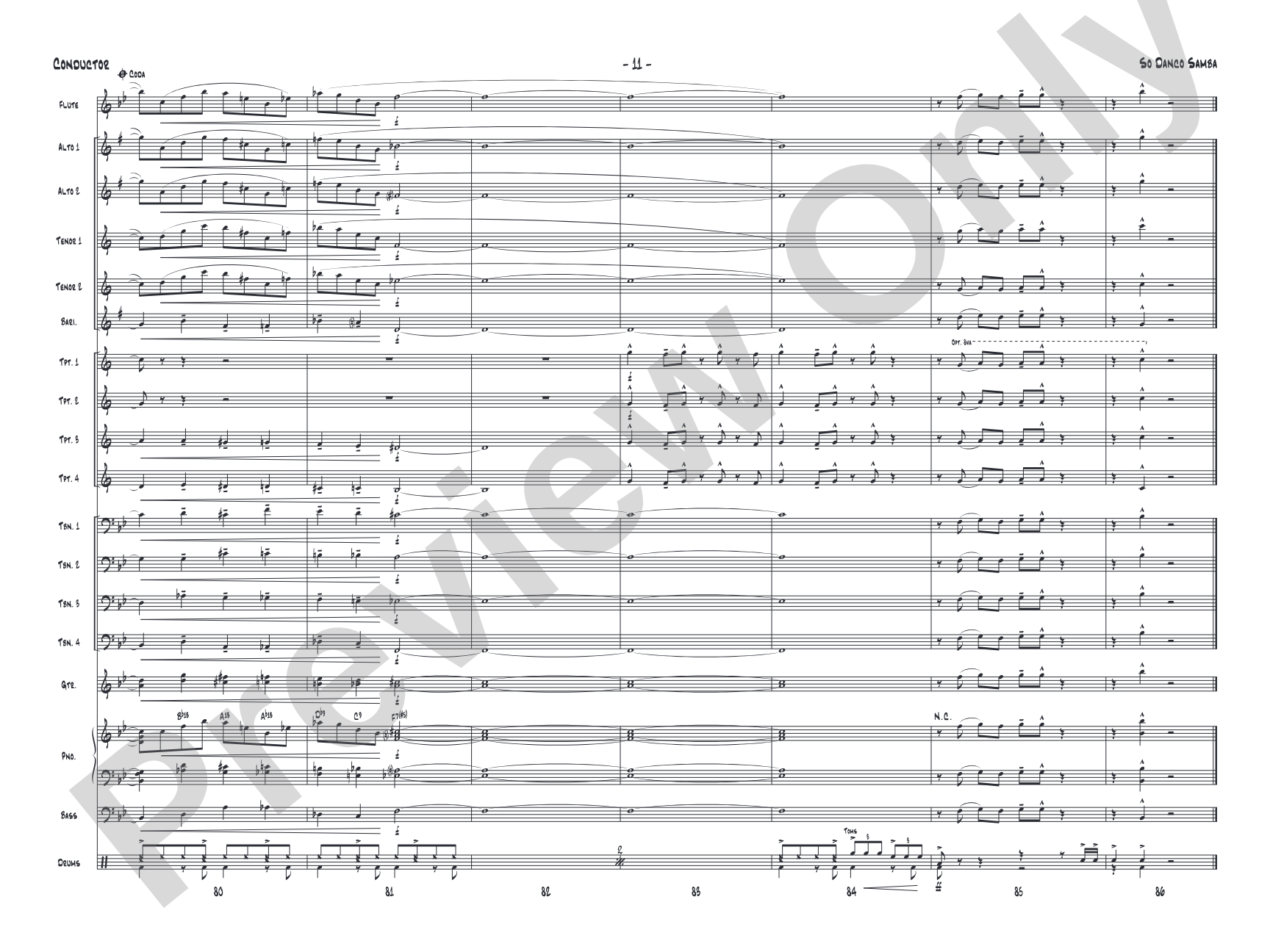

So Danco Samba: Score
By Antonio Jobim / arr. Victor López
Grade: 2 (Medium Easy)
Item: 00-PR-0006956
$9.00
Pickup currently not available
Description
This great samba that alternates with a brief swing feel. This great samba alternates with a brief swing feel. The tempo is around 158 BPM and it's tasty with some clever quotes you'll recognize. Features include written solos for tenor sax, a few piano montuna interludes, and accessible brass ranges. This is a fine Latin samba chart! (3:05)


So Danco Samba: Score isn't in MakeMusic Cloud just yet...but it could be. Let us know you'd like to see it, and you'll help shape what comes next. In the meantime, start a free trial and dive into thousands of interactive titles your students can play along with today.
Request This Title
Tell us you want it.
Start Your Free Trial
Explore everything that's ready to play right now.
Sample Audio
1
Audio File
--:--
0:00
0:00
Sample Video
Additional Details
Series:
Young Jazz Ensemble
Publisher:
Alfred Music
Page Count:
98
SKU:
00-PR-0006956
More about this title
About the Composer: Antonio Jobim
Antonio Jobim (1927-1994) was a Brazilian composer and pianist who fundamentally shaped the sound of bossa nova and samba in the 20th century. His harmonic sophistication and melodic gift brought Brazilian music to concert halls and jazz clubs worldwide, influencing generations of composers across genres. For ensemble directors, Jobim's work represents a bridge between classical training and authentic Latin idiom; his pieces reward careful attention to harmony and rhythmic precision while remaining deeply accessible to student musicians.
Why we love this
Victor López's arrangement captures the infectious energy of Jobim's samba while respecting the skill level of young ensembles. The strategic shift between samba and swing feels gives your band genuine stylistic variety within a single chart, and the written tenor sax solo provides a clear focal point without overwhelming soloists who are still building confidence.
What to expect
Infectious and sophisticated at once. The samba sections pulse with Brazilian warmth and rhythmic clarity, while the brief swing interludes inject a cool, conversational jazz attitude. Clever harmonic quotes weave through the texture, rewarding listeners who know the Jobim canon while remaining transparent enough for ensembles still developing their jazz vocabulary.
Who it's for
This arrangement works for Grade 2 jazz ensembles and small big bands ready to explore Latin jazz repertoire without excessive technical demands. Directors seeking accessible contest or festival material that doesn't sacrifice musical substance will find real value here; the piece offers authentic harmonic movement and rhythmic integrity at an entry-level grade.
How to get the most out of it
- Lock the clave rhythm (either 3-2 or 2-3 depending on your chosen approach) before rehearsing sections. The entire ensemble's pocket depends on this foundation; spend time isolating it in rhythm section and lower voices first.
- Shape the piano montuna interludes as distinct musical moments rather than filler between themes. These passages are where your pianists shine; make sure they land with clarity and swing.
- Approach the swing section as a genuine tonal shift, not just a tempo adjustment. Adjust articulation, note length, and phrasing to honor the jazz tradition, then return to the samba with intentional precision.
- Balance the tenor saxophone solo so it sits naturally over the ensemble; this isn't a feature moment where the soloist overshadows the band. The accompaniment should feel conversational, not subordinate.
How to use it
This works exceptionally well as a mid-set offering on a jazz festival concert, where it can sit comfortably between a straight-ahead swing tune and a ballad. The 3:05 length is ideal for programming a full evening of young ensemble music; it's substantial without dominating a set and provides clear contrast if you're alternating Latin and American jazz styles throughout your show.
Skills your students will build
- Clave rhythms and samba feel fundamentals
- Style switching between samba and swing within a single piece
- Comping and montuna accompaniment patterns
- Soloing over jazz changes with written guidance
- Dynamic balance between rhythmic section and ensemble figures