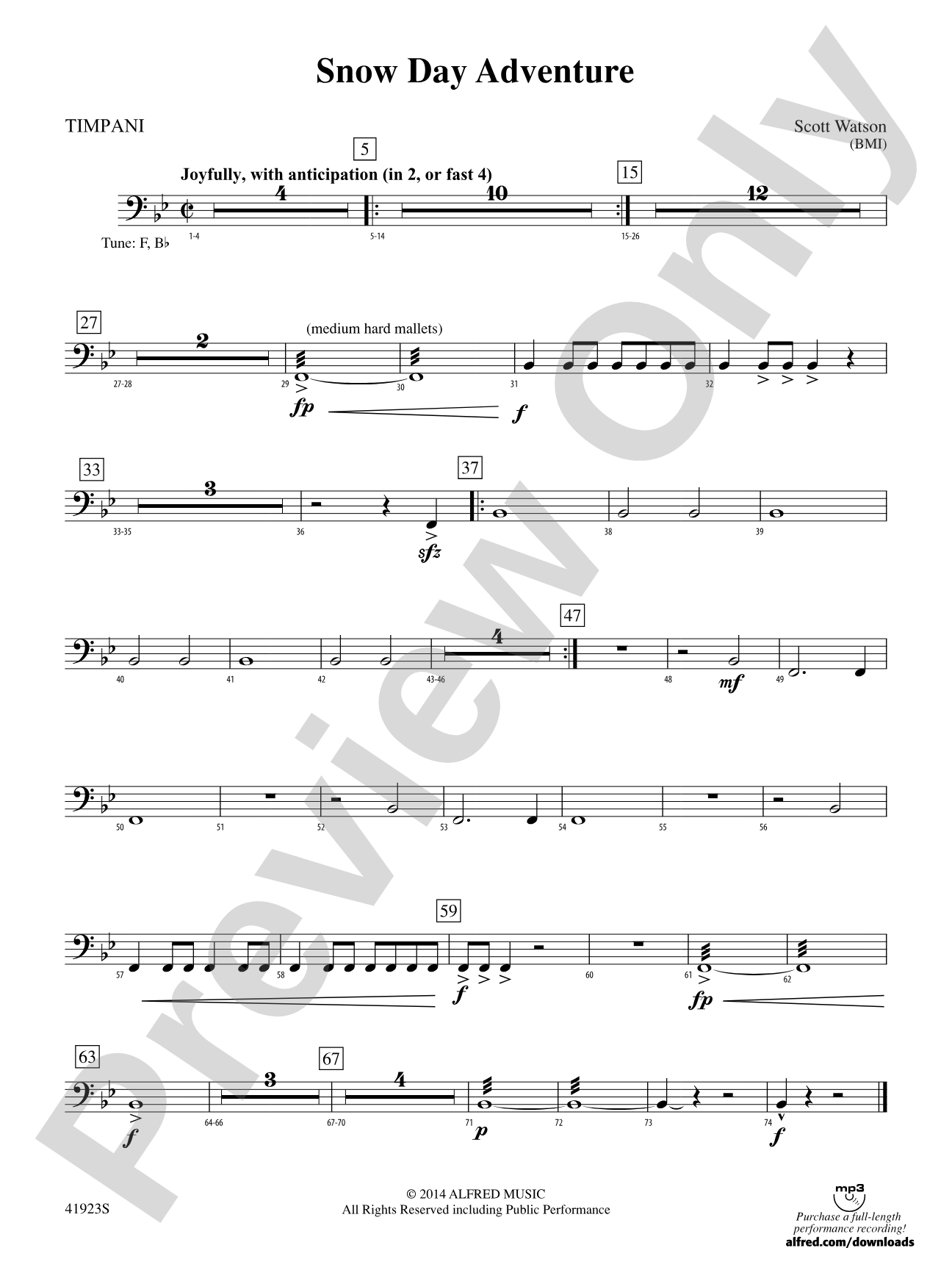
Snow Day Adventure: Timpani Sheet Music Preview

Snow Day Adventure: Timpani

By Scott Watson

Grade: 1.5 (Easy)

Item: 00-PC-0016405_TMP

Digital Download
$3.00
Description
The alarm clock sounds on a cold winter morning. Youngsters begrudgingly wake and peer outside to find the ground covered with deep snow. Even better, it's going to be a "snow day" off from school! The fun-filled adventure which ensues---replete with sledding, snowmen, forts, and snowball battles---is musically portrayed in this delightful, colorfully-scored seasonal work for young band. (2:15)

Don't just read it, hear it, play along with it, and watch your students grow with it. In MakeMusic Cloud, Snow Day Adventure: Timpani comes alive with professional accompaniment, adjustable tempo, and built-in practice tools that turn solo practice into real progress.

Sample Audio
0:00
0:00
Sample Video
Additional Details
Series: Challenger Band Series
Publisher: Alfred Music
Page Count: 122
SKU: 00-PC-0016405_TMP

More about this title

About the Composer: Scott Watson

Scott Watson

Scott Watson has spent four decades shaping young musicians, first as Director of Bands and then as coordinator of elementary band and strings across Parkland School District in Pennsylvania. His transition to Cairn University as Associate Professor reflects a career built on understanding what works in rehearsal rooms at every level.

With over 120 published works, Watson writes from genuine classroom experience. His music draws equally from contemporary concert art and the practical realities of teaching bands. He has been commissioned frequently, presented his work at the White House and the Academy of Music in Philadelphia, and serves as exclusive composer and clinician for Alfred Publications. Watson authored the Oxford University Press text Using Technology to Unlock Musical Creativity and continues to guest conduct at honor bands and festivals.

Why we love this

Watson captures the genuine excitement of a snow day with musical specificity that Grade 1.5 bands can actually execute. The colorful orchestration and vivid program unfold logically, holding young players' attention while building confidence through achievable writing. This is seasonal programming that doesn't feel obligatory.

What to expect

The piece wakes abruptly, then tumbles into exuberant childhood joy. Each musical moment captures a different facet of snow day play, building energy through the sledding and battles before settling into the satisfying exhaustion of a day well spent. The orchestration stays bright and playful throughout, never veering into saccharine territory.

Who it's for

Grade 1.5 concert bands seeking seasonal repertoire that avoids cliché and genuinely delights audiences. The accessible Grade 1.5 level means developing bands can execute Watson's colorful orchestration without struggling through technical demands.

How to get the most out of it

  • Shape the wake-up alarm in the opening to feel genuinely abrupt; let your brass section nail the timing so the contrast with the discovery outside lands clearly.
  • Differentiate the sledding, snowman-building, fort-construction, and snowball battle sections by adjusting articulation and energy rather than tempo; this keeps the piece unified while making each adventure feel distinct.
  • Balance the melodic material between upper and lower woodwinds throughout so the storytelling never relies on one section carrying everything alone.
  • Use the two minutes fifteen seconds judiciously in rehearsal by isolating the transitions between musical scenes; young bands often rush when excitement builds.

How to use it

Perfect for winter concert openers, holiday season programming, or any concert that benefits from a mood-lifting, youth-friendly selection. At just over two minutes, it pairs well with longer works or can anchor a concert theme around seasonal celebration.

Skills your students will build

  • Coordinating articulation across sections to shape musical narrative
  • Balancing melody between different instrumental choirs
  • Executing clear rhythmic transitions between contrasting musical scenes
  • Responding to conductorial tempo and energy changes to reflect program storytelling

You May Also Like