Snow Dance Sheet Music Preview

Snow Dance: Piano

By Timothy Brown

Item: 98-DW9210

Digital Download
$2.50
Description
Snow Dance, a late intermediate/early advanced piece in 2/4 time features a wide variety of sixteenth note rhythmic figures and articulations which offer several benefits to a student's continued technical development. You'll enjoy this interesting and distinctive piece.

Snow Dance: Piano isn't in MakeMusic Cloud just yet...but it could be. Let us know you'd like to see it, and you'll help shape what comes next. In the meantime, start a free trial and dive into thousands of interactive titles your students can play along with today.

Sample Audio
No sample audio found.
Sample Video
Additional Details
Series: Written For You
Publisher: The FJH Music Company, Inc.
SKU: 98-DW9210

More about this title

Why we love this

Timothy Brown crafts technically engaging pieces that don't sacrifice musicality for pedagogy. Snow Dance proves that intermediate students can work through substantial rhythmic complexity while playing something genuinely enjoyable, not just an etude in disguise.

What to expect

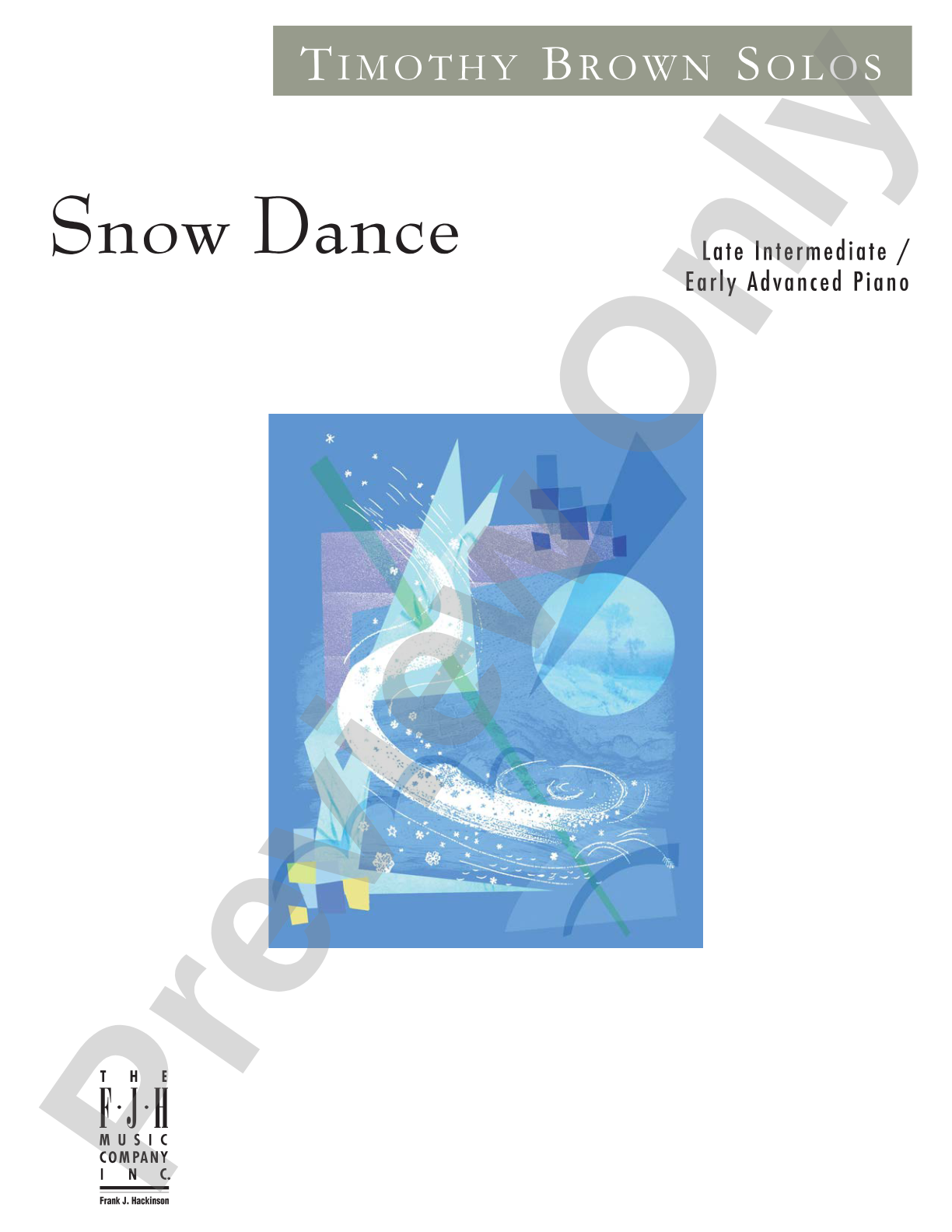
Snow Dance captures the visual movement and energy of falling snow with its active sixteenth note passages and varied articulations, creating a kinetic piece that feels both contemporary and approachable. The rhythmic textures keep the piece moving and engaging while the overall structure remains clear and musical.

Who it's for

Late intermediate and early advanced pianists who are developing technical facility and looking for repertoire that challenges rhythmic reading without being overly virtuosic. This works well for students who enjoy contemporary concert music and want pieces suited for recital or festival performance.

How to get the most out of it

  • Map out all sixteenth note figure patterns before drilling them at tempo. Identify where articulations change, then practice each pattern block separately at a slow speed to lock the muscle memory.
  • Layer your tempo building carefully. Establish a comfortable baseline where you can play all sixteenth figures cleanly, then increment upward in small 4-6 BPM increases over several practice sessions.
  • Pay close attention to articulation marks as rhythmic guides. They do more than shape tone; they help clarify the exact subdivision you're playing and prevent rushing through smaller note values.

How to use it

Include this in a solo recital alongside Romantic or early modern works to show your students' range and technical growth. It also works as a festival or competition selection for pianists working solidly in the late intermediate range who want to demonstrate rhythmic precision and contemporary musical sensibility.

Skills your students will build

  • Reading and executing sixteenth note rhythmic figures accurately
  • Applying varied articulations to sixteenth note passages
  • Interpreting contemporary single-line and textural writing
  • Developing even subdivision at moderate to brisk tempos

You May Also Like