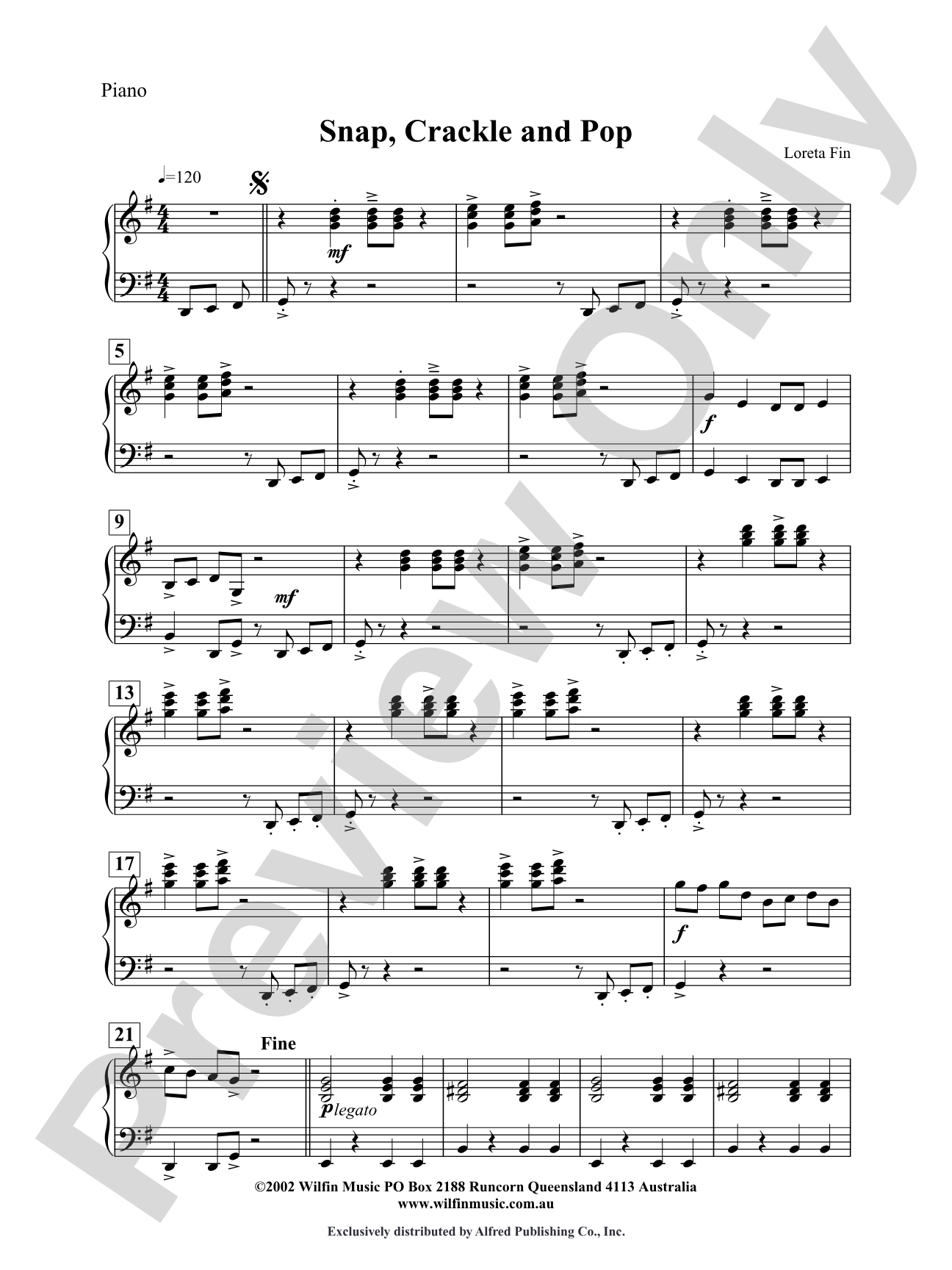
Snap, Crackle and Pop: Piano Accompaniment Sheet Music Preview

Snap, Crackle and Pop: Piano Accompaniment

By Loreta Fin

Grade: 2

Item: 76-PC-0000015_K

Digital Download
$5.99
Description
An excellent introduction to recognition of syncopated rhythms for young string players. The piece has a good feel and, although it sounds complicated, is quite straightforward to play.

Snap, Crackle and Pop: Piano Accompaniment isn't in MakeMusic Cloud just yet...but it could be. Let us know you'd like to see it, and you'll help shape what comes next. In the meantime, start a free trial and dive into thousands of interactive titles your students can play along with today.

Sample Audio
No sample audio found.
Sample Video
Additional Details
Series: Wilfin String Orchestra: Young String Ensemble Series
Publisher: Wilfin Music
Page Count: 66
SKU: 76-PC-0000015_K

More about this title

About the Composer: Loreta Fin

Loreta Fin

Loreta Fin AM is a violist and string educator based in Australia who trained at the Sydney Conservatorium of Music and performed as a first violinist with the Sydney Youth Orchestra. For over 25 years, she served as Principal Viola player with the Queensland Pops Orchestra while simultaneously building a reputation as a passionate string pedagogue. She directed the strings program at Somerville House School in Brisbane starting in 1993 and has since become a fixture at Australian national music conferences and international string teaching forums, presenting on contemporary ensemble pedagogy.

As both an accomplished adjudicator and prolific composer, Fin has written more than 100 works for string orchestra published internationally by Alfred Music. Her contributions to the Australian Strings Association spanned 25 years, including service as State and National President. She was honored with a Queensland State Award for her AUSTA contributions in 2009 and received the National Award for Services to Music and String Teaching from AUSTA. Since 2015, she has regularly conducted the State and National Honours Ensembles Programs in Brisbane. In 2017, she released a Beginner String Ensemble Series; her work was subsequently recognized with a nomination for the inaugural ARIA "Best Teacher" award.

Why we love this

Loreta Fin has designed this piece with the young string player's mind in mind. Syncopation often intimidates emerging orchestral musicians, yet here it sounds playful and approachable rather than forbidding. What makes it distinctive is how the rhythmic complexity sits atop straightforward technical writing; students feel the challenge of the syncopation without wrestling with awkward fingerings or bow work, making it genuinely rewarding to rehearse and perform.

What to expect

Snap, Crackle and Pop sparkles with rhythmic energy and playful momentum. The syncopation gives the piece a modern, percussive snap that feels contemporary rather than classical, inviting students to move with the music rather than sit rigidly through it.

Who it's for

Grade 2 string orchestras learning to master rhythmic independence and build comfort with syncopation. Young players at this level typically read basic rhythms confidently, making this an ideal bridge to more complex metric ideas without overwhelming them technically.

How to get the most out of it

  • Isolate syncopated passages in rehearsal as rhythmic units rather than melodic ones. Tap or clap the syncopated rhythms in unison with the ensemble before adding pitch, which locks in the timing across all four string parts.
  • Conduct the straight pulse underneath the syncopation so players hear and feel the underlying beat even when the melody sits against it. This reference point prevents the ensemble from rushing or settling into the syncopated feel too early.
  • Record a quick rehearsal run-through and play it back for the orchestra. Hearing themselves perform the syncopation builds confidence and shows visually how their collective effort shapes the sound.

How to use it

This novelty piece works beautifully as a lighter moment in a concert of more substantial repertoire. Program it after a lyrical or technical showpiece to give both audience and orchestra a chance to enjoy something with genuine character and humor.

Skills your students will build

  • Reading and performing syncopated rhythms against the pulse
  • Maintaining rhythmic accuracy in syncopated passages while listening to other voices
  • Balancing technical simplicity with rhythmic independence

You May Also Like