Snap, Crackle and Pop Cover Image

Snap, Crackle and Pop: String Orchestra Conductor Score

$7.00 USD
Sale price  $7.00 USD Regular price 
Skip to product information
Snap, Crackle and Pop Cover Image

Snap, Crackle and Pop: String Orchestra Conductor Score

By Loreta Fin

Grade: 2

Item: 76-30159S

$7.00
Shipped

One moment…

Description
An excellent introduction to recognition of syncopated rhythms for young string players. The piece has a good feel and, although it sounds complicated, is quite straightforward to play.

Snap, Crackle and Pop: String Orchestra Conductor Score isn't in MakeMusic Cloud just yet...but it could be. Let us know you'd like to see it, and you'll help shape what comes next. In the meantime, start a free trial and dive into thousands of interactive titles your students can play along with today.

Sample Pages

Sample Audio
No sample audio found.
Sample Video
Additional Details
Series: Wilfin String Orchestra: Young String Ensemble Series
Publisher: Wilfin Music
Page Count: 8
UPC: 038081326924
SKU: 76-30159S

More about this title

About the Composer: Loreta Fin
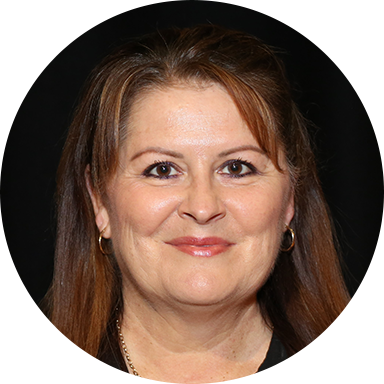
Loreta Fin

Loreta Fin AM is an Australian violist, educator, and prolific composer whose four-decade career has centered on strengthening string music in schools. A first violinist with the Sydney Youth Orchestra and longtime Principal Viola player with the Queensland Pops Orchestra, she studied at the Sydney Conservatorium of Music and has performed alongside internationally recognized artists. Her leadership as Director of Strings at Somerville House School in Brisbane since 1993 has directly shaped her understanding of what young string players need to flourish.

Fin has composed over 100 works for string orchestra published worldwide by Alfred Music, while simultaneously serving as state and national president of the Australian Strings Association, examining for the Australian Music Examinations Board, and conducting honours ensembles programs. Her contributions to music education earned her a Queensland State Award for services to AUSTA in 2009 and a National Award for Services to Music and String Teaching in Australia. She has presented at American National String Teachers' Conferences and adjudicated major competitions across Australia.

Why we love this

Fin captures that rare quality of sounding sophisticated while remaining genuinely accessible for Grade 2 players. The syncopated rhythms sit naturally under the fingers and bow without requiring technical maturity beyond what young students possess, yet they sound undeniably confident and contemporary. You'll hear your ensemble light up when they realize they can pull off something that sounds this polished.

What to expect

Contemporary and rhythmically sharp with a driving energy that keeps young players engaged. The syncopation feels intentional and musical rather than merely technical, giving students a taste of what happens when rhythm becomes a compositional tool. There's real personality in this piece—it doesn't sound like an etude dressed up as music.

Who it's for

Young string orchestras in Grades 2-3 who are ready to expand their rhythmic vocabulary beyond straight eighths and quarter notes. Players at this level benefit from repertoire that challenges their reading and sense of pulse without overwhelming their technical range. This score works for conductors seeking pieces that demonstrate maturity without sacrificing playability.

How to get the most out of it

  • Subdivide the syncopated figures in rehearsal by having students count in eighth notes or sixteenths, then gradually remove the counting as the pattern anchors in their muscle memory.
  • Balance the piece around its rhythmic energy rather than trying to smooth out the syncopation; let the offbeat accents pop without apology.
  • Establish a rock-solid pulse in the ensemble before adding the syncopated layers; anchor with your cello and bass parts, then bring the upper strings in once that foundation is secure.
  • Record a sectional rehearsal or use the piece as a listening reference for your students between rehearsals so they internalize the rhythmic profile before the next session.

How to use it

Program this as the centerpiece of a concert section exploring rhythm across different styles, or use it as a confidence builder mid-season when your ensemble is ready for something that sounds more sophisticated than their technical level might suggest. It also works well as a bridge between simpler repertoire and more complex Grade 3 material, showing students what careful rhythm writing can accomplish.

Skills your students will build

  • Reading and executing syncopated rhythms in ensemble context
  • Maintaining pulse while performing offbeat articulations
  • Balancing part independence with collective rhythmic precision
  • Interpreting rhythm as a compositional element rather than accompaniment

You May Also Like