
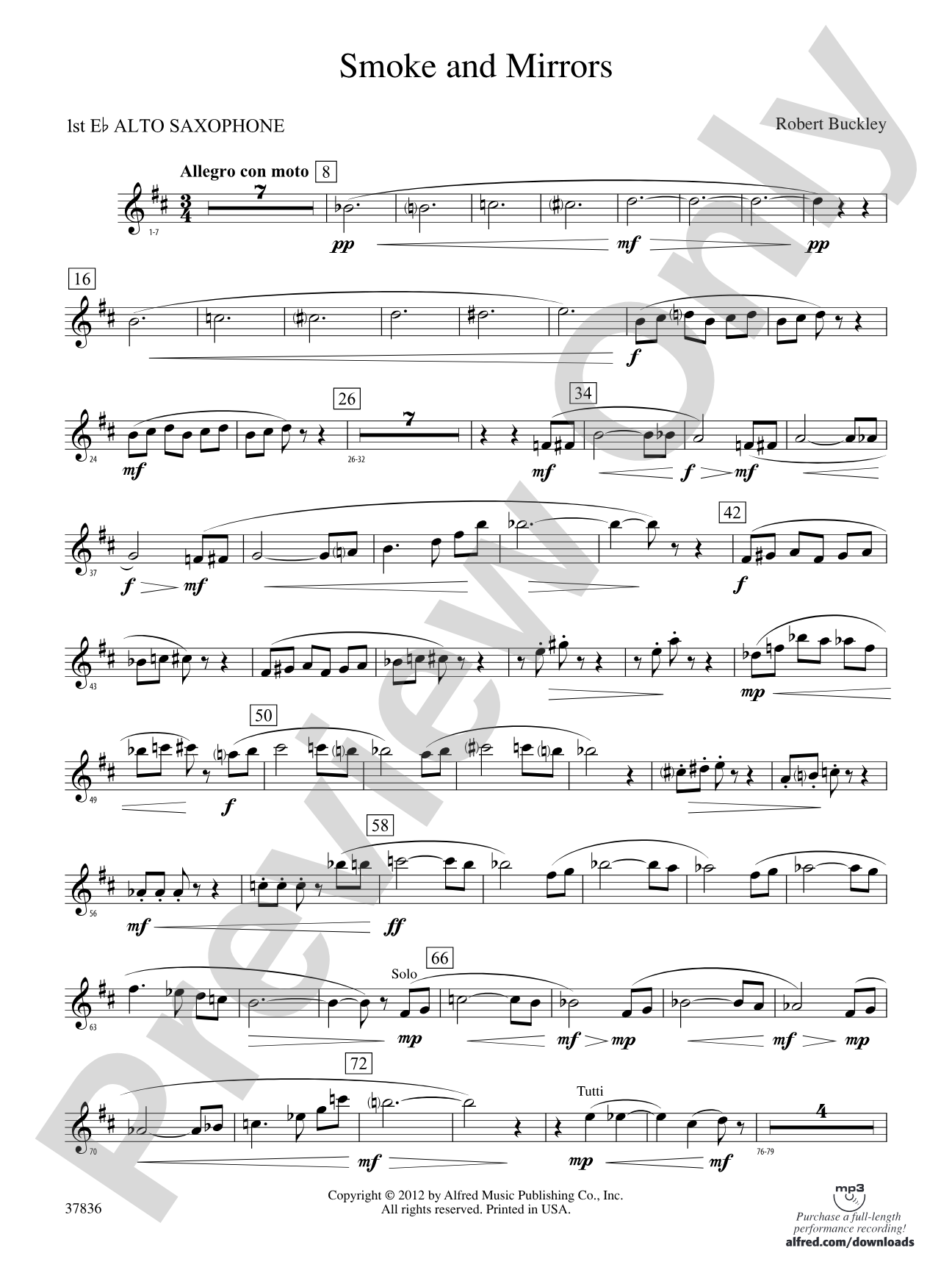

Smoke and Mirrors: E-flat Alto Saxophone
By Robert Buckley
Grade: 4 (Medium Difficult)
Item: 00-PC-0015365_AX1
$3.00
Pickup currently not available
Description
Imagine a misty hall of mirrors where, one by one, colorful, bizarre characters materialize out of the shadows and begin dancing a wild, mysterious waltz. Starting tentatively at first, the music whirls and twirls, spinning and turning, eventually becoming faster and faster, building to a frenzied climax when, in a puff of smoke, everyone disappears! Featuring solos for trumpet, alto saxophone, flute, and clarinet, and a duet for piccolo and tuba, "Smoke and Mirrors" is full of sweeping melodies, energetic percussion, harmonic surprises, and dramatic shifts in dynamics. Sure to bring a spark of magic to any concert. (5:00)


Don't just read it, hear it, play along with it, and watch your students grow with it. In MakeMusic Cloud, Smoke and Mirrors: E-flat Alto Saxophone comes alive with professional accompaniment, adjustable tempo, and built-in practice tools that turn solo practice into real progress.
Open in the Player
Jump straight in and assign it today.
Start Your Free Trial
Open this title and explore the full library in minutes.
Sample Audio
1
Audio File
--:--
0:00
0:00
Sample Video
No sample videos found.
Additional Details
Series:
Alfred Concert Band
Publisher:
Alfred Music
Page Count:
288
SKU:
00-PC-0015365_AX1
More about this title
Why we love this
Buckley builds genuine narrative arc across five minutes, moving from eerie whispers through exuberant solos to full-band frenzy without ever feeling forced. The orchestration gives every section something to do, and the carefully placed solos for trumpet, alto sax, flute, clarinet, piccolo, and tuba ensure your strongest players shine without overshadowing the ensemble. Directors consistently report that this piece energizes rehearsals and lands hard with audiences, especially when the percussion drives home that final climactic moment.
What to expect
A journey from shadowy mystery into vivid, almost chaotic celebration. The waltz framework keeps the motion grounded even as the colors shift and the pace quickens, creating a piece that feels both whimsical and structurally coherent. By the finale, the band is flying.
Who it's for
Bands at the Grade 4 level ready to program something with genuine theatrical flair and narrative momentum. The solos suit your section leaders, and the ensemble writing keeps everyone engaged rather than relegated to accompaniment duty.
How to get the most out of it
- Shape the opening waltz with rubato in the early sections; let the tempo settle into a steady groove before the accelerations begin, so the buildup feels earned rather than rushed.
- Highlight the duet between piccolo and tuba as a comedic turning point. These voices are naturally mismatched, and embracing that contrast makes the ensemble's frenzied response feel justified.
- Balance the numerous solos carefully during rehearsal. Each soloist needs breathing room, but the surrounding harmonic support must remain transparent so every featured voice projects.
- Use dynamic shifts as dramatic punctuation. The sudden softening before the final acceleration creates tension; snap the energy back hard when the climax hits.
How to use it
Perfect as a concert closer or as the centerpiece of a Halloween or October program where you want something clever without sacrificing musicality. This also works well in contest/festival settings, where the clear dramatic arc and varied instrumental writing impress adjudicators without requiring unusual instrumentation or advanced technical demands.
Skills your students will build
- Executing dynamic contrast and dramatic shifts in a connected musical narrative
- Balancing solo voices with ensemble support
- Maintaining steady pulse during gradual tempo acceleration
- Responding to unconventional orchestration (piccolo and tuba duet)
- Building ensemble energy from sparse texture to full-band climax