Smiling Selfie Sheet Music Preview

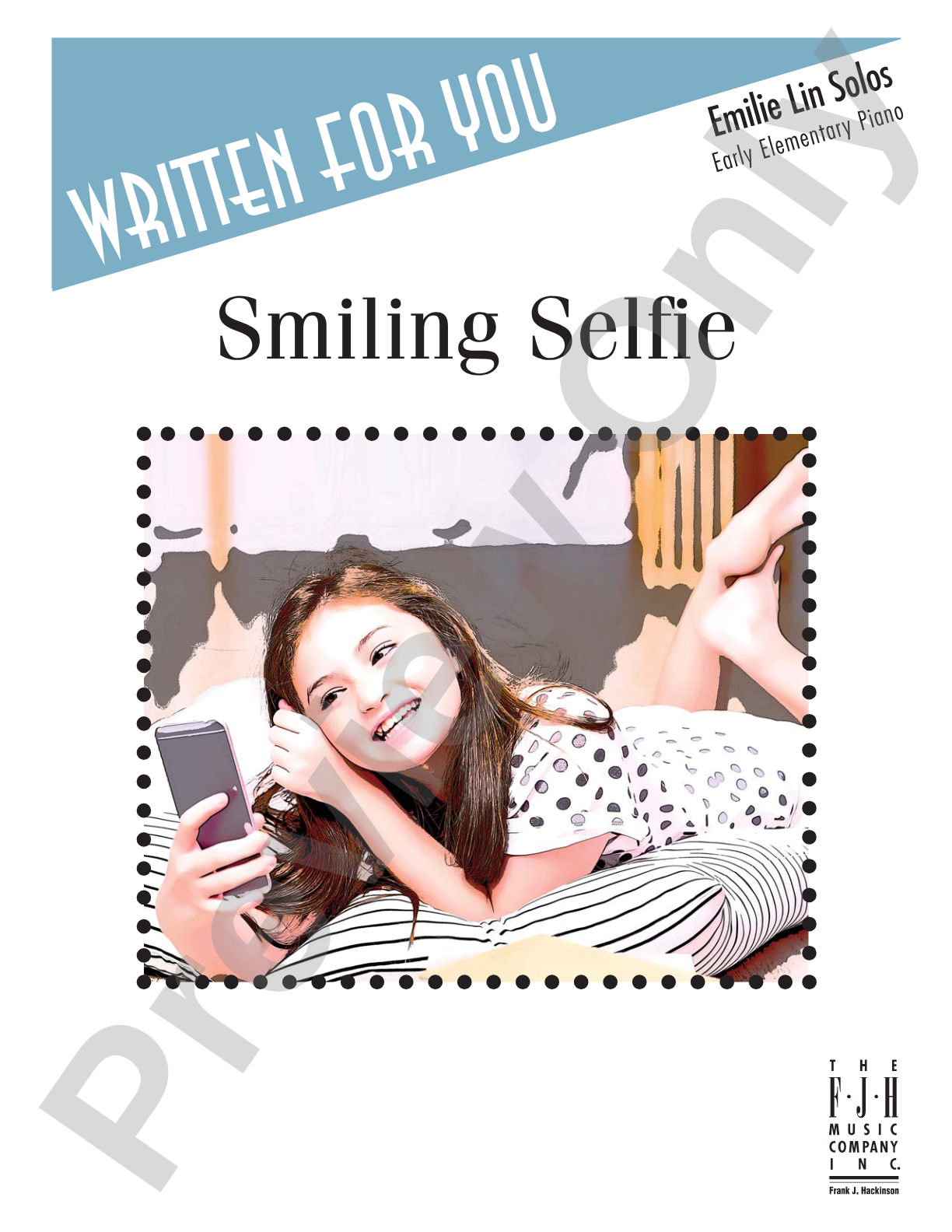
Smiling Selfie: Piano

By Emilie Lin

Item: 98-DW9476

Digital Download
$3.50
Description
If your students have smart phones, this cheerful, bouncy piece will definitely put a smile on their face! Written in “almost Middle C position”, it calls for expressive dynamics and the ability to play staccato and legato passages hands separately until the last beat.

Smiling Selfie: Piano isn't in MakeMusic Cloud just yet...but it could be. Let us know you'd like to see it, and you'll help shape what comes next. In the meantime, start a free trial and dive into thousands of interactive titles your students can play along with today.

Sample Audio
No sample audio found.
Sample Video
Additional Details
Series: Written For You
Publisher: The FJH Music Company, Inc.
SKU: 98-DW9476

More about this title

Why we love this

Emilie Lin captures something real here: the genuine delight kids feel when technology connects to music-making. The piece moves fast enough to feel modern and fun, yet stays grounded in solid pedagogy. Your early elementary students will practice dynamics, articulation, and hand independence without realizing they're working.

What to expect

Bright, modern, and full of personality. There's a conversational quality to the bouncing rhythms and dynamic shifts that feels playful rather than mechanical. It sounds like what today's kids actually want to play.

Who it's for

Early elementary pianists who are comfortable in the Middle C area and ready to explore expressive playing with both hands. The "almost Middle C position" framing makes it accessible to students still building hand independence and reading fluency.

How to get the most out of it

  • Map out the staccato and legato passages before playing through. Marking them lightly in pencil helps students visualize which hand plays which texture at any given moment.
  • Encourage exaggerated dynamic shifts. The piece thrives on contrast, so invite students to really lean into the soft moments and brighten the louder sections.
  • Keep the tempo steady but energetic. This piece needs forward motion to feel "bouncy." A metronome helps early learners find the sweet spot between rushed and sluggish.
  • Practice hand independence slowly. Work each hand alone until the patterns feel automatic, then layer them back together.

How to use it

Save this for a studio recital or student showcase where contemporary appeal matters. It pairs well with classical repertoire on the same concert because it gives young pianists a relatable moment and reminds the audience that piano music can be fun and current.

Skills your students will build

  • Playing staccato and legato articulations in separate hands
  • Hand independence and coordination
  • Reading and executing expressive dynamics (soft to loud contrasts)
  • Note reading in Middle C position and nearby keys
  • Maintaining steady tempo in a rhythmically active piece

You May Also Like