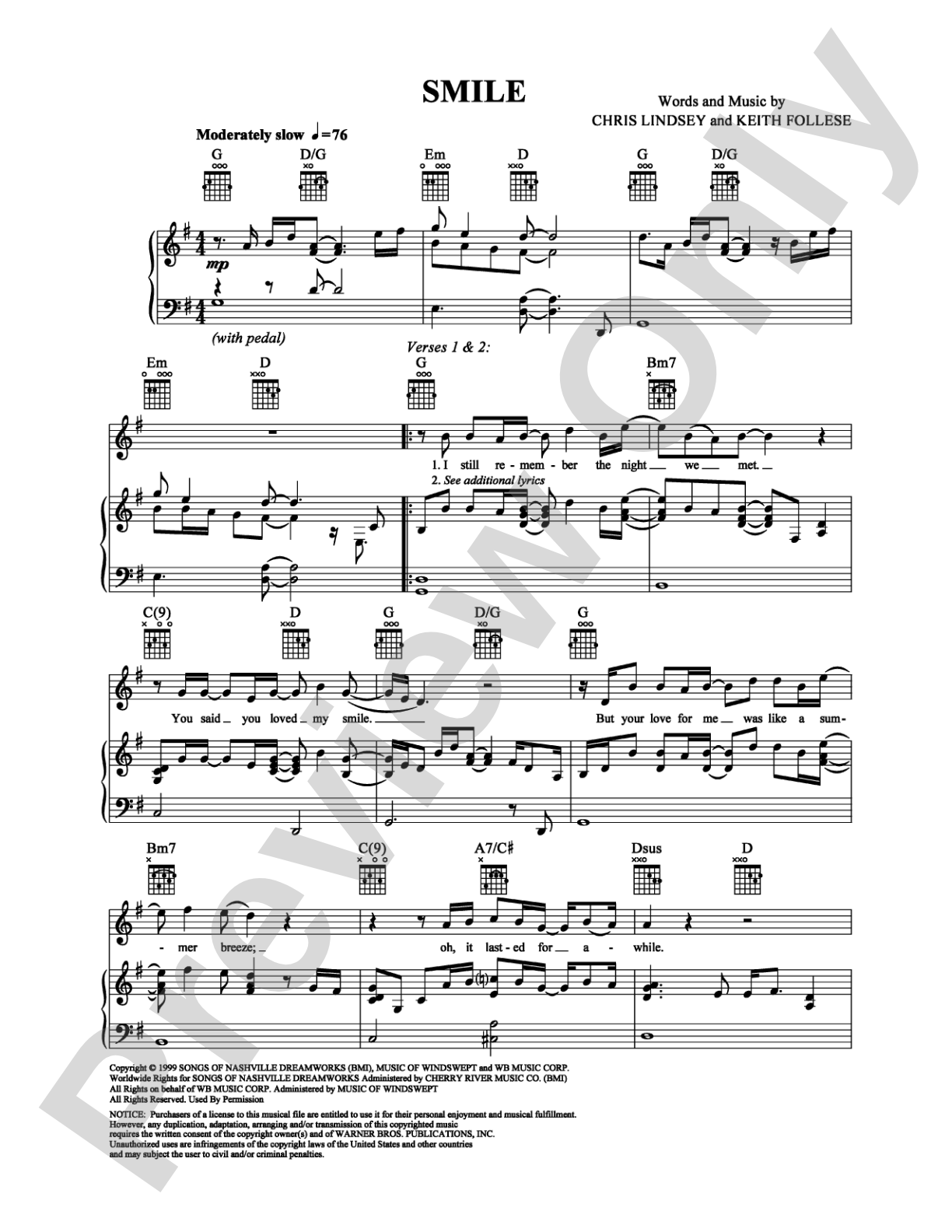
Smile: Piano/Vocal/Chords Digital Sheet Music

Smile: Piano/Vocal/Chords Digital Sheet Music

Lonestar, Chris Lindsey, Keith Follese

Item: 00-PS-0006489

Digital Download
$3.99
Description

Smile: Piano/Vocal/Chords Digital Sheet Music isn't in MakeMusic Cloud just yet...but it could be. Let us know you'd like to see it, and you'll help shape what comes next. In the meantime, start a free trial and dive into thousands of interactive titles your students can play along with today.

Sample Audio
No sample audio found.
Sample Video
Additional Details
SKU: 00-PS-0006489

More about this title

About the Artist: Lonestar

Lonestar emerged from the country music scene in the 1990s with a distinctive blend of traditional country storytelling and contemporary pop sensibility. The group's ability to craft emotionally resonant songs has made their catalog a staple in both country radio and vocal music education settings.

Why we love this

Country ballads at this accessibility level rarely balance emotional authenticity with straightforward vocal writing. The piano/vocal/chords format makes this ideal for students learning to interpret a commercially successful song without excessive technical demands, while the song's earnest lyrics encourage genuine expressive work.

What to expect

Warm and reflective, with the unhurried quality of a late-evening conversation. The melody sits naturally in the speaking voice range, making the song feel intimate rather than performative, while the harmonic progressions carry quiet emotional weight.

Who it's for

Vocalists in high school and early college settings who are building a contemporary country repertoire, as well as piano students learning to accompany singers. This arrangement works for students exploring the intersection of country songwriting and vocal technique without the complexity of jazz voicings or classical demands.

How to get the most out of it

  • Sing through the melody at a comfortable tempo first to establish the emotional arc; resist rushing the slower passages even if they feel static on paper.
  • Use the chord progression as a guide for dynamic shaping rather than treating each chord change as rhythmically strict; country ballads live in the space between the written notes.
  • If accompanying yourself on piano, keep the voicings simple and let silence breathe between phrases instead of filling every moment with accompaniment.

How to use it

Include this in a country or contemporary music showcase where it pairs well with other accessible vocal standards. The simplicity of the arrangement also makes it suitable for coffeehouse recitals or informal performance contexts where authenticity matters more than production value.

Skills your students will build

  • Phrasing within a slow, lyric-driven melody
  • Reading and interpreting chord symbols for accompaniment
  • Connecting emotional interpretation to vocal placement in a contemporary style
  • Balancing piano accompaniment with vocal line independence

You May Also Like