
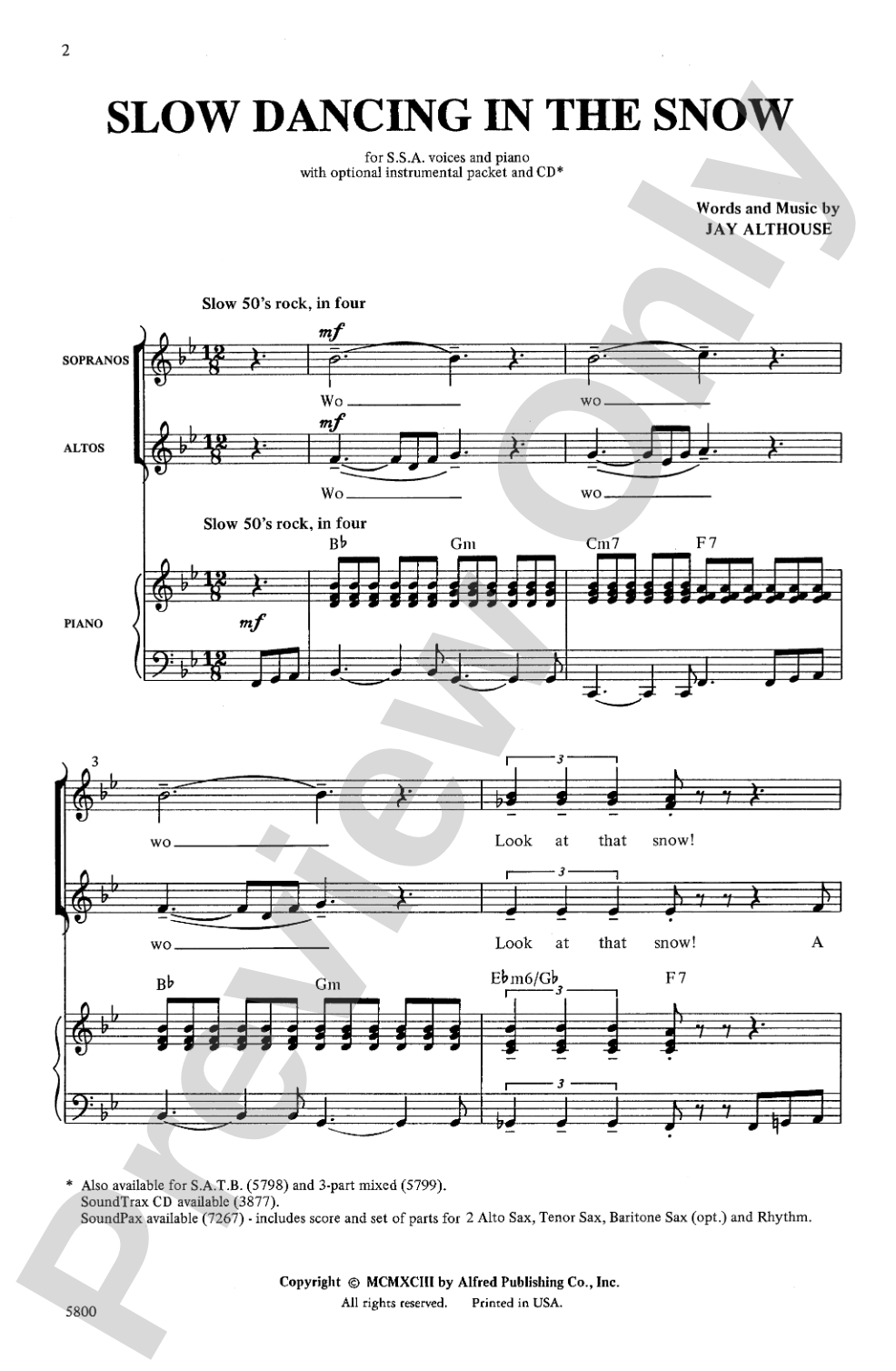

Slow Dancing in the Snow: SSA Choral Octavo
Music by Jay Althouse
Item: 00-PO-0004487
$2.25
Minimum order quantity: 20 copies
Pickup currently not available
Related Items
Slow Dancing in the Snow: SATB Choral Octavo |
$2.25
|
View | |
Slow Dancing in the Snow: 3-Part Mixed Choral Octavo |
$2.25
|
View | |
Slow Dancing in the Snow: SATB Choral Octavo |
$2.25
|
View | |
Slow Dancing in the Snow: 3-Part Mixed Choral Octavo |
$2.25
|
View | |
Slow Dancing in the Snow: SSA Choral Octavo |
$2.25
|
View | |
Slow Dancing in the Snow: Choral Octavo SoundTrax CD |
$27.99
|
View |
Description
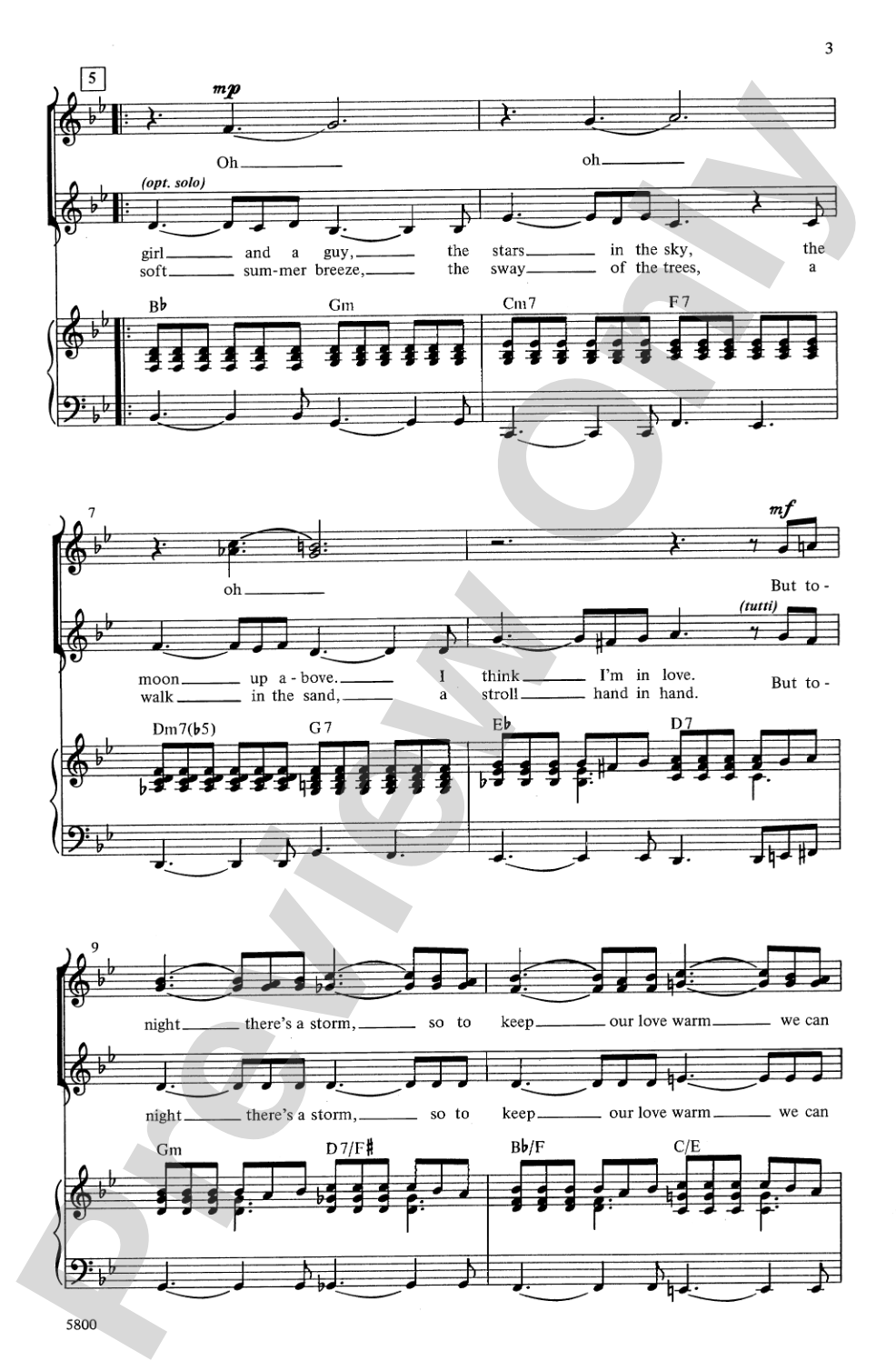
It's back to the 50's with this slow rock ballad that's perfect for your winter concerts. It's not a Christmas piece, so it's suitable for any secular winter-time concert. Jay Althouse cleverly mixes memories of summer ("The soft summer breeze. the sway of the trees") with images of winter for an absolutely unforgetable musical treat. "So let it snow till Valentine's Day..." and we'll for Slow Dancing in the Snow.


Slow Dancing in the Snow: SSA Choral Octavo isn't in MakeMusic Cloud just yet...but it could be. Let us know you'd like to see it, and you'll help shape what comes next. In the meantime, start a free trial and dive into thousands of interactive titles your students can play along with today.
Request This Title
Tell us you want it.
Start Your Free Trial
Explore everything that's ready to play right now.
Sample Audio
1
Audio File
--:--
0:00
0:00
Sample Video
No sample videos found.
Additional Details
Series:
Alfred Archive Edition: Alfred Choral Designs
Publisher:
Alfred Music
Page Count:
8
SKU:
00-PO-0004487
More about this title
About the Composer: Jay Althouse

Jay Althouse holds degrees in Music Education and Music from Indiana University of Pennsylvania, where he was recognized as a Distinguished Alumnus. His eight-year tenure in rights and licensing at a major educational publisher included service on the Executive Board of the Music Publishers Association of America. As a composer, he has over 800 choral works in print performed internationally across all choir levels, and he maintains ASCAP membership with multiple Special Award recognitions for his compositions.
Beyond composition, Althouse has co-created children's musicals with his wife Sally K. Albrecht, edited respected vocal solo collections including Folk Songs for Solo Singers, and co-authored The Complete Choral Warm-up Book and Accent on Composers. His instructional resources for music classrooms cover music literacy, assessment, and composer study. Althouse served on the North Carolina Master Chorale board and currently advises the Folk Art Society of America's National Board.
Why we love this
Althouse balances accessibility with musical sophistication here. The 1950s slow-rock idiom sits comfortably within the SSA range, and his clever juxtaposition of summer imagery against winter scenes creates memorable musical contrast without requiring elaborate staging. Directors appreciate that this piece works in secular winter programming without relying on holiday themes, filling a genuine repertoire gap for January and February concerts.
What to expect
Slow Dancing in the Snow captures the bittersweet nostalgia of winter romance through a 1950s lens. The piece drifts between summer memories and snowy present moments with a gentle, dreamy quality that settles naturally into the SSA voicing, creating an intimate sound that feels both wistful and warm.
Who it's for
SSA choirs at the secondary or community level seeking secular winter repertoire with contemporary accessibility. Directors who want strong musical writing and clear interpretive direction will find Althouse's voice part writing singable while maintaining harmonic interest across all three lines.
How to get the most out of it
- Lean into the nostalgic tone by encouraging singers to imagine specific memories associated with both seasons. The emotional authenticity will deepen the lyrical delivery and make the summer-to-winter transition feel genuine rather than clever.
- Pay attention to the recorded accompaniment provided. Althouse's ballad style requires careful tempo control, and matching the recorded track's phrasing will help your singers find the right groove and rubato for this slow-rock idiom.
- Highlight the moment when winter imagery takes over from the summer memories. Mark that shift clearly in rehearsal so the ensemble understands this isn't a jumble of contradictory images but a deliberate emotional progression.
How to use it
Program this in a winter concert alongside other secular seasonal pieces to build thematic cohesion without relying on holiday music. Its moderate difficulty and 8-page length make it an ideal complement to longer or more challenging works in the same concert, and its romantic nostalgia provides pleasant contrast if surrounded by more upbeat selections.
Skills your students will build
- Sustaining lyrical phrasing in a ballad style across longer melodic lines
- Blending three-part harmony while maintaining clear voice independence
- Interpreting rubato and tempo flexibility appropriate to slow-rock idiom
- Coordinating vocals with recorded accompaniment in a contemporary popular music style