Slipping Away Cover Image

Slipping Away: Jazz Ensemble Conductor Score & Parts

$29.95 USD
Sale price  $29.95 USD Regular price 
Skip to product information
Slipping Away Cover Image

Slipping Away: Jazz Ensemble Conductor Score & Parts

As Recorded on the Album Strings

By Jim Snidero

Level: Advanced

Item: 01-ADV17013

$29.95
Shipped

One moment…

Description
Following the release of Jim Snidero's critically acclaimed Strings album, the complete scores and parts of the recorded pieces are now available for alto saxophone, string ensemble, and rhythm section. The atmospheric Snidero original in 3/4, Slipping Away, is a superior example of jazz with strings, with solos for alto saxophone, piano and bass.

Slipping Away: Jazz Ensemble Conductor Score & Parts isn't in MakeMusic Cloud just yet...but it could be. Let us know you'd like to see it, and you'll help shape what comes next. In the meantime, start a free trial and dive into thousands of interactive titles your students can play along with today.

Sample Pages

No sample pages found.

Sample Audio
No sample audio found.
Sample Video
Additional Details
Publisher: Advance Music
UPC: 805095170139
SKU: 01-ADV17013
Instrumentation: Alto saxophone, string quintet, piano, double bass, drum set

More about this title

About the Composer: Jim Snidero
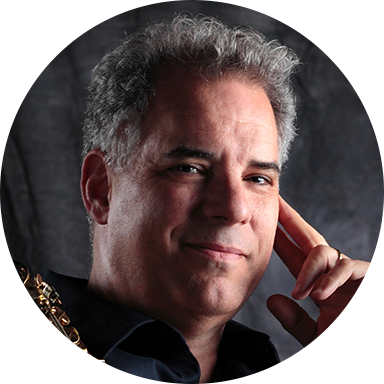
Jim Snidero

Jim Snidero has spent more than three decades establishing himself as one of jazz's most accomplished alto saxophonists, composers, and educators. Downbeat Magazine recognized him as a "master musician" and "alto saxophone virtuoso," and his placement in the 2017 Downbeat Critic's Poll confirms his enduring influence on the international jazz scene. Growing up near Washington, DC, Snidero studied with Phil Woods as a teenager and later attended the University of North Texas, where he performed with the One O'Clock Lab Band before further study with Dave Liebman sharpened his artistic vision.

After moving to New York in 1981, Snidero quickly became a sought-after sideman, recording with Brother Jack McDuff, the Mingus Big Band, Frank Wess, the Toshiko Akiyoshi Jazz Orchestra, and others. His work as a leader began with On Time (1984) and continued through celebrated recordings like Mixed Bag (1987) and Blue Afternoon (1989), the latter recognized in The Penguin Jazz Guide as one of the finest jazz records ever made. His compositional voice balances sophistication with accessibility, making his work valuable for both professional ensembles and advanced student groups.

Why we love this

Snidero writes for strings with genuine orchestral sensibility rather than treating them as window dressing around a jazz core. The 3/4 meter gives the piece rhythmic character without exotic difficulty, and the balance between alto saxophone, piano, and bass solos means no single player carries the entire weight of the performance. Conductors appreciate how accessible this becomes once the ensemble locks the groove, making it realistic for advanced high school or college ensembles to deliver something that sounds genuinely professional.

What to expect

Slipping Away has the introspective quality of late-night jazz, with strings creating an almost film-score atmosphere beneath the saxophone's lyrical voice. The 3/4 meter lends an unrushed, floating quality even when the tempo keeps moving forward. Each solo feels like a meditation rather than a display piece.

Who it's for

Advanced jazz ensembles with the instrumentation to match: alto saxophone, string quintet, piano, bass, and drums. This works well for programs that have developed a serious jazz curriculum and want to program something beyond small combo arrangements. It's especially valuable for conductors seeking serious composition over novelty.

How to get the most out of it

  • Establish the 3/4 pulse with quiet precision before bringing in the full ensemble. The piece's atmospheric quality depends on listeners feeling the meter without hearing it hammered.
  • Work the rhythm section first. Piano, bass, and drums need their partnership locked before strings enter, since the strings will follow that pocket rather than the other way around.
  • Give soloists space to breathe between phrases. Alto saxophone, piano, and bass all need room to develop ideas, so resist the urge to pack every measure with ensemble activity.
  • Balance the strings so they support rather than overshadow the saxophone. In a jazz context, they're the bed, not the ceiling.

How to use it

Position this as a centerpiece for a jazz concert where you're trying to show depth and maturity rather than crowd-pleasing energy. It pairs well with harder-swinging small combo pieces and gives serious student soloists a chance to shine in front of a polished ensemble backdrop. Consider it for a spring concert where audiences expect more listening depth than a winter holiday program demands.

Skills your students will build

  • Reading and performing in 3/4 meter within a jazz context
  • Responding to and balancing against improvised solos
  • Understanding string orchestration in a jazz setting
  • Phrase shaping and dynamic control in ensemble playing
  • Trading solos between saxophone, piano, and bass
  • Maintaining groove in a less-common meter

You May Also Like