
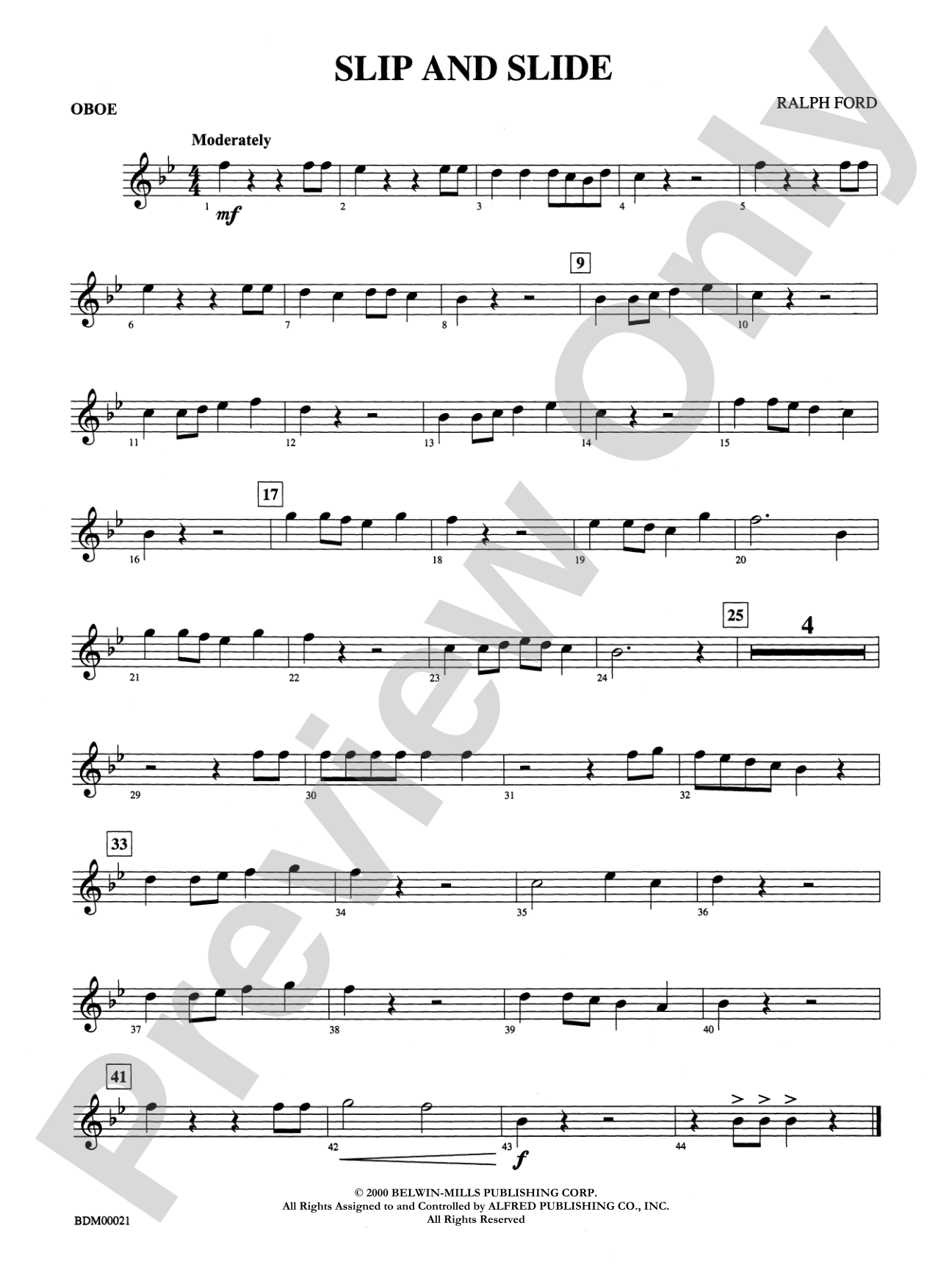

Slip and Slide: Oboe
Trombone Section Feature
By Ralph Ford
Grade: 0.5 (Very Easy)
Item: 00-PC-0002121_O1
$3.00
Pickup currently not available
Description
This delightful original melody is interrupted by comical trombone glissandos throughout . . . each carefully marked with slide positions for ease of teaching. A pleasant and unique opportunity to feature your beginning trombonists. "Listen to the sounds I can make with my new trombone!" This is a great selection to recruit more beginning trombonists. (1:30)


Don't just read it, hear it, play along with it, and watch your students grow with it. In MakeMusic Cloud, Slip and Slide: Oboe comes alive with professional accompaniment, adjustable tempo, and built-in practice tools that turn solo practice into real progress.
Open in the Player
Jump straight in and assign it today.
Start Your Free Trial
Open this title and explore the full library in minutes.
Sample Audio
1
Audio File
--:--
0:00
0:00
Sample Video
Additional Details
Series:
Belwin Very Beginning Band
Publisher:
Alfred Music
Page Count:
132
SKU:
00-PC-0002121_O1
More about this title
About the Composer: Ralph Ford

Ralph Ford brings three decades of composition and arrangement experience across multiple genres and mediums. A prolific creator with over 250 published works for orchestra, concert band, jazz ensemble, and marching band, Ford has built his career both in academic settings and the professional media world, earning regional and international recognition for his work in advertising, broadcast, and live production.
Ford served fifteen years on the music faculty at Troy State University, where he taught orchestration, arranging, theory, and applied brass while simultaneously directing the jazz ensemble program. His tenure as an exclusive composer and arranger for the Belwin division of Alfred Music has resulted in a catalog performed by university, military, professional, community, and school ensembles worldwide. His background as a student arranger in Panama City, Florida, combined with his professional experience in live radio, television production, and recording studios, informs his distinctive approach to accessible, engaging concert band writing.
Why we love this
Ford writes trombone glissandos that feel earned rather than gimmicky. The comical intent is clear from the first measure, and by marking each slide position explicitly, he removes the guesswork from teaching young brass players how to execute them musically. This is the kind of piece that makes beginning trombonists feel like they're playing something genuinely special.
What to expect
Cheerful and buoyant, with a melody that feels like a musical wink. The interrupting glissandos are playful rather than intrusive, giving the piece a sense of fun surprise without sacrificing musicality. It's the sound of young musicians discovering what their instruments can do.
Who it's for
Directors of beginning concert bands looking for a piece that generates genuine excitement among new trombonists. This works equally well for recruitment concerts, where it demonstrates the unique sounds young players can produce immediately, and for early-season programming when the ensemble is still building fundamentals.
How to get the most out of it
- Have your trombonists practice the glissando positions separately during sectional rehearsal before running the piece with the full band. Mark the positions in their parts with colored pencil if the printed markings aren't clear enough.
- Balance the melody line so it doesn't get overwhelmed by the supporting voices. At this level, young players often play louder than necessary, so gentle reminders about blend help the delightful tune shine.
- Let the trombone section rehearse their glissandos with exaggeration first. Once they're confident with the technique, dial back the theatrical sound to match the lighthearted (not cartoonish) character of the piece.
- Take the marked tempo seriously. The 1:30 duration guides pacing; rushing or dragging will undermine the comedic timing built into the arrangement.
How to use it
Feature this early in a concert where it can draw smiles and applause without making the band feel they're playing "easy" music. It pairs well on programs with other accessible originals, and its brevity makes it ideal filler between longer works. Consider placing it strategically to highlight your trombone section's growth during the fall rehearsal season.
Skills your students will build
- Executing trombone glissandos with marked slide positions
- Playing with ensemble blend at a very easy level
- Reading and interpreting section features within a full-band context
- Controlling tone quality during technical passages
- Coordinating with other sections at brisk tempos