
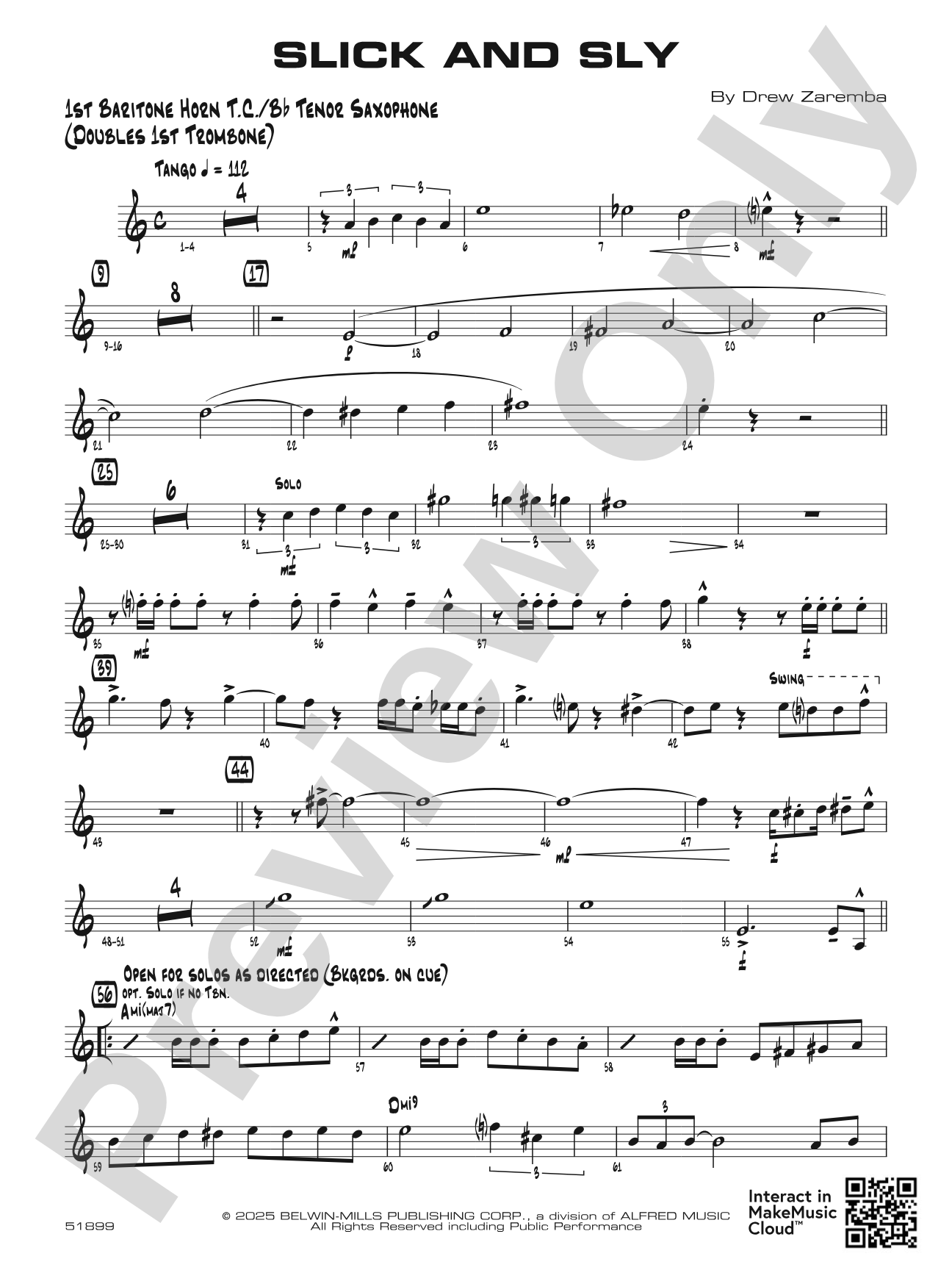

Slick and Sly: Baritone T.C.
By Drew Zaremba
Grade: 3.5
Item: 00-PC-0019591_BTC1
$3.00
Pickup currently not available
Description
A uniquely cool chart with a tango-ish groove played around 112 BPM. Alto 1 takes the soulful melody line and solo space, along with trumpet 2, trombone 1, and drumset. Brass use their plunger mutes, and lead trumpet range is to written G-sharp. Optional parts include flute and vibes. Beautiful colors and textures galore in this excellent chart! (4:40)


Slick and Sly: Baritone T.C. isn't in MakeMusic Cloud just yet...but it could be. Let us know you'd like to see it, and you'll help shape what comes next. In the meantime, start a free trial and dive into thousands of interactive titles your students can play along with today.
Request This Title
Tell us you want it.
Start Your Free Trial
Explore everything that's ready to play right now.
Sample Audio
1
Audio File
--:--
0:00
0:00
Sample Video
Additional Details
Series:
Jazz Band Series
Publisher:
Alfred Music
SKU:
00-PC-0019591_BTC1
More about this title
About the Composer: Drew Zaremba
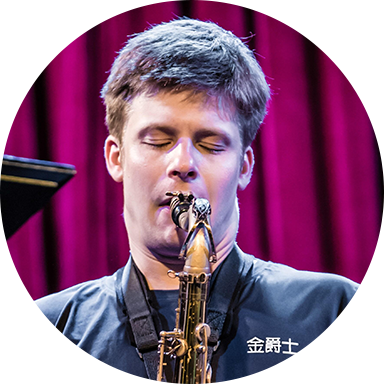
Drew Zaremba has built an international presence as a conductor, composer, and arranger whose work spans from concert halls to jazz stages. His compositions and arrangements have been performed by ensembles ranging from the BBC Orchestra and Metropole Orkest to the Dallas Symphony Orchestra, and he has collaborated with acclaimed soloists including Randy Brecker, Eddie Gomez, and members of Chicago and Manhattan Transfer.
Zaremba served on the faculty at the University of Northern Colorado beginning in 2018, teaching jazz composition and arranging. His creative ambitions have taken him across the globe, including a two-month residency in Zhuhai, China, where he created an entire concert fusing Chinese opera with jazz idioms. His original compositions have earned significant recognition, including the Sammy Nestico Award in 2018 and first prize in the Sherman/Barsanti Inspiration Award at UNT. His catalog appears through Sierra Music and UNC Jazz Press, and he has recorded extensively with the University of North Texas Lab Bands.
Why we love this
Zaremba writes charts that balance sophistication with accessibility, and this one exemplifies his gift for orchestration and groove. The tango-inflected rhythm keeps ensembles engaged without overwhelming Grade 3.5 players, while the color choices with plunger mutes, vibraphone, and optional flute create a recording-ready sound that rewards rehearsal detail.
What to expect
Sophisticated and streetwise at once. The tango-ish swing carries a cool, understated confidence, with plunger mutes adding a vintage-modern edge and the rhythm section propelling everything forward with easy swing. Listening, you hear a professional jazz recording; playing it, your students feel the immediate payoff of ensemble precision and color.
Who it's for
Jazz ensembles at the Grade 3.5 level ready to tackle instrumentation specifics and Latin-jazz grooves. This is ideal for conductors seeking a chart that teaches authentic jazz phrasing and orchestration without overshooting a developing ensemble's technical reach.
How to get the most out of it
- Shape the plunger mute work in the brass section with precision; these articulations define the chart's personality, so invest rehearsal time in consistent mute placement and release across the section.
- Anchor the tango feel in your rhythm section first. Lock the groove at 112 BPM before layering in the melody, so soloists have a rock-solid foundation.
- Balance Alto 1's melody and solo space carefully against the supporting voices; Zaremba's voicings are lean and deliberate, so each voice matters to the overall color.
- If using the optional vibraphone and flute parts, rehearse them separately from the core ensemble first, then integrate them to understand how they shift the texture and harmonic color.
How to use it
Place this as a centerpiece of a jazz concert or as a closing number on a mixed-repertoire band program, where its distinctive groove and recorded-quality production will stand out. It also works well as a winter festival or adjudication piece; the four-and-a-half-minute duration fits easily into contest windows and the soloists shine under that kind of spotlight.
Skills your students will build
- Playing with plunger mutes and executing consistent mute articulations
- Swinging a tango-influenced groove in a jazz context
- Reading and balancing a five-part jazz ensemble voicing (with optional doublings)
- Trading and sharing melodic space with confidence in small sections
- Interpreting jazz phrasing, dynamics, and color changes from a professional score