Sleigh Ride Samba: 3rd Flute Sheet Music Preview

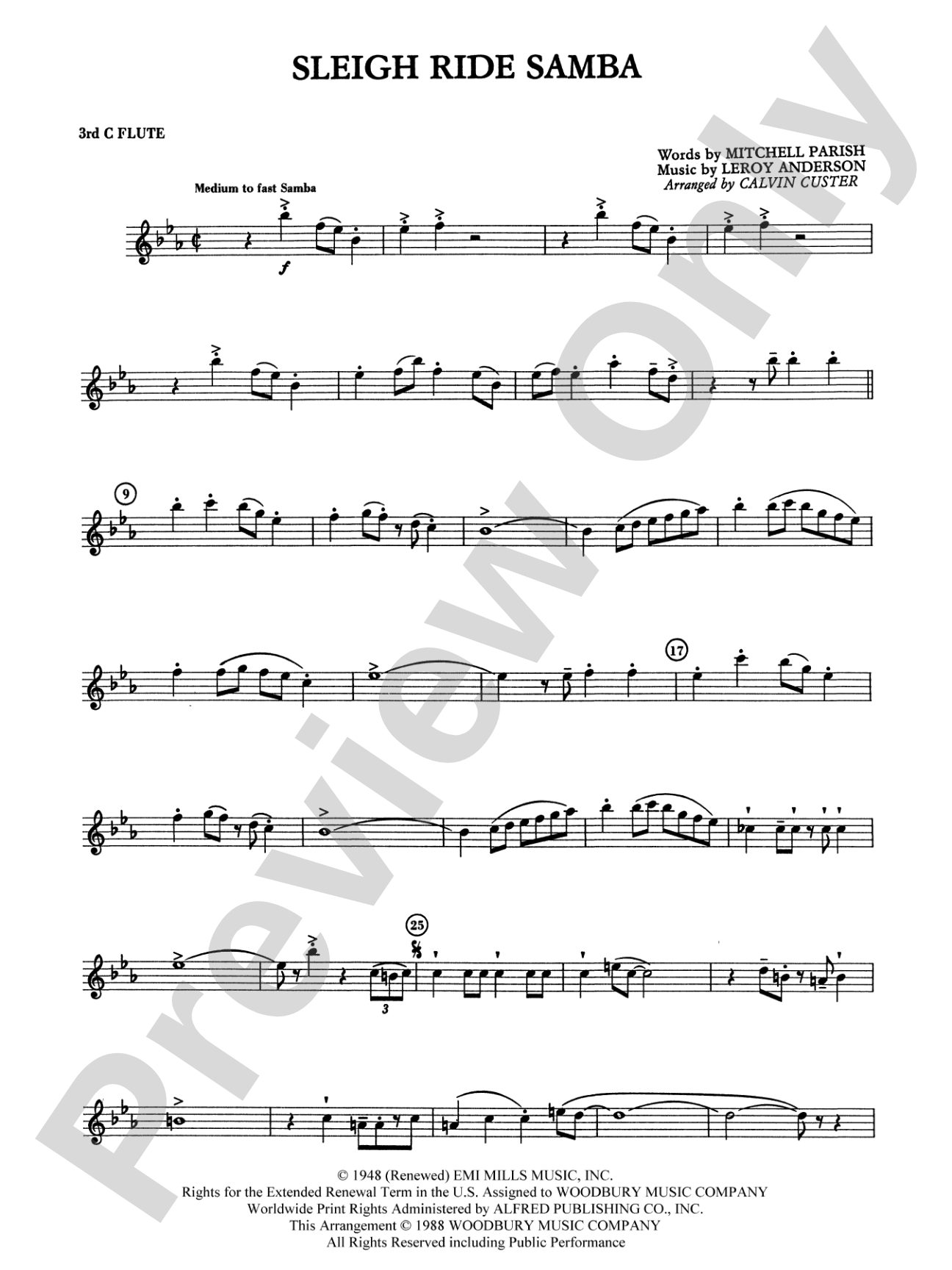
Sleigh Ride Samba: 3rd Flute

By Leroy Anderson / arr. Calvin Custer

Level: Medium Easy

Item: 00-PC-0001695_F3

Digital Download
$3.00
Description
Ensemble for flute choir (1st C flute, 2nd C flute, 3rd C flute, 4th C flute, 5th C flute, guitar, bass, drums, and piano).

Download free full-performance and accompaniment recordings. Play along with the music and learn the correct style with the full-performance track. The accompaniment track includes only piano, guitar, bass, and drums, so if you don't have a rhythm section, you can play along with this track in rehearsal and performance.

Free Recording Downloads:
Full Performance Track
Accompaniment Track

Don't just read it, hear it, play along with it, and watch your students grow with it. In MakeMusic Cloud, Sleigh Ride Samba: 3rd Flute comes alive with professional accompaniment, adjustable tempo, and built-in practice tools that turn solo practice into real progress.

Sample Audio
0:00
0:00
Sample Video
Additional Details
Series: Ensembles That Swing
Publisher: Alfred Music
Page Count: 36
SKU: 00-PC-0001695_F3
Instrumentation: Flute Choir

More about this title

About the Composer: Leroy Anderson

Leroy Anderson (1908-1975) was an American composer and conductor whose gift for orchestration and melodic invention made him one of the most performed composers in educational settings. His light classics and pops arrangements combined sophistication with accessibility, earning him a place in both concert halls and school rehearsal rooms. Anderson understood how to write for ensemble with clarity and joy, qualities that have kept his music vital in music education for generations.

Why we love this

Calvin Custer's arrangement captures the infectious swing and rhythmic vitality of Anderson's original while tailoring the texture perfectly for flute choir with rhythm section. The five-part flute writing creates genuine harmonic depth without demanding virtuosity, and the included accompaniment track solves the real logistics problem of assembling a working rhythm section. This is a piece that sounds polished and energetic in performance while remaining straightforward enough to learn efficiently.

What to expect

A winter classic with Latin swagger. The samba rhythm gives the beloved Sleigh Ride melody a warm, dancing quality that feels contemporary and alive rather than quaint or nostalgic. It's the sound of a flute section that knows how to lock in with a rhythm section and deliver style.

Who it's for

This arrangement works for intermediate flute choirs (Grade 3) and mixed flute ensembles in schools and community bands. It's equally at home in a holiday concert, a pops program, or a spring concert that needs energy and tunefulness without technical extremes.

How to get the most out of it

  • Lock the rhythmic pocket with your rhythm section during rehearsal using the accompaniment track. Even 10 minutes of sectional work with the drums and bass will tighten the ensemble's overall swing feel.
  • Shape the melody with gentle articulation in the higher flutes rather than heavy tonguing. Anderson's orchestration sings when the upper line floats over the harmony.
  • Balance the middle voices (2nd and 3rd flutes) as the true harmonic foundation. They carry far more than accompaniment; they anchor the sound.
  • Highlight the samba rhythms by listening carefully to where the kick drum and clave land. Your rhythmic independence from the rhythm section will sound crisp only if you know exactly where they're playing.

How to use it

Program this as a second-half opener to reset audience energy after a slower section, or pair it with other Anderson arrangements from the Ensembles That Swing series for a cohesive pops set. The moderate difficulty and seasonal appeal make it an ideal choice for holiday concerts that want to move beyond traditional arrangements.

Skills your students will build

  • Playing with samba rhythmic feels and light swing articulation
  • Balancing five-part flute harmony with clear voice leading
  • Locking rhythmically with a rhythm section using recorded accompaniment
  • Reading and executing parts that support rather than carry the melody

You May Also Like