
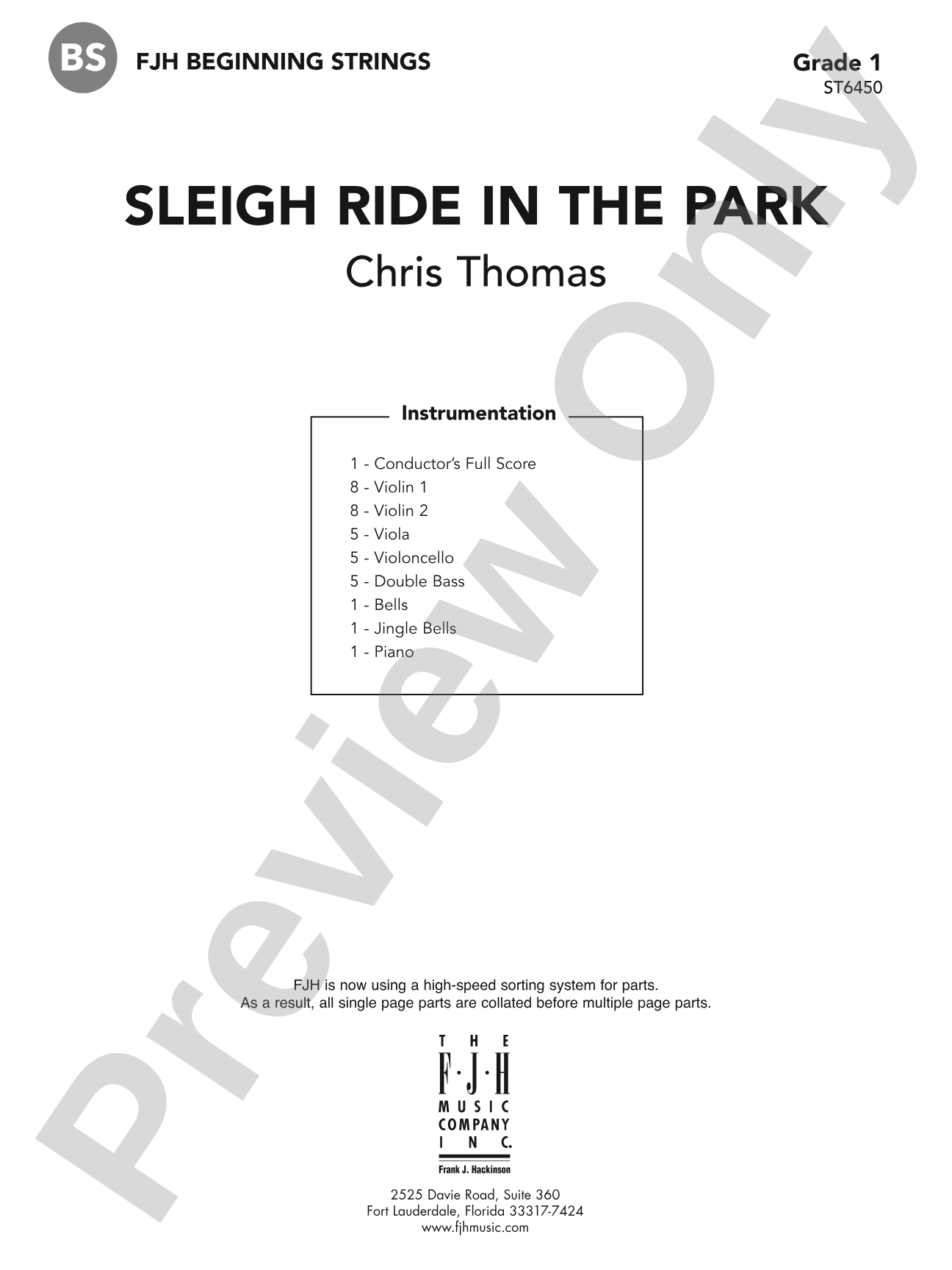

Sleigh Ride in the Park: String Orchestra Conductor Score & Parts
By Chris Thomas
Grade: 1
Item: 98-DST6450

$50.00
Pickup currently not available
Buy Extra Parts (Digital PDF Download)
| Product | Price | Quantity |
|---|---|---|
| Sleigh Ride in the Park: Score | $5.00 | |
| Sleigh Ride in the Park: Violin 1 | $7.00 | |
| Sleigh Ride in the Park: Violin 2 | $7.00 | |
| Sleigh Ride in the Park: Viola | $7.00 | |
| Sleigh Ride in the Park: Violoncello | $7.00 | |
| Sleigh Ride in the Park: Double Bass | $7.00 | |
| Sleigh Ride in the Park: Bells | $7.00 | |
| Sleigh Ride in the Park: Jingle Bells | $7.00 | |
| Sleigh Ride in the Park: Piano | $7.00 |
Parts Added to Cart!
Description
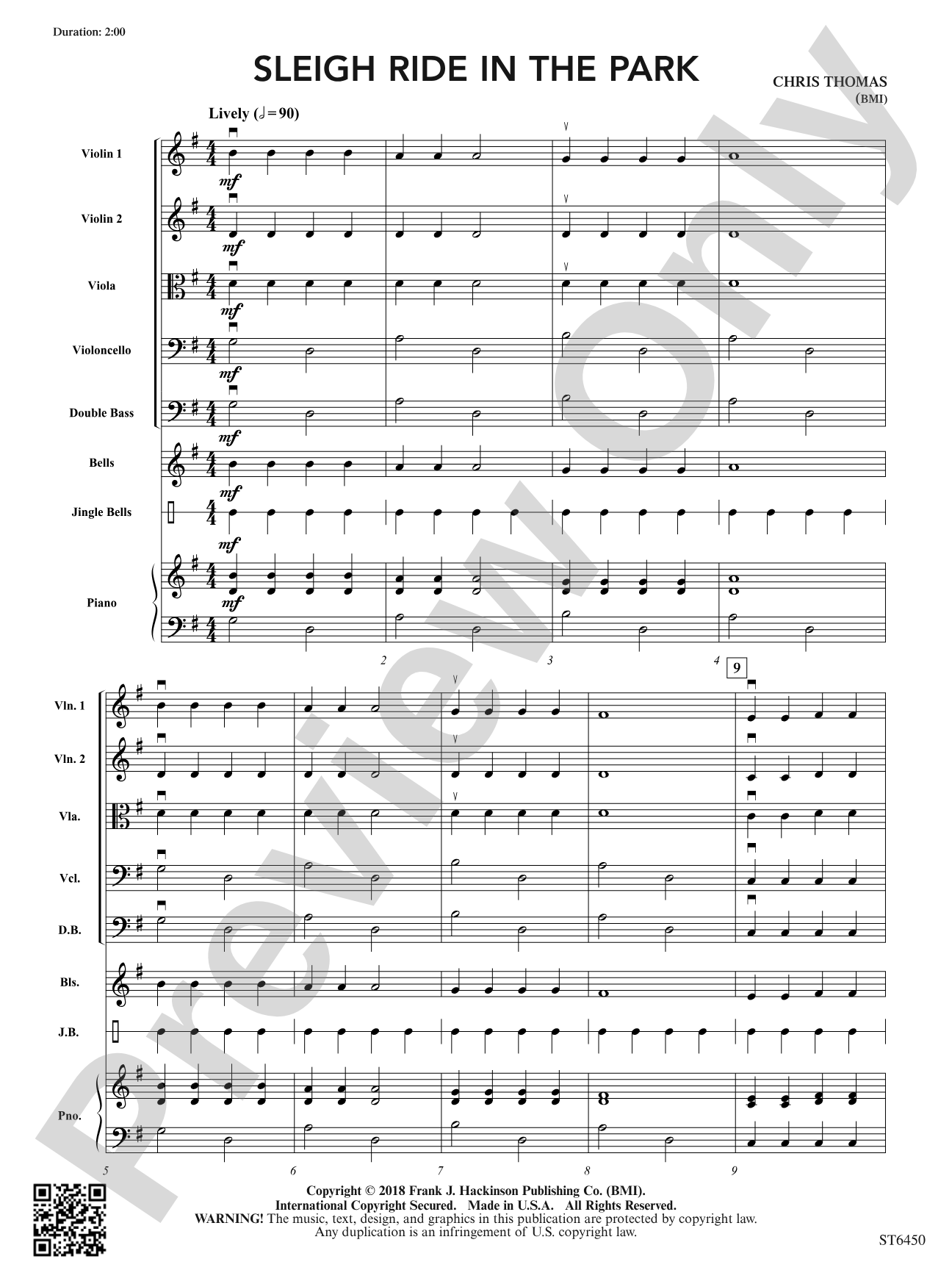
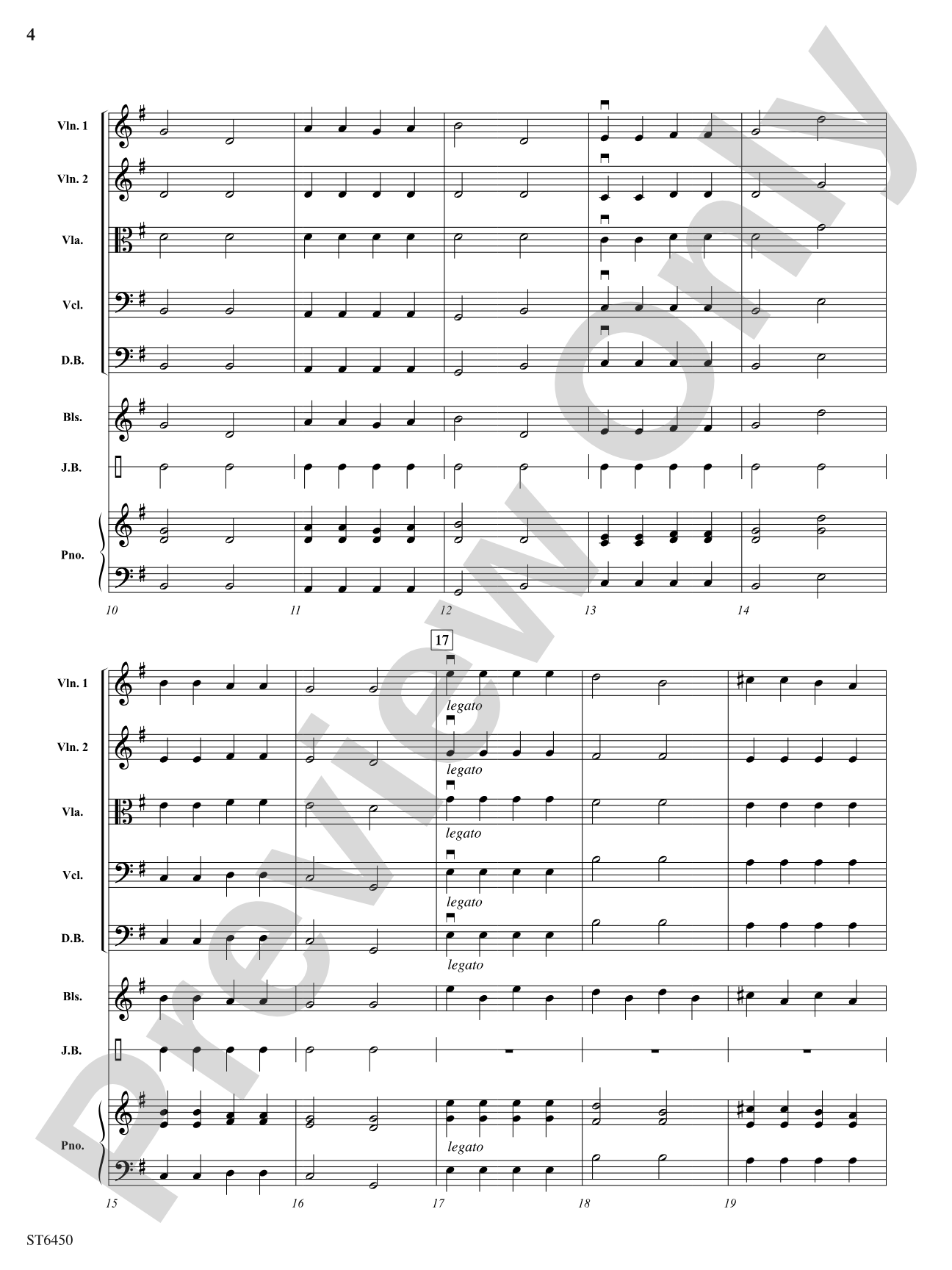
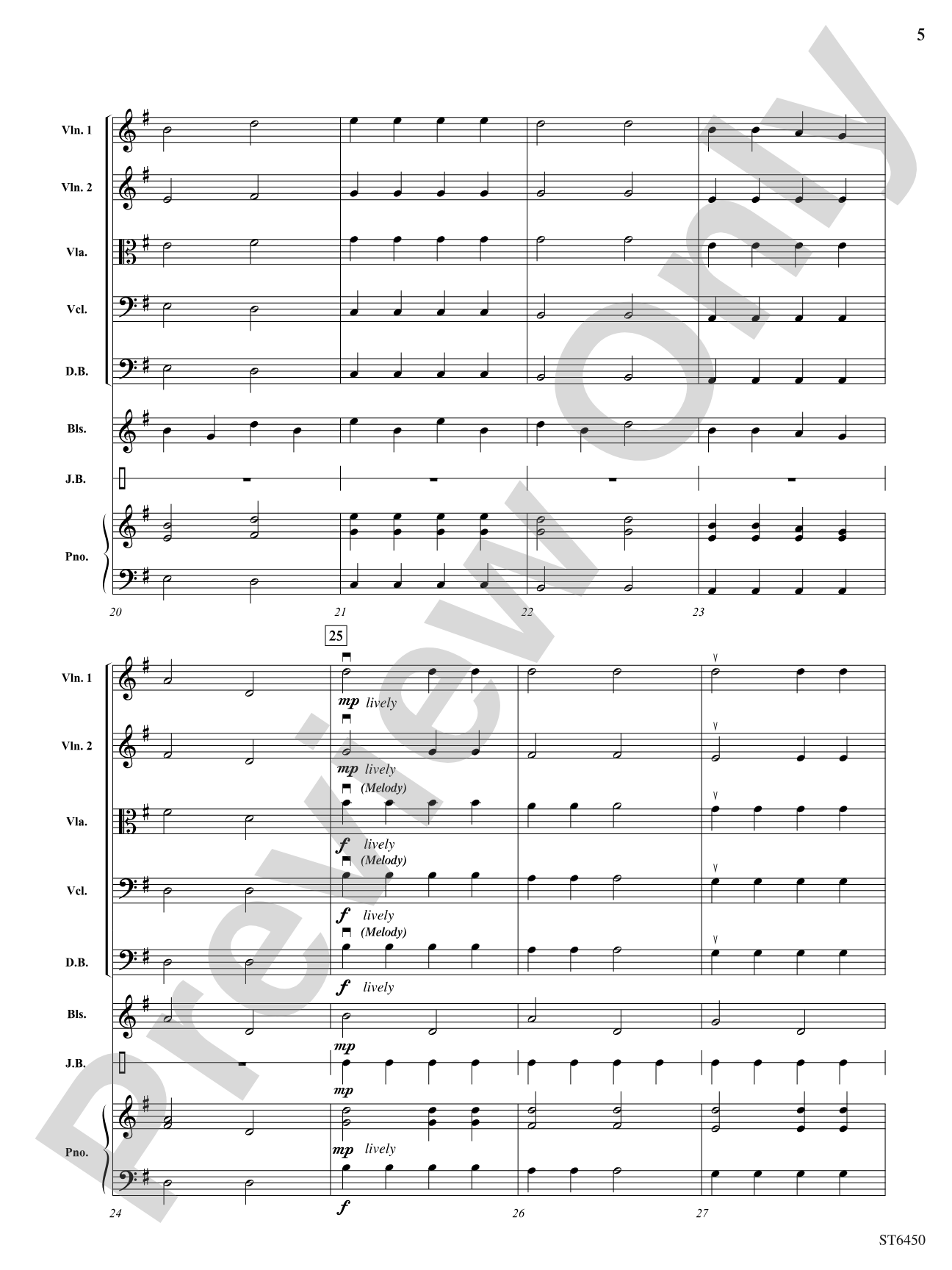
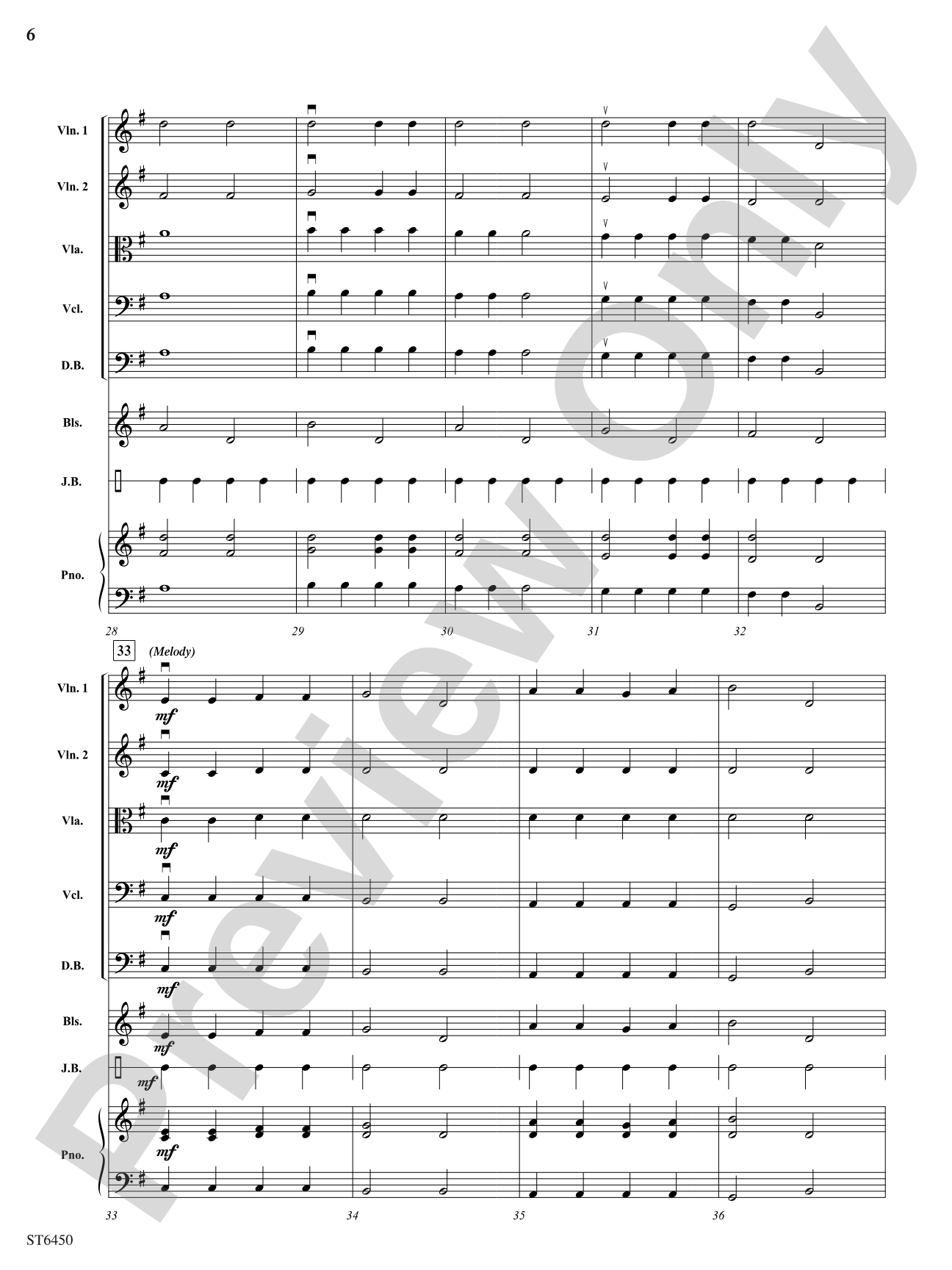
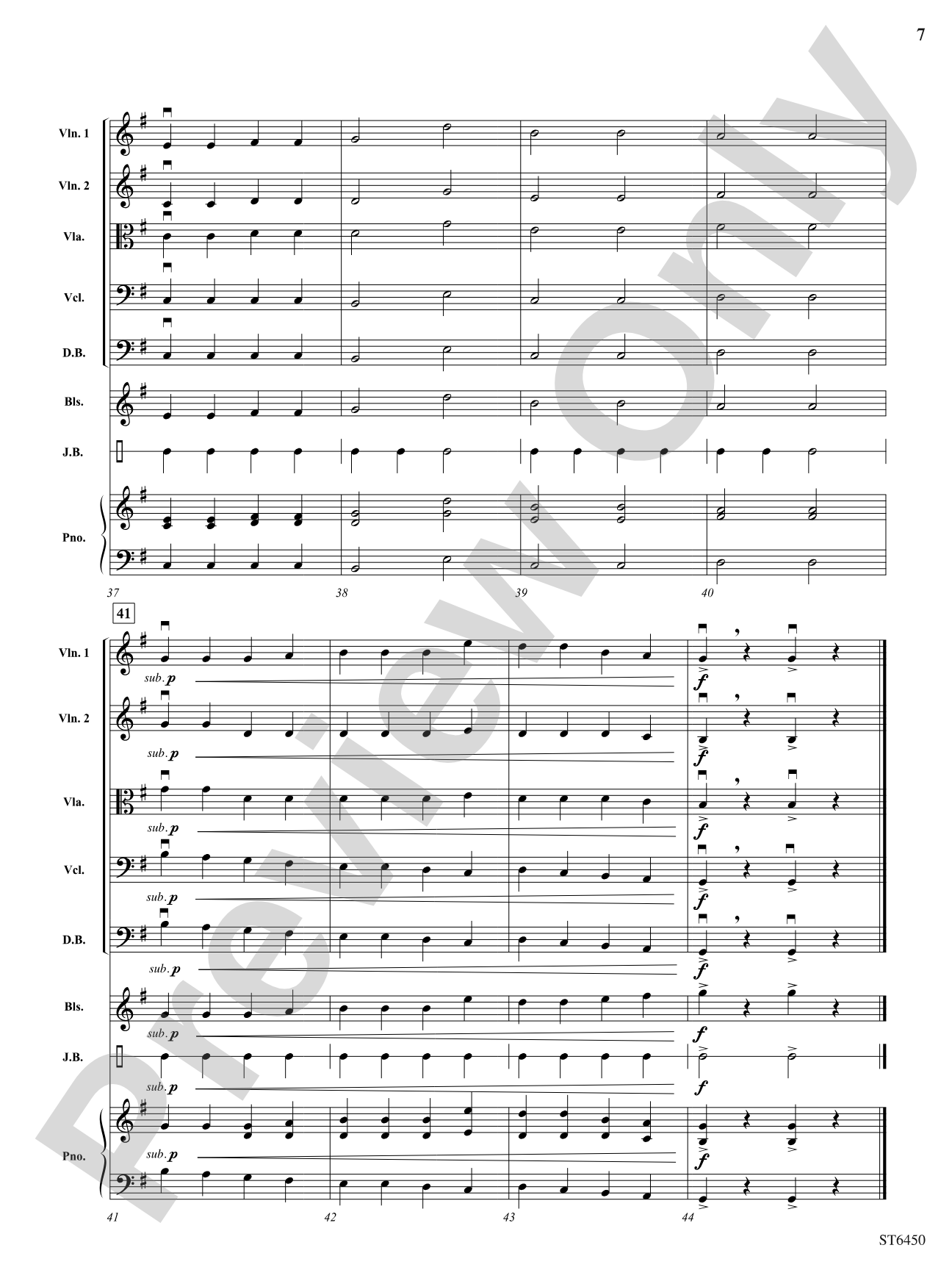
Imagine a horse-drawn sleigh coasting leisurely through the park with blanket-coated passengers in tow. This music features a bright melody, a sparkly glockenspiel part, and jingle bells to mimic the sound of the sleigh. The melody is passed around to multiple sections in this light-hearted, and very playable addition to any holiday program.


Don't just read it, hear it, play along with it, and watch your students grow with it. In MakeMusic Cloud, Sleigh Ride in the Park: String Orchestra Conductor Score & Parts comes alive with professional accompaniment, adjustable tempo, and built-in practice tools that turn solo practice into real progress.
Open in the Player
Jump straight in and assign it today.
Start Your Free Trial
Open this title and explore the full library in minutes.
Sample Audio
1
Audio File
--:--
0:00
0:00
Sample Video
Additional Details
Series:
FJH Beginning Strings
Publisher:
The FJH Music Company, Inc.
SKU:
98-DST6450
More about this title
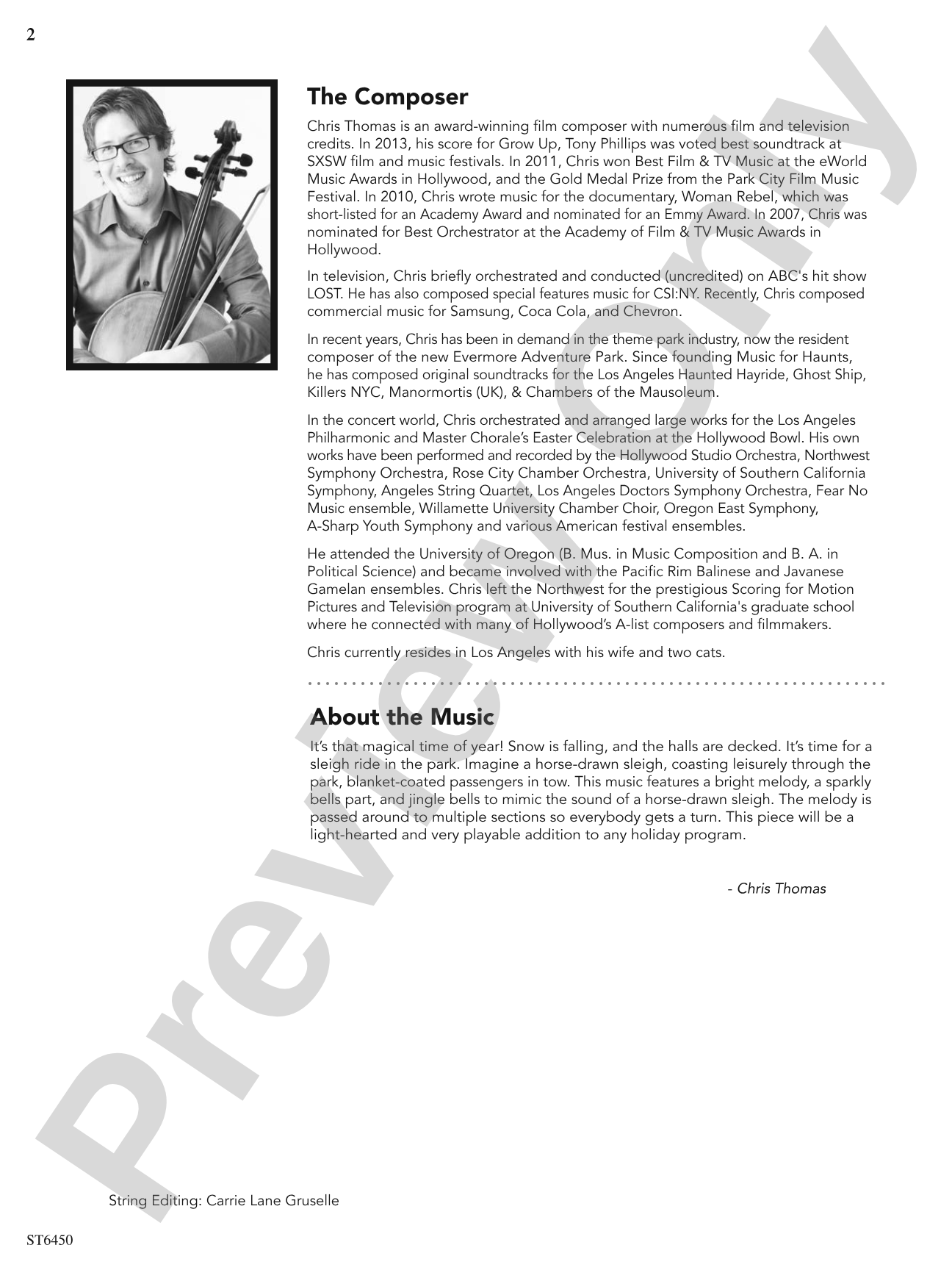
About the Composer: Chris Thomas

Chris Thomas writes music across film, television, theme parks, and the concert stage. His work has earned a Hollywood Music in Media Award, two American Prize placements in composition, a Global Music Award, and the Gold Medal at the Park City Film Music Festival. He has composed for Emmy-nominated films and served as composer, orchestrator, and conductor for major studios including Sony, ABC, FOX, CBS, and HBO. His scores appear in theme parks worldwide, from Evermore Adventure Park to Knott's Berry Farm to The Void.
Thomas's classical works have been performed at Carnegie Hall, the Sydney Opera House, and the Hollywood Bowl. His Symphony No. 1 (the Malheur Symphony) was the focus of his 2019 TED Talk. Learn more at www.christhomasmusic.com.
Why we love this
Grade 1 orchestra repertoire rarely balances this much charm with genuine playability. The melody passes through the sections so naturally that every student feels the story, and the jingle bells plus glockenspiel touches give your program that unmistakable holiday sparkle without requiring advanced technique. It's the kind of piece that makes young players excited to rehearse.
What to expect
A crisp winter day unfolds as the sleigh glides through snow-covered paths, passengers wrapped in blankets and listening to the rhythmic jingle of bells. The bright, singable melody passes like the scenery rolling past, while the glockenspiel catches the sunlight on ice. There's joy here, but also quietness—a moment of simple beauty rather than frantic holiday rush.
Who it's for
String orchestras in their first or second year of study will find this piece immediately gratifying. The Grade 1 writing keeps technique simple while the colorful arrangement and holiday setting keep musicians and audiences engaged. It works equally well for mixed-age beginner groups or young ensembles building confidence on stage.
How to get the most out of it
- Keep the tempo steady and unhurried; the sleigh glides, it doesn't rush. A relaxed pulse lets the melody breathe across the sections.
- Balance the glockenspiel so it sparkles without overpowering the strings. A light touch on the mallets captures that icy shimmer.
- Coordinate the jingle bell cues carefully with the conductor so they land exactly on the beat and feel like part of the melody, not an afterthought.
- Shape the melody as it passes between sections; each group should hand off the line with clear phrasing so the story feels continuous.
How to use it
Program this early in a holiday concert to set a warm, inviting tone before more energetic pieces. It pairs naturally with other Grade 1-2 seasonal selections and gives younger orchestra members a rewarding solo moment under performance lights. The modest length and festive imagery also make it ideal for community holiday events or school assembly programs.
Skills your students will build
- Passing melodic lines between sections while maintaining consistent phrasing
- Responding to conductor cues for non-pitched percussion (jingle bells) entries
- Balancing within the ensemble when multiple sections carry the melody
- Maintaining steady tempo during longer lyrical passages
- Coordinating with auxiliary percussion (glockenspiel) in a small ensemble texture