Sleigh Ride: B-flat Bass Clarinet Sheet Music Preview

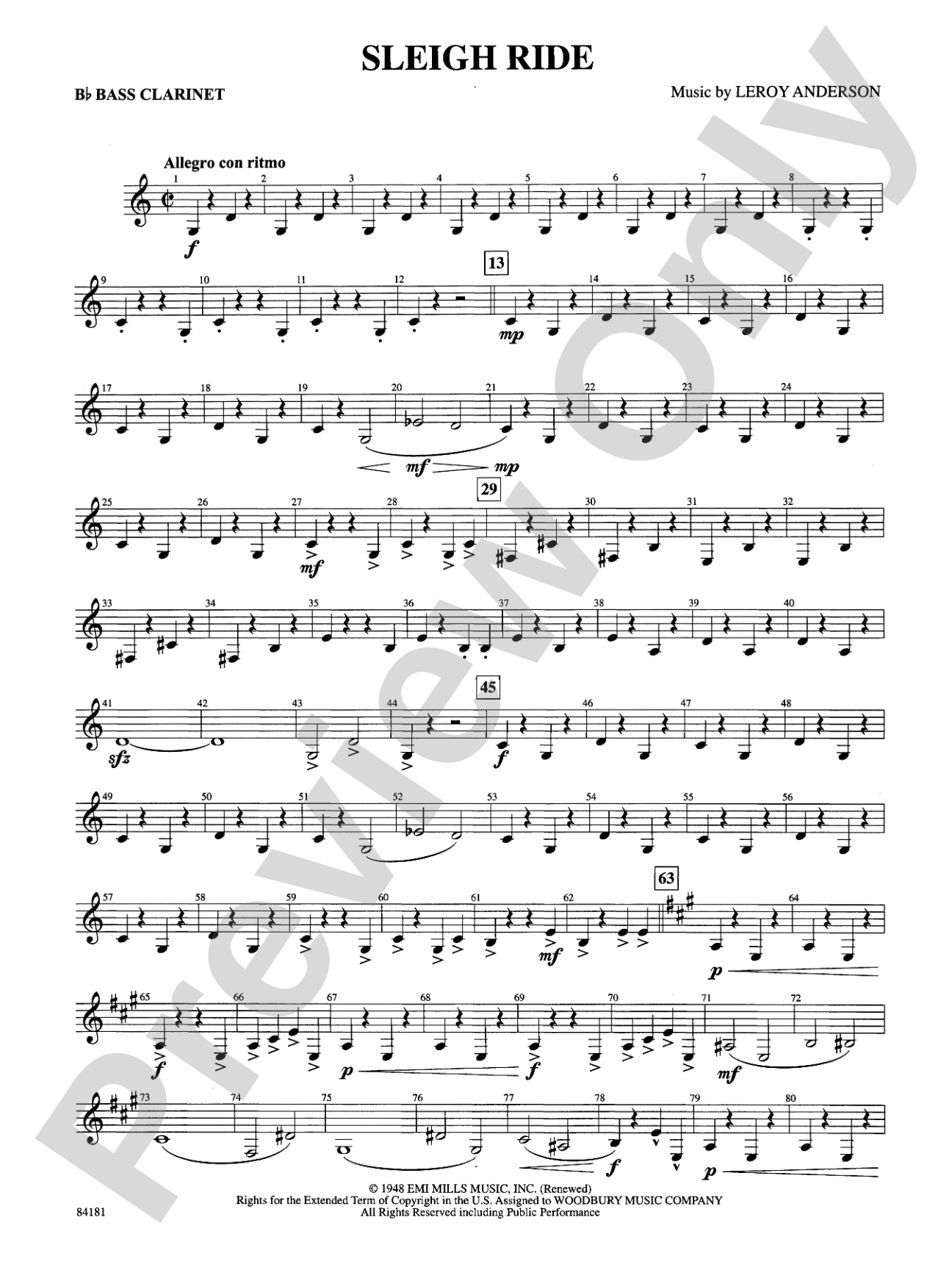
Sleigh Ride: B-flat Bass Clarinet

By Leroy Anderson

Grade: 4 (Difficult)

Item: 00-PC-0014641_BC

Digital Download
$3.00
Description
Very few melodies have the power to instantly create the holiday feeling with just a few notes. Leroy Anderson's classic "Sleigh Ride" is one of them. This concert band arrangement is sure to please audience and player alike. Freshly re-engraved with a new full score. (3:09) This title is available in MakeMusic Cloud.

Don't just read it, hear it, play along with it, and watch your students grow with it. In MakeMusic Cloud, Sleigh Ride: B-flat Bass Clarinet comes alive with professional accompaniment, adjustable tempo, and built-in practice tools that turn solo practice into real progress.

Sample Audio
No sample audio found.
Sample Video
Additional Details
Series: Leroy Anderson Classics
Publisher: Alfred Music
Page Count: 258
SKU: 00-PC-0014641_BC

More about this title

About the Composer: Leroy Anderson

Leroy Anderson (1908-1975) was an American composer and conductor whose gift for melody and orchestration made him one of the most performed composers of light classical music in the twentieth century. His works are characterized by wit, charm, and impeccable craftsmanship; they bridge the gap between concert hall and popular appeal with remarkable ease. Anderson's catalog includes over 150 compositions, many of which have become standards in concert band and orchestra repertoires worldwide.

Why we love this

This Grade 4 arrangement captures everything that makes Leroy Anderson's original so beloved: instant melodic recognition, infectious rhythmic energy, and orchestration that sparkles without demanding virtuosic technical feats from any section. The freshly engraved score gives conductors clarity in managing the countermelodies and rhythmic figures that make the piece dance, while the parts remain accessible enough that solid community and school ensembles can execute it with style and confidence. It's a repertoire choice that generates genuine excitement from audiences while remaining musically substantial.

What to expect

The opening bells and sleigh bells conjure frost and holiday pageantry with instant charm. As the melody enters, a sense of joyful anticipation unfolds; the rhythmic vitality and gentle humor in the orchestration create something both nostalgic and genuinely spirited, never saccharine.

Who it's for

This arrangement serves concert bands preparing holiday programming, festival entries, or year-end pops concerts where immediate audience recognition matters. It's ideal for ensembles with solid fundamentals but mixed technical ability, since the Grade 4 difficulty distributes musical interest across the band rather than concentrating it in featured soloists.

How to get the most out of it

  • Balance the main melody against secondary figures so the primary tune always emerges clearly; Anderson's orchestration stacks lines that can easily bury the central idea if intonation or dynamic control wavers.
  • Articulate the characteristic rhythmic figures crisply without rushing; the lilting, dance-like quality depends on precision rather than speed.
  • Shape the piece with a gentle lift at phrase endings to maintain forward momentum across longer sections; the arrangement's three-minute runtime demands energy that doesn't flag.
  • Use the rehearsal marks and cues in the new engraving to lock ensemble precision on the sudden key changes and metric shifts that Anderson favored.

How to use it

Program this as a concert opener or second piece to establish a festive tone without heavy emotional lifting, or place it late in a winter concert to send the audience out smiling. The three-minute duration makes it an excellent pairing with longer works on a December concert, and its contest-festival credentials make it a reliable choice for holiday ensemble competitions.

Skills your students will build

  • Ensemble balance and blend across multiple simultaneous melodic lines
  • Precision articulation in rhythmic figures without sacrificing musical shape
  • Controlled dynamic contrast that highlights thematic material without overshadowing countermelodies
  • Reading of transposed parts and managing sudden key changes

You May Also Like