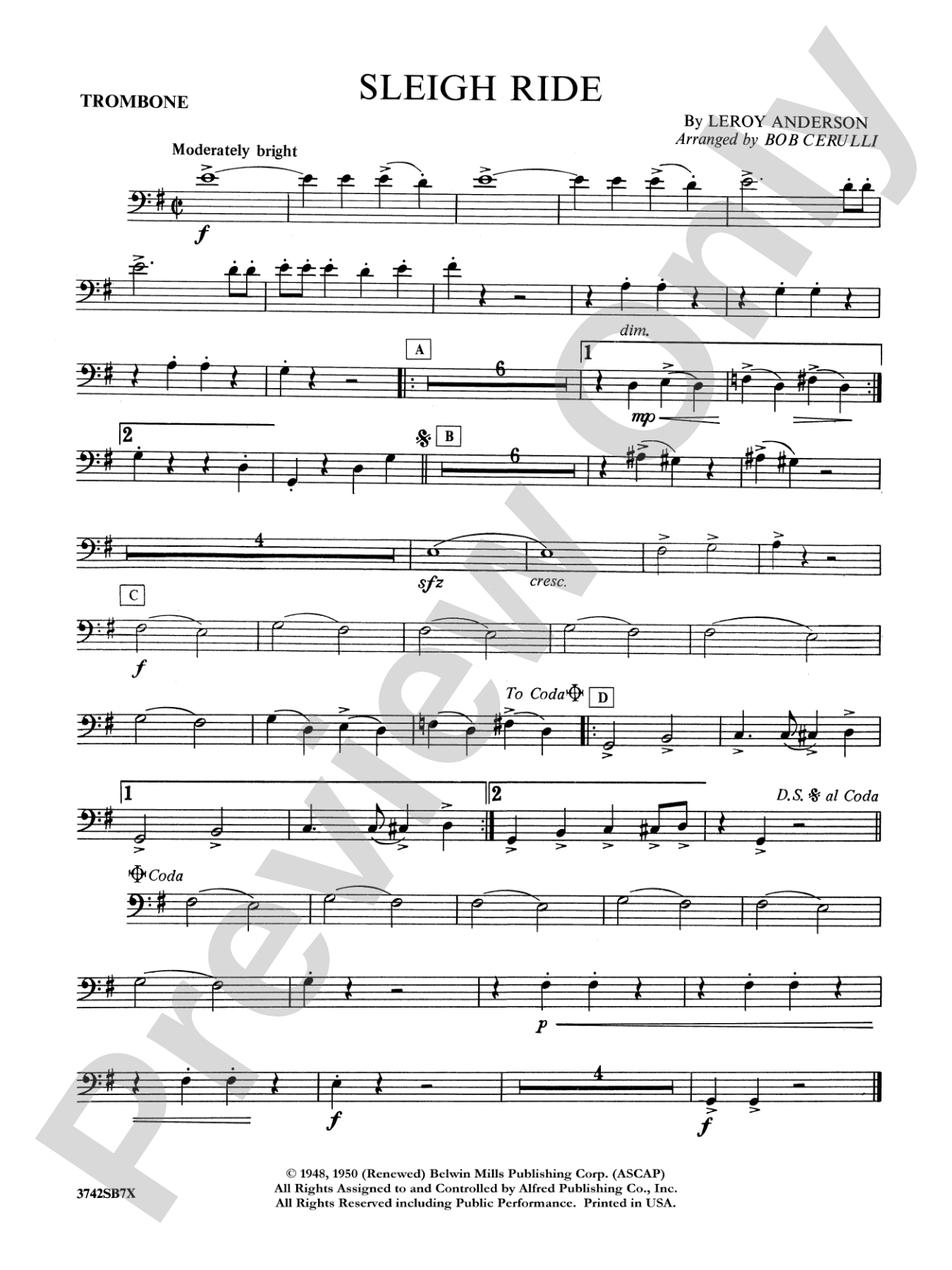
Sleigh Ride: 1st Trombone Sheet Music Preview

Sleigh Ride: 1st Trombone

By Leroy Anderson / arr. Bob Cerulli

Grade: 2.5

Item: 00-PC-0001848_TN1

Digital Download
$3.00
Description
Always a favorite during the holiday season! This new arrangement of the Leroy Anderson classic will be a welcome addition to the concert program. The original style and harmonies are present in this arrangement that has been simplified for young players. Takes a minimum rehearsal time to prepare! (1:52)

Don't just read it, hear it, play along with it, and watch your students grow with it. In MakeMusic Cloud, Sleigh Ride: 1st Trombone comes alive with professional accompaniment, adjustable tempo, and built-in practice tools that turn solo practice into real progress.

Sample Audio
No sample audio found.
Sample Video
Additional Details
Series: Pop Intermediate Full Orchestra
Publisher: Alfred Music
Page Count: 122
SKU: 00-PC-0001848_TN1

More about this title

About the Composer: Leroy Anderson

Leroy Anderson (1908-1975) was an American composer and conductor whose gift for melody and orchestration made him one of the most performed composers in concert music. Working primarily in the twentieth century, Anderson crafted instrumental works that balanced sophisticated harmonic writing with accessibility, earning him a devoted following among orchestras and audiences alike. His catalog includes over one hundred compositions, many of which have become standards in concert programming and educational settings.

Anderson's genius lay in his ability to write music that entertained without compromising musical substance. Teachers and conductors value his work because it engages young players with memorable themes and clear orchestration while maintaining the integrity of the original compositional intent. His pieces remain central to the repertoire because they make both musicians and listeners happy.

Why we love this

Bob Cerulli's arrangement preserves Anderson's infectious melodies and colorful orchestration while keeping parts manageable for young musicians, meaning your orchestra spends rehearsal time making music, not untangling complexity. The 2:52 runtime makes it an ideal concert opener or closer, and the holiday context gives it immediate programming value without feeling like a novelty. This is the kind of piece that builds student confidence because the writing is transparent and rewarding.

What to expect

Bright, buoyant, and genuinely festive without being saccharine. The piece moves with the clarity of sleigh runners on packed snow, driven by crisp rhythms and transparent orchestration that lets every section shine. There's a sparkle in the upper woodwinds and strings that captures the excitement of the season.

Who it's for

This arrangement works for developing orchestras with mixed instrumentation and limited experience with pops repertoire. The Grade 2.5 difficulty means second and third-year players can participate meaningfully without struggling with technical demands or complex rhythmic reading.

How to get the most out of it

  • Balance the melodic line across first and second violins during the main theme; the antiphonal writing only works if both sections commit to their phrases with equal confidence.
  • Use the sleigh bells strategically. They should ring clearly but never drown the ensemble; consider placing them stage right or left rather than center.
  • Maintain steady, dance-like articulation in the accompaniment figures. Anderson's style depends on rhythmic clarity and a light touch, especially in the lower strings and woodwinds.
  • Shape the dynamic contours phrase by phrase rather than making big structural changes; the arrangement's effectiveness comes from small pushes and pulls within each section.

How to use it

Open a holiday concert with this piece to establish an energetic, celebratory mood, or close the first half with a crowd-pleaser that leaves the audience smiling. It pairs well with other Anderson arrangements or classic holiday pieces at similar levels, and its short runtime makes it easy to build around with longer works.

Skills your students will build

  • Maintaining steady tempo and rhythmic precision through dance-like accompaniment figures
  • Reading and executing clear articulation markings across the full orchestra
  • Balancing melodic lines between instrumental choirs while supporting harmonic texture
  • Responding to conductor phrasing and dynamic shaping within a light, transparent orchestration
  • Playing with stylistic awareness appropriate to pops repertoire

You May Also Like