
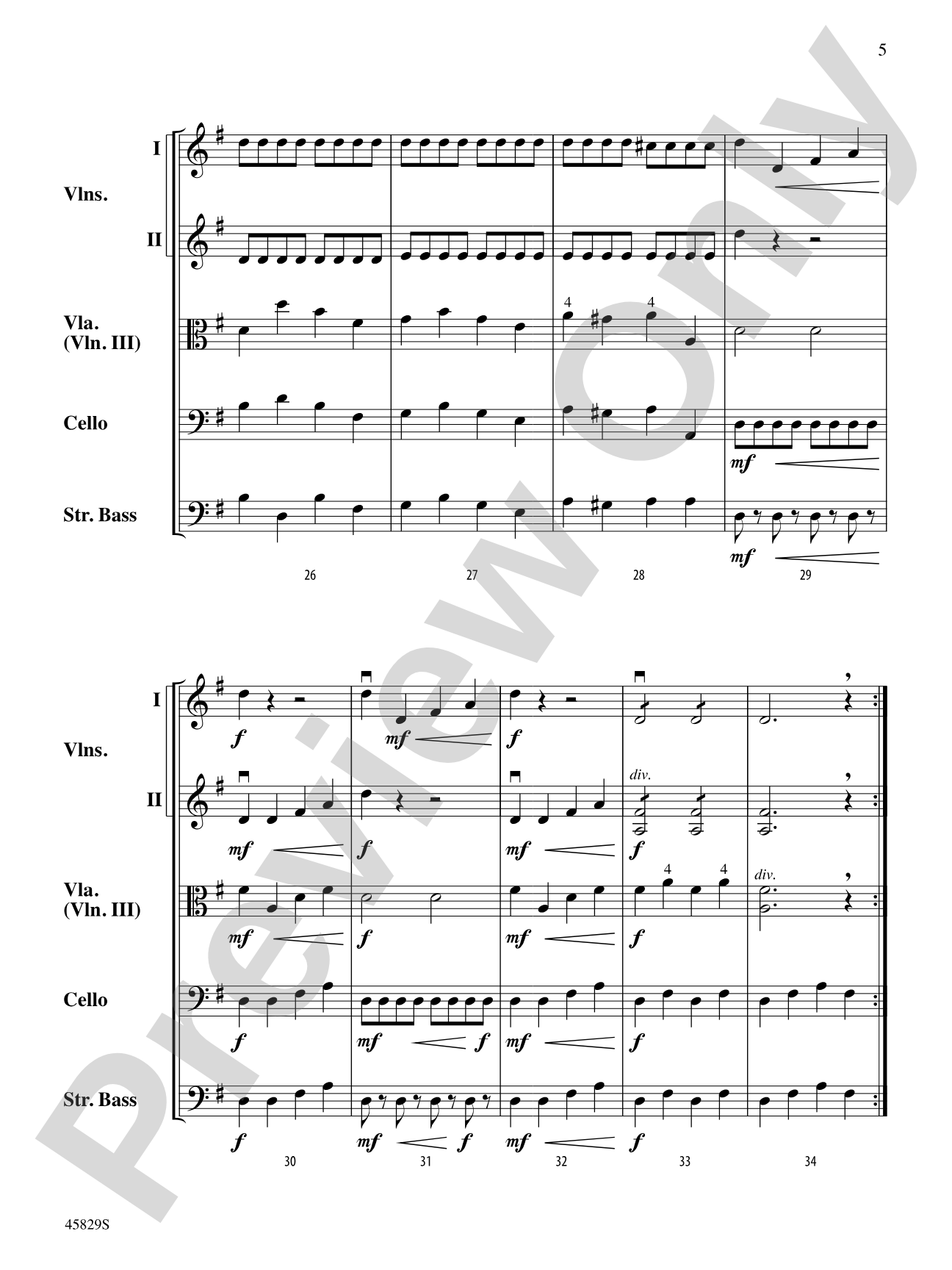
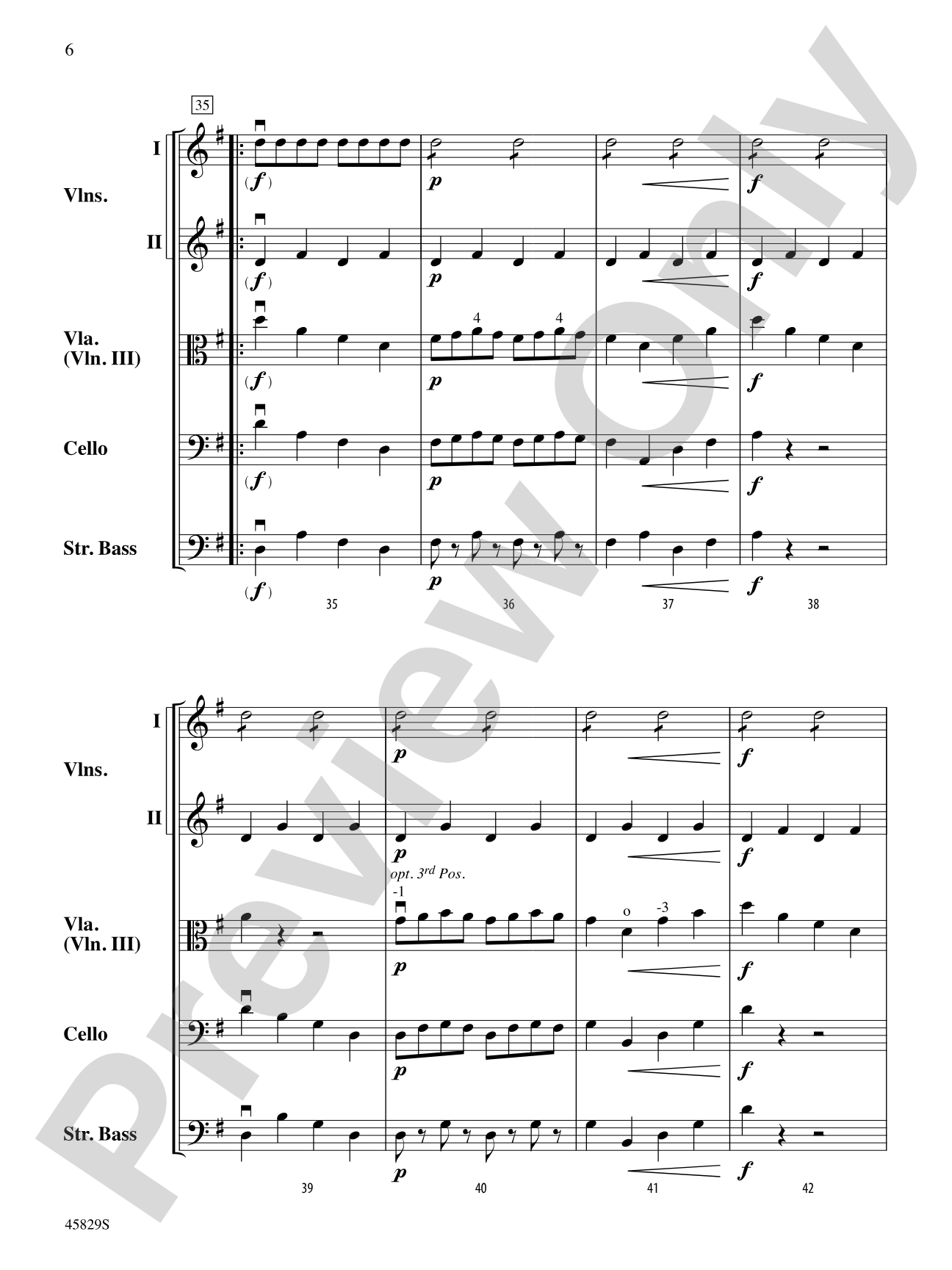
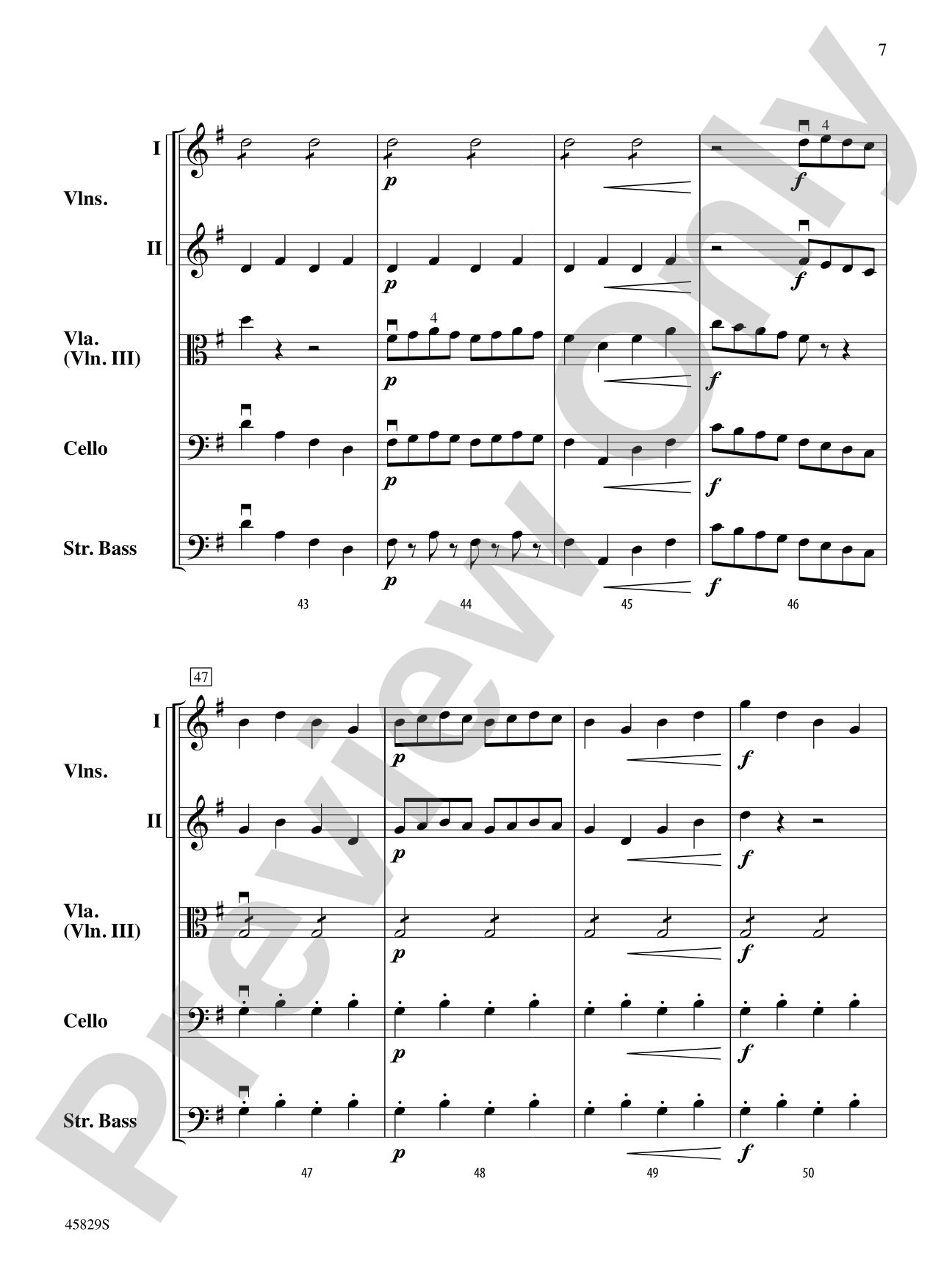
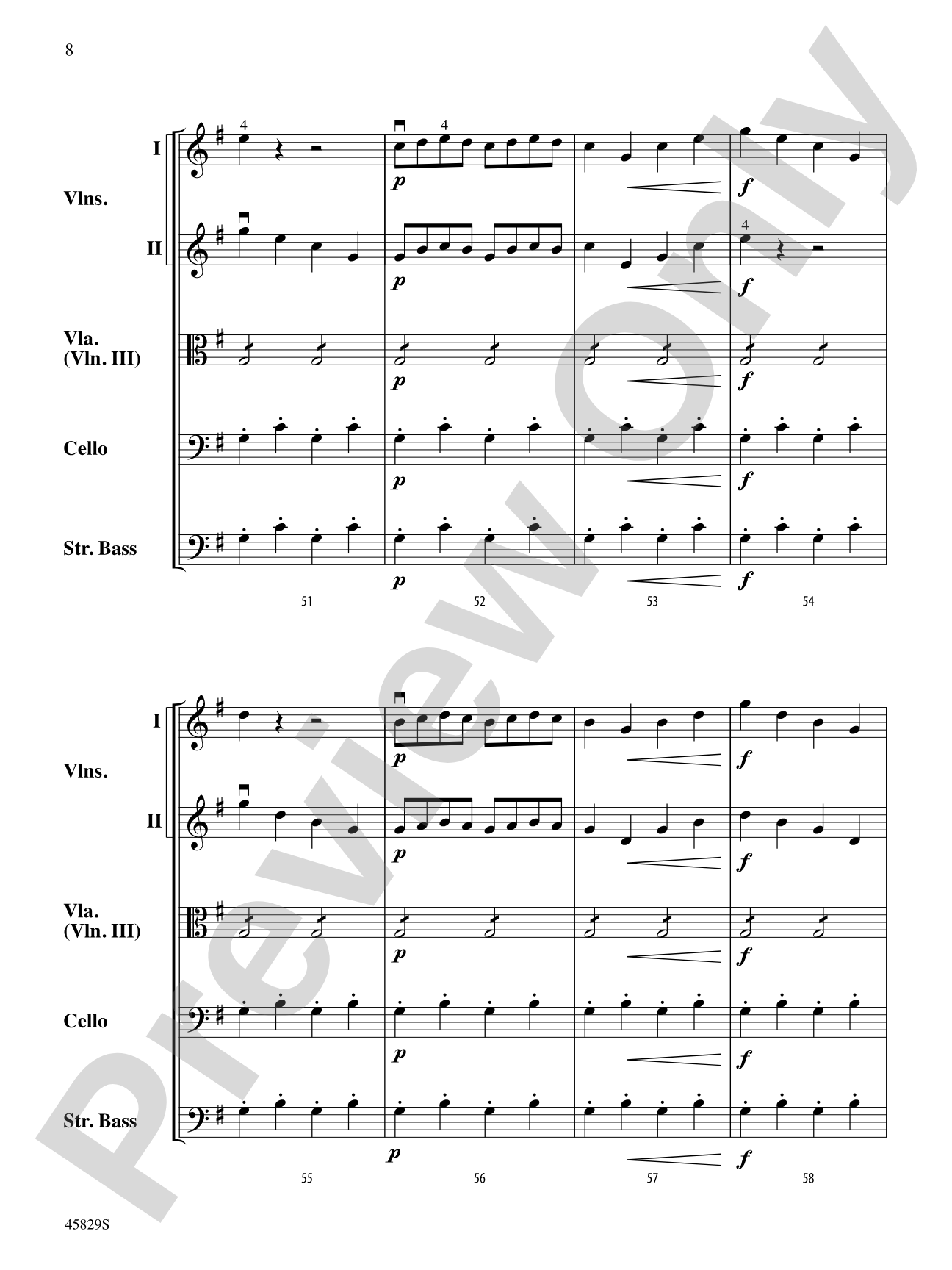

Sleigh Ride: String Orchestra Conductor Score & Parts
By Leopold Mozart / arr. Jan Farrar-Royce
Grade: 2
Item: 00-PK-0007338

$49.00
Pickup currently not available
Buy Extra Parts (Digital PDF Download)
| Product | Price | Quantity |
|---|---|---|
| Sleigh Ride: Score | $9.00 | |
| Sleigh Ride: 1st Violin | $7.99 | |
| Sleigh Ride: 2nd Violin | $7.99 | |
| Sleigh Ride: 3rd Violin (Viola [TC]) | $7.99 | |
| Sleigh Ride: Viola | $7.99 | |
| Sleigh Ride: Cello | $7.99 | |
| Sleigh Ride: String Bass | $7.99 |
Parts Added to Cart!
Description
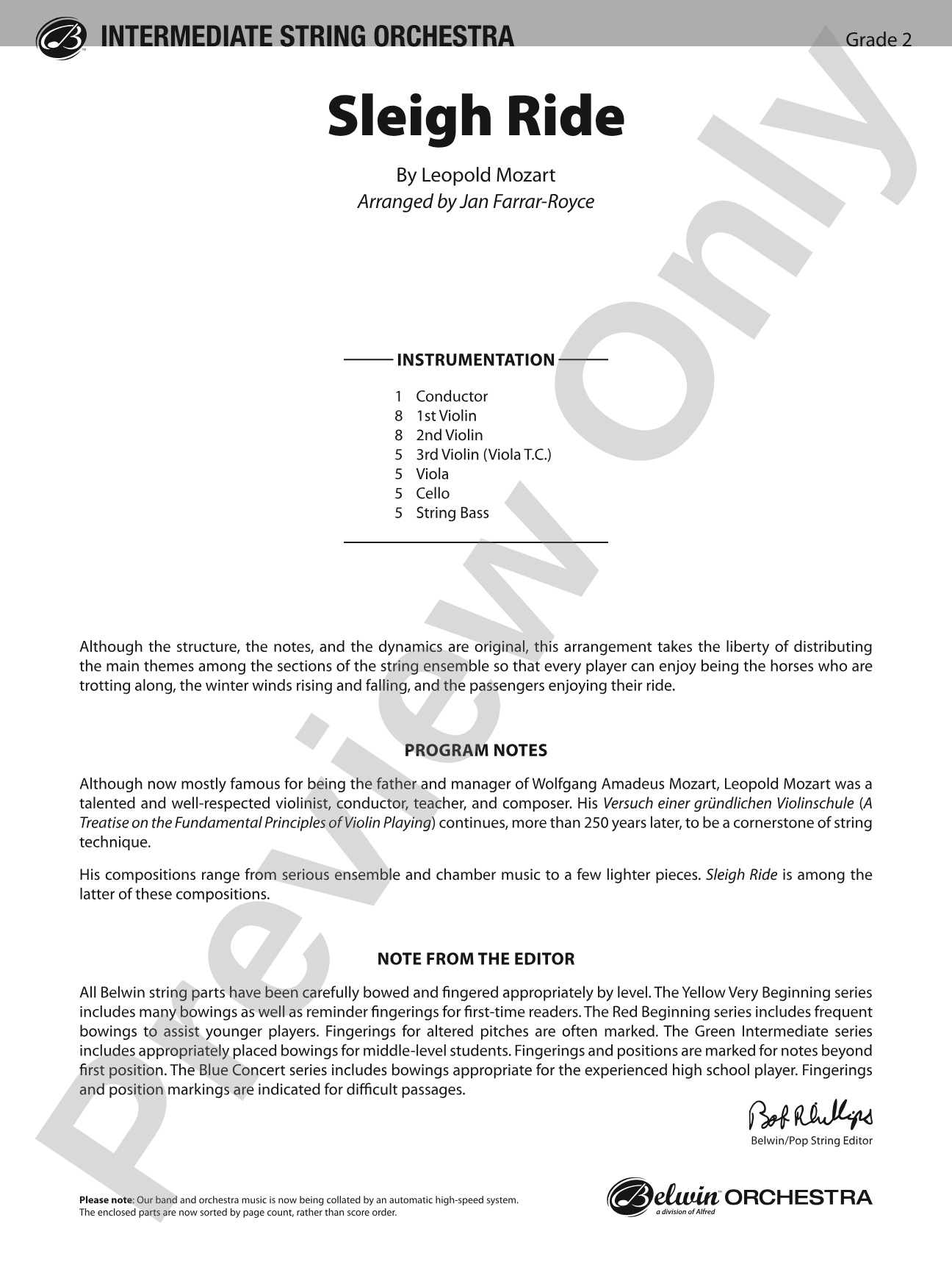
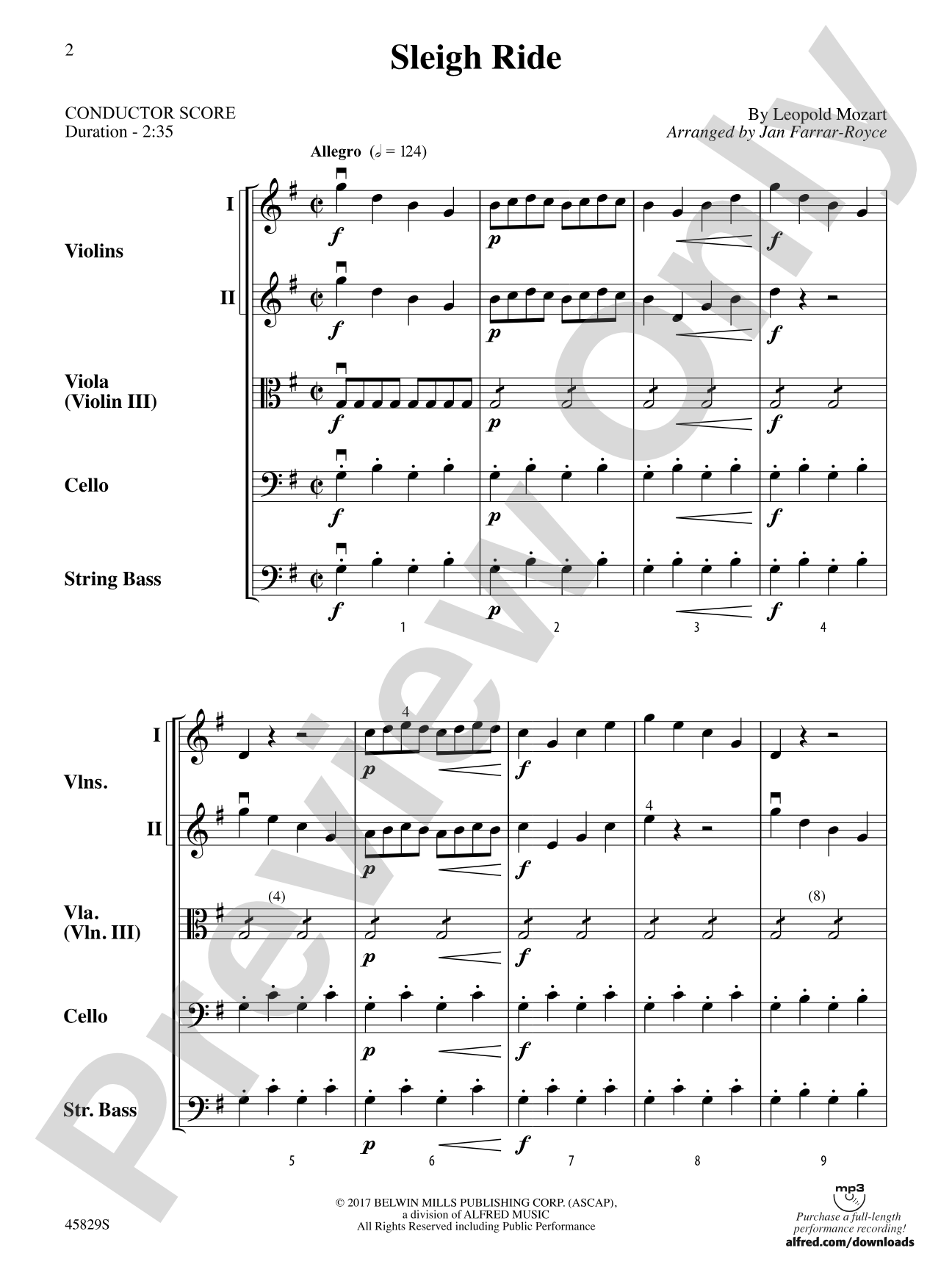
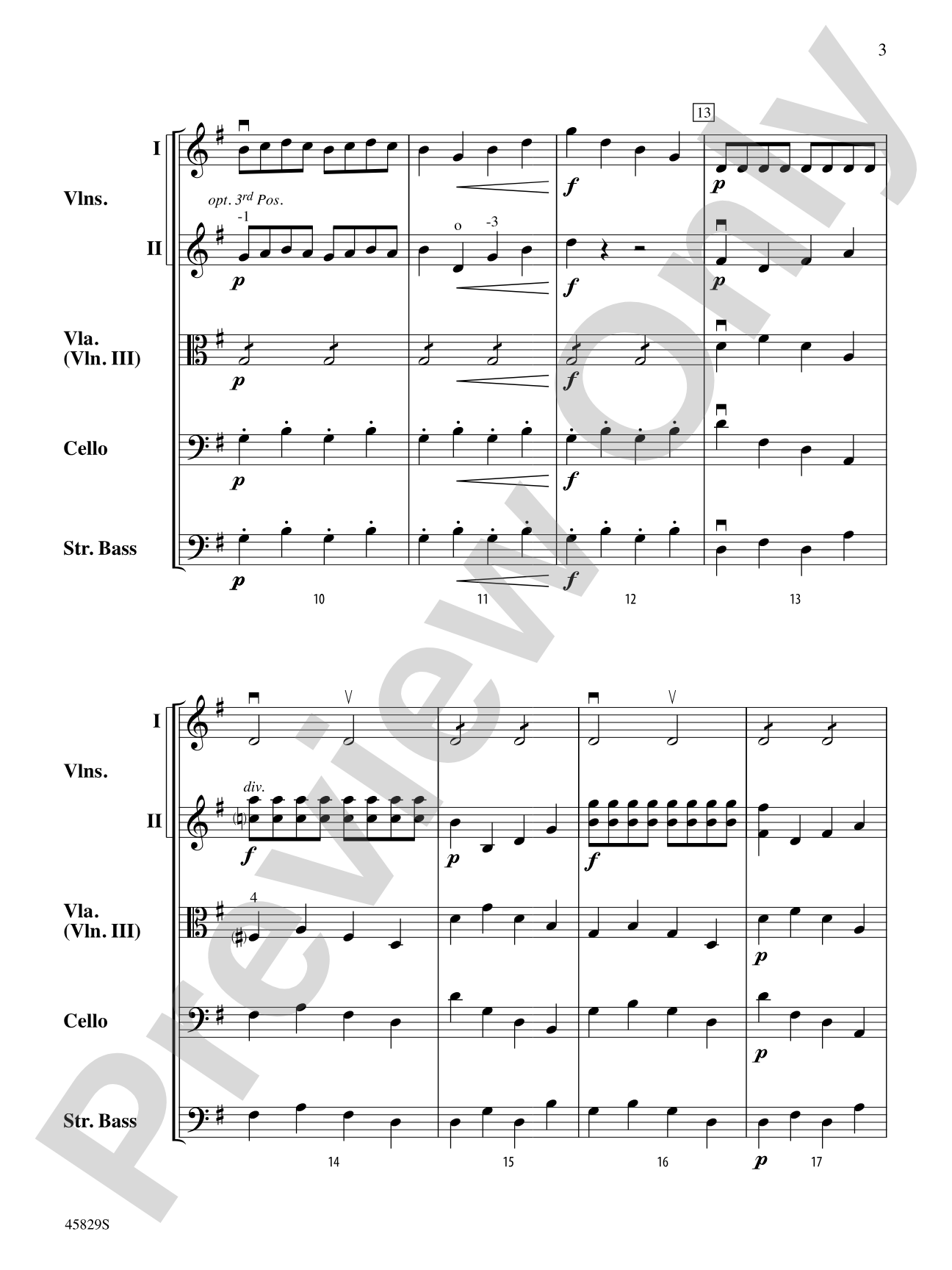
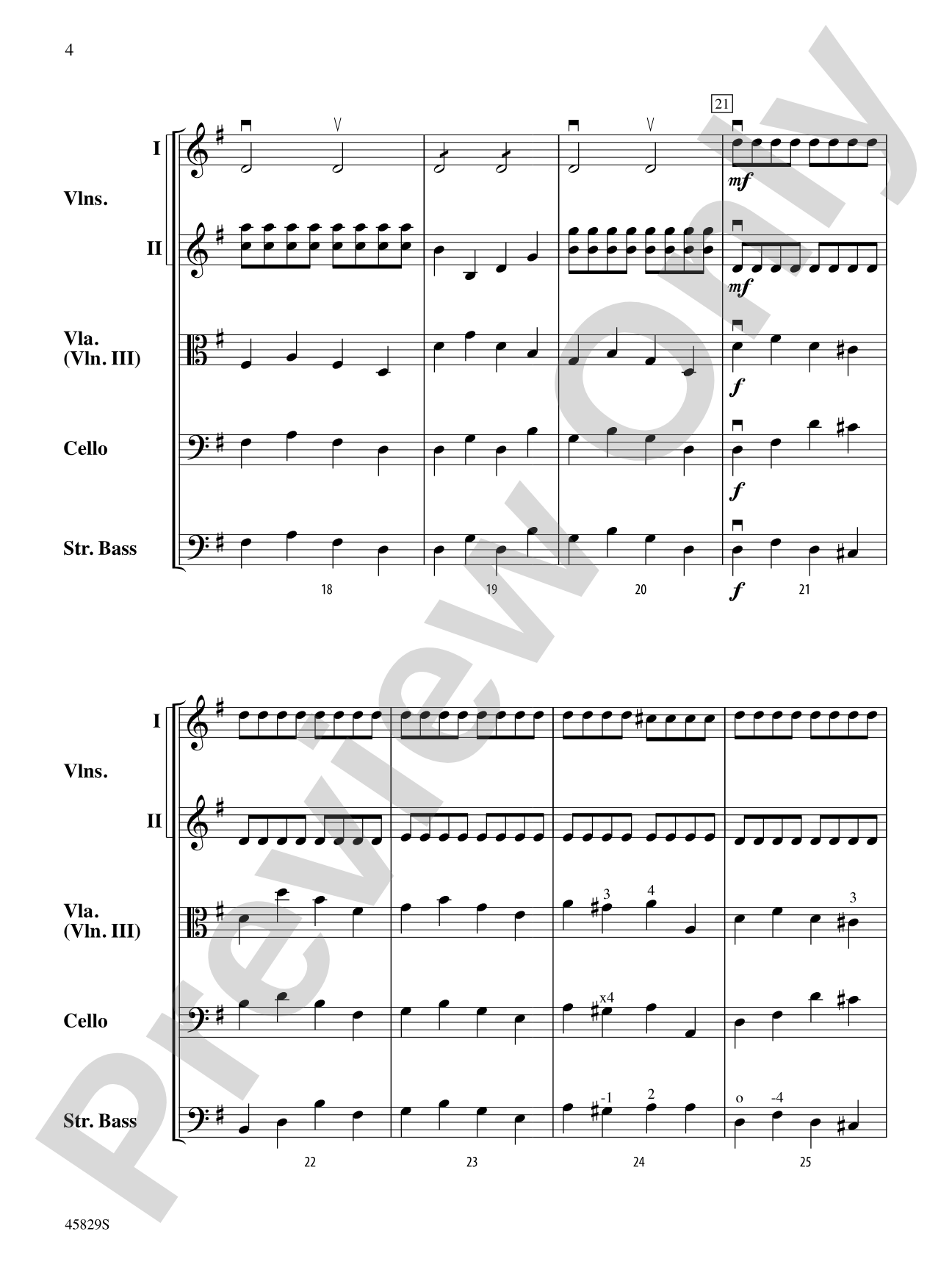
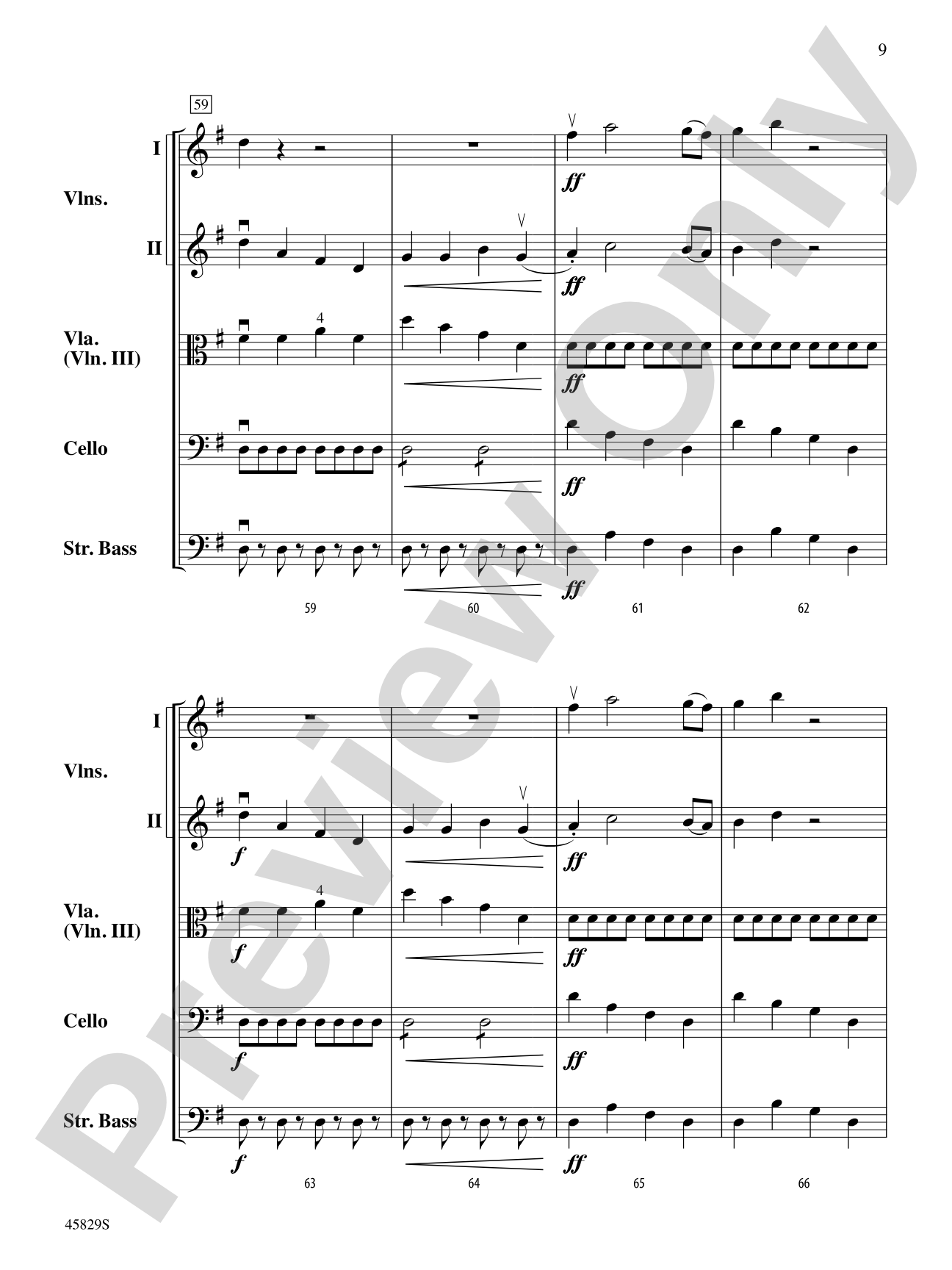
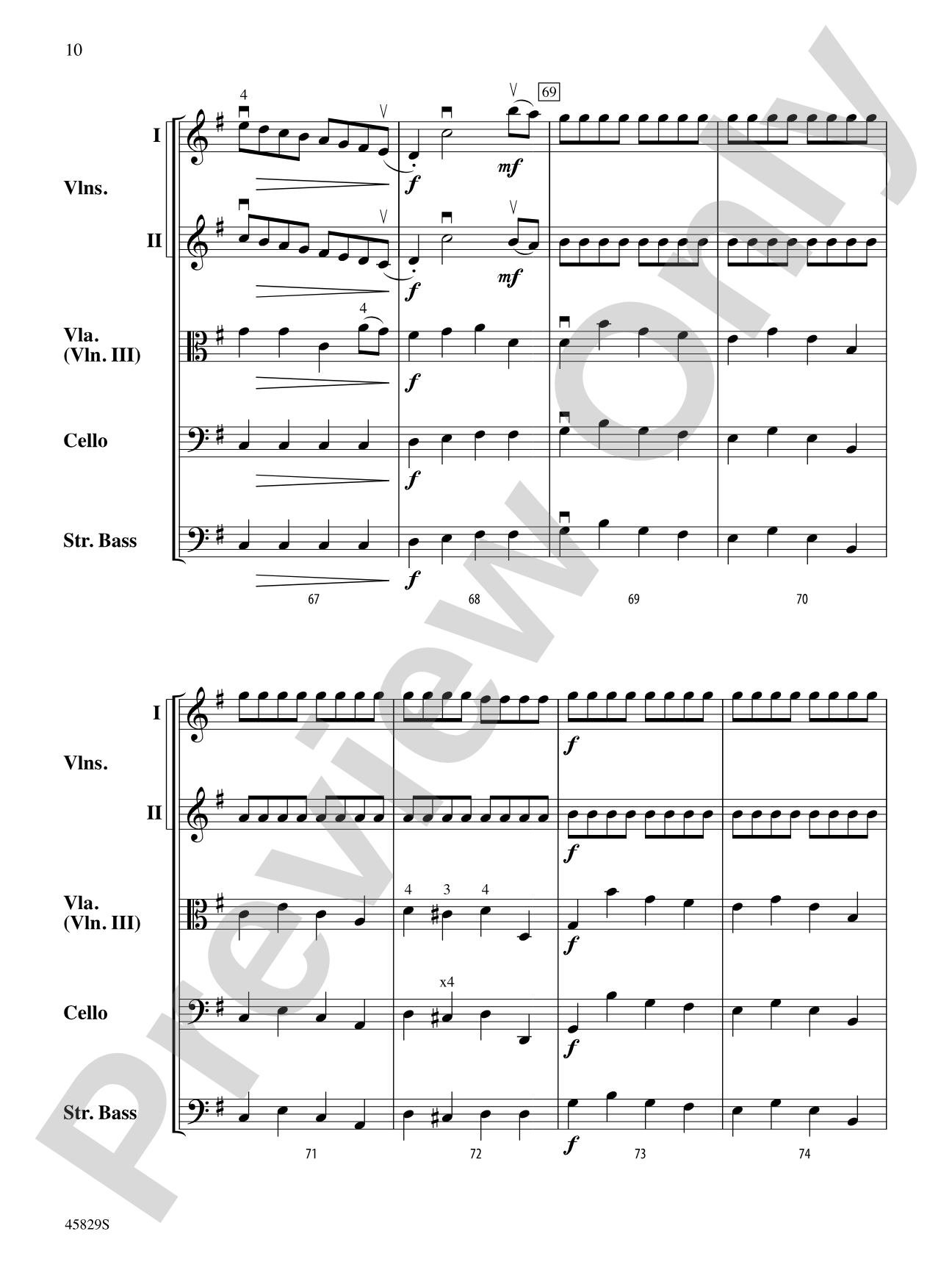
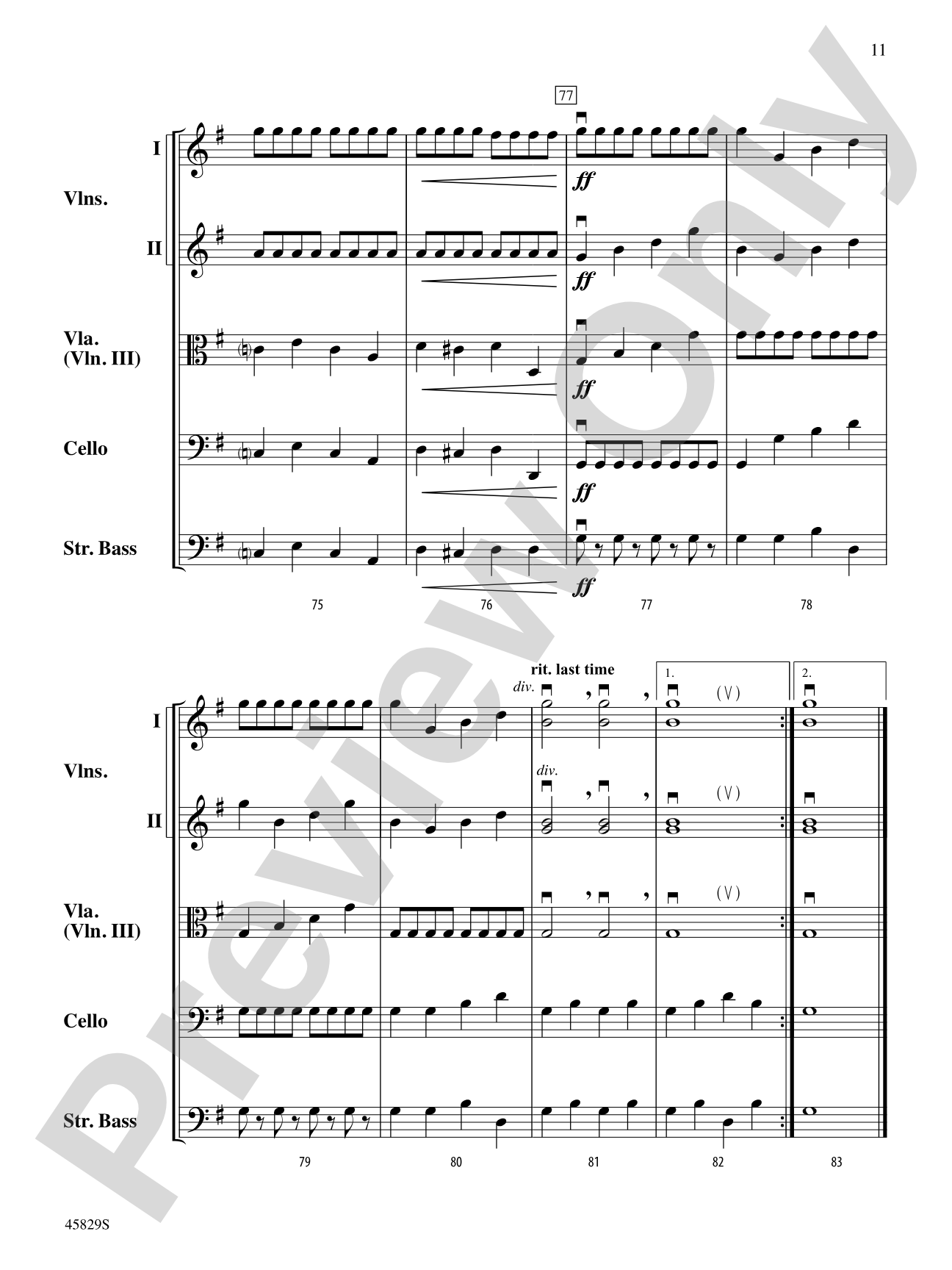
Although the structure, notes, and dynamics are written by Leopold Mozart, arranger Jan Farrar-Royce takes the liberty of distributing the main themes among the sections of the string ensemble so that every player can enjoy being the horses who are trotting along, the rising and falling winter winds, and the passengers enjoying their ride. (2:35)


Don't just read it, hear it, play along with it, and watch your students grow with it. In MakeMusic Cloud, Sleigh Ride: String Orchestra Conductor Score & Parts comes alive with professional accompaniment, adjustable tempo, and built-in practice tools that turn solo practice into real progress.
Open in the Player
Jump straight in and assign it today.
Start Your Free Trial
Open this title and explore the full library in minutes.
Sample Audio
1
Audio File
--:--
0:00
0:00
Sample Video
Additional Details
Series:
Belwin Intermediate String Orchestra
Publisher:
Alfred Music
Page Count:
144
SKU:
00-PK-0007338
More about this title
About the Composer: Leopold Mozart
Leopold Mozart (1719, 1787) was a respected violinist and composer in his own right, though history often remembers him primarily as Wolfgang's father and teacher. He composed prolifically across multiple genres, including symphonies, serenades, and divertimenti that showcase solid craft and elegant melodic writing. His work bridges the Baroque and Classical periods, and his disciplined approach to composition made him an effective educator whose influence shaped Wolfgang's early development.
Why we love this
Farrar-Royce's arrangement distributes thematic material across all string sections, creating real ownership for every player rather than relegating half the ensemble to accompaniment. The Grade 2 setting keeps technical demands manageable while preserving Leopold Mozart's elegant melodic voice, making this ideal for building musicality without sacrificing ensemble cohesion. Winter holidays gain genuine orchestral substance when you program this instead of relying on simplified or novelty versions.
What to expect
Crisp winter air, jingling sleigh bells, and genuine motion captured in Classical elegance. Leopold Mozart's melodies dance with lightness and humor, trading places between voices so the listener (and player) never settles into passive listening. The 2:35 duration maintains energy and focus without overextending younger ensembles.
Who it's for
String orchestra conductors seeking substantial holiday repertoire that respects both player development and musical integrity. Grade 2 ensembles with developing intonation and rhythm skills benefit from the manageable technical profile, while the distributed theme work keeps rehearsals focused on musicality rather than survival.
How to get the most out of it
- Balance the theme sharing: when a violin section plays the main melody, ensure lower strings support with clean, steady accompaniment before roles reverse. This builds appreciation for the interdependence between parts.
- Shape phrases as a unified string sound. The movement from "horses trotting" to "winter winds" to "passengers" reflects Leopold Mozart's compositional logic, not just narrative whimsy. Let the dynamics and articulation guide your interpretation.
- Use the published parts to show students exactly which instruments carry the featured material at each moment. This transparency transforms what might feel like a novelty arrangement into a genuine exercise in orchestral listening and ensemble awareness.
How to use it
Position this early in a winter concert to establish a celebratory tone while your ensemble's stamina and focus are fresh. It works equally well as a standalone seasonal offering or paired with a more introspective piece to show the range of holiday music beyond traditional carols. The Grade 2 designation makes it appropriate for mid-year programming when newer students have developed basic ensemble skills.
Skills your students will build
- Trading melodic material between sections while maintaining phrase continuity
- Accompanying techniques for string instruments (sustained tones, pizzicato, light articulation)
- Baroque-Classical style conventions (ornamentation, phrasing, articulation)
- Listening actively for ensemble balance when the featured role shifts