Sleepwalk (Instrumental Version) Sheet Music Preview

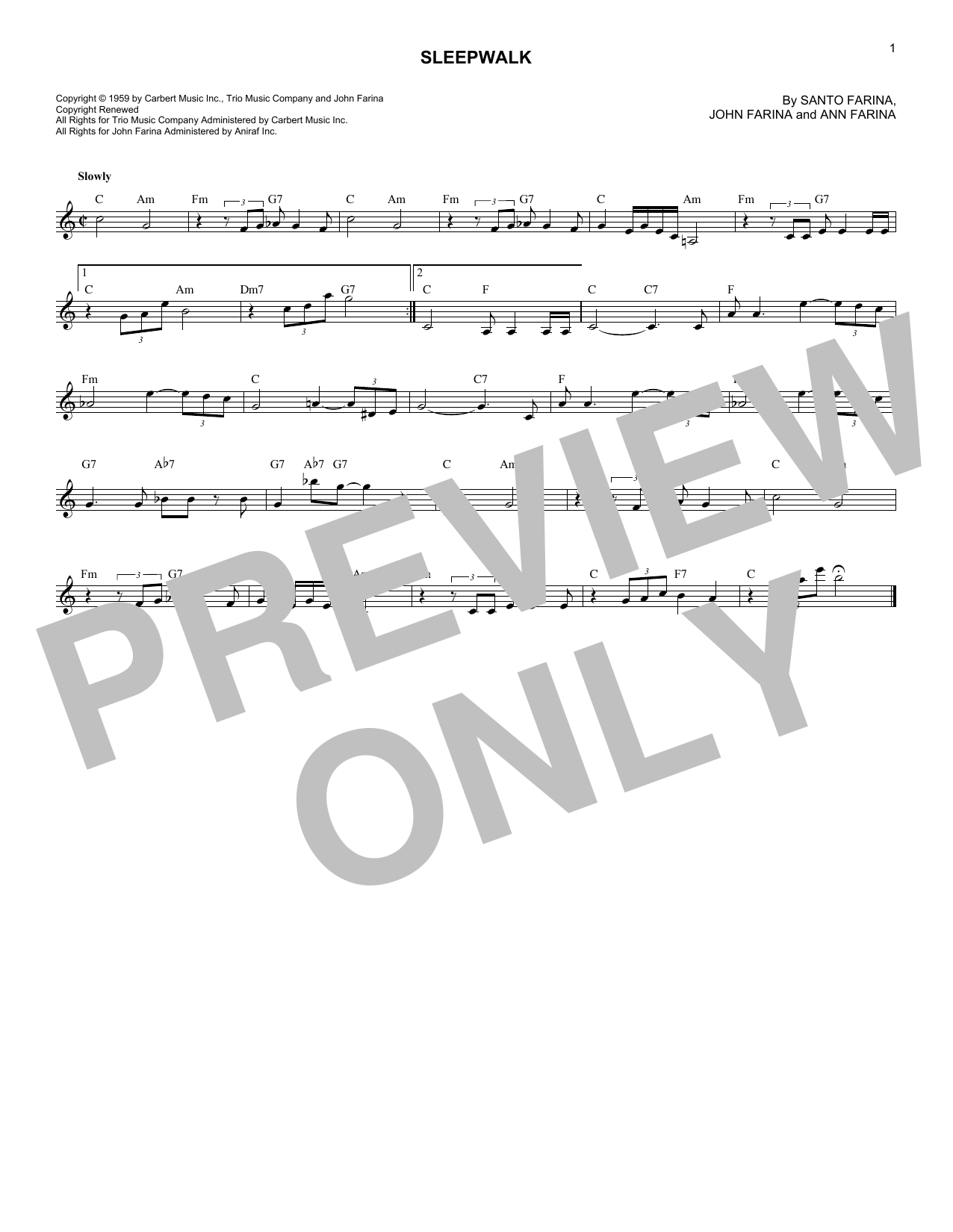
Sleepwalk (Instrumental Version): Lead Sheet / Fake Book

As performed by Santo & Johnny

Item: 35-DS00462803

Digital Download
$3.99
Description

Sleepwalk (Instrumental Version): Lead Sheet / Fake Book isn't in MakeMusic Cloud just yet...but it could be. Let us know you'd like to see it, and you'll help shape what comes next. In the meantime, start a free trial and dive into thousands of interactive titles your students can play along with today.

Sample Audio
No sample audio found.
Sample Video
Additional Details
Publisher: Hal Leonard
Page Count: 1
SKU: 35-DS00462803

More about this title

About the Artist: Santo & Johnny

Santo & Johnny, the Carriere brothers, recorded "Sleepwalk" in 1959 and created one of rock and roll's most enduring instrumental hits. Their signature steel guitar sound defined an era and influenced generations of musicians across multiple genres. The track remains a staple of American popular music, recognized instantly by listeners from teenagers to grandparents.

For music educators, Santo & Johnny's work offers a masterclass in melodic clarity and arrangement economy. "Sleepwalk" proves that instrumental music can carry genuine emotional weight without vocals, making it an excellent teaching tool for understanding voice leading, texture, and the power of a memorable hook.

Why we love this

This lead sheet captures a song that bridges generations and genres effortlessly. Students recognize it immediately, which means you're not fighting for their attention; instead, you're channeling genuine enthusiasm into learning how a hit is constructed. The melody sits perfectly for keyboard players to explore jazz voicings and comping styles while maintaining the song's essential character.

What to expect

There's a wistful, dreamy quality to this melody that floats over gentle harmonic motion. The steel guitar's characteristic tone translates to keyboard as something warm and unhurried, inviting the player to shape each phrase with intention rather than rushing.

Who it's for

Pianists and keyboard players exploring standards and rock classics gain valuable experience reading a working lead sheet. Directors building repertoire for assemblies, pops concerts, or jazz ensembles will find this instantly accessible yet musically substantive.

How to get the most out of it

  • Let the melody breathe with space between phrases rather than filling every moment with accompaniment figures. The original's power comes partly from restraint.
  • Experiment with different comping styles in the chord changes; the lead sheet format invites you to discover what works for your touch and ensemble.
  • Pay attention to the rhythmic pocket underneath the melody. Even small tempo fluctuations will expose whether the accompaniment is truly locking into the groove.

How to use it

Place this in a jazz ensemble or informal recital context where students can apply improvisation or explore different accompaniment textures. It works equally well as a solo showcase piece for an advanced young pianist or as a full-band arrangement in a pops concert, where its familiarity becomes an asset rather than a limitation.

Skills your students will build

  • Reading lead sheet notation and understanding harmonic symbols
  • Analyzing 12-bar and extended song form
  • Balancing melodic shape with harmonic accompaniment
  • Developing touch and tone sensitivity in ballad-tempo playing
  • Applying jazz voicings to a rock-era standard

You May Also Like