
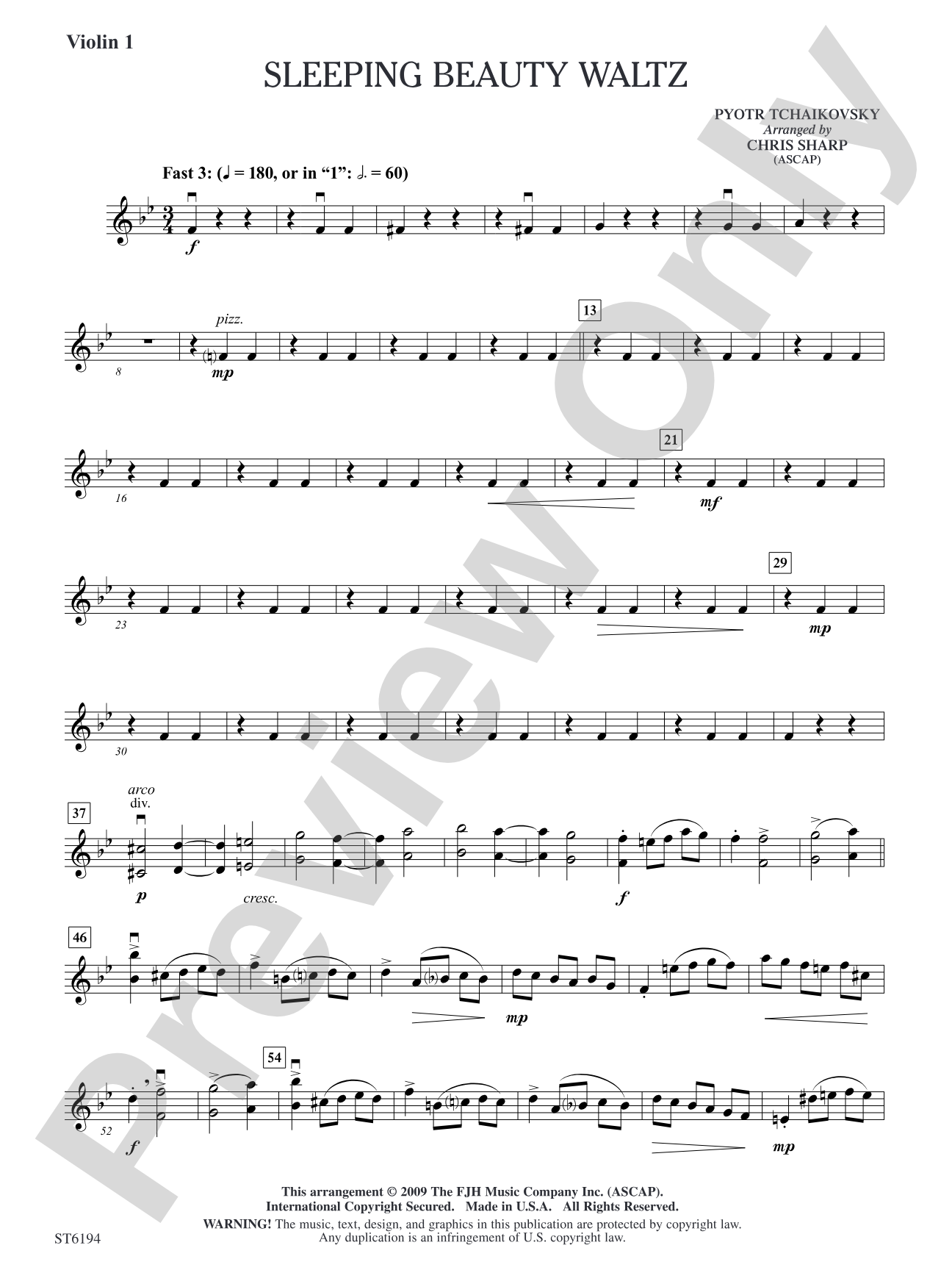

Sleeping Beauty Waltz: Violin 1
By Pyotr Tchaikovsky / arr. Chris Sharp
Grade: 3
Item: 98-PC-DST6194_VN1
$7.00
Pickup currently not available
Description
Taken from Tchaikovsky's ballet based on the famous fairy tale, this version features the viola section as is the case with the original (optional violin 3 parts double the viola). This arrangement features all the main themes of the original waltz which is a nice departure from other versions that only highlight the main theme. An excellent way to lighten the concert while simultaneously including a bright gem from the classical world.


Sleeping Beauty Waltz: Violin 1 isn't in MakeMusic Cloud just yet...but it could be. Let us know you'd like to see it, and you'll help shape what comes next. In the meantime, start a free trial and dive into thousands of interactive titles your students can play along with today.
Request This Title
Tell us you want it.
Start Your Free Trial
Explore everything that's ready to play right now.
Sample Audio
1
Audio File
--:--
0:00
0:00
Sample Video
No sample videos found.
Additional Details
Series:
FJH String Orchestra
Publisher:
The FJH Music Company, Inc.
SKU:
98-PC-DST6194_VN1
More about this title
About the Composer: Pyotr Tchaikovsky
Pyotr Tchaikovsky (1840-1893) stands among the most performed composers in the classical canon, known for his gift for melody and his ability to draw audiences into worlds of narrative and emotion. His three ballets—Swan Lake, The Sleeping Beauty, and The Nutcracker—remain cornerstones of the ballet repertoire and continue to introduce new generations of listeners to orchestral music through their theatrical power and memorable themes.
For music educators, Tchaikovsky's work offers accessible entry points into nineteenth-century orchestration. His orchestral writing is transparent enough for student musicians to hear their own parts clearly within the texture, yet sophisticated enough to reward careful attention to phrasing, balance, and color.
Why we love this
This arrangement honors the original ballet's orchestration by giving violas their moment in the spotlight—a refreshing choice that reshapes how students hear the melody and adds genuine orchestral depth to a familiar tune. Rather than reduce the waltz to a single theme, Sharp includes the multiple sections Tchaikovsky composed, giving your orchestra a richer experience and a more satisfying arc across the piece.
What to expect
Graceful and poised, with the gentle lilt of a ballroom waltz that stays light on its feet. The melody sings from the violas with a warm, singing quality, while the violins provide shimmer and support, creating an atmosphere that is refined without being stiff—perfect for capturing the fairy-tale elegance of the original ballet.
Who it's for
String orchestras at the intermediate level (grades 2-4) looking for a polished classical arrangement that flatters the ensemble without oversimplifying the source material. This works well for students who have solid intonation and can maintain independent lines within a homophonic texture.
How to get the most out of it
- Balance the viola melody carefully in the opening; they need enough projection to lead the orchestra without drowning out the violin accompaniment beneath them.
- Shape each thematic section as a complete musical thought with clear phrase boundaries, since the arrangement features multiple themes rather than cycling through variations of a single idea.
- Approach the Grace notes and ornamental passages with light articulation and a flexible tempo; the waltz should dance, not march.
- Use the optional violin 3 doubling parts strategically to strengthen the viola melody when the acoustic demands it, but resist doubling throughout, which will muddy the texture.
How to use it
Program this to shift the energy during a concert that includes heavier contemporary or challenging works; it gives audiences a moment of classical beauty while keeping your ensemble engaged with genuine musical substance. It pairs naturally with other ballet arrangements or romantic-era pieces, or stands alone as a concert closer that leaves listeners with a lyrical impression.
Skills your students will build
- Balancing and voicing in homophonic texture with melody in an inner voice rather than the first violins
- Sustaining long melodic lines with consistent vibrato and tone quality in the viola section
- Executing articulation patterns (staccato, legato, grace notes) with precision at moderate tempos
- Reading and doubling parts (violin 3) only when pedagogically necessary, building judgment about orchestral balance