
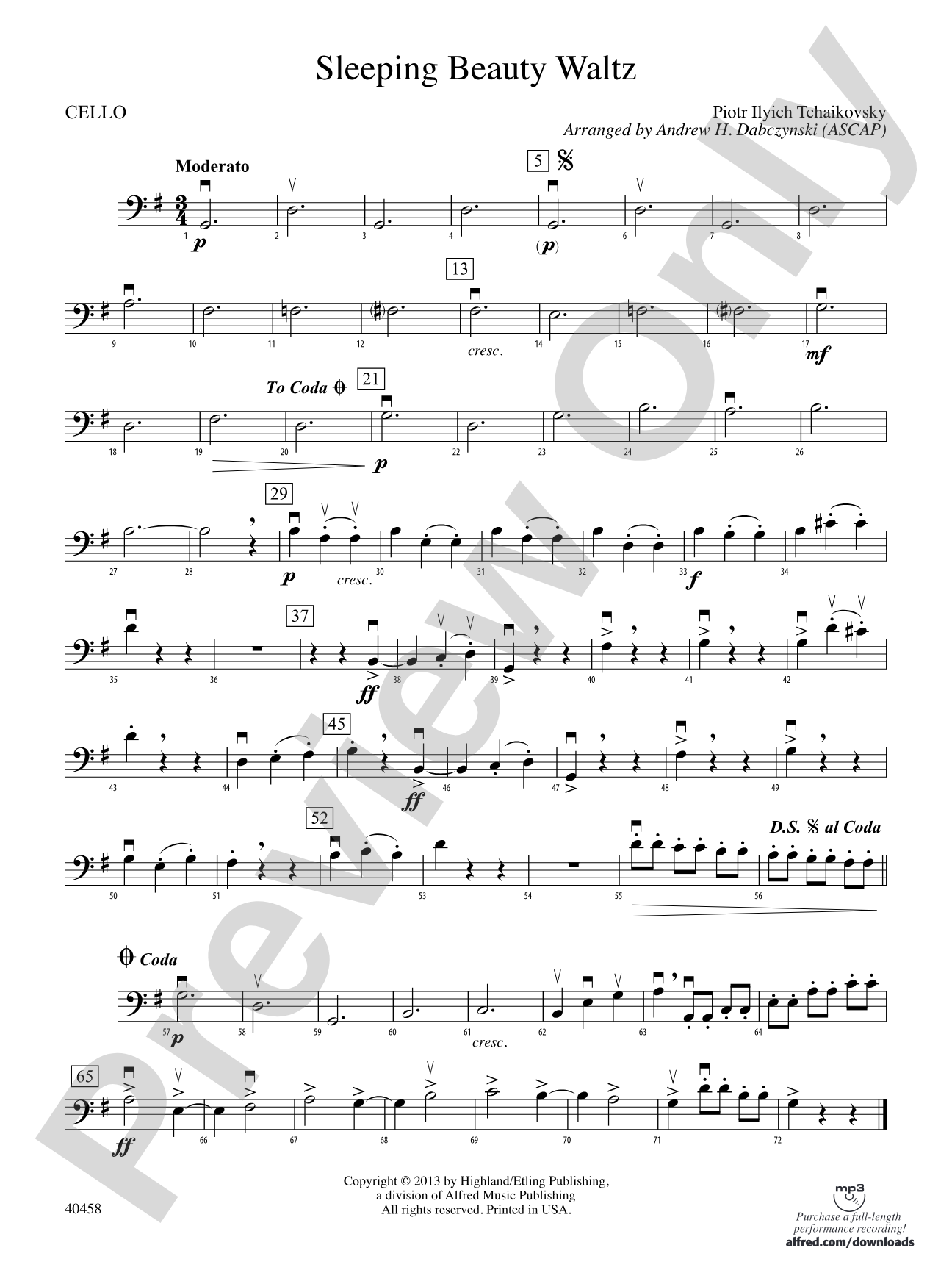

Sleeping Beauty Waltz: Cello
By Piotr Ilyich Tchaikovsky [Peter Ilyich Tchaikovsky] / arr. Andrew H. Dabczynski
Grade: 2
Item: 00-PC-0015991_VC1
$5.99
Pickup currently not available
Description
The melodies of Tchaikovsky's celebrated ballets are beloved worldwide, and no more so than this famous waltz. In this Romantic-era masterpiece, young string students will discover beautiful musical figures with rhythms, bowings, and fingerings achievable even by students in their first year of study. All sections have interesting parts; however, the firsts are featured. More advanced students will also find the arrangement fulfilling and motivational. This is a selection that will enhance any string orchestra concert program at any time of the year. Correlates to String Explorer, Book 1, Unit 11. This title is available in Music Prodigy.


Don't just read it, hear it, play along with it, and watch your students grow with it. In MakeMusic Cloud, Sleeping Beauty Waltz: Cello comes alive with professional accompaniment, adjustable tempo, and built-in practice tools that turn solo practice into real progress.
Open in the Player
Jump straight in and assign it today.
Start Your Free Trial
Open this title and explore the full library in minutes.
Sample Audio
1
Audio File
--:--
0:00
0:00
Sample Video
No sample videos found.
Additional Details
Series:
Highland/Etling String Explorer
Publisher:
Alfred Music
Page Count:
72
SKU:
00-PC-0015991_VC1
More about this title
About the Composer: Piotr Ilyich Tchaikovsky
Piotr Ilyich Tchaikovsky (1840-1893) stands as one of the most performed composers in the concert repertoire, and for good reason. His gift for melody and dramatic orchestration transformed 19th-century Russian music into works that speak directly to audiences across languages and cultures. His three major ballets, including Swan Lake and The Nutcracker alongside Sleeping Beauty, remain cornerstones of dance and concert music education worldwide.
Tchaikovsky's compositions for students and emerging musicians reveal a composer who understood how to write idiomatically for developing performers without sacrificing artistic integrity. His gift for crafting memorable themes within accessible harmonic and technical frameworks makes his work ideal for string orchestras building ensemble skills and musical confidence.
Why we love this
Andrew Dabczynski's arrangement captures what makes this waltz irresistible while respecting the realities of second-year string students. First violins get to shine with the famous melody, yet every section has something worth playing, so your orchestra stays engaged from start to finish. The technical demands remain achievable without boring more advanced players, making this a rare piece that works genuinely well for mixed-level ensembles.
What to expect
The Sleeping Beauty Waltz brings Romantic elegance into your rehearsal space. Its graceful melodic contour and lilting three-beat rhythm create a sense of ballroom sophistication, while the straightforward harmonic language ensures that technical concerns never overshadow the music's lyrical beauty. Young players discover that simplicity can be profoundly musical.
Who it's for
This arrangement welcomes first-year and second-year string orchestra students who want to experience a genuine masterwork without overextending their technical abilities. Conductors seeking repertoire that balances accessibility with musical substance will find it here, especially those working with programs that blend beginning and intermediate players.
How to get the most out of it
- Shape the waltz character through subtle phrasing rather than exaggerated dynamics. Let the natural three-beat pulse guide your approach rather than forcing theatrical expression.
- Establish a steady tempo from the outset and maintain it. Young string players often rush waltzes, so a clear downbeat and consistent conducting pattern will anchor the ensemble.
- Balance the first violin line with supporting voices. Second violins and violas carrying harmonic material need enough sound to anchor the piece without overwhelming the melody.
- Pay attention to bowing consistency across the section. Unified bow strokes in the accompaniment figures will tighten ensemble blend and improve overall polish.
How to use it
Program this waltz on a concert where you want to showcase melody and ensemble cohesion. Its moderate length and universal appeal make it an excellent anchor for a string orchestra concert at any point in the season, or an effective contest selection for programs emphasizing musical maturity over technical fireworks. Pair it with contrasting contemporary or baroque repertoire to highlight the Romantic era's distinctive voice.
Skills your students will build
- Sustaining longer melodic lines with consistent tone and expression
- Playing in waltz meter (3/4) with secure pulse and phrasing
- Coordinating bowing patterns across multiple string sections
- Balancing melody and accompaniment within an ensemble texture
- Interpreting Romantic-era stylistic conventions