
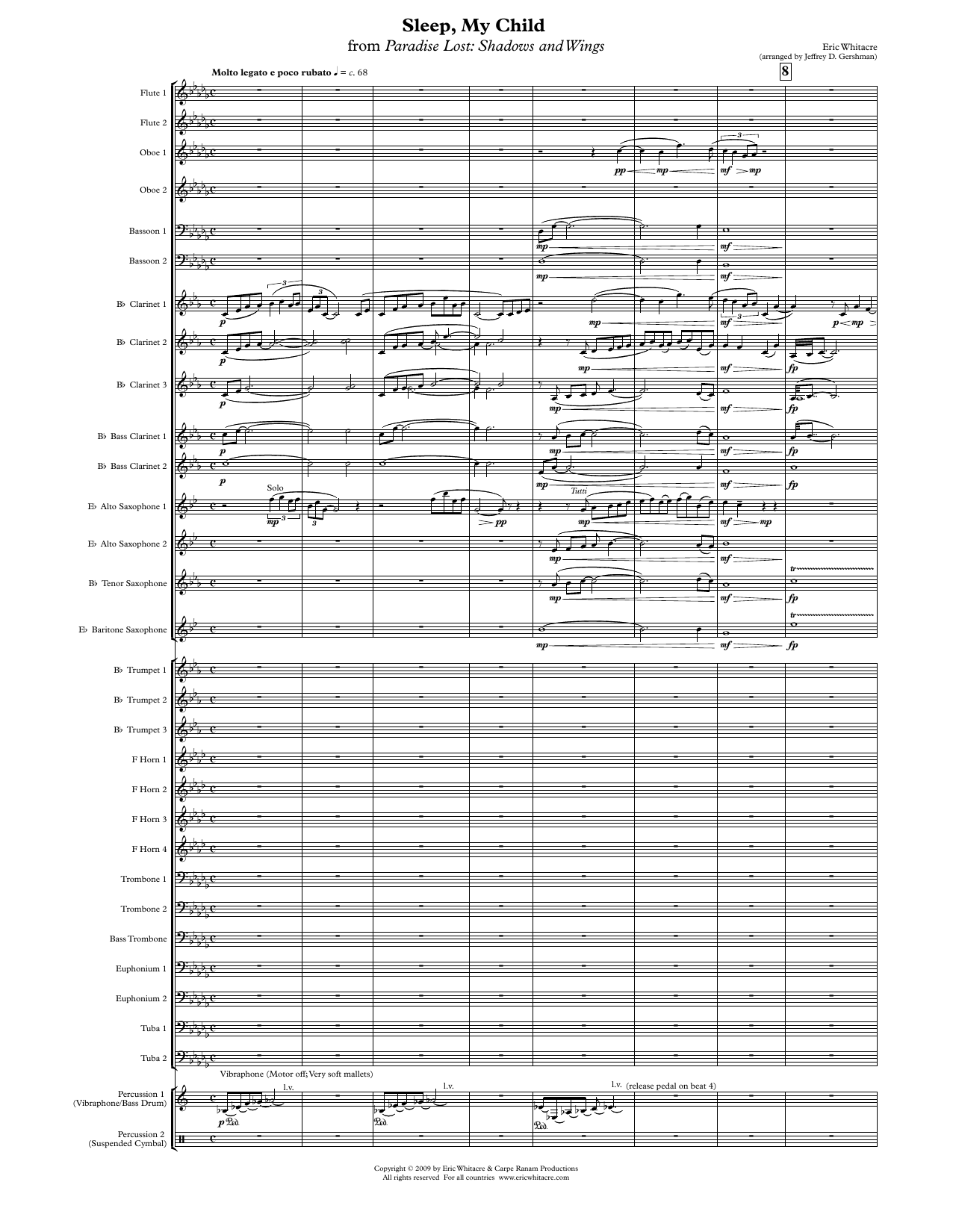

Sleep, My Child (from Paradise Lost: Shadows and Wings): Concert Band Conductor Score & Parts
By Eric Whitacre / Arranged by Jeffrey D. Gershman
Item: 35-PK01112316
$125.00
Pickup currently not available
Buy Extra Parts (Digital PDF Download)
Parts Added to Cart!
Description
"Sleep, My Child" comes from Eric Whitacre's work for musical theater, Paradise Lost: Shadows and Wings. Originally written for two sopranos and mezzo (portrayed as three angels), it was adapted for band in 2012 by Jeffrey Gershman at the request of the composer and is the latest title in a growing catalog of Whitacre's compositions (October, Sleep, Lux Aurumque and The Seal Lullaby) that illustrate his sincere commitment to creating lush, beautiful music for winds.


Sleep, My Child (from Paradise Lost: Shadows and Wings): Concert Band Conductor Score & Parts isn't in MakeMusic Cloud just yet...but it could be. Let us know you'd like to see it, and you'll help shape what comes next. In the meantime, start a free trial and dive into thousands of interactive titles your students can play along with today.
Request This Title
Tell us you want it.
Start Your Free Trial
Explore everything that's ready to play right now.
Sample Audio
No sample audio found.
Sample Video
No sample videos found.
Additional Details
Publisher:
Hal Leonard
SKU:
35-PK01112316
More about this title
About the Composer: Eric Whitacre
Eric Whitacre stands among the most performed living composers in the world, known for his gift at writing idiomatic music for winds and voices that prioritizes accessibility without sacrificing sophistication. His catalog spans concert works, choral compositions, and musical theater pieces, all marked by lush harmonies and emotional directness that resonate with student musicians and audiences alike.
Whitacre's work in wind literature has fundamentally shaped how young musicians understand modern composition. Pieces like Lux Aurumque and October have become staples in concert programming precisely because they challenge players technically while rewarding them with music of genuine beauty. His 2012 adaptation of "Sleep, My Child" for concert band exemplifies his ongoing investment in creating repertoire that serves the wind ensemble community.
Why we love this
This arrangement captures the ethereal quality of the original theater piece while showcasing Whitacre's masterful understanding of band sonorities. The lullaby setting gives your ensemble permission to explore color and nuance in ways that standard concert fare often doesn't allow, and the harmonic language introduces students to contemporary writing that never feels alienating.
What to expect
Gentle and suspended, as if floating in a moment outside of time. The orchestration creates a hushed, intimate atmosphere despite the ensemble size, with layered harmonies that shimmer beneath the soprano voices. There's an underlying tenderness that invites listeners into a quiet, protected space.
Who it's for
Concert bands seeking contemporary repertoire that's accessible without being simplistic, particularly groups aiming to introduce students to modern harmonic language. It works equally well for bands interested in programming works by a recognizable name or for directors looking to balance their season with a piece that demands musicality over technical flash.
How to get the most out of it
- Shape the opening solos with a singing tone; treat the clarinet and flute parts as if they're literally lulling someone to sleep. Warmth matters more than projection.
- Balance the harmonic foundation carefully in the lower voices. These sustained chords carry the piece emotionally, so tuning and vowel consistency in the section are essential.
- Allow slight flexibility in the phrasing during the more exposed moments. Whitacre's music often breathes better when you avoid metronomic rigidity.
- Use the dynamic landscape to shape form. The piece unfolds gradually, so resist the urge to reach full volume even when the score invites louder playing. Restraint serves the lullaby concept.
How to use it
Program this as a centerpiece for a concert exploring contemporary approaches to traditional forms, or place it alongside other works featuring prominent solo lines to create a cohesive first half. The piece works beautifully in a spring concert or as the opening number, setting a reflective tone that other selections can then contrast against.
Skills your students will build
- Sustaining warm, singing tone quality in both solo and tutti passages
- Listening for balance and blend in complex chord structures
- Responding to subtle dynamic and tempo variations
- Understanding contemporary harmonic language and how it functions in modern wind writing
- Interpreting musical direction beyond traditional tempo markings