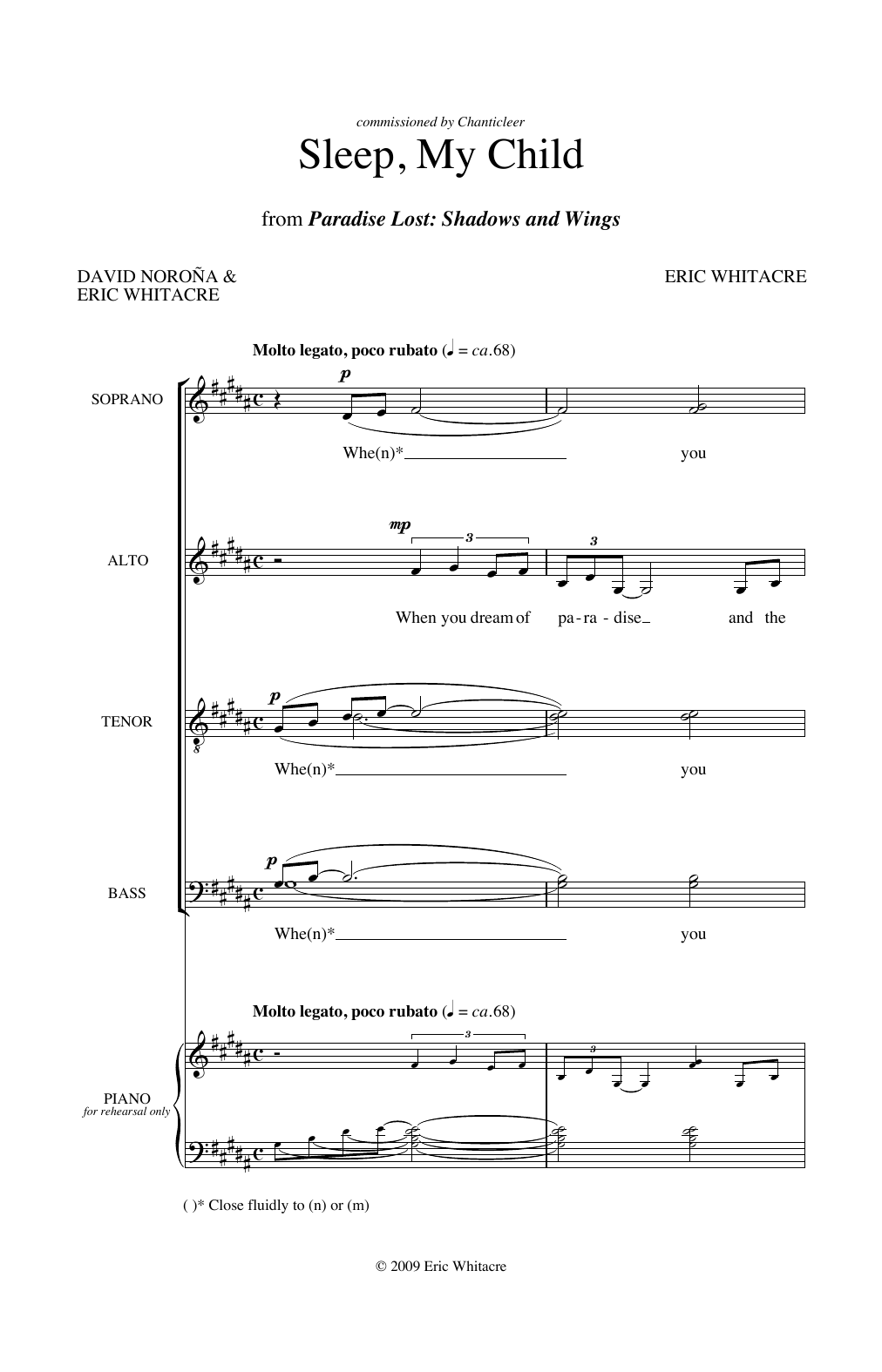
Sleep, My Child (from Paradise Lost: Shadows and Wings) Sheet Music Preview

Sleep, My Child (from Paradise Lost: Shadows and Wings): SATB Choral Octavo

Item: 35-DS00444132

Digital Download
$3.25
Description

Sleep, My Child (from Paradise Lost: Shadows and Wings): SATB Choral Octavo isn't in MakeMusic Cloud just yet...but it could be. Let us know you'd like to see it, and you'll help shape what comes next. In the meantime, start a free trial and dive into thousands of interactive titles your students can play along with today.

Sample Audio
No sample audio found.
Sample Video
Additional Details
Publisher: Hal Leonard
Page Count: 14
SKU: 35-DS00444132

More about this title

Why we love this

The writing here balances intimacy with structural sophistication. A lullaby that doesn't sacrifice harmonic interest for simplicity, it gives your singers something genuinely beautiful to inhabit rather than something merely serviceable.

What to expect

A moment of tenderness suspended in time. The piece unfolds with the quiet inevitability of someone settling a child to sleep, moving between close harmonies and open textures that feel both grounded and weightless.

Who it's for

SATB choirs with secure fundamentals and comfort holding pitch without instrumental support. The piece rewards groups that have already developed blend and intonation skills, as the textures will expose any rushed balancing.

How to get the most out of it

  • Establish the lullaby character early by keeping dynamics soft and tempo unhurried. Let the text breathe naturally rather than pushing toward a metronomic pulse.
  • Guard against individual voice parts becoming mechanical. Each line should sound like it's singing a complete phrase, even when parts move independently.
  • Shape the arch gently. A cappella writing at this length requires intentional control of energy; map where the piece naturally swells and where it settles.

How to use it

Program this as a centrepiece for a choral concert devoted to nocturnal or introspective themes, or use it as a closing piece that leaves audiences in genuine quiet. Its narrative frame makes it particularly effective when paired with other movements from the parent work.

Skills your students will build

  • Sustained pitch accuracy in a cappella settings
  • Phrasing control across longer melodic lines
  • Blending of independent voice parts into unified sonority
  • Text interpretation for lyrical intimacy

You May Also Like