
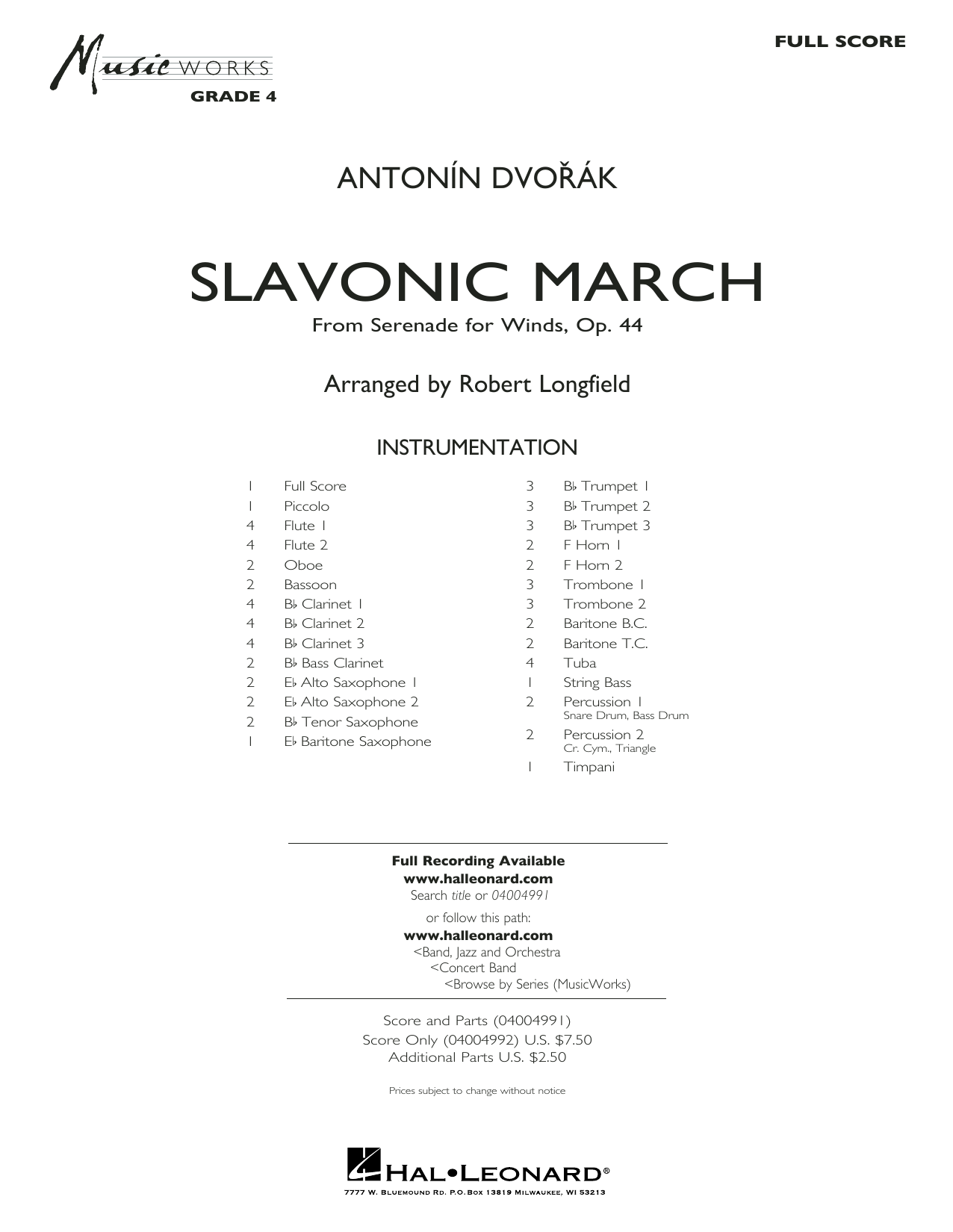

Slavonic March (from Serenade for Winds, Op. 44): Concert Band Conductor Score & Parts
As performed by Antonín Dvorák / Arranged by Robert Longfield
Grade: 4
Item: 35-PK00376960
$75.00
Pickup currently not available
Buy Extra Parts (Digital PDF Download)
Parts Added to Cart!
Description
Composed the same year as Dvorak's "Slavonic Dances", the "Serenade for Winds" is also nationalistic in style, reflecting the melodic and rhythmic elements of traditional Czech folk music. This adaptation for band is based on the first movement and showcases exquisite orchestration and a dignified martial flavor. Dur: 3:45


Slavonic March (from Serenade for Winds, Op. 44): Concert Band Conductor Score & Parts isn't in MakeMusic Cloud just yet...but it could be. Let us know you'd like to see it, and you'll help shape what comes next. In the meantime, start a free trial and dive into thousands of interactive titles your students can play along with today.
Request This Title
Tell us you want it.
Start Your Free Trial
Explore everything that's ready to play right now.
Sample Audio
No sample audio found.
Sample Video
No sample videos found.
Additional Details
Publisher:
Hal Leonard
SKU:
35-PK00376960
More about this title
About the Artist: Antonín Dvorák
Antonín Dvorák (1841-1904) stands among the most important nationalist composers of the Romantic era. A Czech master who drew deeply from folk traditions, he elevated regional musical idioms to concert hall significance, proving that local melodic and rhythmic character could sustain works of international scope and ambition.
Dvoják's output spans symphonies, concertos, chamber music, and vocal works, all informed by his commitment to capturing the spirit of Czech culture. His influence on music education remains profound; his works teach composers how to balance accessibility with sophistication, and they teach ensembles how to find nobility in directness.
Why we love this
Longfield's arrangement captures the march's architectural strength without losing the folk warmth that makes Dvorák's voice instantly recognizable. Grade 4 bands get a work that demands maturity in phrasing and sectional balance while remaining within reach, making it an ideal choice for programs seeking substance over showmanship.
What to expect
This march carries the bearing of a formal procession observed from within a community that knows its own worth. Melodic lines unfold with an unhurried confidence, supported by harmonies that feel both ancient and carefully crafted. The overall effect is dignified without being austere; there is warmth and even joy beneath the measured stride.
Who it's for
Grade 4 concert bands seeking repertoire with genuine substance and cultural grounding. Directors who want their students to experience how folk traditions become concert music will find an exemplary model here.
How to get the most out of it
- Balance the melody between woodwinds and brass; this march lives in the conversation between the two sections rather than dominance by either. Let the horns anchor the harmonic foundation without obscuring the lyrical voice above.
- Shape the rhythmic pulse with the low reeds and low brass working as a unified heartbeat. Precision in their attacks will clarify the march's forward momentum.
- Resist the urge to rush. The dignity Dvorák built into this movement depends on space and weight in the phrasing; take time with the melodic peaks.
- Pay close attention to dynamic contours between phrases. The folk character emerges through gentle waves of intensity rather than sudden shifts.
How to use it
Position this as a centerpiece in a concert exploring nationalist composers, or pair it with other Dvorák works to show his range. It also serves well as a standalone concert opener, setting a refined tone that other selections can build from or contrast against.
Skills your students will build
- Sustaining long melodic lines with consistent tone and phrase direction
- Balancing between woodwind and brass sections in dialogue
- Reading and executing dynamic gradations across extended passages
- Maintaining rhythmic precision in march-like accompaniment figures
- Responding to folk music idioms and their characteristic phrasing