
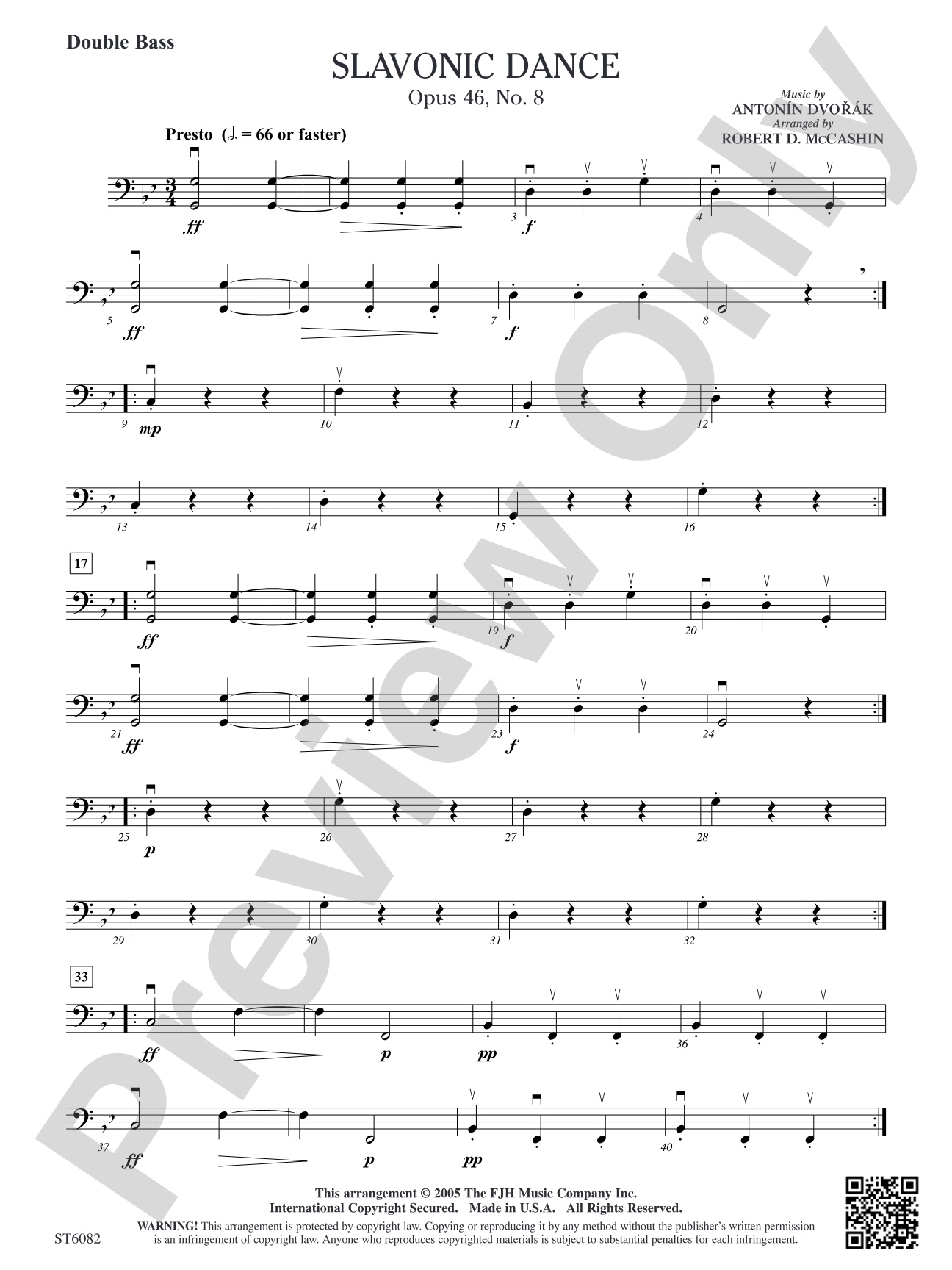

Slavonic Dance, Opus 46, No. 8: Double Bass
By Antonín Dvorák / arr. Robert D. McCashin
Grade: 3
Item: 98-PC-DST6082_SB
$7.00
Pickup currently not available
Description
This outstanding setting of Dvorák's Slavonic Dance, Opus 46, No. 8 maintains the composer's original energy and character, yet also makes the music accessible to younger musicians. You will find this to be ideal as a concert opener or closer, and an excellent choice to provide players with a spirited opportunity to experience the Czechoslovakian musical style!


Slavonic Dance, Opus 46, No. 8: Double Bass isn't in MakeMusic Cloud just yet...but it could be. Let us know you'd like to see it, and you'll help shape what comes next. In the meantime, start a free trial and dive into thousands of interactive titles your students can play along with today.
Request This Title
Tell us you want it.
Start Your Free Trial
Explore everything that's ready to play right now.
Sample Audio
1
Audio File
--:--
0:00
0:00
Sample Video
No sample videos found.
Additional Details
Series:
FJH String Orchestra
Publisher:
The FJH Music Company, Inc.
SKU:
98-PC-DST6082_SB
More about this title
About the Composer: Antonin Dvorák
Antonin Dvorák (1841-1904) stands as one of the most performed composers of the Romantic era, and for good reason. His gift for melody and his deep connection to Czech folk traditions created music that feels both sophisticated and singable, making his works especially valuable in music education.
Dvoák's Slavonic Dances remain among his most recognizable compositions. Written in two sets (Opus 46 and Opus 72), these pieces capture the rhythmic vitality and emotional warmth of Eastern European folk culture. For string orchestras, they offer an ideal entry point into the Romantic repertoire, combining technical challenges with immediate musical reward.
Why we love this
Robert McCashin's arrangement opens Dvorák's energetic original to younger orchestras without sacrificing the infectious character that makes this dance unforgettable. The Grade 3 scoring respects the composer's harmonic language while distributing the essential musical material across all sections, so every player stays engaged and contributes meaningfully to the sound.
What to expect
Slavonic Dance, Opus 46, No. 8 radiates physical energy and joy. The syncopated rhythms and folk-dance character create a sense of motion and celebration, while the harmonies give the piece sophistication that keeps players and listeners engaged throughout. It feels at once familiar and fresh, like discovering something timeless.
Who it's for
String orchestras at the Grade 3 level, including advanced middle school ensembles and younger high school groups, will find this arrangement immediately rewarding. Directors seeking a concert piece that combines musical substance with accessibility, and that introduces players to Romantic-era repertoire and Central European musical traditions, should program this work.
How to get the most out of it
- Establish the rhythmic drive from the opening. The syncopated figures need clarity and confidence; rehearse the first two measures in isolation until the ensemble locks the offbeat energy.
- Shape the melodic material with natural phrasing rather than note-by-note precision. Dvorák's lines flow best when string sections breathe together at phrase endings.
- Balance the violin figurations against the lower voices. Since McCashin likely distributes the dance rhythms across sections, ensure violas and cellos project the accompaniment pattern so it anchors the ensemble.
- Bring out the folk-tune character by letting the tempo breathe slightly at structural arrival points. This piece will feel stiff if conducted with metronomic rigidity.
How to use it
This piece excels as a concert opener, where its rhythmic vitality and immediate appeal capture attention and set a bright mood. It also works beautifully as a closer when you want to send audiences home with the memory of something spirited and musically complete. Consider pairing it with other Romantic-era arrangements or with contemporary works that share similar energy and cultural themes.
Skills your students will build
- Rhythmic independence in syncopated figures across multiple sections
- Melodic phrasing and shaping in Romantic-era string writing
- Ensemble balance when distributing folk-tune material across voices
- Stylistic understanding of Eastern European musical idiom and dance forms
- Confidence in Romantic-era harmonic language and modulation