
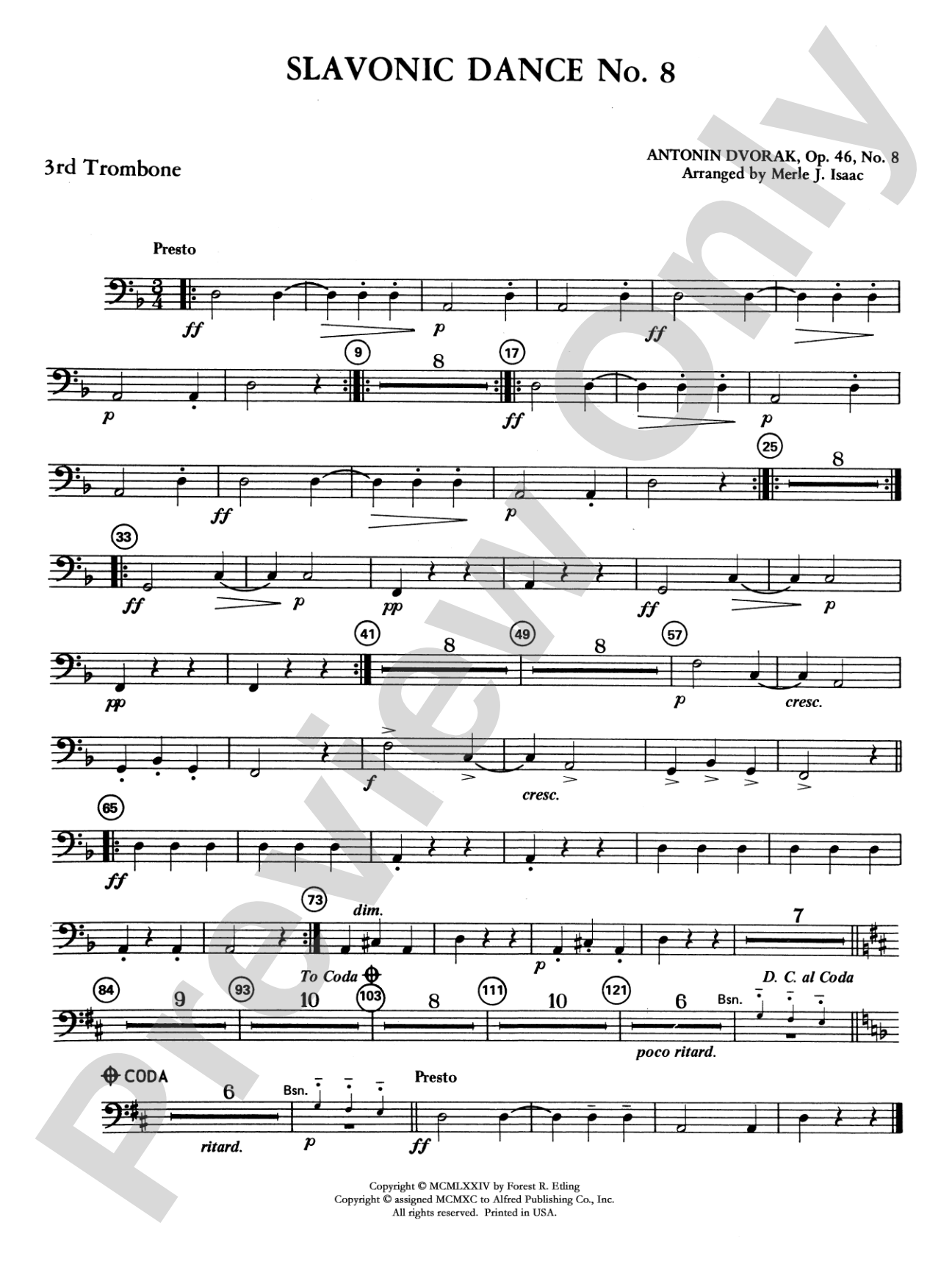

Slavonic Dance No. 8: 3rd Trombone
By Antonín Dvorák / arr. Merle J. Isaac
Grade: 3
Item: 00-PC-0000050_TN3
$3.00
Pickup currently not available
Description
From the Czech composer Antonín Dvorák.


Don't just read it, hear it, play along with it, and watch your students grow with it. In MakeMusic Cloud, Slavonic Dance No. 8: 3rd Trombone comes alive with professional accompaniment, adjustable tempo, and built-in practice tools that turn solo practice into real progress.
Open in the Player
Jump straight in and assign it today.
Start Your Free Trial
Open this title and explore the full library in minutes.
Sample Audio
No sample audio found.
Sample Video
No sample videos found.
Additional Details
Series:
Highland/Etling Full Orchestra
Publisher:
Alfred Music
Page Count:
312
SKU:
00-PC-0000050_TN3
More about this title
About the Composer: Antonin Dvorák
Antonín Dvořák (1841-1904) remains one of the most performed composers of the Romantic era, celebrated for his gift for memorable melody and his ability to weave Czech musical idioms into the symphonic tradition. His nine symphonies, numerous chamber works, and concertos have established him as a bridge between the Brahmsian tradition and the nationalist movements of 19th-century Europe. For music educators, Dvořák's work offers direct access to orchestral color, formal clarity, and deeply singable themes that resonate across skill levels.
The Slavonic Dances represent some of Dvořák's most accessible and frequently performed works. Originally composed as piano duets and later orchestrated, these 16 dances showcase his genius for blending Slavic folk idioms with sophisticated compositional technique. They have become staples of youth orchestra and full orchestra programs worldwide, valued equally for their musical substance and their immediate appeal to young musicians and audiences alike.
Why we love this
Dvořák's Slavonic dances sit at a rare intersection: they demand genuine musicianship while remaining thoroughly engaging for Grade 3 orchestras. This orchestration captures the folkloric spirit and tuneful directness of the original, allowing young musicians to play something that sounds substantial without drowning in technical complications. Conductors consistently choose this work because it builds ensemble cohesion, develops sectional listening skills, and leaves audiences impressed by what a developing orchestra can accomplish.
What to expect
Spirited and clear, with the kind of memorable melody that sticks with players and audiences alike. The orchestration sparkles with Romantic-era orchestral color, featuring folk-dance rhythms that give the ensemble a sense of occasion and forward momentum, making it deeply satisfying to perform.
Who it's for
This full orchestra score and parts serve Grade 3 ensembles ready to engage with recognized orchestral literature without simplified pedagogical trappings. It works equally well for festival and concert settings, and for directors seeking a work that demands genuine musicianship while remaining technically appropriate.
How to get the most out of it
- Shape the main melody with careful attention to phrase breathing and natural rise-and-fall. Young orchestras often rush through Dvořák's accessible themes; treat them with the same musical intention you would apply to a symphonic first movement.
- Balance the string-to-winds ratio carefully. The arrangement depends on inner harmonic voices (violas, clarinet harmonies, French horn counterlines) that must emerge clearly without drowning the primary melodic line.
- Lock rhythm section entrances before full ensemble rehearsals. Timpani, bass drum, and pizzicato bass define the dance character; secure these parts early so woodwinds and brass can focus on phrasing and intonation.
- Keep the tempo steady but not metronomic. The work has a dancing quality that benefits from slight flexibility at phrase endings and a sense of forward motion through each section.
How to use it
Program this as a strong mid-concert work that shows orchestral sophistication without requiring an entire program of contemporary or experimental music. It works particularly well on spring concerts or festival programs where directors want to demonstrate genuine progress, and pairs naturally with lighter works or contrasting 20th-century pieces. The familiar title and accessible character also make it ideal for community engagement or school board demonstrations of musical growth.
Skills your students will build
- Balancing multiple melodic lines in a full orchestral texture
- Maintaining steady tempo in a rhythmically driven work while preserving musical phrasing
- Sectional coordination across strings, woodwinds, brass, and percussion
- Reading standard orchestral instrumentation and responding to conductor cues across eight to ten instrumental families
- Shaping folk-inspired themes with appropriate articulation and dynamic sensitivity