
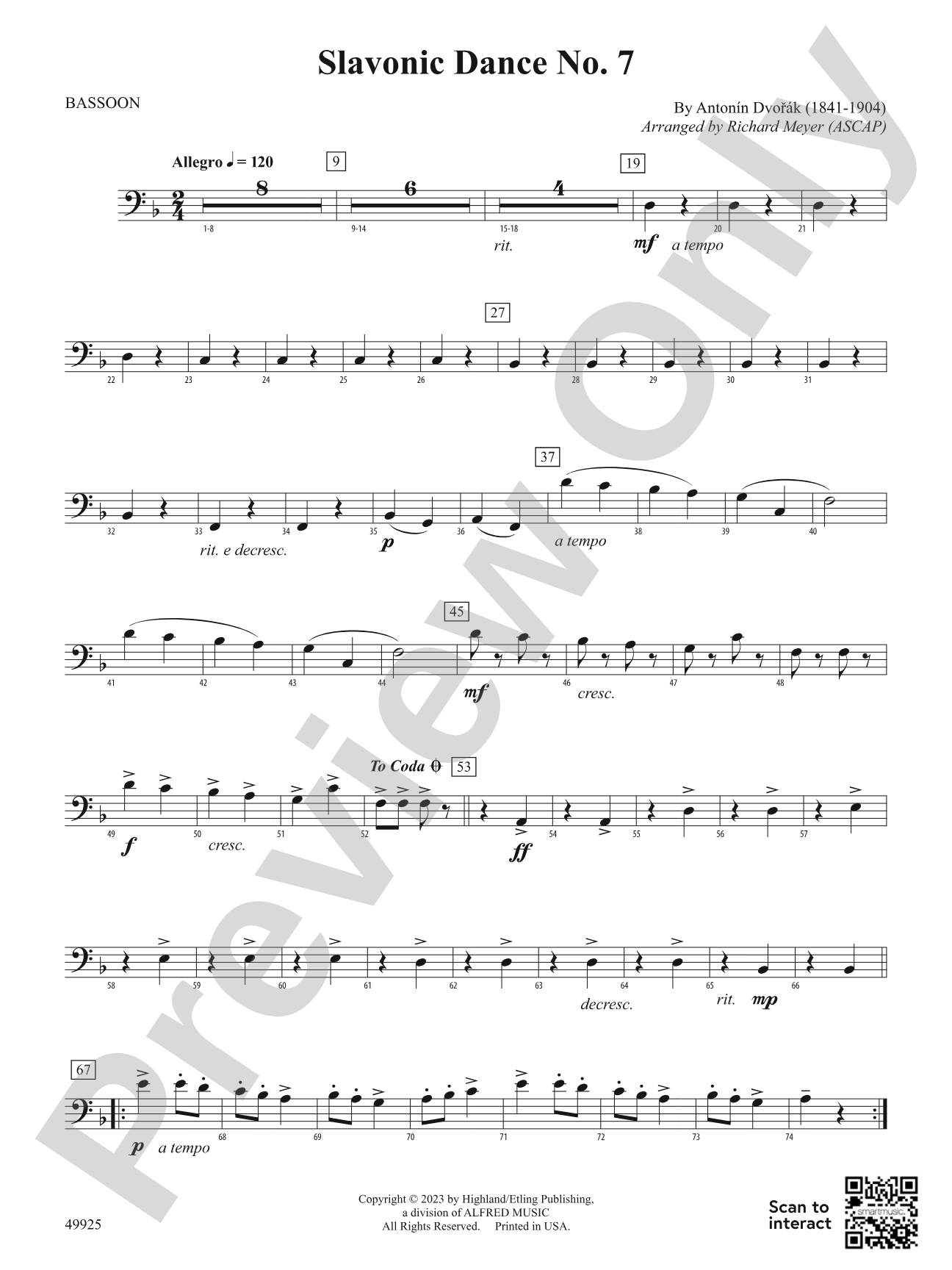

Slavonic Dance No. 7: Bassoon
By Antonín Dvorák / arr. Richard Meyer
Grade: 2.5
Item: 00-PC-0019019_B1
$3.00
Pickup currently not available
Description
Faithful to the original, Richard Meyer's arrangement of Dance No. 7 retains Dvorák's bold and brilliant orchestration, with exciting and meaningful parts for every instrument. Your students and audience will love the immediately appealing melodies, the delightful shifts from major to minor modes, and the imaginative canonic effects that permeate this work. (3:30)


Don't just read it, hear it, play along with it, and watch your students grow with it. In MakeMusic Cloud, Slavonic Dance No. 7: Bassoon comes alive with professional accompaniment, adjustable tempo, and built-in practice tools that turn solo practice into real progress.
Open in the Player
Jump straight in and assign it today.
Start Your Free Trial
Open this title and explore the full library in minutes.
Sample Audio
1
Audio File
--:--
0:00
0:00
Sample Video
Additional Details
Series:
Highland/Etling First Philharmonic
Publisher:
Alfred Music
SKU:
00-PC-0019019_B1
More about this title
About the Composer: Antonín Dvorák
Antonín Dvorák (1841–1904) stands among the most performed composers of the Romantic era, and for good reason. His gift for melody was boundless, and his orchestrations shimmer with color and invention. Born in Bohemia, Dvorák drew deeply from folk music and dance traditions of his homeland, infusing concert works with the rhythmic vitality and emotional warmth that listeners recognize immediately in pieces like the Slavonic Dances.
Dvorák's influence on music education runs as deep as his catalog. Teachers and conductors return to his works because they reward both players and audiences with immediate musical satisfaction. The Slavonic Dances, originally for solo piano, have been arranged and re-arranged countless times because their bones are so strong. They teach students what matters: melody, orchestration, architecture, and the power of a tune that sticks.
Why we love this
Richard Meyer's arrangement captures every ounce of Dvorák's orchestral brilliance while keeping the part writing accessible enough for a developing orchestra. The result feels effortless and assured, not simplified. At Grade 2.5, your students get a masterwork that doesn't ask them to fake it—they're playing genuine, beautiful material that responds to honest musicianship.
What to expect
A spirited, earthy dance with sudden moments of introspection. The piece pivots between major-key brightness and minor-key pensiveness with ease, building excitement through rhythm and orchestral color rather than volume alone. It feels both folk-rooted and formally composed, which is exactly what makes Dvorák so engaging.
Who it's for
Full orchestras in grades 4–7 who are ready to tackle genuine concert repertoire. This arrangement assumes working musicianship across the ensemble—competent section leaders, players who can balance and blend, and a conductor who hears orchestration.
How to get the most out of it
- Shape the opening melody with a clear sense of direction; the piece relies on its natural lilt, so avoid over-conducting. Let the rhythm section lock into the dance rhythm and the rest of the ensemble will follow.
- Emphasize the major-to-minor shifts as emotional turning points rather than mere harmonic changes. These moments are what make the piece memorable, so ask your winds and strings to listen across the orchestra and respect the color change together.
- Balance the canonic figures by identifying which sections carry the melody at each moment and which provide counterpoint. A light, clean texture here lets the compositional ingenuity shine through.
- Use the 3:30 runtime to build momentum without rushing. This piece breathes naturally, and your ensemble will communicate more as an orchestra if you conduct for phrasing rather than just keeping time.
How to use it
Open a concert with this piece to establish character and energy, or place it in the middle of a program to lift the mood after a slower work. It pairs especially well with other Romantic-era orchestral repertoire or with contemporary pieces that explore folk idioms. Festival and contest adjudicators respond well to orchestral clarity and musical authenticity, both of which this arrangement highlights.
Skills your students will build
- Balancing written dynamic levels across a full orchestral texture
- Playing with rhythmic precision in a dance form with recurring, driving patterns
- Recognizing and executing canonic entrances with rhythmic accuracy and ensemble awareness
- Responding to major-to-minor harmonic shifts and adjusting tone color accordingly
- Reading and executing standard orchestration for Romantic-era full orchestra