
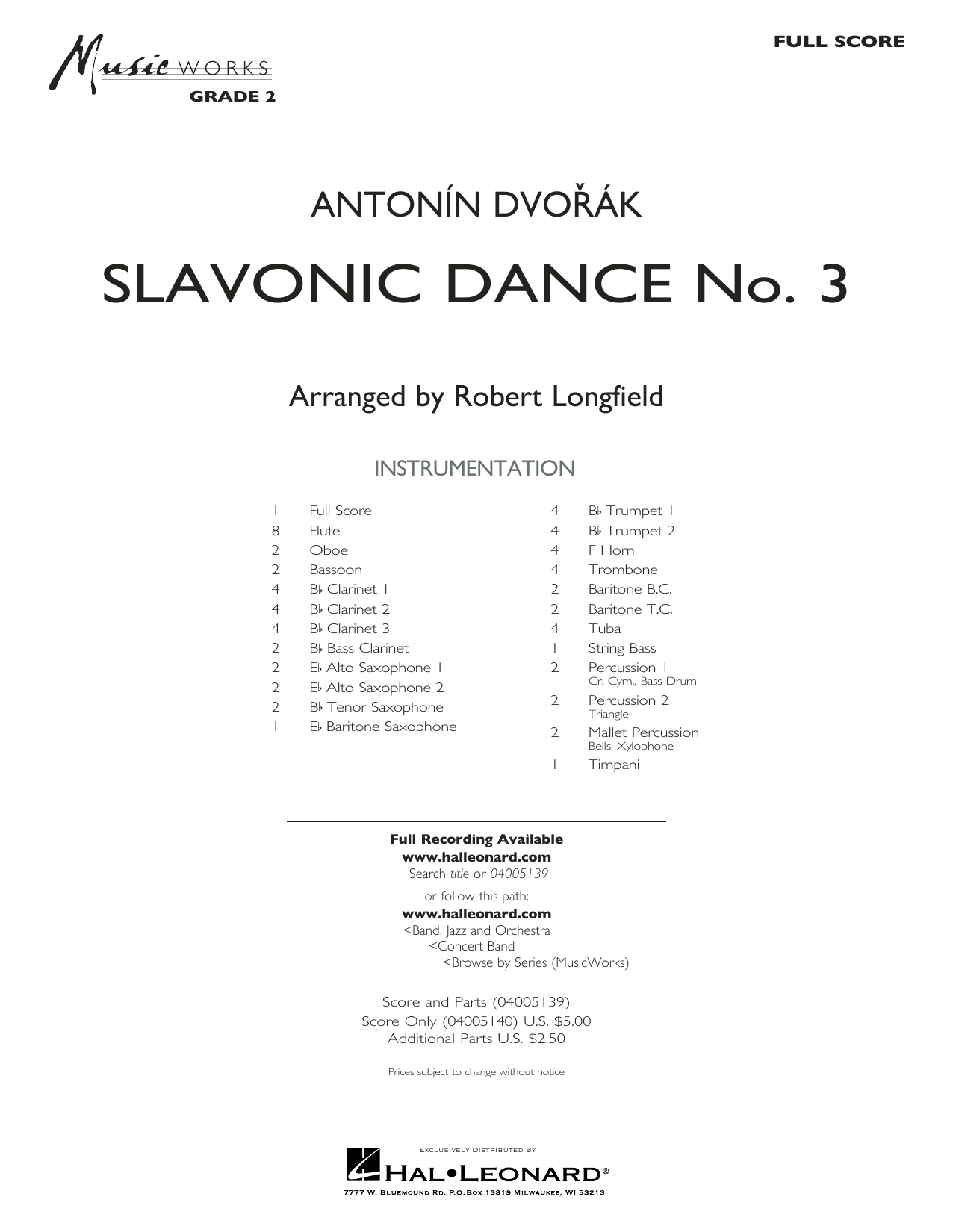

Slavonic Dance No. 3: Concert Band Conductor Score & Parts
Arranged by Robert Longfield
Grade: 2
Item: 35-PK00377246
$55.00
Pickup currently not available
Buy Extra Parts (Digital PDF Download)
Parts Added to Cart!
Description
"Tuneful and rhythmic" describe the "Slavonic Dances" by Dvorak, and part of what makes them so immediately appealing. This setting of Slavonic Dance No. 3 alternates between a moderate tempo and faster sections, and ultimately an even faster segment for the energetic finish. Effectively arranged for younger bands. Dur: 2:35


Slavonic Dance No. 3: Concert Band Conductor Score & Parts isn't in MakeMusic Cloud just yet...but it could be. Let us know you'd like to see it, and you'll help shape what comes next. In the meantime, start a free trial and dive into thousands of interactive titles your students can play along with today.
Request This Title
Tell us you want it.
Start Your Free Trial
Explore everything that's ready to play right now.
Sample Audio
No sample audio found.
Sample Video
No sample videos found.
Additional Details
Publisher:
Hal Leonard
SKU:
35-PK00377246
More about this title
Why we love this
Longfield captures the essential character of Dvorak's original without overwhelming younger players. The arrangement respects the source material's folk authenticity while making smart textural choices that keep energy high across the full ensemble. It's the kind of piece that sounds more ambitious than it actually is to perform.
What to expect
The piece pulses with Slavonic character without feeling foreign or remote. Moderate passages breathe with a lyrical quality while faster sections arrive with almost irresistible momentum, creating natural waves of intensity that keep listeners engaged throughout the short runtime.
Who it's for
Grade 2 concert bands ready to program folk-based material with genuine musical weight. This works equally well for groups seeking accessible concert fare and those wanting to build rhythmic clarity and sectional balance.
How to get the most out of it
- Balance the melody across sections as it passes between voices; the tune's appeal depends on hearing it cleanly against supporting parts.
- Shape the tempo transitions deliberately rather than sliding between them. Mark clear separation points so the ensemble can reset their internal pulse before the faster sections.
- Let the rhythm section lock the accelerations early in rehearsal, then layer the melodic lines on top once the tempo framework feels secure.
- The energetic final segment benefits from precision in articulation; short, clean attacks create forward momentum without requiring breakneck speed.
How to use it
Include this in a concert exploring Dvorak's influence or paired with other folk-inspired works at the same level. At 2:35, it's ideal for programs needing solid material in that sweet spot between opening warmup and anchor works.
Skills your students will build
- Tempo transitions between moderate and fast sections
- Sectional independence while maintaining textural blend
- Rhythmic clarity in folk-derived melodic gestures
- Ensemble balance when melody transfers between parts