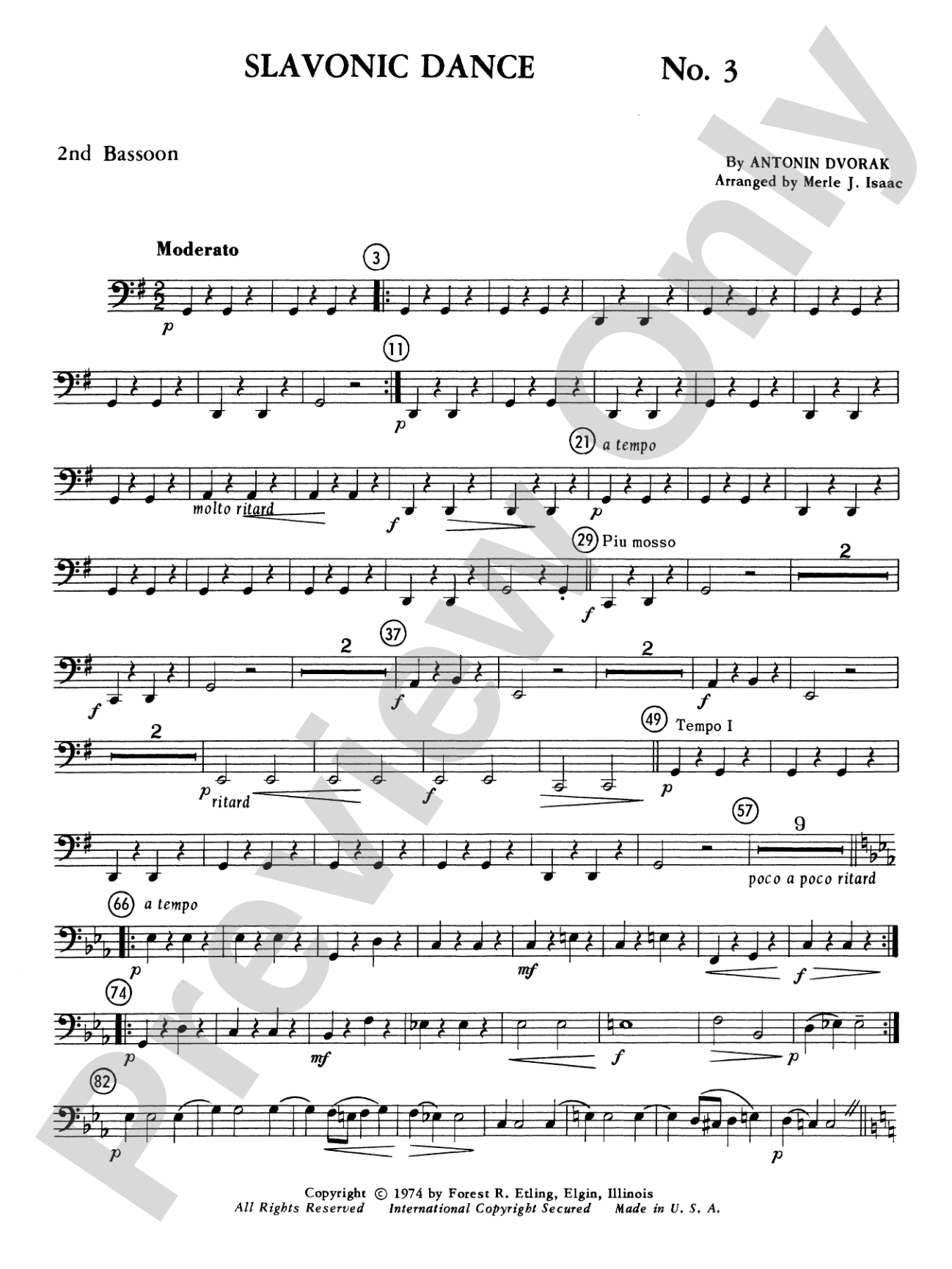
Slavonic Dance No. 3: 2nd Bassoon Sheet Music Preview

Slavonic Dance No. 3: 2nd Bassoon

By Antonín Dvorák / arr. Merle J. Isaac

Grade: 3

Item: 00-PC-0000049_B2

Digital Download
$3.00
Description
From the Czech composer Antonín Dvorák.

Don't just read it, hear it, play along with it, and watch your students grow with it. In MakeMusic Cloud, Slavonic Dance No. 3: 2nd Bassoon comes alive with professional accompaniment, adjustable tempo, and built-in practice tools that turn solo practice into real progress.

Sample Audio
No sample audio found.
Sample Video
Additional Details
Series: Highland/Etling Full Orchestra
Publisher: Alfred Music
Page Count: 177
SKU: 00-PC-0000049_B2

More about this title

About the Composer: Antonin Dvorák

Antonín Dvořák (1841-1904) stands among the most performed composers of the Romantic era, celebrated for music that fuses Czech folk idioms with European symphonic traditions. His prolific output spans nine symphonies, chamber works, concertos, and orchestral suites, each marked by lyrical melodies and imaginative orchestration. Dvořák's Slavonic Dances remain cornerstones of the concert repertoire, prized for their rhythmic vitality and accessibility to orchestras at all levels.

As a teacher and cultural ambassador, Dvořák championed the integration of national character into concert music without sacrificing structural sophistication. His influence on music education extends far beyond composition; his works have become essential repertoire for developing orchestras seeking to build ensemble cohesion, style awareness, and interpretive depth.

Why we love this

This Grade 3 arrangement of Slavonic Dance No. 3 captures the infectious energy and melodic generosity of Dvořák's original while remaining genuinely playable for developing orchestras. The Merle Isaac arrangement distributes the orchestration thoughtfully, ensuring principal parts sing while the whole ensemble stays engaged. Contest and festival judges consistently reward performances of this work because it demands both musical maturity and technical precision without requiring advanced virtuosity.

What to expect

Spirited and characterful, Slavonic Dance No. 3 pulses with the energy of traditional Czech folk celebration. The melodies dance and leap across the ensemble with infectious joy, while harmonic richness and lyrical secondary themes create moments of warmth and reflection. There is an unmistakable sense of cultural authenticity tempered by the sophistication of a master orchestrator.

Who it's for

This arrangement serves developing orchestras at the middle school and early high school levels, as well as adult community orchestras seeking accessible yet musically substantial repertoire. It works equally well for sight-reading clinics and festival competitions, offering a piece that rewards careful preparation while remaining within technical reach of Grade 3 players.

How to get the most out of it

  • Establish the opening folk-like character with a clear, unhurried pulse from the conductor; the piece's momentum comes from rhythmic precision, not rushing.
  • Balance the interplay between melodic sections and accompanying figures by rehearsing divisi passages with deliberate attention to blend and dynamic shaping.
  • Attend to the characteristic articulation markings throughout; Dvořák's dance rhythms depend on clear, clean tonguing or bowing that propels forward without heaviness.
  • Shape each phrase with subtle dynamic rise and fall rather than static volume; the piece's traditional dance origins benefit from organic breathing and release.

How to use it

Program this piece as a contrasting centerpiece alongside more contemporary works or as the opening statement of a concert centered on European masterworks. Its moderate length and appeal to audiences make it ideal for community orchestra pops concerts or festival programs where you want to demonstrate the ensemble's growing musicality and style awareness. The piece also serves exceptionally well in youth orchestra concert settings where audiences need immediate connection to the music.

Skills your students will build

  • Ensemble balance and blend across divisi sections
  • Rhythmic precision in folk-influenced meters and syncopation
  • Phrasing and rubato within a dance form structure
  • Dynamic control and shape in contrasting melodic sections
  • Style awareness and interpretation of Romantic-era orchestral writing

You May Also Like