
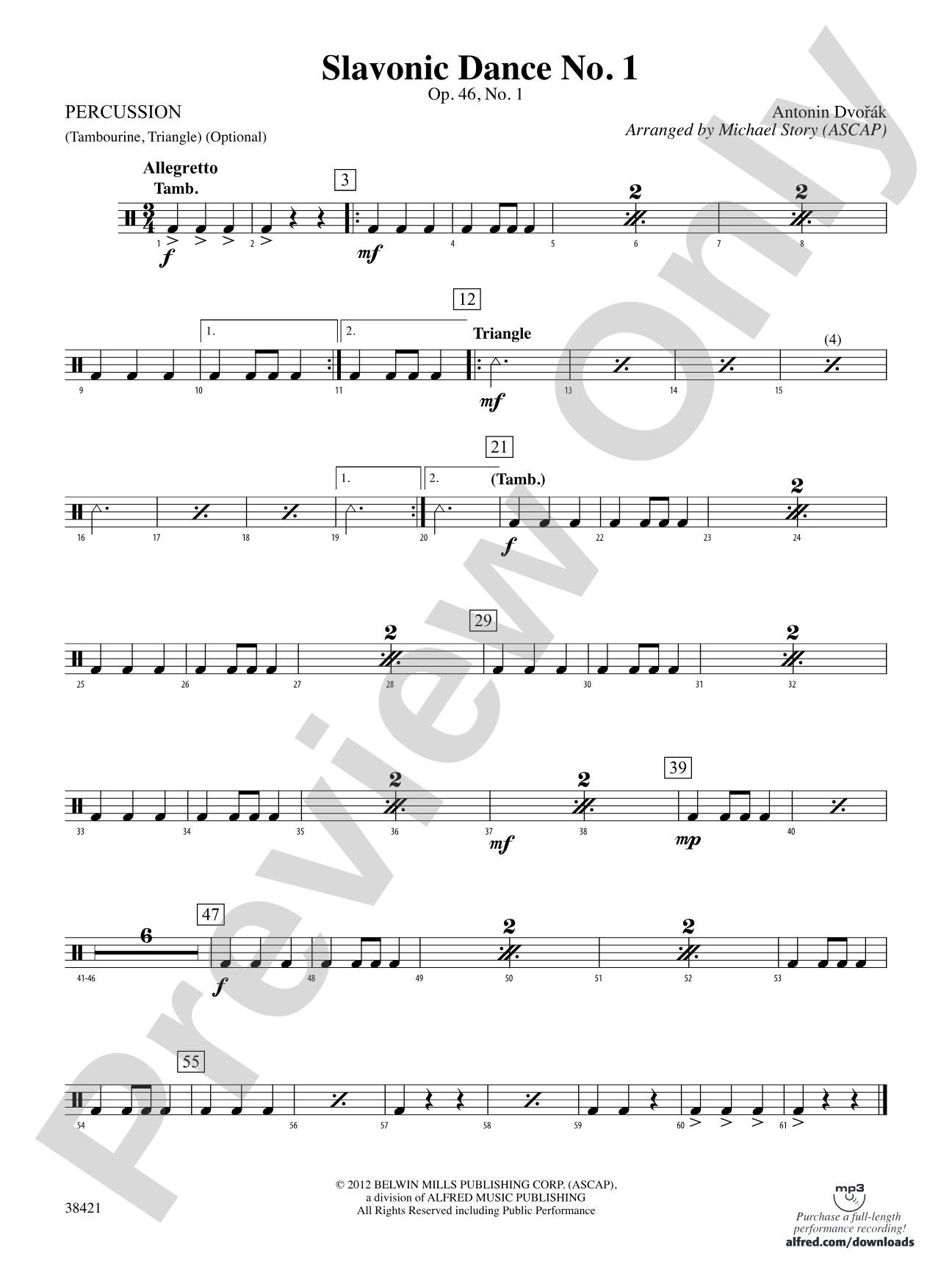

Slavonic Dance No. 1: 1st Percussion
Op. 46, No. 1
By Antonín Dvorák / arr. Michael Story
Grade: 1
Item: 00-PC-0015488_PC1
$5.99
Pickup currently not available
Description
This fantastic and very easy Dvorák arrangement will work well for festivals and contests. Folk-like in nature, the dance is set in a moderately fast tempo, which may be increased as the ensemble gains proficiency. This title is available in MakeMusic Cloud.


Don't just read it, hear it, play along with it, and watch your students grow with it. In MakeMusic Cloud, Slavonic Dance No. 1: 1st Percussion comes alive with professional accompaniment, adjustable tempo, and built-in practice tools that turn solo practice into real progress.
Open in the Player
Jump straight in and assign it today.
Start Your Free Trial
Open this title and explore the full library in minutes.
Sample Audio
1
Audio File
--:--
0:00
0:00
Sample Video
No sample videos found.
Additional Details
Series:
Belwin Very Beginning String Orchestra
Publisher:
Alfred Music
Page Count:
70
SKU:
00-PC-0015488_PC1
More about this title
About the Composer: Antonin Dvorák
Antonín Dvořák (1841-1904) stands as one of the most prolific and beloved composers of the Romantic era. A Czech nationalist who drew deeply from folk music and the landscapes of his homeland, Dvořák created nine symphonies, numerous chamber works, and an enormous catalog of orchestral pieces that remain central to the concert repertoire. His Slavonic Dances, composed in two sets during the 1870s and 1880s, became instant favorites across Europe and continue to captivate audiences with their infectious rhythms and lyrical warmth.
For music educators, Dvořák's gift for melody and his structural clarity make his music remarkably accessible to developing ensembles. Even simplified arrangements like this one preserve the character and charm of the original, allowing younger players to experience the joy of performing a genuine masterwork rather than a generic étude.
Why we love this
This arrangement captures everything that makes Dvořák's Slavonic Dances special: infectious folk-inspired melody, clear harmonic movement, and a tempo that builds energy without demanding technical fireworks. At Grade 1, it's genuinely playable for beginning string orchestras while sounding like real music, not a simplified exercise, making it an ideal choice for ensembles seeking repertoire that audiences recognize and enjoy.
What to expect
Slavonic Dance No. 1 radiates the joy of a village celebration. The piece bounces with rhythmic life and straightforward melodic appeal, capturing the spirit of Eastern European folk music without pretension or complexity. Young players will recognize immediately that they're making something that sings, not merely executing technical exercises.
Who it's for
This score and parts set is ideal for beginning string orchestras in their first or second year of ensemble playing. Directors preparing for festival performances or contests will find reliable material that impresses judges and audiences alike, while student musicians gain experience with a genuine Romantic masterwork rather than generic pedagogical material.
How to get the most out of it
- Honor the dance character by keeping the rhythm buoyant and forward-moving; resist the temptation to drag even though the ensemble is still building technical facility.
- Gradually increase tempo as Michael Story's arrangement suggests, but do so across rehearsals rather than mid-performance; this builds confidence and ensemble security.
- Balance the folk melody between sections so it sings clearly; string orchestras at this level often need reminding that melodic players aren't the only voices that matter.
- Shape phrases with subtle dynamics rather than sudden changes; gentle crescendos and diminuendos help young players develop musical sensitivity alongside technical skills.
How to use it
This works beautifully as a concert opener, setting an upbeat, accessible tone while demonstrating ensemble capability early in a program. It's equally at home in festival competitions, where its combination of musical substance and Grade 1 accessibility typically earns strong scores. Consider pairing it with contrasting repertoire (perhaps a slower, lyrical piece) to showcase your ensemble's range.
Skills your students will build
- Maintaining steady tempo and rhythmic precision in a moderately fast dance meter
- Balancing between melody and accompaniment voices in an arranged orchestration
- Executing clean, unified articulation across string sections
- Responding to conductor cues for gradual tempo increases and dynamic shaping
- Understanding phrase structure and musical storytelling in folk-based material