
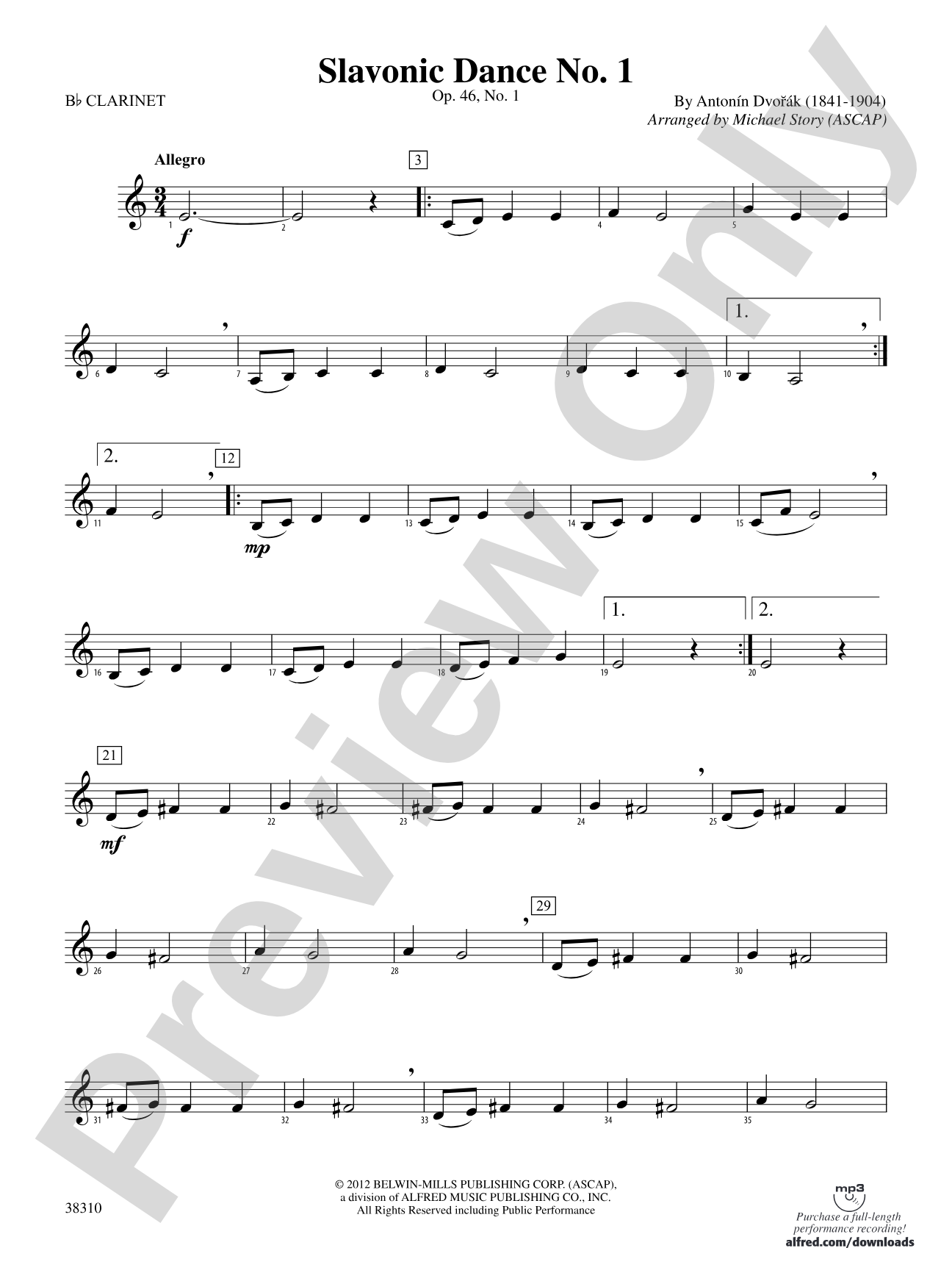

Slavonic Dance No. 1: 1st B-flat Clarinet
Op. 46, No. 1
By Antonín Dvorák / arr. Michael Story
Grade: 1 (Very Easy)
Item: 00-PC-0015412_C1
$5.99
Pickup currently not available
Description
From the Czech composer Antonín Dvorák. Originally composed in 1886 for four-hand piano, this beginning band transcription/reduction develops the charismatic melody and offers opportunity to explore the varied timbres in beginning band in a sure-fire solid setting. Providing a stunning opportunity to introduce or reinforce three-quarter time, the arrangement is a charming choice for concert and contest alike. (2:15) This title is available in MakeMusic Cloud.


Don't just read it, hear it, play along with it, and watch your students grow with it. In MakeMusic Cloud, Slavonic Dance No. 1: 1st B-flat Clarinet comes alive with professional accompaniment, adjustable tempo, and built-in practice tools that turn solo practice into real progress.
Open in the Player
Jump straight in and assign it today.
Start Your Free Trial
Open this title and explore the full library in minutes.
Sample Audio
1
Audio File
--:--
0:00
0:00
Sample Video
No sample videos found.
Additional Details
Series:
Belwin Beginning Band
Publisher:
Alfred Music
Page Count:
210
SKU:
00-PC-0015412_C1
More about this title
About the Composer: Antonin Dvorák
Antonín Dvořák (1841-1904) stands among the most performed composers of the Romantic era, and his gift for melody remains unmatched. A Czech nationalist who drew deeply from folk music, Dvořák elevated his country's musical tradition to international prominence while composing across every genre: symphonies, concertos, chamber music, and operas that continue to define concert life today.
His Slavonic Dances occupy a special place in music education. Composed as piano duets in 1886, these pieces capture the spirit and rhythmic vitality of Czech folk traditions while remaining accessible to performers at all levels. Teachers and conductors return to them repeatedly because the melodies are instantly memorable, the structures are transparent, and the cultural content invites genuine musical storytelling.
Why we love this
Michael Story's transcription preserves every ounce of Dvořák's melodic charm while giving your beginning band real musical substance to play. The three-quarter time signature becomes a natural teaching moment rather than a hurdle, and the orchestration allows you to hear which sections are developing independence and blend. It's the kind of piece that sounds confident and finished within weeks of rehearsal.
What to expect
Dvořák's Slavonic Dance No. 1 radiates warmth and character from the opening phrase. The three-quarter time has a lilting, celebratory quality that feels both elegant and deeply human; this isn't abstract minimalism but music rooted in dance and community. Even at this accessible level, the arrangement captures the piece's essential dignity.
Who it's for
Beginning band conductors leading Grade 1 ensembles who want to program a masterwork without oversimplifying. Students encounter this piece at a stage where they're comfortable with basic instrument control and are ready to explore style, phrasing, and what it means to play a famous melody with respect and musicality.
How to get the most out of it
- Balance the melody across your ensemble; this isn't a feature for one section. Rotate the primary voice between woodwinds and brasses so each student experiences leading the phrase.
- Shape the three-quarter meter with a flowing pulse rather than emphasizing the downbeat. Listen for lift at measure two, not weight.
- Let the accompaniment figures breathe. Thin, even rhythmic support will let the tune sing without cluttering the texture.
- Take advantage of the two-minute-fifteen-second length for a polished final run-through before festival or concert. The piece is short enough to maintain focus through performance.
How to use it
Program this as an opener or early concert piece to establish your band's musical literacy and maturity. It works equally well in a contest setting where judges value careful arrangement and authentic interpretation at an entry-level grade. Pair it with another Romantic work or contemporary piece to show range without overwhelming your performers.
Skills your students will build
- Playing in three-quarter time with consistent pulse and phrasing
- Balancing melody and accompaniment roles across the ensemble
- Sustaining focused attention through lyrical, song-like passages
- Understanding style and character in a masterwork arrangement
- Responding to clear, transparent orchestration to locate their musical role