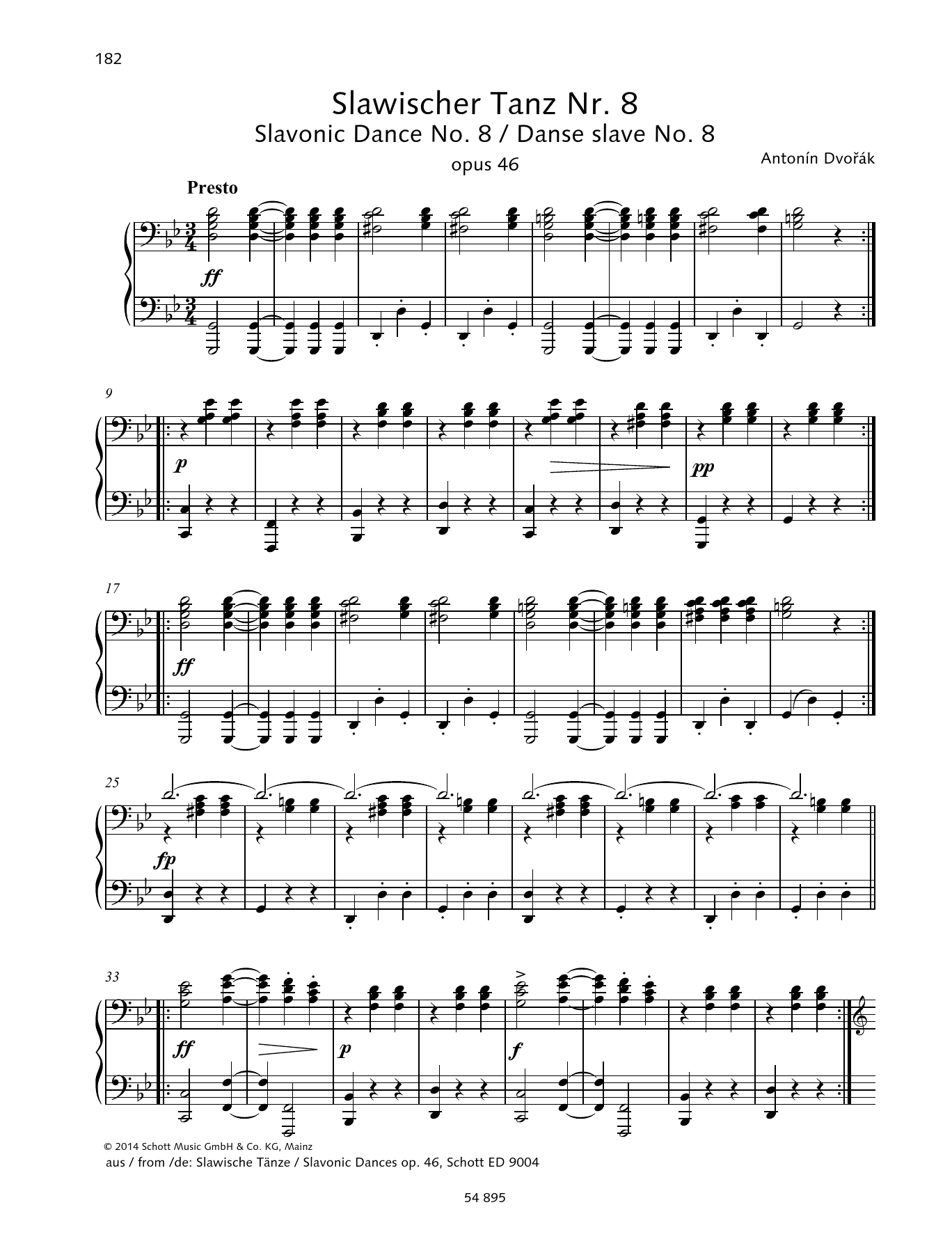
Slavonic Dance Sheet Music Preview

Slavonic Dance: Piano Duet

By Antonín Dvorák / Arranged by Monika Twelsiek

Item: 35-DS00370517

Digital Download
$4.99
Description

Discover MakeMusic Cloud: thousands of interactive titles your students can play along with today.

Sample Audio
No sample audio found.
Sample Video
Additional Details
Publisher: Hal Leonard
Page Count: 14
SKU: 35-DS00370517

More about this title

About the Composer: Antonín Dvorák

Antonín Dvorák (1841–1904) stands as one of the most significant voices in Romantic music, a composer who drew deeply from Czech folk traditions while commanding the largest forms of the classical era. His nine symphonies, chamber works, and orchestral dances earned him international recognition and multiple appointments across Europe and America, yet he never abandoned his roots or his commitment to elevating nationalist musical idioms.

Dvorak's Slavonic Dances remain central to the repertoire because they capture something essential about his compositional genius: the ability to make folk material sing at concert scale. Written in two sets (Op. 46 and Op. 72), these pieces balance earthy rhythmic vitality with sophisticated harmonic language, making them equally valuable as teaching tools and concert fare.

Why we love this

Dvorák's Slavonic Dances belong in every ensemble library because they bridge folk authenticity and concert sophistication without sacrificing either. This arrangement preserves the muscular rhythmic drive and melodic generosity of the originals while remaining accessible to intermediate players, giving students repertoire that sounds substantial and feels good to play.

What to expect

Earthy and propulsive, with the infectious momentum of a village celebration rendered in concert dress. The harmonic language feels generous and warm, while the rhythmic profiles keep the energy forward and the mood grounded in something real rather than abstract.

Who it's for

Intermediate to advanced ensembles seeking concert repertoire with authentic voice and pedagogical substance. This works equally well for concert band, orchestra, or chamber ensemble readings and suits musicians ready to engage with Romantic-era orchestration and national style idioms.

How to get the most out of it

  • Anchor the rhythmic foundation by maintaining clear separation between the dance's characteristic patterns and the harmonic accompaniment; too much blur will flatten the folk idiom that gives this piece its character.
  • Shape the main melody with the slight lilt natural to Slavonic dance rhythms; mechanical evenness will drain the work of its vitality and charm.
  • Balance the orchestration so that inner voices and countermelodies emerge clearly. These aren't accompaniment lines; they're integral to Dvorák's voice leading and should breathe independently.

How to use it

Pair this with other nationalist repertoire to build a concert around the influence of folk traditions on Romantic composers, or use it as a standalone showpiece that demonstrates ensemble musicianship and stylistic range. Its 14 pages and moderate technical demands make it realistic for mid-season programming or as a strong closer for a concert needing structural variety.

Skills your students will build

  • Reading Slavonic dance rhythms and maintaining metric clarity across syncopated passages
  • Balancing nationalist melodic character with sophisticated harmonic movement
  • Shaping folk-derived material for concert performance without losing authenticity
  • Ensemble awareness of inner voice independence and clear rhythmic cooperation

You May Also Like