Slava: 4th F Horn Sheet Music Preview

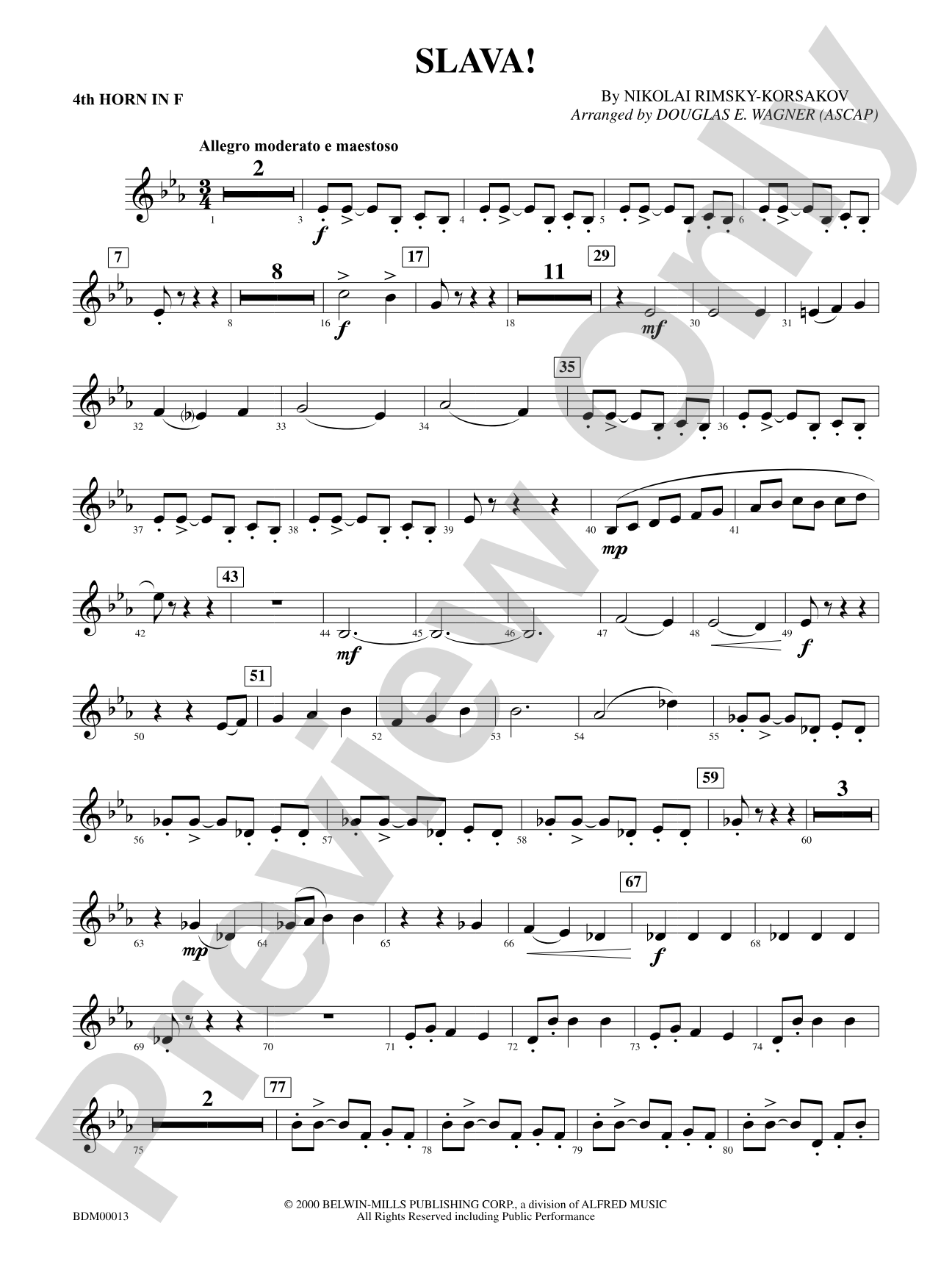
Slava: 4th F Horn

Traditional / arr. Douglas E. Wagner

Grade: 4 (Medium)

Item: 00-PC-0017497_H4

Digital Download
$3.00
Description
Once the Russian National Anthem, this hymn has a rich tradition dating back five centuries. This magnificent tune has been masterfully arranged by Douglas Wagner, who incorporates Rimsky-Korsakov's original orchestra and mixed choir voicing into the fabric of this wind band score while maintaining the integrity and spirit of the original. The dignified melodic statement follows a regal fanfare-like introduction. Be certain to include this terrific program music on your first concert performance. (4:30)

Don't just read it, hear it, play along with it, and watch your students grow with it. In MakeMusic Cloud, Slava: 4th F Horn comes alive with professional accompaniment, adjustable tempo, and built-in practice tools that turn solo practice into real progress.

Sample Audio
0:00
0:00
Sample Video
Additional Details
Series: Belwin Symphonic Band
Publisher: Alfred Music
Page Count: 248
SKU: 00-PC-0017497_H4

More about this title

About the Arranger: Douglas E. Wagner

Douglas E. Wagner

Douglas E. Wagner earned his degrees from Butler University and spent three decades leading music programs in high schools before transitioning to full-time composition and arrangement. Since 1973, he has created more than 3,500 published works across choral, concert band, orchestral, handbell, organ, piano, and vocal genres, with over seventeen million copies in circulation worldwide.

His arrangements and original compositions have been performed in concert halls and broadcast on radio and television throughout the United States and internationally. Wagner currently lives in Indianapolis with his wife, Sandy.

Why we love this

Wagner's arrangement honors the hymn's historical weight and melodic grandeur while making it accessible to concert band instrumentation. The opening fanfare immediately signals occasion and ceremony, and the subsequent dignified melody gives every section meaningful material. This is repertoire that sounds substantial without requiring advanced technical demands, making it ideal for building program prestige and audience engagement.

What to expect

Ceremonial and stately. The piece opens with trumpet and horn brilliance before settling into a warm, hymn-like meditation that feels both solemn and affirming. The four-and-a-half minute duration allows the melody to breathe and resonate, creating a moment of collective reflection rather than display.

Who it's for

Concert bands at the Grade 4 level looking for programming that combines historical significance with accessible musicianship. This works equally well for ensembles preparing for festivals or building season-opening concerts that need to establish credibility and mood.

How to get the most out of it

  • Shape the fanfare introduction with clear articulation and controlled dynamics to establish the regal character before the hymn statement enters.
  • Balance the melodic line across sections as it passes through the band; this hymn sings best when listeners hear one unified voice, not competing timbres.
  • Allow the full harmonic resonance to bloom during the sustained passages; resist the urge to rush these moments, as the original's spiritual quality depends on unhurried pacing.
  • Attend closely to Wagner's dynamic architecture; the arrangement builds and recedes intentionally, and respecting these contours preserves the emotional arc.

How to use it

Place this early in a concert to set a respectful, substantive tone. It pairs naturally with lighter character pieces that follow, or use it as the anchor of a program exploring music with cultural or spiritual roots. Its five-century history makes it a talking point for program notes.

Skills your students will build

  • Sustaining long phrases with proper breath support and intonation control
  • Balancing multiple melodic lines occurring simultaneously across different sections
  • Responding to subtle dynamic shaping that conveys emotional intent rather than technical display
  • Interpreting hymn-based repertoire with appropriate weight and reverence

You May Also Like